
61 Hours – Trapped in a Blizzard, Reacher Faces a Race Against Time
Stranded in a frozen town, Reacher protects a witness with a killer on the loose and time running out – 61 hours, to be exact.
This post contains affiliate links. We may earn a commission if you make a purchase, at no extra cost to you. As an Amazon Associate, Dadnology earns from qualifying purchases.
📚 Introduction
This review is part of the Jack Reacher Book Series – explore all Reacher books in order!
61 Hours offers one of the most tightly constructed thrillers in the Jack Reacher series. Set in a frozen town on lockdown, the novel is built around a ticking clock, and every chapter ticks us one step closer to danger. The atmosphere is as frigid as the setting, and the tension climbs with each passing hour.
This is Reacher in full investigator mode – cool, logical, and fiercely focused.
Ad61 Hours (Paperback) (opens in a new tab)
Get the Paperback version of 61 Hours.

🕵️ Plot & Characters
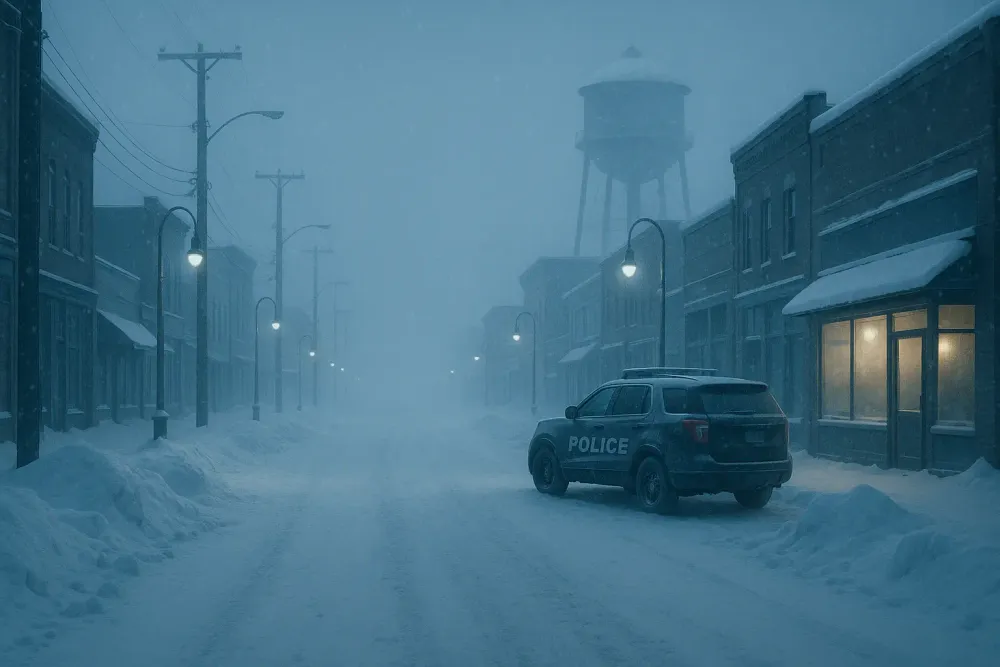
Reacher finds himself stranded in Bolton, South Dakota, after a bus crash in a snowstorm. The town is already on edge – an elderly witness is under federal protection, a nearby prison holds dangerous inmates, and a hired killer is closing in.
Ad61 Hours (Kindle) (opens in a new tab)
Get the Kindle version of 61 Hours.
The story unfolds over exactly 61 hours, and the structure is brilliant. Each chapter ratchets the tension. Lee Child masterfully balances the ticking-clock device with slow-burn investigation. There’s no filler – just tightening suspense.
The witness — an elderly woman who saw something she shouldn’t have — is one of the most memorable supporting characters in the series. She’s not there to be rescued. She’s principled, stubborn, and acutely aware of the danger she’s in. Reacher respects her for it, and so does the reader. Child gives her a dignity that makes you genuinely invested in her outcome, which isn’t always the case with the protected-witness trope.
The local police are overwhelmed but well-written, and the prison warden adds a unique layer of control vs. chaos. The nearby military installation — its abandoned tunnels and what they’re hiding — gives the book a second investigation track that intersects with the witness plot in ways that feel organic rather than contrived.
Reacher is more isolated than ever here. No friends. No support. Just his intellect, instincts, and moral compass.
The book ends on a cliffhanger — the only true multi-book arc in the Lee Child era of the series. One plotline resolves. Another does not. It’s a bold structural choice for a series that had always been self-contained, and it works because Child earns it: the unresolved thread isn’t a cheap hook, it’s a genuine consequence of what happens in the final act.
🎯 Style & Atmosphere
Few thrillers do cold as well as 61 Hours. The snowstorm becomes a character, cutting off communication, stalling rescue, and enclosing the story in a white, silent trap. Every movement feels slower, heavier, and riskier.
Lee Child’s prose remains minimalist and direct. Sentences are short. Emotions are subdued but real. The result is a novel that feels both cinematic and literary – lean but impactful.
The atmosphere is quietly terrifying. Reacher is in enemy territory with no exits. You feel the hours slipping away, and the pressure builds chapter by chapter.
The countdown device is one of the few genuinely original structural choices in the series. Most Reacher novels build tension through escalating action and gathering threat — 61 Hours does all that, but adds a running clock that makes even the quieter procedural scenes feel urgent. A chapter that would be atmospheric moodiness in another book becomes anxiety when you know the number on the next chapter is lower. Child only uses this device once across the entire series, which tells you he understood it had a limited lifespan — deploy it once, make it count.
The South Dakota winter also distinguishes it aesthetically. There’s something about a blizzard that strips away the options. Roads closed. No air support. No cavalry. Child is very good at constructing situations where Reacher genuinely cannot call in reinforcements, and a Dakota blizzard in January is about as good a real-world justification as the series ever provides.
👨👧👦 Our Experience & Recommendation
Reading 61 Hours as a dad adds another layer: the urge to protect, to solve, to stay one step ahead. The witness isn’t helpless – she’s smart and brave – but knowing Reacher is her last line of defense resonates deeply.
This book is ideal for readers who enjoy structured thrillers and slow-building dread. Teens might find it less explosive than earlier Reacher books, but mature readers will appreciate its precision and tone.
It’s also one of the rare Reacher novels with a cliffhanger ending – something you’ll want resolved immediately in the sequel (Worth Dying For).
I read the final fifty pages in one sitting at about 11 PM on a Tuesday, which is the kind of thing that happens when a thriller is actually working. The countdown chapters at the end are relentless — Child keeps cutting between the investigation and the ticking number, and you start doing the maths yourself. What can he possibly do with the time he has left? The answer, when it comes, is both credible and genuinely shocking.
One practical note: buy Worth Dying For before you start 61 Hours. You will need it immediately when you finish. That’s not a complaint — it’s a compliment to how effectively Child constructed the cliffhanger — but it’s the kind of thing you want to know going in rather than discovering at midnight with no follow-up book available.
As a standalone read — ignoring the cliffhanger entirely — 61 Hours is also one of Child’s most purely satisfying structural achievements. The countdown gives the novel a formal backbone that most genre fiction lacks. You always know where you are in the story, how much time remains, and how the pressure is building. That kind of architectural clarity is rare, and it makes the book feel more controlled and purposeful than the average thriller, which tends to manufacture urgency scene by scene without an organizing principle. Here the organizing principle is built into the title, and Child never lets you forget it.
Ad
61 Hours (Paperback) (opens in a new tab)
Get the Paperback version of 61 Hours.
Pros
- Brilliant structure with a real-time countdown
- Atmospheric snowstorm setting
- Strong female supporting character
- Tense pacing and procedural depth
- Memorable cliffhanger ending
Cons
- Less action than some readers expect
- Sparse emotional introspection
📝 Conclusion
61 Hours is a masterclass in structural tension. Lee Child slows the pace but sharpens the focus, giving us a cerebral thriller that unfolds minute by minute. Reacher’s logic, observation, and quiet strength make this a standout entry in the series.
Recommendation: Read it when you want to feel the cold, count the hours, and be pulled into a razor-sharp narrative.
🎧 Rather listen than read? Audiobooks are how busy dads actually finish books — start a free 30-day Audible trial and turn your commute into reading time.
📌 FAQ – Frequently Asked Questions
Is 61 Hours suitable for teens or kids?
How long is the book?
Is this part of a larger storyline?
What makes 61 Hours unique in the series?
Does 61 Hours need to be read before Worth Dying For?
Is the countdown structure in 61 Hours effective?
Keep this in your inbox
One email a week: what we actually watched, built and reviewed — the stuff worth a dad's time. No hype, no daily spam.
Dadnology Weekly
One email a week: the LEGO, gaming and movie news worth a dad's time — plus what we actually reviewed. No hype, no daily spam.
Disclaimer: This review and its visuals were created with the help of AI. Some links may be affiliate links – we may earn a commission if you make a purchase, at no extra cost to you.
You might also like
Nothing to Lose – Jack Reacher vs. Two Towns and One Dark Secret
*Nothing to Lose* delivers a slower, atmospheric thriller with classic Reacher intensity. The dual-town setup is intriguing, and the mystery unfolds with creeping dread. While less action-packed than some entries, the psychological suspense and chilling reveal make this a strong entry. Reacher's moral code and quiet tenacity are on full display. Fans of more contemplative thrillers will find plenty to appreciate – it’s moody, methodical, and darkly satisfying.
Die Trying – Jack Reacher Faces His Most Relentless Challenge Yet
*Die Trying* is a relentlessly intense thriller that never lets up. Jack Reacher is at his sharpest, facing a terrifying enemy deep in the American wilderness. With breakneck pacing, clever twists, and a powerful female co-lead, it’s one of the most memorable entries in the series. A perfect 5 for action fans.

Neagley – Season 1: A Reacher Spin-Off That Doesn't Need Reacher
Neagley answers a question we didn't know we needed answered: can this universe work without a book to adapt? Yes. Maria Sten leads a tight, genuinely gripping case as Frances Neagley, and the show never leans on Reacher to carry it — he's a guest, not a crutch. Strong characters, a story that earns its turns, and a clear recommendation for anyone who's been following the flagship show. Rating: 4.5/5.