
LEGO Batman: Legacy of the Dark Knight Review – Co-Op Chaos Done Right
LEGO Batman: Legacy of the Dark Knight is everything a LEGO game should be — funny, chaotic, endlessly playable with kids, and packed with Batman history. A strong 4/5.

This post contains affiliate links. We may earn a commission if you make a purchase, at no extra cost to you. As an Amazon Associate, Dadnology earns from qualifying purchases.
🧱 This review is part of our LEGO Brand Hub — our full LEGO collection: Star Wars, Marvel, LOTR, Harry Potter, Creator and more.
LEGO games operate on a kind of reliable family magic that I have never quite managed to explain to anyone who hasn’t experienced it. The formula is almost absurdly simple: take a beloved franchise, render it in exaggerated plastic brick form, apply an extremely specific brand of self-aware humour, add local co-op, scatter approximately ten thousand collectibles across the levels, and then watch as two people of completely different ages sit next to each other and have a genuinely good time. LEGO Batman: Legacy of the Dark Knight does all of this with the confidence of a series that has been doing it for twenty years, and the result is an 4/5 that the LEGO formula absolutely deserves at its best.
AdLEGO Batman: Legacy of the Dark Knight – Xbox Series X|S (opens in a new tab)
The new standard for family co-op gaming. Buy it, sit down with your kid, and let Gotham happen to you.
This is not a game that will surprise you. If you have played a LEGO game before, you know exactly what you are getting: brick-built environments that invite destruction, enemies that shatter into colourful fragments, puzzles that require two characters with different abilities to cooperate, a story that treats its source material with warm irreverence, and at least one moment per level where something explodes for comedic effect. What Legacy of the Dark Knight brings to this established formula is the best Batman-specific content TT Games has ever assembled — and the best villain roster in any LEGO game, possibly ever.
🦇 The Legacy Concept: Multiple Eras, One Gotham
The central conceit of Legacy of the Dark Knight is its timeline-hopping structure. The game covers five distinct eras of Batman history: the 1939 Golden Age, the 1966 television series, the 1992 animated series, the Burton/Schumacher film era, and the contemporary comic-book continuity. Each era has its own visual style, its own character roster, and its own flavour of Batman — from the deadpan camp of Adam West’s caped crusader to the angular brutalism of the animated series design that defined the character for a generation of children, including this reviewer.
The execution is better than the concept suggests. Transitions between eras are handled through a narrative framing device involving the Batcomputer accessing historical records — a neat metatextual trick that lets the game be a museum of Batman history without the awkwardness of asking which Batman is “real.” Each era’s visual language is rendered with clear affection: the 1966 sections are rendered in deliberately flat, eye-popping colour; the animated series sections adopt the famous black backgrounds and art deco geometry of the original show. The art team clearly spent time with the source material.
🃏 The Villain Roster: Finally, This Many
LEGO games have always been defined partly by their character rosters, and Legacy of the Dark Knight’s antagonist lineup is the most lovingly curated the series has assembled. The classics are all here — Joker, Penguin, Riddler, Catwoman, Two-Face, Bane, Mr. Freeze — but the game goes considerably deeper: Clayface has a boss encounter that plays with the brick aesthetic in ways that are genuinely inventive; Poison Ivy has a Gotham Botanical Garden level that is one of the game’s best; Ra’s al Ghul brings the animated series’ operatic villainy in full; and the inclusion of Egghead (a 1966 television original, played here as a warm tribute to Vincent Price) will make any dad in their late thirties or forties feel specifically seen.
AdXbox Wireless Controller – Robot White (opens in a new tab)
A second controller is essential for LEGO Batman co-op. This one looks clean, feels great, and doesn't cost a fortune.
The humour is consistent with the best LEGO game writing. Each villain gets a signature bit — Riddler’s compulsive question marks appear on everything he touches, Penguin’s umbrella is deployed for transportation in ways the character himself finds increasingly undignified, Joker’s gags always have a second punchline three beats after the first one lands. The animated series voice direction is excellent, and the 1966 Adam West-style delivery in the Golden Age sections is so committed to the bit that it becomes genuinely funny rather than merely nostalgic.
🎮 The Gameplay Loop: Reliable as Ever
The LEGO formula remains: each level is a sequence of environments filled with brickable objects (break them for studs), character-specific puzzles (Batman builds, Robin grapples, Catwoman sneaks), enemies who shatter harmlessly, and a hidden cache of collectibles that reveal the level’s true depth. Progress is tracked through True Hero status (collect enough studs to fill the bar), Minikit components (ten per level, reward bonus vehicles), and Character Tokens (unlock roster members by finding their hidden targets).
The level design in Legacy is tighter than LEGO Batman 3, with fewer stretches where the formula visibly exhausts itself. The animated series chapters in particular — Gotham’s rooftops, the Arkham asylum interior, a docklands level that pulls directly from “The Cape and Cowl Conspiracy” — feel like TT Games at their most inspired. The puzzle variety is higher than average: a level set during Gotham’s 1966 art heist has Batman and Robin navigating a gallery whose security system only responds to specific painted frequencies, and it is significantly cleverer than that description suggests.
The combat is exactly what LEGO combat always is — button-mash with an occasional dodge, satisfying for children, not demanding for adults — and the boss encounters are puzzle-dressed action sequences where the villain’s defining trait becomes the mechanic. Clayface is defeated by using the environment’s structure against his shapeshifting; Mr. Freeze requires temperature management; the Joker finale involves a toy that has been foreshadowed throughout the chapter with the kind of Chekhov’s Gun clarity that works because the game trusts its audience to notice.
👨👧 Local Co-Op: The Whole Point
LEGO Batman: Legacy is at its best when two people are playing it together, which is the condition under which most family gaming actually happens. The local co-op is split-screen with dynamic camera that zooms out when players separate and pulls together when they converge — a system the series has refined over many entries to the point of invisibility. You stop noticing the camera because it’s always roughly where it should be.
For parents: the ability gap management is worth noting. A seven-year-old and an adult playing together will naturally settle into a rhythm where the child handles combat (which they can’t really fail at meaningfully) while the adult handles the more precise puzzle elements. The game doesn’t enforce this division — both players can attempt anything — but the natural play pattern emerges quickly and means neither player is frustrated by the other’s pace. We played with a seven-year-old and a nine-year-old across three evenings and the sessions ended because of bedtime, not because anyone was done.
AdLEGO Batman: Legacy of the Dark Knight – PlayStation 5 (opens in a new tab)
The PS5 version runs identically to Xbox — buy whichever matches your household's primary console.
The humour operates across age brackets in a way that few games achieve. The adult Batman references — animated series character designs, 1966 camp callbacks, villain dialogue that has one layer for children and another layer for dads — land without ever being over the children’s heads. My kids laugh at Penguin slipping on his umbrella. I laugh at Riddler’s increasingly baroque question-mark-themed crime schemes. We’re laughing at different jokes and having the same good time, which is exactly how family co-op should work.
🏙️ Gotham in Five Eras: A World Worth Inhabiting
The hub world — Gotham City — is rendered in a layered visual style that shifts as you unlock each era’s content. The city starts in contemporary comic-book Gotham and progressively reveals the animated series skyline, the 1966 television backlot aesthetic, and eventually a gorgeous Art Deco vision of 1939 Gotham that is one of the most beautiful environments in any LEGO game. Exploration between missions is rewarded: hero and villain tokens are hidden across the hub, Bat-Vehicles can be summoned and driven through the streets, and hidden LEGO structures scattered across the rooftops build into bonus content that is genuinely worth seeking out.
The decision to use one unified hub rather than separate era-based hubs is the right one. It makes Gotham feel like a real place with history stratified through time, rather than a set of thematic lobby rooms. The navigation is clear, the fast-travel system is accessible, and the hub is big enough to get lost in but not so large as to become a chore.
⏱️ The Honest Assessment of the Formula
Here is the thing about LEGO games that you either accept or you don’t: they don’t really change. The bones of Legacy of the Dark Knight are the same bones as the original LEGO Star Wars from 2005. Better bones, better flesh, better hair — but the same skeleton. If you played a LEGO game last year and wanted something fundamentally different, you will not find it here. If you played a LEGO game last year and had a good time, you will have a good time here.
The formula works because it was designed to work. TT Games has two decades of evidence about what makes family co-op satisfying, and they apply it with expertise. The frustrations are minor and recurring: occasionally unclear puzzle solutions that require both players to try every available ability before the correct one reveals itself; stud collection that feels mechanical in the late game when your multiplier is already maxed; a couple of boss encounters that run one phase longer than necessary. None of these are new problems, and none of them significantly affect the overall experience.
Pros
- Best villain roster in any LEGO Batman game — Golden Age through contemporary
- Era-hopping structure gives each chapter a distinct visual and comedic identity
- Humour works for children and adults simultaneously, at different registers
- Local co-op is perfectly calibrated for mixed-age family play from age 7
- Animated series chapters are TT Games at their most inspired
- Gotham hub world across five eras is one of the most beautiful in the series
Cons
- Formula is twenty years old and shows no signs of fundamental evolution
- Occasional puzzle solutions require exhausting all options rather than arriving logically
- Some boss encounters run one phase longer than they need to
Conclusion: Reliable Family Magic, Batman Edition
LEGO Batman: Legacy of the Dark Knight is exactly what it says it is: a LEGO game about Batman, delivered with the craft and confidence of a series that has been doing this for two decades. It doesn’t surprise. It doesn’t need to. What it does is take the best Batman villain lineup ever assembled in brick form, run it through five lovingly rendered eras of Gotham history, and deliver 10-25 hours of local co-op family gaming that will reliably end sessions only when someone’s bedtime arrives.
For dads who grew up on the Batman animated series, the fan service is real and specific. For kids who know Batman from the films or recent comics, the accessibility is immediate. For families looking for something to play together on a Friday evening, this is the answer. The LEGO formula isn’t revolutionary. But executed this well, it doesn’t need to be.
The Final Word: The best LEGO Batman game since LEGO Batman 2 — grab a second controller and let Gotham happen to you.
Is LEGO Batman Legacy of the Dark Knight good for kids?
How long is LEGO Batman Legacy of the Dark Knight?
Which platforms is LEGO Batman Legacy available on?
Does LEGO Batman Legacy have online multiplayer?
Is LEGO Batman Legacy better than the older LEGO Batman games?
Keep this in your inbox
One email a week: what we actually watched, built and reviewed — the stuff worth a dad's time. No hype, no daily spam.
Dadnology Weekly
One email a week: the LEGO, gaming and movie news worth a dad's time — plus what we actually reviewed. No hype, no daily spam.
Disclaimer: This review and its visuals were created with the help of AI. Some links may be affiliate links – we may earn a commission if you make a purchase, at no extra cost to you.
You might also like
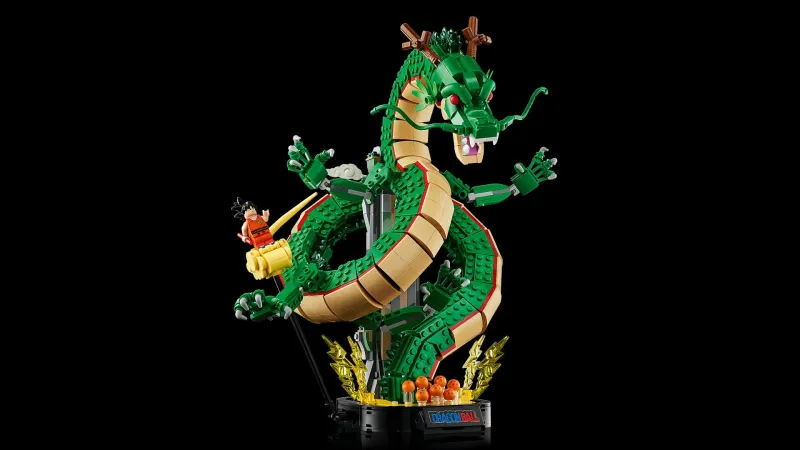
The First LEGO Dragon Ball Set (11390) Is Shenron and Kid Goku
LEGO announced Dragon Ball Shenron & Goku (11390): 1,764 pieces, Kid Goku on the Nimbus, $179.99, Insiders from 1 November and everyone from 4 November.
New LEGO Sets October 2026: The Best Picks for Dads and Kids
October 2026's LEGO wave in one honest guide: the 6,130-piece Executor UCS, four new Avengers: Doomsday movie tie-in sets, and LEGO's first Wednesday Addams sets.

LEGO Just Confirmed the Dragon Ball Set Fans Have Wanted for Years
LEGO confirmed a Dragon Ball theme with Toei Animation on 22 September; the first set, Shenron & Goku (11390), has since been announced in full.