
LEGO Zelda Ocarina of Time: The Final Battle (77093) Review
The LEGO Ocarina of Time Final Battle (77093) recreates Ganon's castle showdown: 1,003 pieces, 5 characters, a big-figure Ganon and a button-raised Ganondorf. 4.5/5.
Photos used with permission. ©2026 The LEGO Group.
This post contains affiliate links. We may earn a commission if you make a purchase, at no extra cost to you. As an Amazon Associate, Dadnology earns from qualifying purchases.
⚔️ Introduction — The Climax of the Greatest Game, in Brick
🗡️ This review is part of our The Legend of Zelda Hub — every mainline game reviewed and rated, plus the movies and the LEGO Zelda sets, all in one place.
If the Great Deku Tree is LEGO’s serene Zelda centrepiece, the LEGO The Legend of Zelda: Ocarina of Time - The Final Battle (77093) is its beating heart. This 1,003-piece set takes the climactic confrontation from Ocarina of Time — Link, the Master Sword, and the towering beast Ganon amid a collapsing castle — and turns it into a play-and-display diorama. For a generation of dads, that final battle is seared into memory. Getting to rebuild it in brick is a small, specific joy. For the Dadnology community, this is a 4.5/5, and arguably the better-value of the two LEGO Zelda sets.
AdLEGO The Legend of Zelda: Ocarina of Time - The Final Battle (77093) (opens in a new tab)
A 1,003-piece LEGO diorama of Ocarina of Time's climax: Ganon's ruined castle, a button-raised Ganondorf, a big-figure Ganon and five characters including Navi.

What sets this one apart from the Deku Tree is energy. The Deku Tree is calm and sculptural; the Final Battle is drama in a box. There is rubble, a tower, hidden compartments and a working reveal mechanism — this is a set that does things, not just one that sits there looking handsome. It is the difference between a landscape painting and an action figure, and depending on which kind of fan you are, that may make it the more exciting build of the pair.
A thousand pieces, five characters and a working gimmick at a friendlier price than the 2,500-piece flagship — on paper, this is the smart-money pick. Let us see how it holds up.
First Impressions: A Castle Built to Be Played With
The centrepiece is Ganon’s ruined castle and its tower — a satisfyingly crumbling, asymmetric structure rather than a neat geometric building. LEGO leans into the “after the fall” aesthetic, all broken arches and exposed stone, which gives the model a sense of motion and history that a pristine castle would lack.
The clever bit is what is hidden inside. There is a button that raises Ganondorf out of the ruins — a proper reveal mechanism, the kind of function that makes you grin the first time it works. The rubble is movable, and tucked away in the structure are three Recovery Hearts and the Megaton Hammer, waiting to be discovered. These are not throwaway gimmicks; they are direct references to the game’s own logic of secrets and recovery, and they give the finished model a reason to be picked up and fiddled with rather than only stared at.
That play-and-display duality is the set’s real identity. It is an 18+ collector model, but unlike a pure static diorama, it invites interaction. For a dad, that is the sweet spot — a display piece your kids are actually allowed to touch.
Real-World Performance: Five Characters and a Big-Figure Ganon
The roster is the heart of the set. You get minifigures of Link, Zelda and Ganondorf — the central trio of the entire saga — plus the showstopper: a big, brick-built figure of Ganon, the monstrous final boss form. Building Ganon as a large figure rather than a standard minifigure is exactly the right call; this is the moment the villain stops being a man and becomes a beast, and the scale sells it.
AdNintendo Switch 2 (opens in a new tab)
Play the source — and be ready for the Ocarina of Time Remake when it lands. The family console of the moment.

Then there is the lovely deep-cut: a transparent build standing in for the fairy Navi. It is a small thing, but it is the kind of detail that tells you the designers actually played the game. Anyone who spent the late nineties hearing “Hey! Listen!” will smile at it. Rounding out the box are the iconic accessories — the Master Sword, the Megaton Hammer, the Hylian Shield, two fabric capes and two swords for Ganon — the props that turn a scene into the scene. As with the Deku Tree, the build is supported by the LEGO Builder app and its 3D instructions.
The Build: A Thousand Pieces That Earn Their Keep
At 1,003 pieces, this sits in a sweet spot a lot of “big” sets miss. It is substantial enough to feel like a project — a couple of focused evenings — without becoming the kind of marathon that demands a cleared dining table and a free weekend. For a dad whose building time arrives in ninety-minute windows after bedtime, that matters more than raw part count. You can make real, visible progress in a single sitting, which is its own quiet reward.
The architecture itself is the most interesting part of the construction. Building ruins is a different discipline from building a clean structure: the model deliberately leans, breaks and crumbles, which means a lot of small, irregular techniques and angled sections rather than long stretches of repetitive stacking. It keeps the build engaging start to finish, and it is the reason the finished castle reads as a moment frozen in collapse rather than a tidy playset. The hidden mechanisms are woven in as you go, so there is a steady drip of “oh, that is how the Ganondorf reveal works” payoffs along the way.
As a long-term display piece, it holds up. Nine months from now, when it is sitting on a shelf, the thing your eye keeps returning to is the silhouette — the broken tower, the looming big-figure Ganon, the tiny glow of Navi. It is dramatic from across a room in a way a neater build never would be. That is the dividend of all those irregular angles: presence.
The Final Battle vs. The Great Deku Tree: Which First?
These two sets are designed to complement each other, and the honest answer to “which first?” depends entirely on what you love about Zelda.
| Feature | Final Battle (77093) | Great Deku Tree (77092) |
|---|---|---|
| Pieces | 1,003 | 2,500 |
| Character | Action diorama | Serene centrepiece |
| Figures | Link, Zelda, Ganondorf + Ganon + Navi | Zelda + 3 Links |
| Play features | Button-raised Ganondorf, hidden hearts | Posable face, side panels |
| Availability | LEGO.com | Amazon + LEGO.com |
| Verdict | The drama, for less money | The flagship landmark |
If you want the story — the villains, the showdown, a model that performs a trick — start here. It is cheaper, more interactive, and built around the most dramatic moment in the game. If you want the iconic landmark and a shelf anchor, the Deku Tree is the bigger statement. My honest steer for most dads: the Final Battle is the better entry point and the better value, and the Deku Tree is the upgrade you talk yourself into later.
And the line keeps growing: LEGO has revealed a third set, Link & Epona, a brick-built, 1,750-piece display model of Link on a rearing Epona, sword raised, arriving spring 2027 with no minifigures at all.
Family Fit: The Display Piece Kids Are Allowed to Touch
Like its sibling, this is an 18+ set in part count and price. But of the two, it is the one with more genuine play in it. The button reveal, the hidden hearts, the big-figure Ganon and a cast of recognisable characters make it far more inviting to a child than a static tree. Build it yourself, then let an older kid discover the Ganondorf mechanism — that moment of “wait, what does this button do?” is worth the price of admission.
It is not a toy to be hurled across a playroom, and the fabric capes and finer details want a degree of care. But as a shared object — dad’s build, the family’s diorama — it slots into real life better than most adult sets, precisely because it was designed to do something.
Pros
- Real play-and-display features: a button-raised Ganondorf, movable rubble, hidden hearts and Megaton Hammer
- Five characters including a big brick-built Ganon and a transparent Navi — a proper deep-cut
- All the iconic props: Master Sword, Megaton Hammer, Hylian Shield and fabric capes
- Considerably cheaper than the Deku Tree while still feeling like an event
Cons
- Not currently sold on Amazon — a LEGO.com purchase for now
- Smaller and less of a statement centrepiece than the 2,500-piece flagship
- Still an 18+ price point, not a casual pickup
Play it: this is the climactic Ganon fight from The Legend of Zelda: Ocarina of Time — and the Switch 2 remake restages it in full on 5 November 2026.
Conclusion: The Most Exciting LEGO Zelda Set
After the landmark moment of the first LEGO Zelda set, the Ocarina of Time - The Final Battle (77093) is the one that actually made me grin while building it. It captures the saga’s defining showdown with real interactivity, a knockout big-figure Ganon, and a cast that any Ocarina of Time fan will recognise instantly.
If you want one LEGO Zelda set and you love the drama of the series, get this one — it is cheaper, more playful, and built around the moment that ends the legend. If you want the serene, iconic landmark for your shelf, the Great Deku Tree is the bigger centrepiece. Together, they are the perfect pair.
The Final Word: The most exciting LEGO Zelda set for the money — drama, villains and a working reveal, all in one box. A 4.5/5.
How many pieces is the LEGO Zelda Final Battle (77093)?
What characters come with the LEGO Zelda Final Battle set?
Is the LEGO Zelda Final Battle worth it?
Can you buy the LEGO Zelda Final Battle on Amazon?
Keep this in your inbox
One email a week: what we actually watched, built and reviewed — the stuff worth a dad's time. No hype, no daily spam.
Dadnology Weekly
One email a week: the LEGO, gaming and movie news worth a dad's time — plus what we actually reviewed. No hype, no daily spam.
Disclaimer: This review and its visuals were created with the help of AI. Some links may be affiliate links – we may earn a commission if you make a purchase, at no extra cost to you.
You might also like
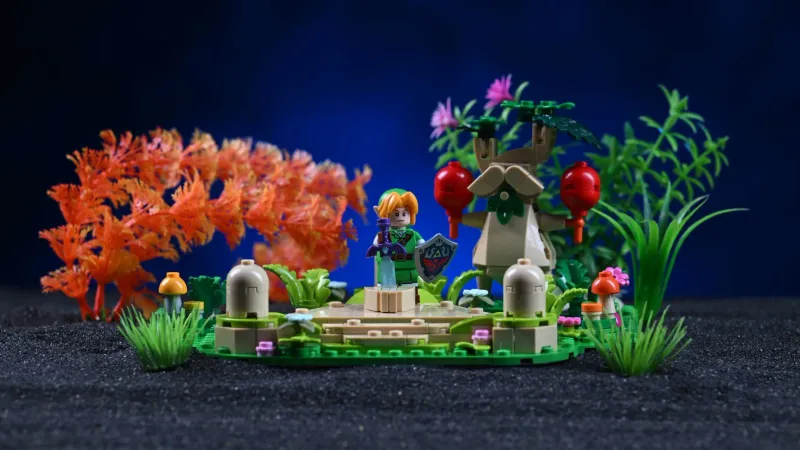
LEGO Zelda Great Deku Tree (77092) Review: 2-in-1
The first official LEGO Zelda set delivers exactly what fans hoped for: a 2,500-piece, 2-in-1 Great Deku Tree with two distinct game-accurate versions, four great minifigures and curated series details. The single-choice build is the only real catch. A joyful 4.5/5.

LEGO Zelda: Link & Epona Revealed, 1,750 Pieces
Nintendo's 40th Anniversary Zelda Direct revealed a third LEGO Zelda set: a brick-built Link riding Epona from Ocarina of Time, 1,750 pieces, spring 2027.
Mineru's Construct amiibo Lands 17 September
Nintendo's Mineru's Construct amiibo arrives 17 September with something no Zelda amiibo has had before: articulated, posable arms.