
Spider-Man: Across the Spider-Verse – Bolder, wilder, perfect
Expectations after Part 1 were sky-high—and this sequel clears them with room to spare. A breathtaking multiverse opera of color, rhythm, and heart that deepens Miles and Gwen while exploding animation grammar. It’s audacious, hilarious, and emotionally true from first frame to cliffhanger.
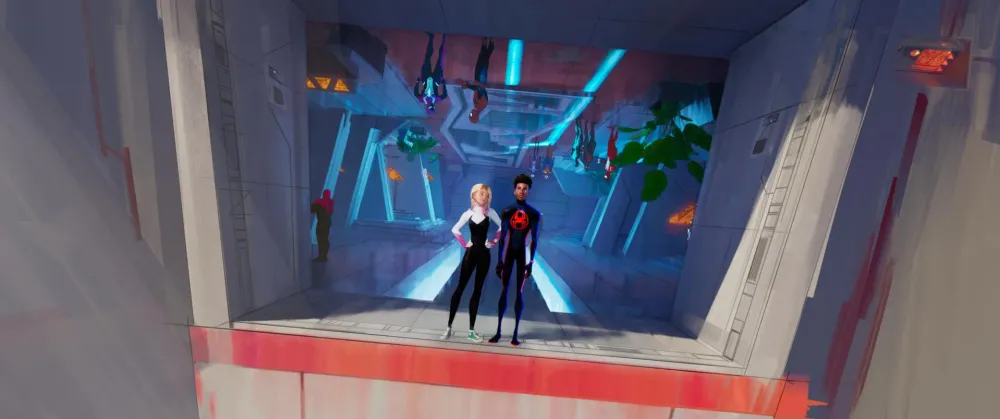
Photos courtesy of Sony Pictures Entertainment.
This post contains affiliate links. We may earn a commission if you make a purchase, at no extra cost to you. As an Amazon Associate, Dadnology earns from qualifying purchases.
Start here if you missed Part 1: Our review of Into the Spider-Verse.
Explore more: MCU Watch Order · Marvel’s Spider-Man series · Spider-Verse series
🎬 Introduction — The sequel that shouldn’t be possible (but is)
We went in carrying impossible expectations after the first film. Across the Spider-Verse doesn’t just survive that pressure; it thrives on it. The sequel widens the canvas but tightens the pulse, giving us a Miles who’s older, bolder, and brave enough to question the rules that supposedly hold his world together. Gwen isn’t a side note but a co-lead with a heart-wrecking arc. And the animation—good grief—the animation invents new ways of feeling.
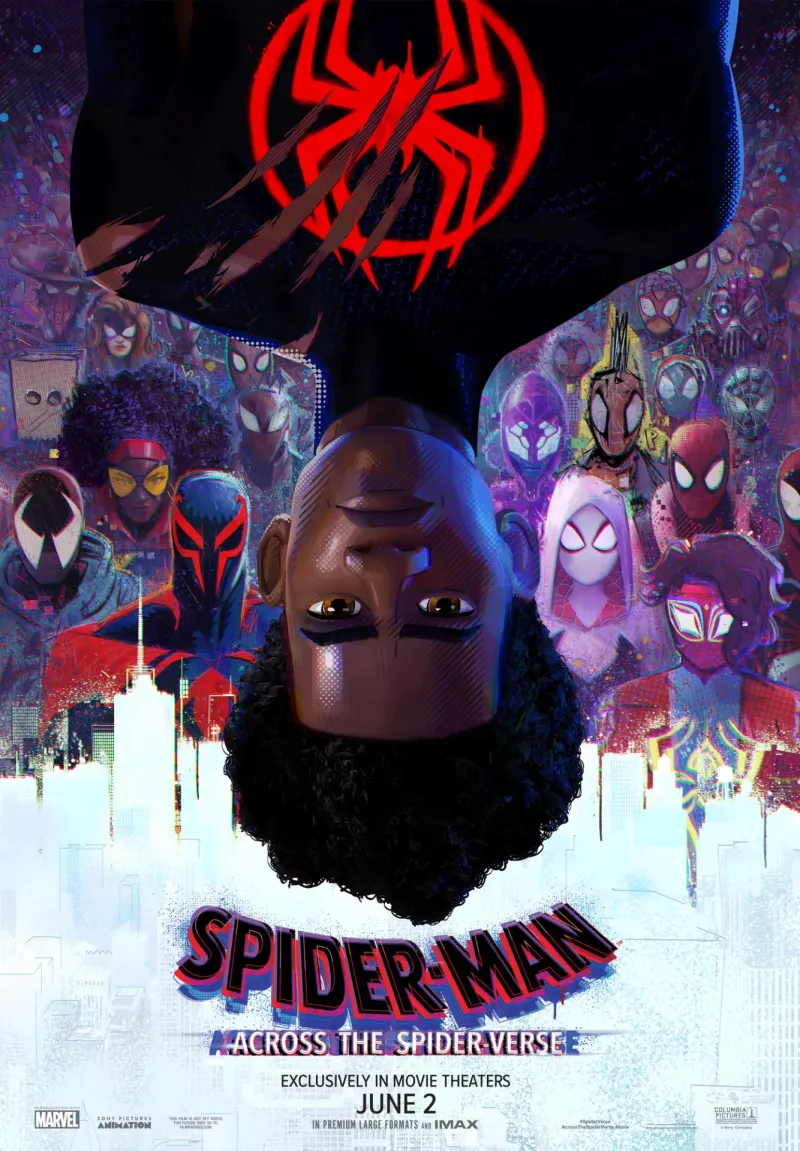
🧠 Story & theme — Canon vs. Choice
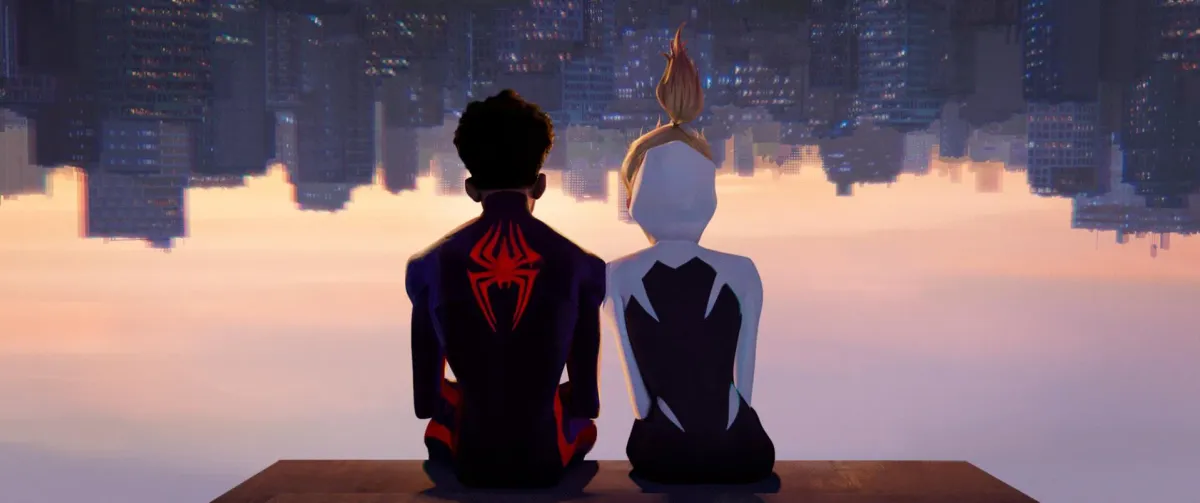
The smartest decision here is to turn “the multiverse” into more than a toy box. The movie pits canon events (the prescriptive, capital-S Story) against chosen identity (the life you write for yourself). That’s the heart of Miles’ journey: not whether he can be Spider-Man, but whether he must accept someone else’s outline for his life. Gwen’s arc mirrors and refracts his—found family vs. biological family, honesty vs. protection—until both characters arrive at choices that feel earned and risky.
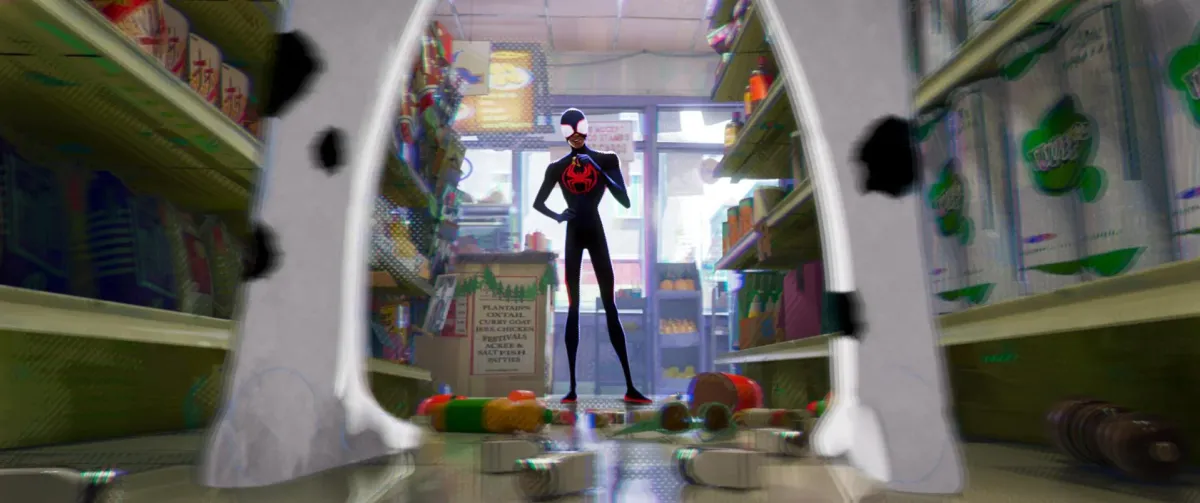
The villainy is clever, too. The Spot begins as a gag and metastasizes into an existential threat, a walking negative space whose holes are both punchline and abyss. That metamorphosis embodies the film’s thesis: small, “throwaway” things can become multiverse-level consequences.
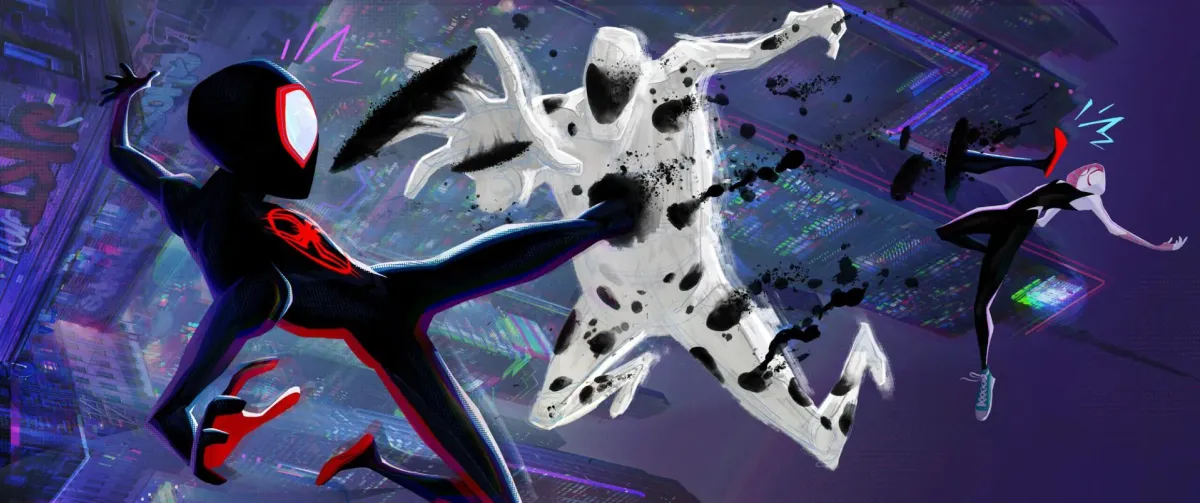
🎨 Animation — Worlds with their own heartbeats
Where the first movie created a single groundbreaking grammar, the sequel writes an anthology of dialects. Each dimension isn’t just a background; it’s a visual philosophy.
1. Gwen’s watercolor universe (Earth-65)
Emotions literally wash across the frame. The hues run hot or cold based on her relationship with her father. Walls bleed pink or recede into blue when she withholds the truth. It is living impressionism.
2. Mumbattan (Earth-50101)
A comic-masala of brushstroke lines, festival color, and architecture that stacks like panel grids. It is joyous, kinetic, and surprisingly legible despite the density.
3. Nueva York (Earth-928)
Glossy futurism snapped to a design grid. The signage and UI echo the first film’s halftone heritage but at a sleek, corporate scale designed by Syd Mead fever dreams.
💿 Why physical media wins here
We often say streaming is “good enough,” but for a film this visually dense, compression is the enemy.
| Feature | Streaming (4K) | 4K UHD Blu-ray |
|---|---|---|
| Bitrate | 15-25 Mbps (Compressed) | 60-100 Mbps (Lossless Video) |
| Color Depth | Dependent on connection | True HDR/Dolby Vision pop |
| Audio | Compressed Dolby Digital+ | Uncompressed Dolby Atmos |
| Ownership | Can be removed anytime | Yours forever |
| The Verdict | Good for casual watching | Essential for this specific art style |
If you want to see the texture of the paper grain and the subtle halftone shifts, the 4K Blu-ray Bundle is the only way to truly see what the artists created.
🕸️ Ensemble — Many spiders, many mirrors
The spider-crew expands without losing intimacy:
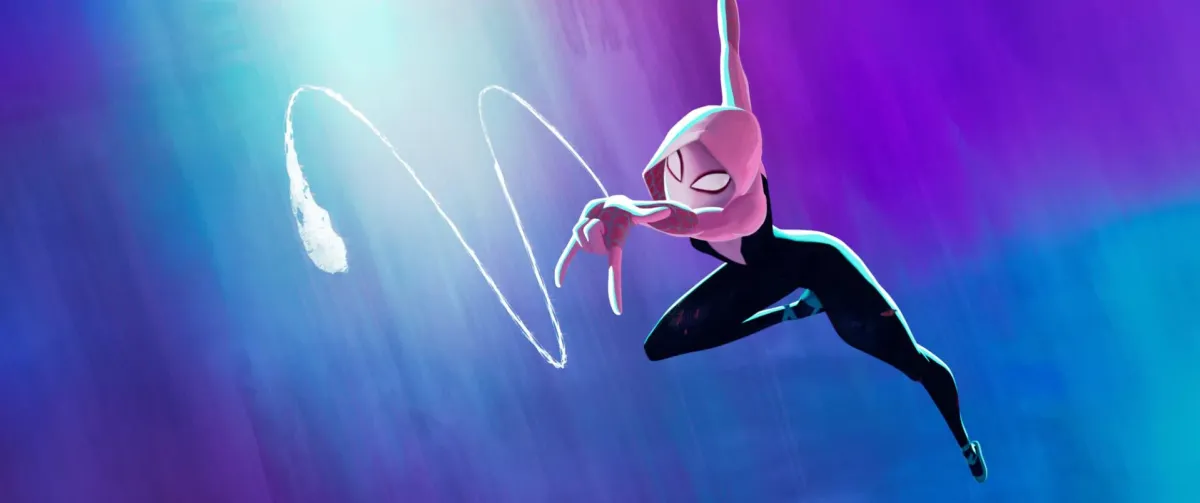
- Gwen Stacy: The soul of the film. Her opening drums-and-watercolor overture is an all-timer.
- Hobie Brown / Spider-Punk: An anti-authoritarian collage come to life. His animation frame rate changes constantly to reflect his chaotic nature.
- Miguel O’Hara: Tragedy in a razor-edged suit. Not a mustache-twirler, but a principled antagonist whose certainty is the danger.
Every introduction is an idea, not just a costume.
🧭 Comics faithfulness — Reverent, not shackled
As Spider-Verse readers, we caught a blizzard of nods—costumes, captions, deep-cut cameos. The movie distills the theme of the Spider-Verse Comics (many Spiders, many truths) into Miles + Gwen first, then layers the rest as color and chorus.
You don’t need to know a single issue to feel the weight of canon vs. choice. If you do know the issues, it’s a feast.
🎵 Music & sound — Rhythm as narrative
Daniel Pemberton doubles down on sonic collage: analog glitches, drumline thunder, processed hums that feel like portal residue. Licensed tracks punctuate character beats rather than wallpapering montage. Gwen’s percussive motif carries her isolation; Miles’ rising synth-chorus melds heroism with doubt.
👨👩👧 A dad/fan perspective — Why it connects at home
The movie treats parents with empathy—Jeff and Rio’s love isn’t a hurdle, it’s the point. Their “rules” are anxious protection dressed as structure. Conversations about honesty, safety, and independence echo long after the credits. For kids 9+, peril is intense but framed by care; for teens, the identity themes land like a mixtape you can’t stop replaying.
🎮 After the credits? Swing into the game
If the movie rekindles your web-swing itch, Marvel’s Spider-Man 2 on PS5 keeps the Miles-and-Peter rhythm alive.
It features spectacular traversal and a story that respects both heroes equally. It is a different continuity, but shares the same love of movement and friendship. The “Web Wings” mechanic in the game feels ripped straight from the movie’s gliding sequences.
🛒 Must-own options
📺 Movie night sorted: thousands of films and shows are streaming on Prime Video — free for 30 days. Worth a look before you buy the disc.
The trilogy closer, Spider-Man: Beyond the Spider-Verse, is now confirmed for June 18, 2027.
🎥 The production story: How Sony animation built an impossible film
Here’s the number: approximately 1,000 animators worked on Across the Spider-Verse across multiple studios spread across several countries. Each studio wasn’t just handling a chunk of the workload—each was responsible for one world’s visual dialect. The Mumbattan crew wasn’t painting Gwen’s watercolors; the Earth-65 team wasn’t scripting Nueva York’s grid-snapped signage. You were essentially making three or four distinct animated films simultaneously, then threading them together into a single coherent narrative spine.
That’s not a production pipeline. That’s a creative superorganism.
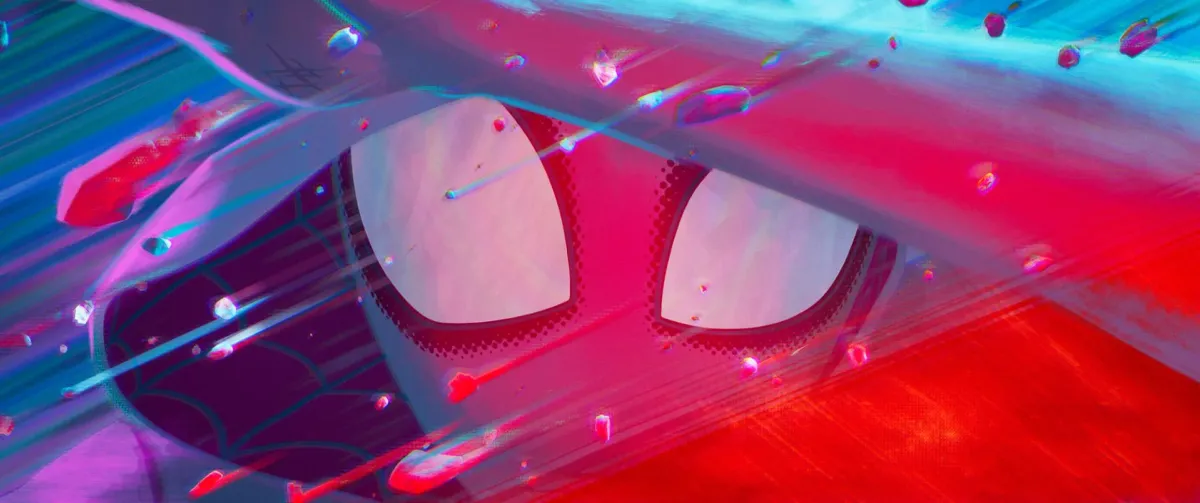
But the detail that stopped me cold—the one I immediately texted to my group chat at 11 PM like a complete nerd—was the frame-rate decisions baked into the character animation itself. Gwen animates on 2s (standard cinema smooth). Miles animates on 3s: slightly jerkier, a fraction less polished, subtly off compared to everyone around him. That isn’t a budget cut or a stylistic accident. It’s a deliberate character statement—Miles is an outsider in the Spider-Society, and the physics of his existence reflect that. His world moves differently because he moves differently.
Spider-Punk takes it further. Hobie Brown animates on random, irregular frames—chaos built into the rendering pass. Every time he appears on screen, his body refuses to be pinned down by predictable motion. He doesn’t just talk about being anti-establishment. His skeleton refuses to comply with cinematic conventions. That is, technically and philosophically, punk.
And none of this would exist if the team hadn’t had the nerve—and the studio backing—to scrap significant work mid-production. The film was in development for five years total, and at some point the team collectively decided the original approach wasn’t bold enough. They reset. They threw out work that, by any normal production logic, was sunk cost that had to ship. Sony let them.
As someone who manages teams for a living, that decision lands differently. The instinct in any deadline-driven environment is to protect the work that’s already been done, even when you privately know it’s not right. The creative call here was the opposite: if the foundation isn’t what it needs to be, rebuild it. The film that came out of that reset is one of the most technically audacious animated features ever made.
Sony Animation has now done this twice in a row—given a team time, resources, and genuine creative control, then stood back. For tech dads who’ve sat through enough “we need to ship by Q3” meetings to last a lifetime: this is what it looks like when the people in charge actually trust the experts to build the thing they know how to build. The result hangs on the screen like proof.
Pros
- Astonishing, readable maximalism—multiple art styles in one coherent film
- Miles & Gwen share the lead with arcs that hurt and heal
- Theme (canon vs. choice) turns spectacle into purpose
- Music and sound design that *feel* like portal physics
- Set pieces that are both jaw-dropping and crystal clear
Cons
- Cliffhanger may frustrate if you crave immediate closure (we loved the audacity)
🗣️ Conclusion
Across the Spider-Verse is that rare sequel that understands the assignment so deeply it redefines it. Bigger, yes—but also braver, kinder, and more exacting in how it uses animation to talk about identity, family, and authorship.
We laughed, gasped, argued, and then sat quietly with a perfect last image that promises more without cheating the moment. As Marvel fans and animation addicts, we couldn’t ask for better.
📌 FAQ – Frequently asked questions
Do I need to watch Part 1 first?
Is this OK for kids?
Does the multiverse get confusing?
Best way to watch at home?
When is Beyond the Spider-Verse coming out?
What is the Miles Morales PS5 game like compared to the film?
Keep this in your inbox
One email a week: what we actually watched, built and reviewed — the stuff worth a dad's time. No hype, no daily spam.
Dadnology Weekly
One email a week: the LEGO, gaming and movie news worth a dad's time — plus what we actually reviewed. No hype, no daily spam.
Disclaimer: This review and its visuals were created with the help of AI. Some links may be affiliate links – we may earn a commission if you make a purchase, at no extra cost to you.
Current deals in Movies & TV
Verified live discounts tracked on Amazon
![The Legend of Korra — The Complete Series [Blu-ray]](https://m.media-amazon.com/images/I/51+1TXyb7aL._SL500_.jpg)
Movies & TV · Tested by Dadnology
The Legend of Korra — The Complete Series [Blu-ray]
4.5/5“A new Avatar, a modern city, a masked revolution”Read our review
Movies & TV · Tested by Dadnology
Zack Snyder's Justice League (4K Ultra HD)
4/5“Four hours. One vision. This is the film.”Read our review
Movies & TV · Tested by Dadnology
Space Jam (4K Ultra HD + Digital)
4/5“It's gonna be a whole new ball game”Read our reviewYou might also like
Spider-Man: Into the Spider-Verse – A genre-rewriting masterpiece
We expected a great animated superhero movie; we got a genre reset. *Into the Spider-Verse* fuses a tender Miles Morales origin with jaw-dropping comic-panel animation, a killer soundtrack, and jokes that actually serve character. It’s joyous, experimental, and perfectly paced—thrilling for Marvel diehards and newcomers alike. Sony, thank you for this miracle. Absolute buy. **Rating: 5/5.**
Kraven the Hunter review: A raw 3/5 SSU action film
Kraven the Hunter is tonally braver than anything else in the SSU — darker, bloodier, more willing to sit in its own brutality. Aaron Taylor-Johnson commits fully. The script doesn't match his commitment. Real action highlights, weak connective tissue. A fair 3/5.
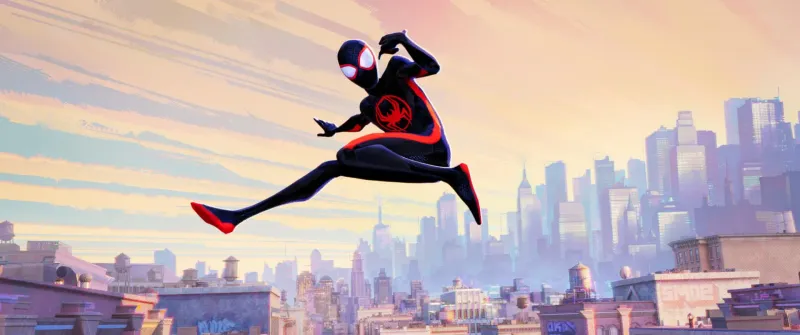
Spider-Verse film series – Order, context & why these two are perfect
Two films, one verdict: perfect. *Into* delivers a tender, hilarious Miles origin with radical comic-panel animation; *Across* enlarges the world, deepens Gwen, and turns “canon vs. choice” into a heartbeat. For Marvel diehards, animation lovers, and families, these are essential, endlessly rewatchable masterpieces. This page collects our take on why the series works so well, the ideal watch order, and must-own picks like the 4K bundle, the Spider-Verse comics, and the PS5 game that keeps the swing going.