
Harry Potter and the Prisoner of Azkaban review: The best of the saga
For us, the absolute best film in the series — Alfonso Cuarón's darker, richer Hogwarts is a masterpiece and the saga's turning point. A fantastic 4.5/5.
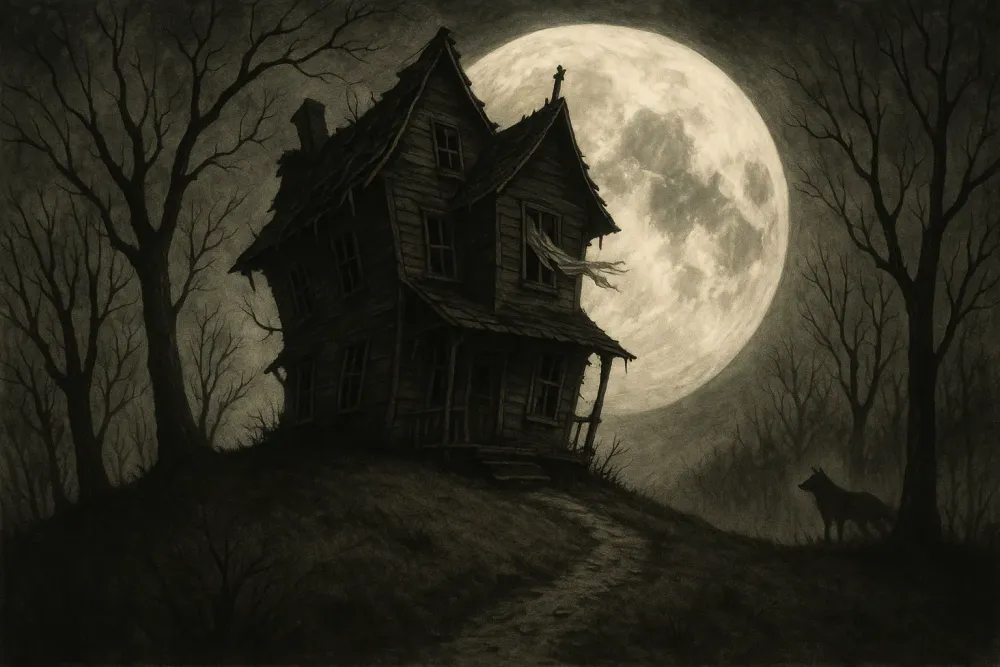
This post contains affiliate links. We may earn a commission if you make a purchase, at no extra cost to you. As an Amazon Associate, Dadnology earns from qualifying purchases.
🌙 Introduction
⚡ This review is part of the Is Harry Potter OK for Kids? – see which Harry Potter books and films fit which age.
⚡ This film is part of the Harry Potter Master Hub – our complete guide to watching and reading the whole Wizarding World in order, with every film, book and LEGO set reviewed.
When my wife and I finished our full-series rewatch this year, one verdict didn’t need discussing: Harry Potter and the Prisoner of Azkaban (2004) is the best of the eight. Not the biggest, not the most emotional finale — the best. It’s the film where Harry Potter stops being a beautifully mounted storybook and becomes genuine cinema, and it does it in the hands of one director working at the absolute top of his game.
Alfonso Cuarón — who’d go on to win Oscars for Gravity and Roma — took the baton from Chris Columbus and, in a single film, reinvented what a Harry Potter movie could be. For the Dadnology community, this is an easy, confident 4.5/5: darker, richer, more grown-up, and structurally the cleverest thing the saga ever attempted. If the first two films are the childhood, this is the moment the series hits adolescence — and it’s electric.
The reason it works is that Cuarón trusted the material to be more than magic tricks. He made a film about grief, fear, and the shadows of the past — and wrapped it in the most beautiful images the franchise ever produced.
Narrative architecture: The past comes for Harry
The emotional engine of Azkaban is inheritance — the weight of a history Harry never got to live. The convicted murderer Sirius Black has escaped the wizard prison of Azkaban, and everyone believes he’s coming to Hogwarts to kill Harry. The soul-sucking Dementors that guard the prison are sent to protect the school, and they’re drawn to Harry more than anyone — because he carries more grief than anyone.
That’s the masterstroke: the Dementors don’t just look frightening, they mean something. They feed on your worst memories, and Harry’s worst memory is the night his parents died. Cuarón turns a monster into a metaphor for depression and trauma, and the film’s answer — the Patronus charm, cast by summoning your happiest memory — is one of the most quietly profound ideas the series ever offered a child. As a dad, it’s a gift: a fantasy story that hands you a real vocabulary for talking about sadness and how you fight it.
The plot itself is the tightest in the saga, and the finale — a Time-Turner sequence that recontextualises the entire third act — is the single cleverest thing the films ever pulled off. It’s a genuine time-travel puzzle that plays fair, rewards attention, and lands an emotional gut-punch about Harry realising the saviour he saw across the lake was himself.
| Element | Prisoner of Azkaban | The Columbus Films |
|---|---|---|
| Director's stamp | Cuarón — cinematic, muted, alive | Columbus — faithful, warm, storybook |
| Villain | Grief and fear themselves (the Dementors) | A clear external threat |
| Structure | A fair-play time-travel puzzle | Linear school-year mystery |
| Harry's arc | Confronting the past and his own trauma | Discovering and defending his world |
| Voldemort | Absent — and better for it | The looming central threat |
Gary Oldman and David Thewlis are the adult heart of the film — Sirius and Lupin, the last living links to Harry’s parents, offering him the family and the father-figures he’s never had. Their scenes give the film a melancholy that the earlier entries, for all their charm, never reached.
That yearning for family is the film’s real emotional core, and it’s what makes Azkaban land so differently as a dad. Harry has spent two films being told he’s special; here, for the first time, he’s offered something he wants far more — someone who knew and loved his parents, and who might take him in. The cruel snatching-away of that possibility is the wound the film leaves you with, and it’s a far more adult kind of heartbreak than anything the series had attempted. Cuarón trusts his young audience to feel disappointment as keenly as danger, and that trust is a big part of why the third film feels like a step into a different, richer register.
Craft & direction: A master takes the wheel
Everything looks and feels different here, and it’s all deliberate. Cuarón swapped the bright, saturated storybook look for something autumnal and windswept — real weather, real seasons, a Hogwarts that finally feels like it exists in a physical landscape rather than on a soundstage. The famous Whomping Willow seasons-passing montage is a director quietly announcing that the training wheels are off.
His fingerprints are everywhere in the detail:
- The Dementors: rendered as drifting, rattling wraiths rather than simple ghosts — genuinely upsetting, and all the more effective for the restraint.
- A living Hogwarts: the castle gains a clock tower, a stone circle, sweeping grounds down to the lake — geography you can feel.
- Naturalistic kids: Cuarón let the young cast wear their own clothes off-duty and behave like actual teenagers, and the trio’s performances take a visible leap.
John Williams, in his final and most experimental Potter score, matches the reinvention — the medieval, playful “Double Trouble” and the aching Buckbeak theme expand the sonic world just as Cuarón expands the visual one. The only reason it’s a 4.5 and not a 5 for us is that a couple of book subplots (the origins of the Marauder’s Map, the full Marauders backstory) get compressed to near-invisibility — a small price for the best-directed film in the series.
The film’s iconography is irresistible in brick. It opens on that triple-decker purple bus, and the LEGO Knight Bus (76446) is one of the most characterful sets in the whole theme. The Care of Magical Creatures lesson gone wrong lives on in the snapping LEGO Monster Book of Monsters (76449), and Cuarón’s expansive castle is best captured by the clever LEGO Hogwarts Castle & Grounds (76419).
The family rewatch: The tonal turning point
This is the film to flag on a family marathon, because it’s where the floor drops. The Dementors are frightening in a way the basilisk simply isn’t — they’re abstract, creeping, and emotional rather than a monster you can point at. My advice, tested on our own rewatch: this is the natural gear-change point. Younger kids who breezed through the first two may need a hand here, and that’s fine — it’s a feature, not a bug.
But it’s also the film that rewards adult attention the most. The Time-Turner finale is genuinely satisfying to unpick, the themes of grief and fear give you something real to sit with, and Cuarón’s craft means it simply looks better than anything around it. If you only rewatch one Harry Potter film as a grown-up, make it this one. My wife and I have watched it more times than any of the others, and it’s never once felt like a kids’ film we’re merely tolerating.
Pros
- For us, the best film in the entire series — Cuarón's masterpiece
- The Dementors: a monster that means something, and a real vocabulary for grief
- The Time-Turner finale — the cleverest, most satisfying plotting in the saga
- The most beautiful cinematography the franchise ever produced
Cons
- The Marauders backstory is compressed almost to a footnote
- Genuinely the tonal turning point — too intense for the youngest viewers
- Michael Gambon's first Dumbledore is a noticeable shift from Richard Harris
Rewatching the whole run back-to-back is the best way to see just how far Azkaban leaps ahead of its neighbours — and a Prime Video free trial is the low-friction way to line the films up, first month free, cancel anytime.
Conclusion: The film that made it cinema
Harry Potter and the Prisoner of Azkaban is the moment the series grew up, and it did it in the hands of a genuine master. Darker, richer, cleverer and more beautiful than anything before it, it’s the turning point that made the back half of the saga possible — and, for us, it’s simply the best of the eight.
With the HBO series promising a longer, deeper take on every book, the third story is the one I most hope they treat as seriously as Cuarón did. He proved this material could carry real weight. Everything great about the later films starts here.
The Final Word: The peak. If a friend will only watch one Harry Potter film to understand why we love the series, this is the one you show them.
Is Harry Potter and the Prisoner of Azkaban the best film in the series?
Why is Prisoner of Azkaban so different from the first two films?
Is Prisoner of Azkaban too scary for kids?
Who directed Harry Potter and the Prisoner of Azkaban?
Does Voldemort appear in Prisoner of Azkaban?
Keep this in your inbox
One email a week: what we actually watched, built and reviewed — the stuff worth a dad's time. No hype, no daily spam.
Dadnology Weekly
One email a week: the LEGO, gaming and movie news worth a dad's time — plus what we actually reviewed. No hype, no daily spam.
Disclaimer: This review and its visuals were created with the help of AI. Some links may be affiliate links – we may earn a commission if you make a purchase, at no extra cost to you.
You might also like
Harry Potter and the Chamber of Secrets review: The trio finds its feet
Just as good as the first film, and the one where the trio truly clicks. Columbus turns up the menace — a basilisk, a possessed diary, a car chase through the sky — without losing the warmth. An underrated 4/5.
Harry Potter and the Deathly Hallows Part 1 review: The long road
The double finale opens softer than the films around it. With no Hogwarts and the trio on the run, it's a moody, wandering road movie — gorgeous and emotionally raw, but slow, closer to the level of the fifth film. A patient 3.5/5 that sets the board for a great payoff.
Is Harry Potter OK for kids? A dad's book-by-book age guide
Harry Potter works brilliantly from about age 7 — as long as you respect the ladder. Books 1-3 and films 1-2 are genuine kids' territory; Goblet of Fire is the turning point; the final stretch is effectively a war story for ages 11-12+. Start with the first book read aloud, and don't binge the whole thing in one go.