
Disaster dad battle: Harry Stamper vs. Ray Gaines
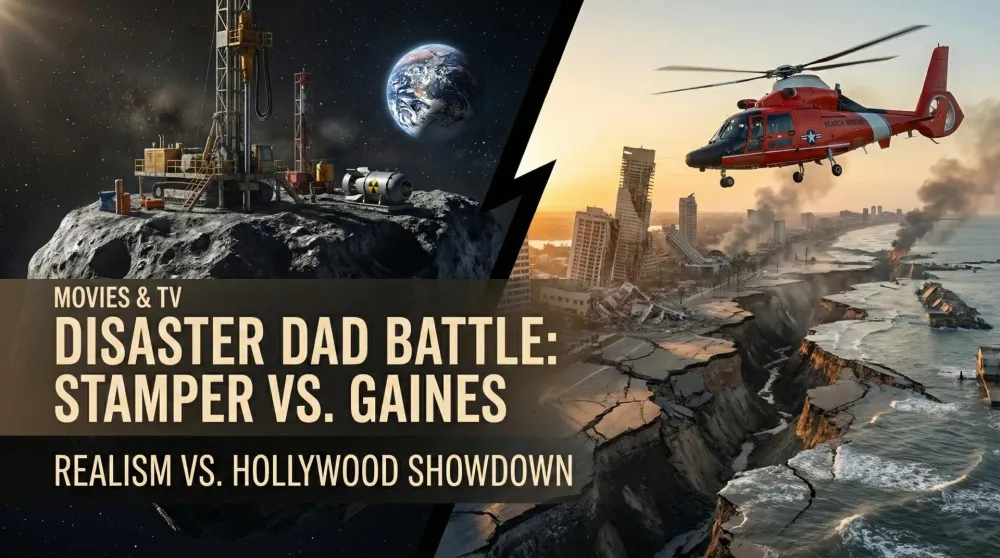
We pit Armageddon’s Harry Stamper against San Andreas’ Ray Gaines. Who follows real-world protocols, and who relies on pure Dad-Logic?
This post contains affiliate links. We may earn a commission if you make a purchase, at no extra cost to you. As an Amazon Associate, Dadnology earns from qualifying purchases.
Looking for the rankings? Check out where these two land on our Top 30 Natural Disaster Movies Master List or jump straight to the Top 10 Elite Hub.
🥊 The matchup: Blue-collar vs. Professional
In one corner, we have Harry Stamper (Armageddon), a deep-core driller with a “git-er-done” attitude and a legendary disdain for NASA suits. In the other, we have Ray Gaines (San Andreas), a highly trained LAFD Search and Rescue pilot who lives and breathes protocol (until his family is in trouble).
At Dadnology, we value the “Protector” role, but today we’re asking the hard question: Whose logic would actually save us in the real world?
Series content
Explore all articles, reviews, and guides in this series.
🚀 Round 1: The NASA protocol (Harry Stamper)
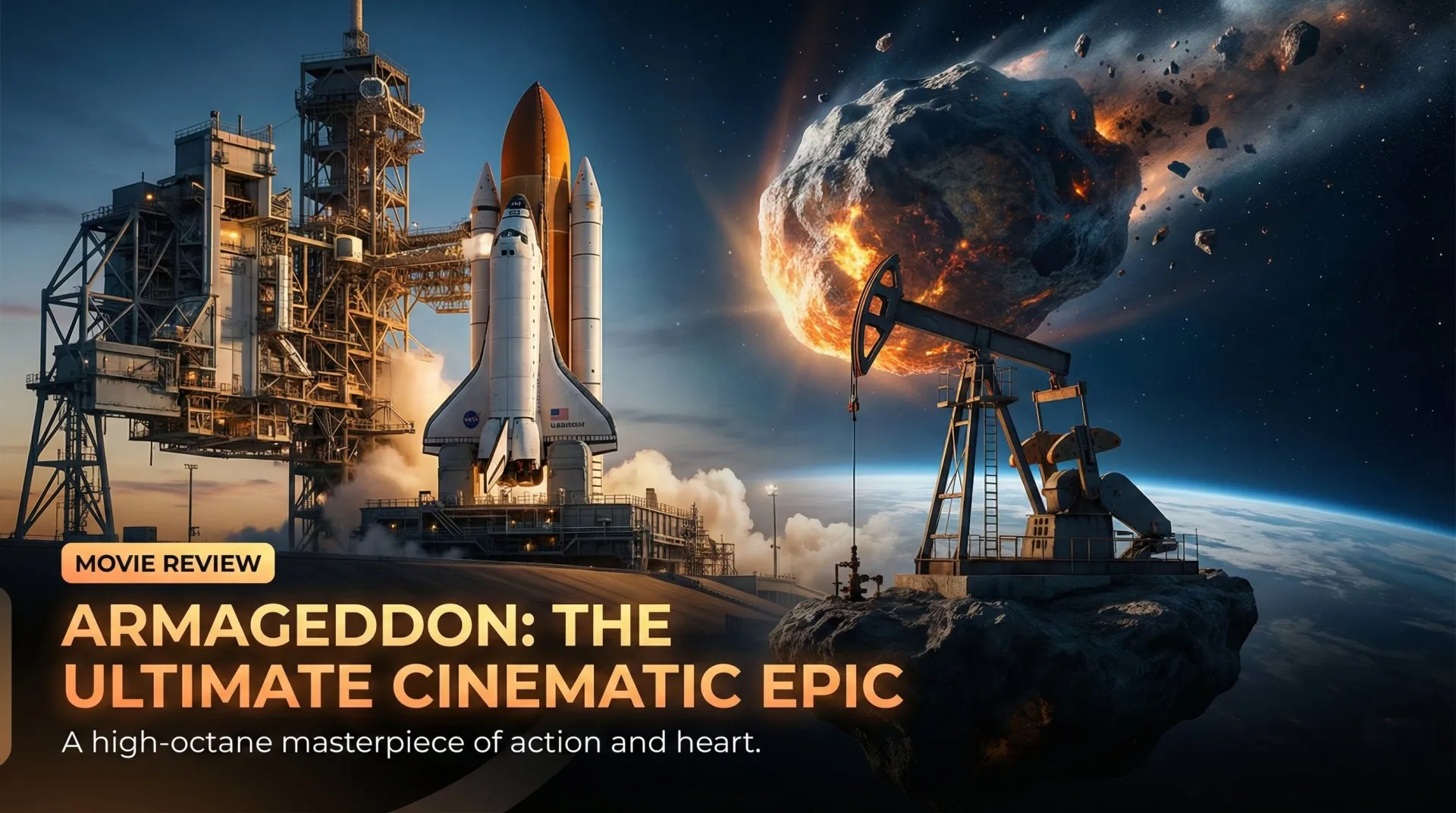
The Movie Logic: NASA finds an asteroid “the size of Texas.” Instead of training astronauts to drill, they spend 12 days training deep-core oil drillers to be astronauts. Harry’s plan? Drill 800 feet into the rock and drop a nuke to split it in half.
The Real-World Science: NASA’s Planetary Defense Coordination Office (yes, it is a real department) actually has protocols for Near-Earth Objects (NEOs). However, they rarely involve a rugged Bruce Willis.
- The Problem: To “split” an asteroid the size of Texas, you would need an amount of energy that exceeds the entire nuclear arsenal of Earth by several orders of magnitude. Physically overcoming the gravitational energy holding a rock that size together isn’t just hard—it’s practically impossible with today’s tech.
- The Reality: Nuking a rock that close to Earth would likely result in “radioactive buckshot.” Instead of one big threat, you’d have thousands of smaller, equally deadly, and now radioactive rocks hitting the atmosphere.
- The Official Way: NASA prefers the “Kinetic Impactor” method (hitting the rock years in advance to nudge its orbit) or using a “Gravity Tractor” (a spacecraft that flies alongside the asteroid and slowly pulls it off course using its own tiny gravitational pull).
Verdict: Harry gets a 2/10 for Realism, but a 11/10 for Dad-Logic. He knows his tools, he trusts his crew, and he doesn’t believe the government can do a “specialist’s job.”
🚁 Round 2: The FEMA protocol (Ray Gaines)
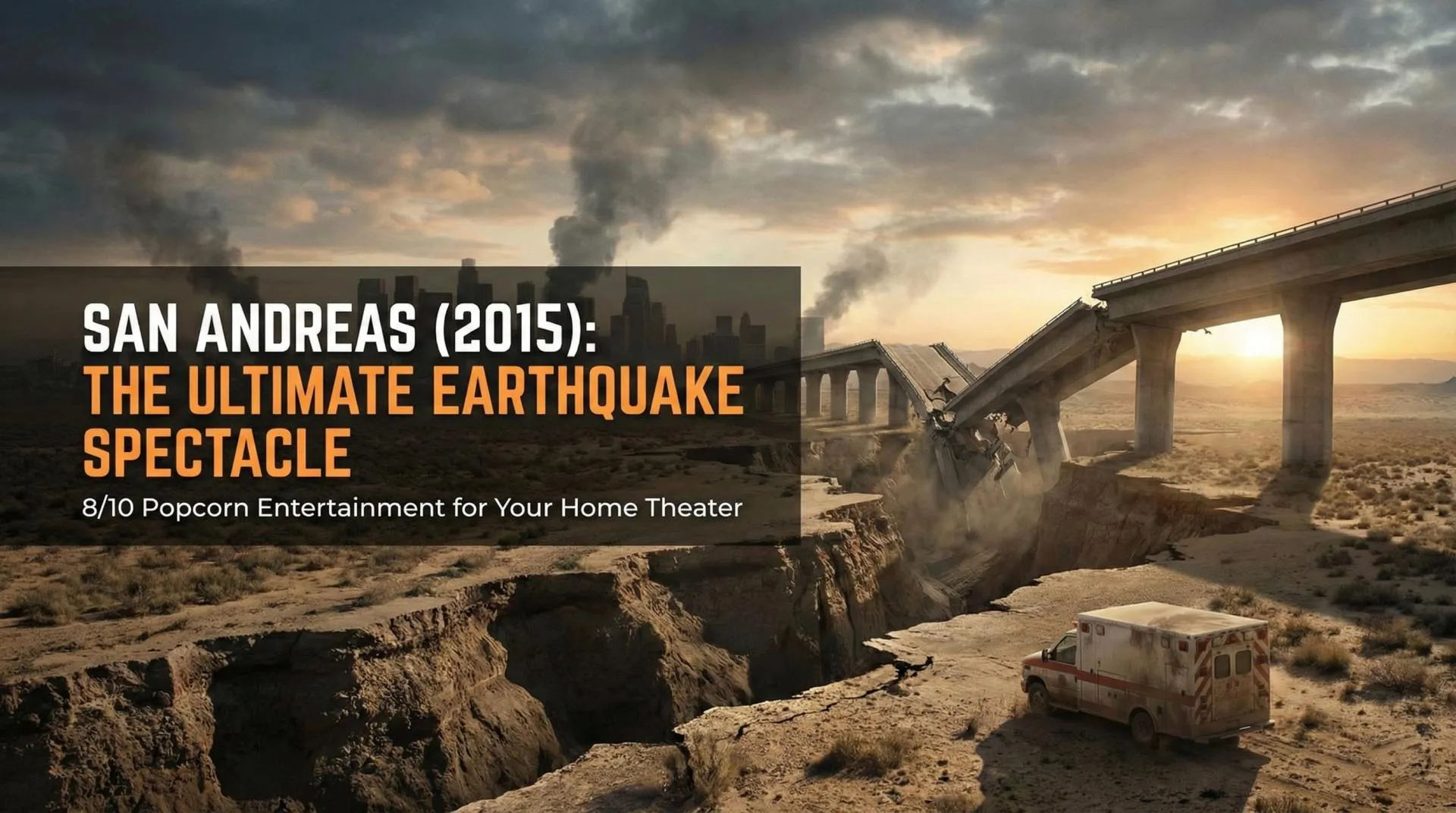
The Movie Logic: A Magnitude 9.1 earthquake hits the San Andreas fault. Ray Gaines steals a department helicopter to fly from LA to San Francisco to rescue his daughter. He navigates tsunamis, falling skyscrapers, and crumbling stadiums with ease.
The Real-World Science: Ray is a professional, but he breaks almost every FEMA and Incident Command System (ICS) rule in the book.
- The Protocol: In a massive disaster, Search and Rescue pilots are assigned grids. “Self-dispatching” (leaving your post to save your own family) is a major violation that would leave hundreds of others without a pilot.
- The Tsunami: In the film, Ray drives a boat over a cresting tsunami wave in San Francisco Bay. In reality, a tsunami in a bay isn’t a single surfable wave; it’s a massive, churning “wall” of debris-filled water.
Verdict: Ray gets an 8/10 for Technical Competence (his knots and first-aid are legit), but a 3/10 for Protocol. He is the ultimate “Family First” dad, but a nightmare for a Shift Supervisor.
📊 The “dad-logic” comparison
| Metric | Harry Stamper | Ray Gaines |
|---|---|---|
| Primary Tool | Oil Rig / Nuclear Device | Bell 412 Helicopter / Parachute |
| Special Skill | Knowing his equipment better than the engineers. | Expert-level situational awareness. |
| The 'Dad' Moment | Staying behind so the younger dad can live. | Driving a boat into a collapsing building. |
| Scientific Plausibility | Near Zero. | Highly exaggerated, but based on real faults. |
| Would He Save You? | Yes, but the debris might still kill you. | Yes, if you're related to him. |
🏆 The final verdict: Who wins?
If we are talking about Pure Scientific Competence, the winner is Ray Gaines. His training is real, his equipment is real, and the San Andreas fault—while it can’t produce a Magnitude 9.6—is a very real threat.
However, if we are talking about the “Ultimate Dad Sacrifice,” Harry Stamper takes the crown. He accepted a mission with a 0% chance of returning because it was the only way to ensure his daughter had a future.
The Winner: Harry Stamper. In disaster cinema, “Dad-Logic” beats “FEMA Protocol” every single time.
🧭 Keep the debate going
Whose side are you on? Dive into our thematic hubs to see how other movie dads handle the pressure:
- ☄️ The Space Threat Series: Explore more heroes who stood up to the cosmos.
- 🌋 The Tectonic Terror Series: See if anyone handles an earthquake better than The Rock.
- 🌪️ The Nature’s Fury Series: Meet the storm chasers who outrun the wind.
- ✊ The Survival Legends Series: Where true stories bring the most realistic “Dad-Logic” of all.
👨👧 The dad test: Which film holds up for a family rewatch?
Here is the practical question we get asked more than anything else: you want to spend a Saturday watching one of these with your kids. Which one actually survives contact with a family audience?
Armageddon is a genuinely good time for the right crowd — specifically, families with teenagers who can absorb the absurdity and enjoy it ironically without losing the emotional payoff. Harry’s final sacrifice hits harder than it has any right to given the preceding 140 minutes of chaos. But the film is long, the editing is relentless, and the humor has aged in complicated ways. If your kids need narrative coherence to stay engaged, Armageddon will lose them somewhere around the asteroid’s weird interior geography.
San Andreas is the tighter family watch. The stakes are immediate and personal — father finds daughter — and the spectacle never obscures the emotional throughline. The Rock is charismatic without being cartoonish, and the scale of the destruction is easy to follow even when the physics is not. For a 10-to-14-year-old who wants a disaster movie, San Andreas is where we start.
The honest verdict for a rewatch: watch Armageddon for the mythology and the farewell scene. Watch San Andreas for the cleaner, more rewatchable action film experience. They are different enough that doing both, on different nights, is not a bad use of two evenings.
🗣️ Final dad take
Whether you’re drilling into an asteroid or parachuting into a stadium, the lesson is the same: Preparation and Competence save lives. You might not have a NASA budget or an LAFD helicopter, but you can have a real-world emergency kit and a plan for your family. That’s the true Dadnology way.
FAQ
Is Armageddon scientifically accurate?
Could a San Andreas earthquake really happen?
Which film is better to watch with family: Armageddon or San Andreas?
Who is the better role model: Harry Stamper or Ray Gaines?
Related Dadnology review: From Cinema to Survival
Keep this in your inbox
One email a week: what we actually watched, built and reviewed — the stuff worth a dad's time. No hype, no daily spam.
Dadnology Weekly
One email a week: the LEGO, gaming and movie news worth a dad's time — plus what we actually reviewed. No hype, no daily spam.
Disclaimer: This review and its visuals were created with the help of AI. Some links may be affiliate links – we may earn a commission if you make a purchase, at no extra cost to you.
Current deals in Movies & TV
Verified live discounts tracked on Amazon
![The Legend of Korra — The Complete Series [Blu-ray]](https://m.media-amazon.com/images/I/51+1TXyb7aL._SL500_.jpg)
Movies & TV · Tested by Dadnology
The Legend of Korra — The Complete Series [Blu-ray]
4.5/5“A new Avatar, a modern city, a masked revolution”Read our review
Movies & TV · Tested by Dadnology
Zack Snyder's Justice League (4K Ultra HD)
4/5“Four hours. One vision. This is the film.”Read our review
Movies & TV · Tested by Dadnology