
Inhumans – Season 1: Wasted potential in the MCU
A disappointing chapter in the MCU, with wasted potential and weak execution.
This post contains affiliate links. We may earn a commission if you make a purchase, at no extra cost to you. As an Amazon Associate, Dadnology earns from qualifying purchases.
👑 Introduction
This review is part of the MCU Watch Order – explore all Marvel movies and shows in order!
Inhumans – Season 1 was supposed to be the next big step in Marvel’s expanding TV universe. Coming off the high of Agents of S.H.I.E.L.D., expectations were high for a show that would bring the mysterious Inhuman Royal Family to life. Unfortunately, what we got was far from the grand cosmic saga fans hoped for.
🧬 Story & characters
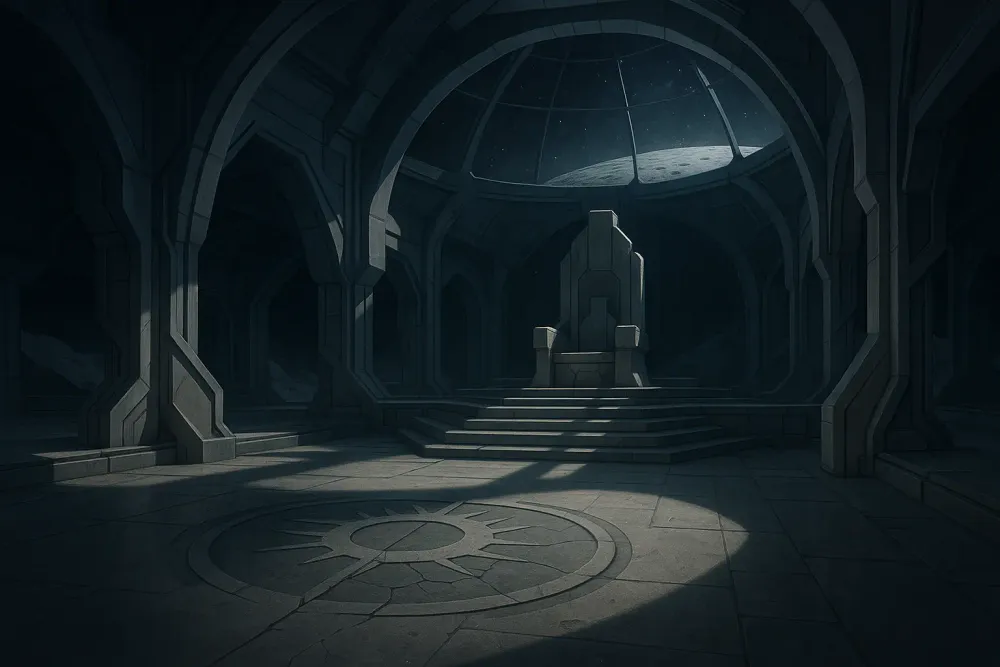
The basic premise has potential: a secret civilization of superpowered beings living on the moon is thrown into chaos when a coup forces the royal family to Earth. It sounds epic – but the execution is anything but.
Black Bolt (Anson Mount) is mute by nature, Medusa’s powers are inexplicably underused (and awkwardly removed early on), and Maximus – the main antagonist – comes off as unconvincing. The rest of the cast never truly shines, and the story never takes off. There are sparks of interest, but they’re drowned in mediocrity.
🎨 Visuals & sound
Despite IMAX backing the first episodes, the visuals are inconsistent. The CGI looks dated, and the moon city of Attilan feels sterile and uninspired. The soundtrack and sound design do little to elevate the lackluster storytelling.
Marvel clearly had budget and production constraints here, but it shows far more than it should.
👨👧👦 Our experience & recommendation
As longtime MCU fans, especially after Agents of S.H.I.E.L.D., we were genuinely excited for Inhumans. But after a few episodes, that excitement quickly turned into disappointment. It felt like Marvel was testing something – and deciding not to continue.
My daughter lost interest halfway through, and I honestly couldn’t blame her. There’s just not enough heart, depth, or purpose here to keep younger audiences engaged.
🌑 The Inhumans concept vs. the execution problem
The Inhumans are one of Marvel Comics’ most genuinely ambitious concepts, and the gap between what they represent on the page and what the television series delivered is one of the more instructive failures in the MCU’s history. The premise is not a simple superhero premise. It is a story about class, biological determinism, and what a society owes people whose birth lottery produced the wrong result.
The society of Attilan is structured around Terrigenesis: a process in which every Inhuman is exposed to the Terrigen Mists and transformed, gaining powers that determine their place in Inhuman society. The royal family sit at the top — Black Bolt’s voice is a weapon of mass destruction, Medusa controls her hair as a prehensile weapon, Crystal commands the elements. Below them, the guard and warrior class. And at the bottom, the people whose Terrigenesis produces nothing. No powers. No status. The workers. The expendable. The people whose genetic lottery came up empty.
Maximus wants to change this. His entire motivation — staging a coup against the royal family, seizing the throne, threatening to relocate the Attilan population to Earth — stems from genuine political grievance. He is an Inhuman whose Terrigenesis produced no powers. He has lived his entire life at the top of a society that treats him as its bottom rung, his position maintained by royal blood rather than the “proper” source of status. When he says the system is unjust, he is correct. When he says the royal family benefits from a hierarchy that has nothing to do with merit, he is correct about that too.
Here is the structural problem the show refuses to acknowledge: it frames Maximus as the villain and the royal family as the heroes. It asks the audience to root for the restoration of a genetic caste system. The Inhumans’ social hierarchy is a direct analog for real-world class systems, and the show’s framing requires treating the preservation of that hierarchy as the desired outcome. The writers appear not to have noticed this. The question of whether Maximus is actually wrong — whether the system he wants to dismantle is defensible — is never seriously examined. He has bad manners and makes expedient compromises. He is the villain. The royals escape to Earth, suffer minor humiliations, and work to reclaim their throne. That is the hero journey.
What the Inhuman concept lost in translation is visible in almost every production element. The show was originally planned as a theatrical film — announced in 2014 as part of Marvel’s Phase 3 slate. Somewhere in the development process, that ambition collapsed. The budget that a cosmic society on the moon requires did not survive the transition to television. Attilan, which should feel like a civilization, feels like three sets and a lot of wide shots of empty corridors. The CGI is inconsistent in ways that a 2017 Marvel production should not be.
Lockjaw is the show’s single unambiguous success. The giant teleporting dog — Black Bolt’s enormous bulldog-breed companion with the ability to teleport anyone he’s touching to any location — is executed with genuine affection. He is charming, practically used in every scene he appears in, and provides the kind of warm spectacle the rest of the show consistently fails to generate. When the production quality of your most successful element is the giant CGI dog, it says something about where the creative priorities landed.
🗣️ Black Bolt and the silence performance challenge
Black Bolt cannot speak. This is not a character choice or a trauma response — it is physics. His voice is a weapon of mass destruction. A whisper destroys walls. A full shout levels city blocks. The show’s opening demonstrates this in the most efficient possible terms: a young Black Bolt, not yet in control, makes a sound in his sleep and kills his parents. He has been silent ever since.
What this means for Anson Mount as a performer is that every emotional state must be externalized through expression, body language, and physical presence. There is no dialogue to fall back on. Confusion, grief, determination, love, fear, frustration — all of it must be readable without words. For a lead character in an eight-episode series, this is an extraordinary constraint to impose on an actor, and it is the one creative decision the show makes that is genuinely, completely correct.
Mount meets this challenge well enough that his performance is the show’s best element by a significant margin. He develops a specific physical vocabulary for Black Bolt across the eight episodes: a quality of stillness that reads as composed power rather than passivity; a particular way of attending when he is listening that communicates active engagement without reaction; a range of small facial expressions — micro-expressions of recognition, concern, decision — that substitute for the emotional register most actors carry in their voice. Watch him in a conversation with Medusa, where she speaks and he responds through expression and gesture, and there is something genuinely communicative happening. The scenes don’t feel like a workaround for a gimmick. They feel like two people talking.
The places where the performance works best are the scenes that lean fully into the constraint rather than minimizing it. His confusion when he encounters the human world — things that don’t translate from Inhuman society, social norms that have no Attilan equivalent — is played with a quality of careful observation that reads clearly without a single line of dialogue. The wordless confrontations, which would normally depend heavily on dialogue to establish stakes and emotional tension, are handled through sustained physical performance and camera work that understands what it’s trying to show.
Mount’s Black Bolt also works because the show gives him a genuine relationship to build with Medusa (Serinda Swan). Their connection is established in shorthand — they have been together long enough that they have a shared language of touch and expression — and the scenes where that shorthand is operating are the show’s warmest moments. When Medusa loses her hair early in the season (an expedient budget decision, widely criticized), she loses not just her power but her primary means of communicating with Black Bolt. That loss has real weight, and Mount plays it accordingly.
The most interesting footnote to his performance is what happened after the show failed. Inhumans was critically savaged, canceled after one season, and effectively buried by Marvel. Black Bolt did not appear in the MCU for five years. Then, in 2022, Doctor Strange in the Multiverse of Madness cast Mount again — the same actor, the same physical presence, the same silent performance vocabulary — as an alternate-universe Black Bolt, a member of the Illuminati in a reality where the character’s power makes him one of the most dangerous people alive. The casting was a signal: whatever the show was, Mount’s performance was not the problem. It was good enough that, years later, someone at Marvel decided it deserved a better showcase.
Pros
- Interesting premise with potential
- Some solid casting choices
- Adds lore to the Inhumans concept
Cons
- Weak story and pacing
- Uninspired visuals despite IMAX support
- Characters lack depth and chemistry
- Quickly abandoned by Marvel
📝 Conclusion
Inhumans – Season 1 feels like Marvel’s first true misstep in its otherwise strong lineup. While the lore had potential, the execution was rushed and the series failed to leave a lasting impression.
If you’re doing a full MCU watch, it might be worth a glance out of curiosity – but it’s not essential. Marvel seems content to leave the Inhumans behind, and after this season, it’s easy to see why.
📺 Movie night sorted: thousands of films and shows are streaming on Prime Video — free for 30 days. Worth a look before you buy the disc.
Related Dadnology reviews: Team Darryl – Thor’s Roommate Meets the Grandmaster · The Punisher – Season 1: More Than Just Guns and Vengeance
📌 FAQ – Frequently asked questions
Is Inhumans part of the MCU?
Will there be a second season of Inhumans?
Is there a post-credit scene?
Did Anson Mount appear as Black Bolt after the Inhumans show was cancelled?
Was the Inhumans show originally meant to be a movie?
Keep this in your inbox
One email a week: what we actually watched, built and reviewed — the stuff worth a dad's time. No hype, no daily spam.
Dadnology Weekly
One email a week: the LEGO, gaming and movie news worth a dad's time — plus what we actually reviewed. No hype, no daily spam.
Disclaimer: This review and its visuals were created with the help of AI. Some links may be affiliate links – we may earn a commission if you make a purchase, at no extra cost to you.
Current deals in Movies & TV
Verified live discounts tracked on Amazon
![The Legend of Korra — The Complete Series [Blu-ray]](https://m.media-amazon.com/images/I/51+1TXyb7aL._SL500_.jpg)
Movies & TV · Tested by Dadnology
The Legend of Korra — The Complete Series [Blu-ray]
4.5/5“A new Avatar, a modern city, a masked revolution”Read our review
Movies & TV · Tested by Dadnology
Zack Snyder's Justice League (4K Ultra HD)
4/5“Four hours. One vision. This is the film.”Read our review
Movies & TV · Tested by Dadnology
Space Jam (4K Ultra HD + Digital)
4/5“It's gonna be a whole new ball game”Read our reviewYou might also like

Captain America: Brave New World – A solid hand-off with noticeable seams
*Captain America: Brave New World* is a solid, sometimes stirring handoff to Sam Wilson’s era. The aerial and close-quarters action pops, and the film’s best beats tackle legacy, leadership, and what a hero looks like without super-soldier shortcuts. But thin antagonists, patchy pacing, and a tidy finale keep it from hitting the highs of Cap’s best. It’s entertaining and sincere, more grounded than recent MCU entries, and easy to recommend to fans—just calibrate expectations for solid, not instant classic.
Thor: Love and Thunder – Thunderous laughs and emotional twists
Taika Waititi’s Thor: Love and Thunder delivers an over-the-top blend of humor, emotion, and cosmic madness. Chris Hemsworth shines, Natalie Portman’s return is powerful, and Christian Bale’s Gorr is haunting. While not for every taste, the film is filled with wild visuals, heartfelt moments, and fan-driven storytelling. It’s a bold MCU entry that caters more to dedicated fans than casual viewers, but its emotional payoff and sheer creativity make it a blast for those who embrace the weird.
MCU watch order 2026 – All Marvel movies & series in timeline
As a lifelong Marvel fan, the MCU is more than a movie franchise – it's an emotional journey through heroism, sacrifice, and epic storytelling. The way films and series connect across timelines, characters, and genres is absolutely unique in cinema history. From Iron Man's first flight to the multiverse madness of recent phases, every chapter adds depth and excitement to this living, breathing universe. Whether you're watching solo or with your kids, the MCU delivers action, humor, and heart like no other. It's not just a saga – it's a part of my world.