
Loki – Season 1: A multiversal mischief of identity and chaos
Time, identity, and chaos: *Loki* breaks the MCU mold with a bold story, stylish visuals, and a tour-de-force performance by Tom Hiddleston.
This post contains affiliate links. We may earn a commission if you make a purchase, at no extra cost to you. As an Amazon Associate, Dadnology earns from qualifying purchases.
🌌 Introduction
This review is part of the MCU Watch Order – explore all Marvel movies and shows in timeline order!
After Avengers: Endgame, most fans assumed Loki’s story had reached its end. But thanks to a clever time-travel twist during the “time heist,” a variant of Loki escaped with the Tesseract—and set off on a brand-new journey. Loki – Season 1 doesn’t just explore this detour—it transforms it into one of the most important chapters of the Multiverse Saga.
With a bold visual style, philosophical undertones, and a version of Loki stripped of his power and identity, the show dives deep into the question: “Who is Loki without the throne, without vengeance, and without purpose?”
🧩 Story & themes
The story begins with Loki being arrested by the Time Variance Authority (TVA), a bureaucratic organization that oversees the proper flow of time. He learns that his escape from 2012 New York created a branching timeline, making him a “variant” who must be pruned—or used.
Rather than face deletion, Loki becomes a TVA asset, working alongside Agent Mobius (Owen Wilson, perfectly cast) to track another dangerous variant… who turns out to be a female version of himself, Sylvie.
The show blends noir mystery, bureaucratic satire, and emotional introspection. It raises fascinating questions about determinism, free will, and the morality of an all-controlling timeline. It also introduces one of the MCU’s most important new threats—He Who Remains, a variant of Kang the Conqueror.
🌀 Characters & performances
Tom Hiddleston once again proves why he’s one of the MCU’s most beloved actors. But this isn’t the same Loki who died in Infinity War. This version hasn’t lived through Ragnarok or his reconciliation with Thor. He’s still arrogant, selfish, and power-hungry—until he’s confronted with the truth of his own destiny.
Watching Loki slowly dismantle his own ego is a rewarding arc. His chemistry with Sylvie (Sophia Di Martino) brings emotional depth and tension, even as their relationship tiptoes into strange territory (yes, it’s a version of self-love in the most literal sense).
Owen Wilson’s Mobius offers levity and heart, while Gugu Mbatha-Raw’s Ravonna hints at deeper mysteries to come. And Jonathan Majors’ appearance in the finale is electrifying—setting the tone for the chaos of the multiverse that lies ahead.
🎨 Visuals, music & style
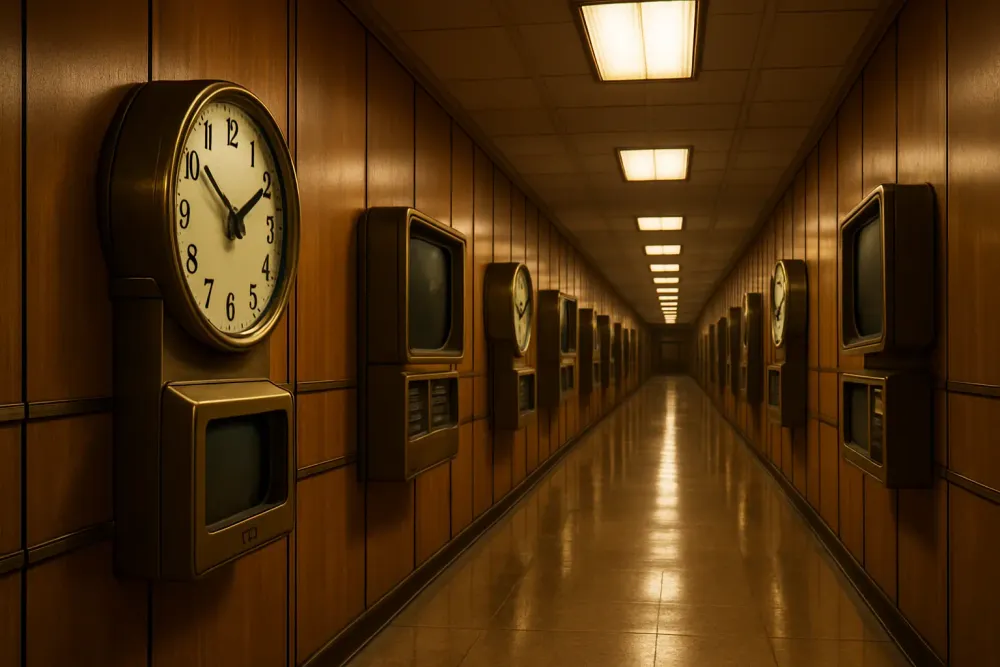
The aesthetic of Loki is one of its greatest strengths. The TVA looks like a blend of 70s office design, brutalist architecture, and surreal bureaucracy. The color palette of oranges, greens, and browns gives the show a timeless feel—somewhere between retro-future and mythological dream.
Each episode offers something visually distinct: a crumbling apocalyptic moon, a timeless void filled with variant Lokis, a city suspended at the edge of time. Natalie Holt’s score adds tension, grandeur, and emotion in equal measure—particularly the use of theremins and violins.
Marvel takes risks here—and most of them pay off.
👨👧👦 Our experience & recommendation
Watching Loki as a family was a different experience than previous Marvel entries. Younger kids might be confused by the timelines and philosophical exposition, but older kids (12+) who’ve followed the MCU will find plenty to enjoy—from variant Lokis to time-bending showdowns.
As a dad, what stood out was the emotional core beneath the chaos. Loki’s growth—from selfish trickster to someone capable of care, sacrifice, and vulnerability—resonates. This is Marvel storytelling at its most experimental, but also surprisingly heartfelt.
⚖️ The TVA and the question of free will
The Time Variance Authority is the show’s central invention: a bureaucratic organization outside of time whose job is to prune branches from the “sacred timeline” — the single timeline the Time-Keepers have determined is the correct one. On paper this sounds like a law enforcement premise. In practice it is something considerably darker. The TVA is a villain dressed as a bureaucracy, operating through paperwork and procedure rather than violence — though violence is always available, holstered and ready, in the form of reset charges and pruning sticks.
What the TVA does is prune variants: alternate versions of people who made different choices than the “sacred” version. A person deviates from their predetermined path, a branch forms, the TVA trims it. They treat this as administrative tidying rather than mass murder. The agents who do this work don’t think of it as killing. They think of it as maintenance.
This is the show’s most pointed observation: the machinery of control becomes most durable when it normalizes itself. When the people inside it stop seeing what they’re doing clearly. The TVA functions not because its agents are evil, but because they have been given a framework in which what they do is simply the job.
The philosophical stakes become personal because of who Loki is. He is a man who has built his entire identity on agency — on refusing to be controlled, on having plans within plans, on defining himself against whatever expectations others have for him. He is the god of mischief precisely because mischief requires choosing to do something the established order doesn’t want. Put him in a situation where he is shown, via the TVA’s paperwork, that every choice he ever made was predetermined, and you have done something specific: you haven’t just stripped his freedom, you’ve stripped his identity, since his identity was premised on having freedom.
Miss Minutes — the chipper animated mascot who explains the TVA’s mythology in orientation videos — is the show’s sharpest satirical instrument. Late-capitalism cheerfulness applied to determinism. She introduces mass-murder-as-admin with the same register as a HR onboarding video. The show uses her sparingly and wisely.
The show does not answer the free will question cleanly. It doesn’t conclude that free will exists, or that it doesn’t. What it does is make the question unavoidable — and then uses Loki’s specific crisis to demonstrate that the question isn’t academic. For most of us it may be. For Loki it is existential in the literal sense.
🪞 Loki variants and the mirror problem
Sylvie is a Loki variant — a version of the character who was “pruned” from the timeline as a child and has spent her entire life on the run from the TVA. She is the same character as Loki in the same way that a twin raised in radically different circumstances is the same person: fundamentally recognizable, fundamentally different.
The narrative device of a variant isn’t new — it’s a staple of science fiction and alternate-history stories — but Loki uses it to do something specific. By placing two versions of the same character in dialogue, the show can examine what is actually essential about Loki. Which traits survive completely different circumstances? The chaos, the survival instinct, the fundamental aloneness, the intelligence weaponized against itself — these persist. What doesn’t persist is the particular social performance Loki has built over centuries of navigating Asgard, Odin, and Thor. Sylvie doesn’t have that performance. She has no reason to be charming; charm requires an audience that might be persuaded, and she has never had that audience.
She is angrier. She is also, in several concrete ways, more capable — she has been running and fighting alone, without a safety net, since childhood. Her magic operates differently because she has had to develop it differently: she learned to enchant people not because it’s elegant but because it’s the only leverage she has ever had. She is what Loki might have been without the palace, without Thor, without any of it.
The romantic dimension is where the show takes its most genuine creative risk. Loki falls for Sylvie. The “is this narcissism or love?” question is left genuinely open — the show is smart enough not to answer it, because answering it either way would flatten what’s actually interesting. What matters dramatically is simpler: each of them recognizes in the other someone who truly understands what they are. For two people who have spent their entire lives not being understood — Loki performing what Odin wanted, Sylvie surviving what the TVA wanted — this recognition is genuinely powerful. It isn’t fan service. It is the show locating the emotional center of its central relationship with more precision than most MCU projects manage.
What Sylvie ultimately represents for Loki’s arc is a challenge to his entire self-narrative. She is the version of him who was never given Odin’s love, never given Thor’s protection, never given the Avengers’ implicit rehabilitation. She survived without any of it. And she is, in some ways, the more complete version of their shared core self. Meeting her forces Loki to ask the question the show builds to: was his growth his own, or just the product of circumstances he had no hand in choosing?
Pros
- Fresh, unpredictable storytelling
- Tom Hiddleston shines as Loki
- Visually stunning and stylistically bold
- Introduces the multiverse with philosophical depth
Cons
- Detached from earlier MCU tone
- Can feel overly expository or abstract at times
🗣️ Conclusion
Loki – Season 1 may not feel like traditional Marvel fare, but that’s exactly what makes it work. It dares to ask big questions, take creative risks, and center its narrative on character introspection rather than action. While it might alienate viewers expecting a more grounded, Avengers-style show, those willing to go on a wild ride through time, identity, and chaos will find something fresh and rewarding. A bold first step into the multiverse era.
📺 Movie night sorted: thousands of films and shows are streaming on Prime Video — free for 30 days. Worth a look before you buy the disc.
Related Dadnology reviews: WandaVision – A Bold, Bizarre, and Brilliant Start to Phase 4 · What If…? – Season 1: A Multiversal Experiment With Mixed Results
📌 FAQ – Frequently asked questions
When does *Loki* take place in the MCU timeline?
Who is 'He Who Remains'?
Is Loki now part of the main MCU timeline again?
Who are the Time-Keepers and do they actually control everything?
Does Loki Season 1 require watching Avengers Endgame first?
Keep this in your inbox
One email a week: what we actually watched, built and reviewed — the stuff worth a dad's time. No hype, no daily spam.
Dadnology Weekly
One email a week: the LEGO, gaming and movie news worth a dad's time — plus what we actually reviewed. No hype, no daily spam.
Disclaimer: This review and its visuals were created with the help of AI. Some links may be affiliate links – we may earn a commission if you make a purchase, at no extra cost to you.
Current deals in Movies & TV
Verified live discounts tracked on Amazon
![The Legend of Korra — The Complete Series [Blu-ray]](https://m.media-amazon.com/images/I/51+1TXyb7aL._SL500_.jpg)
Movies & TV · Tested by Dadnology
The Legend of Korra — The Complete Series [Blu-ray]
4.5/5“A new Avatar, a modern city, a masked revolution”Read our review
Movies & TV · Tested by Dadnology
Zack Snyder's Justice League (4K Ultra HD)
4/5“Four hours. One vision. This is the film.”Read our review
Movies & TV · Tested by Dadnology
Space Jam (4K Ultra HD + Digital)
4/5“It's gonna be a whole new ball game”Read our reviewYou might also like
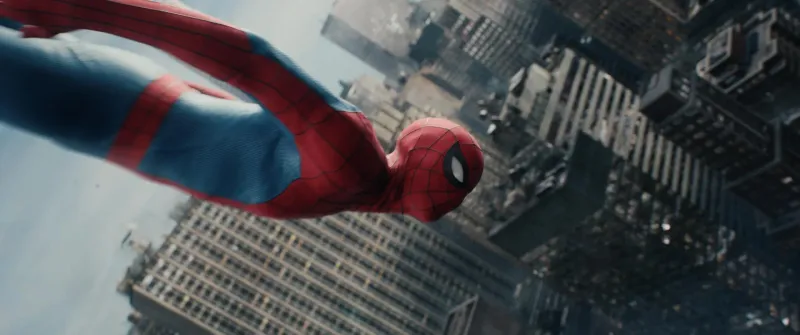
Spider-Man: Brand New Day review: The best Marvel film yet made
Spider-Man: Brand New Day is the best Marvel film we've ever seen. Tom Holland delivers his finest performance across four films, Sadie Sink's Jean Grey is a genuine highlight, and the Hulk/Punisher integration works far better than it has any right to. Action, comedy, goosebumps and quiet moments, all in one film. A perfect 5/5.
Daredevil: Born Again – Season 2: The devil and the Kingpin hit harder
Season 2 of Born Again proves the reboot was no fluke. Daredevil simply rocks here — bruising action, real emotional stakes, and Vincent D'Onofrio's Fisk continuing his reign as one of the best villains on TV. The Jessica Jones appearance is a genuine highlight (more of her, please), and episode 8 is a flawless, goosebump-inducing 10. The season as a whole lands an excellent 4/5 — and that finale alone is worth the subscription.
MCU watch order 2026 – All Marvel movies & series in timeline
As a lifelong Marvel fan, the MCU is more than a movie franchise – it's an emotional journey through heroism, sacrifice, and epic storytelling. The way films and series connect across timelines, characters, and genres is absolutely unique in cinema history. From Iron Man's first flight to the multiverse madness of recent phases, every chapter adds depth and excitement to this living, breathing universe. Whether you're watching solo or with your kids, the MCU delivers action, humor, and heart like no other. It's not just a saga – it's a part of my world.