
Luke Cage – Season 2: The bulletproof hero returns to Harlem
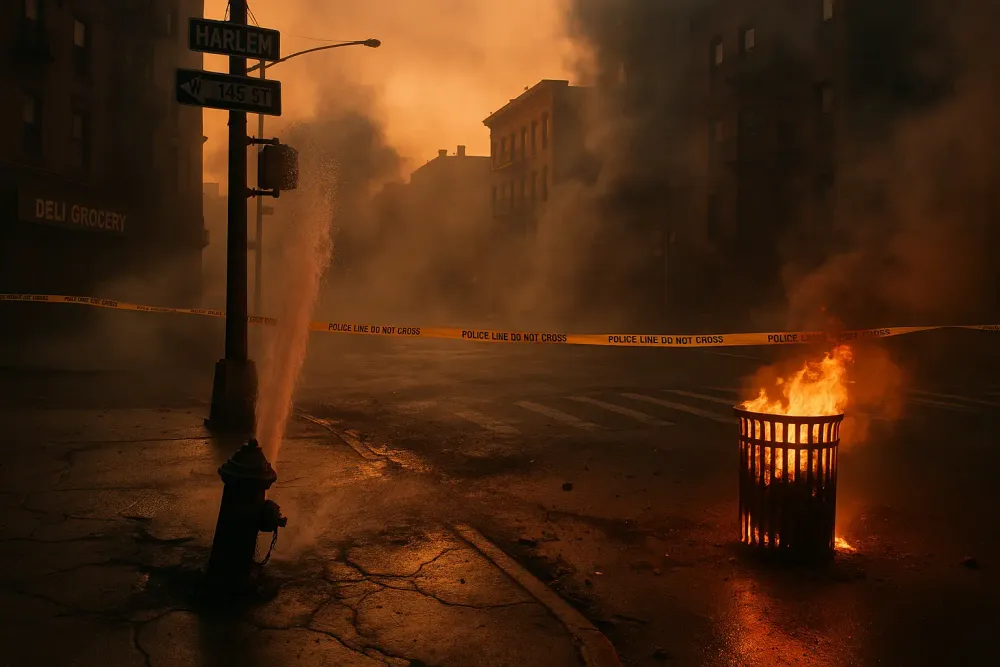
Luke Cage is back – tougher, louder, and more conflicted. Season 2 delivers gritty street drama and evolving power dynamics in Harlem.
This post contains affiliate links. We may earn a commission if you make a purchase, at no extra cost to you. As an Amazon Associate, Dadnology earns from qualifying purchases.
🧱 Introduction
This review is part of the MCU Watch Order – explore all Marvel movies and shows in order!
Luke Cage returns with a bang in Season 2 – and this time, he’s not just protecting Harlem from the outside, but wrestling with power from within. Marvel’s Netflix series continues to distinguish itself through rich cultural identity, immersive music, and real-world themes that hit harder than ever.
🧠 Story & characters
Following the events of The Defenders, Luke is a public figure. Harlem knows his name, kids wear his t-shirts, and local criminals fear him. But power changes people – and Luke is no exception. His rising fame brings pressure, expectations, and a growing ego.
Enter Bushmaster – a villain with strength, mysticism, and personal vendettas. Unlike other foes, Bushmaster doesn’t just want to defeat Luke – he wants to reclaim Harlem in the name of his Jamaican heritage. Their clashes are not just physical but ideological, touching on ownership, legacy, and identity.
Meanwhile, Mariah Dillard transforms from corrupt politician to full-blown crime boss. Her arc is dark, fascinating, and increasingly ruthless. Misty Knight, recovering from the events of The Defenders, continues her journey toward becoming a true street-level hero, now sporting a bionic arm and newfound resolve.
🎵 Style & atmosphere
If Season 1 introduced Harlem as a character, Season 2 gives it a voice – literally. With live music performances woven into key episodes and a soundtrack that pulses with jazz, reggae, and soul, the series creates an unmatched vibe.
The cinematography is stylish but grounded, filled with deep shadows, rich colors, and emotionally charged close-ups. The action scenes are brutal but never over-the-top, with Luke’s strength feeling earned and weighty.
🔥 Themes
Season 2 dives into themes of legacy, trauma, justice, and the moral weight of power. Luke’s slow descent into isolation and dominance echoes classical hero arcs turned antihero. Can you remain the good guy when you control everything?
The show also touches on cultural identity through Bushmaster’s background and voice – offering one of the most compelling Marvel villains outside the mainstream MCU.
👨👧👦 Dadnology Take
Watching Luke Cage – Season 2 as a dad reveals the emotional complexity behind the superhero facade. Luke struggles with his father’s memory, tries to be a role model, and ultimately questions the man he’s becoming. These are themes that resonate beyond comic book action.
While the show is more mature in tone and content, it’s a worthwhile series for older teens and adults who want superhero stories with depth.
🌴 Bushmaster and the Jamaica question: When Season 2 finds its voice
Mustafa Shakir’s Bushmaster is Season 2’s masterstroke. He enters as a villain — brutal, relentless, with a grudge against the Stokes family that predates Luke Cage’s involvement entirely — and gradually reveals a backstory grounded in Jamaican cultural history, colonial exploitation, and family legacy that was stolen rather than surrendered. Unlike Diamondback, Season 1’s weak replacement villain, Bushmaster has moral coherence: he’s wrong in his methods, but his grievances are legitimate, his motivations are understandable, and his rage comes from somewhere real. Shakir plays him with controlled fury — the physicality, the accent, the patience of a man who has been waiting a long time and has finally decided he’s waited long enough.
Season 2 uses the cultures of Harlem and Jamaica with a deliberateness that Season 1, for all its strengths, didn’t quite attempt. The music shifts with the storyline: reggae and dancehall enter the playlist alongside the jazz and soul of Season 1, and the curation feels intentional rather than atmospheric. Food, language, and family structure get screen time as actual character elements rather than background texture. The show is making an argument — through its villain choices, its music choices, its dialogue — that Black American identity is not a monolith. Luke Cage represents one strand of urban Harlem culture, shaped by a particular history of American systemic violence and community survival. Bushmaster represents another strand entirely, with different historical roots, different moral frameworks, and a claim on justice that the show takes seriously even when his methods are indefensible.
This is rare in superhero television. It’s the kind of cultural specificity that usually gets flattened into generic “he had a hard life” villain backstory, and Season 2 refuses that shortcut. When Bushmaster explains what was taken from his family — not just wealth but identity, lineage, the ability to know where you come from — the show is doing something more than setting up fight scenes.
Gabrielle Dennis as Tilda Johnson completes the season’s thematic argument about inheritance and choice: whether you can escape what your family built, whether legacy is a gift or a prison, and what it actually means to be your mother’s daughter in a family where the mother is Mariah Dillard. Her arc runs quietly through the season and pays off in its final minutes in a way that reframes everything you thought you understood about who the real antagonist was all along.
👑 Bushmaster, Mariah, and the problem of too many villains
Season 2 has a structural villain problem that is also, paradoxically, one of its genuine strengths. Mustafa Shakir’s Bushmaster arrives as the most physically credible threat the show has produced — someone who can genuinely match Luke strength for strength, and that rarity matters. Superhero shows live or die on whether the audience can believe the protagonist is actually in danger. Luke’s invulnerability has been a narrative problem since season one; Bushmaster solves it. More importantly, his motivation is specific and comprehensible: he has a legitimate generational grievance against the Stokes family rooted in a historical wrong, the theft of his family’s business and identity by Mama Mabel’s organization decades before the show begins. He is not wrong about what was done to his family. His methods are indefensible and the show never pretends otherwise — but his cause is just, and that moral complexity gives the season a villain worth taking seriously.
The problem this creates is structural. The show already has Mariah Dillard (Alfre Woodard) and Shades (Theo Rossi) as its central antagonists, and their arc in Season 2 is, scene for scene, the season’s best material. Mariah’s full embrace of her criminal inheritance — her decision to stop performing the fiction that she is something other than what her family made her — is a genuinely compelling character turn. She stops pretending. She stops apologizing. She leans into the Stokes legacy with a coldness that is more frightening than any display of physical power. Woodard plays it with absolute conviction: she is one of the finest performers in the entire Netflix Marvel catalogue, and Season 2 finally gives her material equal to her ability.
Two villain arcs of this quality are competing for the same narrative space, and the show cannot fully resolve both within a single season. Bushmaster and Mariah/Shades require different kinds of storytelling — one is a physical threat with a revenge arc, the other is a character study in how power corrupts and what legacy costs. The season strains under the weight of running both simultaneously, and the middle episodes show the seams.
What the show gets right, despite this tension, is the Harlem dimension. The politics of who controls the neighborhood — what it means that the dominant power in Harlem is criminal power, and what the community is actually negotiating when it decides whether to accept or resist Luke as a different kind of authority — runs through every plot thread. The season is asking whether a neighborhood can protect itself without being controlled by its protector, and it asks it with more specificity than any other Netflix Marvel season managed.
The finale’s treatment of Mariah earns its place. It gives her the end her arc deserves — not the villain’s conventional defeat, but something that feels like consequence rather than punishment. It is more than most Netflix Marvel seasons managed for their antagonists, and it is the reason Season 2 lands better in memory than its uneven middle would suggest.
Pros
- Strong performances from Mike Colter and Alfre Woodard
- Bushmaster is a layered, magnetic villain
- Rich cultural setting and soundtrack
- Themes of legacy and identity hit hard
Cons
- Some episodes drag in the middle
- Less direct MCU integration
- Luke’s dark turn may divide viewers
🗣️ Conclusion
Luke Cage – Season 2 doesn’t just live up to its first season – it expands the narrative, deepens its characters, and takes real risks. While not every subplot lands perfectly, the show’s bold voice, cultural richness, and emotional depth make it one of Marvel’s most thoughtful TV entries. A slow burn with real staying power.
📺 Movie night sorted: thousands of films and shows are streaming on Prime Video — free for 30 days. Worth a look before you buy the disc.
Related Dadnology reviews: Cloak & Dagger – Season 2: Expanding the Shadows of New Orleans · Iron Fist – Season 2: A Tighter, Yet Still Flawed Return
📌 FAQ – Frequently asked questions
Is there a post-credit scene?
Do I need to watch Season 1 first?
How does this fit into the MCU timeline?
Is Season 2 better or worse than Season 1?
Does Luke Cage get a Season 3?
Does Luke Cage Season 2 connect to other Netflix Marvel shows?
Keep this in your inbox
One email a week: what we actually watched, built and reviewed — the stuff worth a dad's time. No hype, no daily spam.
Dadnology Weekly
One email a week: the LEGO, gaming and movie news worth a dad's time — plus what we actually reviewed. No hype, no daily spam.
Disclaimer: This review and its visuals were created with the help of AI. Some links may be affiliate links – we may earn a commission if you make a purchase, at no extra cost to you.
Current deals in Movies & TV
Verified live discounts tracked on Amazon
![The Legend of Korra — The Complete Series [Blu-ray]](https://m.media-amazon.com/images/I/51+1TXyb7aL._SL500_.jpg)
Movies & TV · Tested by Dadnology
The Legend of Korra — The Complete Series [Blu-ray]
4.5/5“A new Avatar, a modern city, a masked revolution”Read our review
Movies & TV · Tested by Dadnology
Zack Snyder's Justice League (4K Ultra HD)
4/5“Four hours. One vision. This is the film.”Read our review
Movies & TV · Tested by Dadnology
Space Jam (4K Ultra HD + Digital)
4/5“It's gonna be a whole new ball game”Read our reviewYou might also like
Iron Fist – Season 2: A tighter, yet still flawed return
*Iron Fist – Season 2* makes welcome improvements over its predecessor, especially in pacing and tone. Still, it lacks the gravitas and flair of Marvel’s best TV efforts. A watchable, if underwhelming, chapter in the MCU.
Daredevil – Season 3: The devil returns stronger than ever
Season 3 of *Daredevil* is intense, thoughtful, and emotionally charged. Kingpin shines as a brilliant villain, and the series regains its gritty edge. One of the strongest Marvel TV entries to date.
MCU watch order 2026 – All Marvel movies & series in timeline
As a lifelong Marvel fan, the MCU is more than a movie franchise – it's an emotional journey through heroism, sacrifice, and epic storytelling. The way films and series connect across timelines, characters, and genres is absolutely unique in cinema history. From Iron Man's first flight to the multiverse madness of recent phases, every chapter adds depth and excitement to this living, breathing universe. Whether you're watching solo or with your kids, the MCU delivers action, humor, and heart like no other. It's not just a saga – it's a part of my world.