
Moon Knight – Season 1: A dark, grounded MCU experiment that doesn’t quite stick
Moon Knight offers a gritty, psychological MCU entry with stunning visuals—but its esoteric tone limits its appeal to deep fans.
This post contains affiliate links. We may earn a commission if you make a purchase, at no extra cost to you. As an Amazon Associate, Dadnology earns from qualifying purchases.
🌌 Introduction
This review is part of the MCU Watch Order – explore all Marvel movies and shows in timeline order!
With Moon Knight, Marvel crafts one of its darkest, most psychological series to date. Boldly set in Cairo amidst ancient Egyptian lore, it takes viewers far from the lighthearted superhero fare into a shadowy vigilante tale of identity and myth.
🧩 Story overview & characters
Marc Spector is introduced as a mercenary suffering from dissociative identity disorder, haunted by the Egyptian moon god Khonshu. When identities swap and memories falter, Marc (Oscar Isaac) must embrace his fractured psyche to battle under the Moon Knight mantle.
Across six episodes, the show explores multiple personas—Marc, Steven, Jake—and their struggle to piece together a lost past, understand their cosmic role, and face mortal enemies both ancient and modern.
🔥 Mythology, mystery & setting
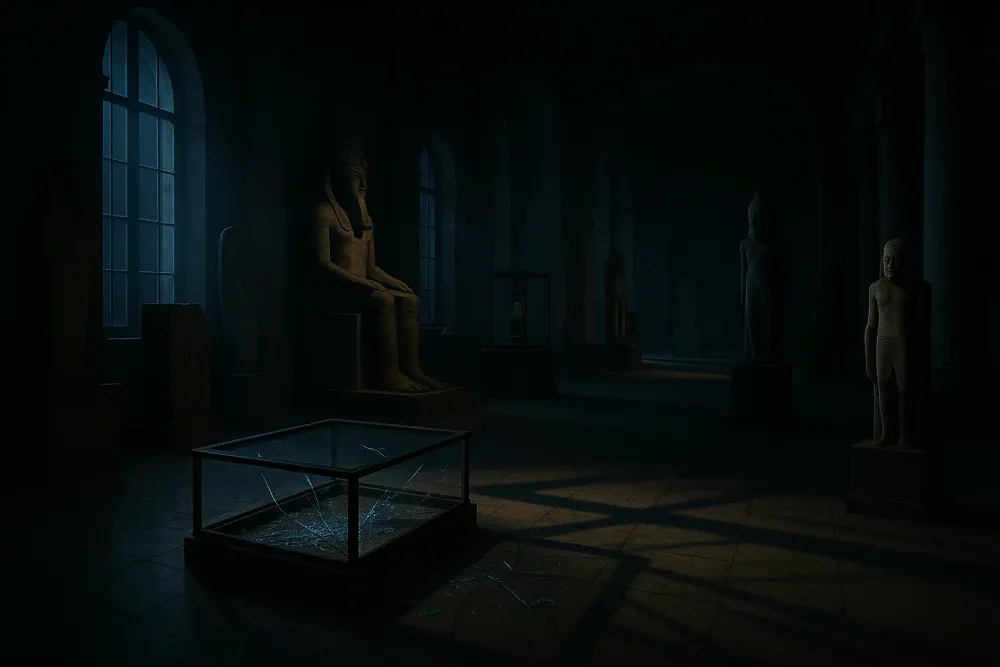
Moon Knight is steeped in Egyptian mythology—Khonshu’s temples, godly powers, ancient artifacts, and Cairo’s desert landscapes become characters themselves. The tone is somber, movie-noir meets mystical horror.
Visually, the series blends gritty urban noir and supernatural elements with striking cinematography, dream sequences, and fractured identity visuals. It looks and feels unlike anywhere else in the MCU.
But those elements also make it esoteric: mythology-heavy storytelling without clear emotional anchor points for casual viewers.
🎭 Oscar Isaac & supporting cast
Oscar Isaac delivers a tour-de-force performance—in one episode alone, you feel three distinct personalities.
May Calamawy shines as Layla El-Faouly, a self-made hero torn between independence and destiny. Ethan Hawke is unsettling as Arthur Harrow, a cult leader wielding godly power.
But while performances are strong, character arcs feel underdeveloped—and emotional payoff is limited.
⚔️ Action style & tone
The action is visceral, grounded—street fights, dark alleys, mysterious brutality. The choreography is raw, shot in tight spaces under moonlight.
Yet there’s minimal levity. No quips. No team banter. The silence here is intentional, but makes it feel less connected to MCU’s more accessible tone.
🧠 Story complexity & accessibility
The plot is fragmented and surreal. Multiple character arcs blur. You need to stay alert—or rewatch—to follow who’s who and what’s real.
Explanations of Khonshu’s realm, mystical rules, and identity mechanics are deliberate and slow, which makes each episode feel dense—and not especially rewatchable for general audiences.
Fans may replay scenes for deeper meaning. Casual viewers? They may just move on.
👨👧👦 Family viewing & accessibility
This is an adult show—psychological horror, betrayal, gore, and tragic themes.
For families, it’s recommended only for older teens comfortable with darker content and existential storytelling.
It’s more a journey than a blockbuster. But one with limited mass appeal.
🏺 Oscar Isaac’s two (actually three) performances
Oscar Isaac plays Marc Spector and Steven Grant as two personalities sharing one body — with a third, Jake Lockley, introduced in the post-credit scene. The technical challenge is formidable: Isaac has to play the same person at entirely different developmental stages, with different accents (Marc is American, Steven is British), different body language, different emotional ranges, and different relationships to violence. Marc is capable and ruthless. Steven is anxious and sweet and genuinely delighted by ancient history in a way that feels like a real person’s passion rather than a convenient personality quirk.
The moments where they interact — one seeing his reflection while the other controls the body — require Isaac to react to himself. There is no scene partner for these sequences. He has to play both halves of a conversation that only one body can have, and the technical difficulty is visible in the best possible way: it looks hard because it is hard, and it works anyway.
The episode set in the psychiatric institution — Episode 4 — is where the performance becomes genuinely extraordinary. The rules of reality become uncertain in that episode in ways the show has been building toward, and Isaac has to hold multiple registers simultaneously: Steven’s bewilderment at the situation, Marc’s suppressed terror at what it might mean, and the system’s genuine inability to determine which personality it is dealing with. The episode works as psychological horror precisely because Isaac makes both men’s responses feel authentic and distinct even in the same body.
What keeps the performance from being a technical exercise is that both Marc and Steven feel like complete people rather than aspects of a gimmick. Steven’s crush on Layla, his genuine enthusiasm for Egyptology, his specific way of being kind to people — these feel like a person’s qualities, not a performer demonstrating range. Marc’s emotional guardedness, his tendency to withdraw when situations become intimate, his complicated relationship with Khonshu’s violence — these feel like wounds, not character notes.
Moon Knight’s mythology is dense and potentially alienating for viewers who don’t come in already invested. The show works as television precisely because Isaac makes both of the men sharing the body worth caring about. Without that, the mythology is just mythology. With it, the mythology has human stakes.
🌙 The Egyptian mythology gamble: How Moon Knight uses religion without trivializing it
Moon Knight’s mythological framework is built from Egyptian religion — Khonshu, the moon god of vengeance; Ammit, the goddess of judgment who in this telling wants to punish souls before they commit sins rather than after. Using a real religious tradition as the framework for a superhero story carries obvious risks: you either trivialize the tradition by making it a costume for familiar genre beats, or you become so cautious about the source material that the mythology loses its power to generate dramatic stakes. Moon Knight steers between both failures, though not always cleanly.
The show’s most important choice is how it handles Khonshu. He is genuinely frightening rather than cuddly — his relationship with Marc is coercive, extractive, and defined by power imbalance. He needs Marc to do violence on his behalf. Marc needs Khonshu’s power to survive. Neither party particularly likes the arrangement, which gives the show a more honest portrait of what divine servitude might actually feel like than the MCU typically attempts. He does not care about Marc as a person. He cares about Marc as an instrument.
Ammit’s ideology is the show’s most interesting conceptual move. The position — that judging people for what they will do rather than what they have done is more just, not less — is presented as genuinely seductive before it becomes genuinely horrifying. Arthur Harrow (Ethan Hawke) believes in it completely, and that complete belief is what makes him unsettling. He is not a villain who wants power. He wants justice, predicated on a definition of guilt that eliminates mercy as a design feature. That is a harder idea to dismiss than straightforward villainy.
The production design reflects the seriousness with which the show treats its source material. The temples, the scrolls, the visual grammar of the gods’ presences — these are rendered with care that reads as actual research rather than mood board aesthetics. Compare this to the MCU’s treatment of Norse mythology in the Thor films, where the Asgardians function effectively as aliens wearing the costume of gods and can always be rationalized away as sufficiently advanced technology. Moon Knight’s Egyptian gods operate within their own religious logic. They are harder to explain away, and the show does not try.
This choice costs something in accessibility — there is more to learn, and the show assumes you will do the work. What it gains is higher dramatic stakes when the mythology finally matters. When gods act in this show, it feels like gods acting, not like special effects with theological window dressing.
Pros
- Oscar Isaac’s performance is mesmerizing
- Unique mythological setting and visuals
- Psychological depth not seen in MCU before
- Strong depiction of identity and trauma
Cons
- Overly complex and fragmented storytelling
- Limited emotional connection for casual viewers
- Tone is bleak with little humor
- Few memorable action set pieces
🗣️ Conclusion
Moon Knight – Season 1 is ambitious, brooding, and visually captivating. But it never quite delivers emotional resonance or engaging world-building for viewers who aren’t already invested. A brilliant experiment in MCU style and tone, yet too esoteric for wider audiences. Only Marvel devotees seeking darker, introspective Marvel storytelling will walk away impressed.
📺 Movie night sorted: thousands of films and shows are streaming on Prime Video — free for 30 days. Worth a look before you buy the disc.
Related Dadnology review: Hawkeye – Season 1: Bow & Arrow, Family, and Fisk’s Return
📌 FAQ – Frequently asked questions
What happens in the post-credit scene of Moon Knight?
Is Moon Knight connected to other MCU shows?
Do I need to rewatch to understand everything?
Is the show suitable for beginners?
Who is Jake Lockley?
Is there a Moon Knight Season 2?
Keep this in your inbox
One email a week: what we actually watched, built and reviewed — the stuff worth a dad's time. No hype, no daily spam.
Dadnology Weekly
One email a week: the LEGO, gaming and movie news worth a dad's time — plus what we actually reviewed. No hype, no daily spam.
Disclaimer: This review and its visuals were created with the help of AI. Some links may be affiliate links – we may earn a commission if you make a purchase, at no extra cost to you.
Current deals in Movies & TV
Verified live discounts tracked on Amazon
![The Legend of Korra — The Complete Series [Blu-ray]](https://m.media-amazon.com/images/I/51+1TXyb7aL._SL500_.jpg)
Movies & TV · Tested by Dadnology
The Legend of Korra — The Complete Series [Blu-ray]
4.5/5“A new Avatar, a modern city, a masked revolution”Read our review
Movies & TV · Tested by Dadnology
Zack Snyder's Justice League (4K Ultra HD)
4/5“Four hours. One vision. This is the film.”Read our review
Movies & TV · Tested by Dadnology
Space Jam (4K Ultra HD + Digital)
4/5“It's gonna be a whole new ball game”Read our reviewYou might also like

Agatha All Along – Season 1: A Witchy detour that casts its own spell
*Agatha All Along* works best when it stops chasing MCU homework and lets Kathryn Hahn chew scenery with glee. The series is stylish, funny, and surprisingly melancholic, with a coven dynamic that plays like supernatural workplace comedy. Connections to the larger saga are light, the mythology occasionally overexplained, and a couple subplots meander, but the vibes, performances, and needle drops carry it. As a self-contained witchy yarn it sings; as a universe linchpin it wisely refuses to pretend otherwise, period.

Ms. Marvel – Season 1: A vibrant coming-of-age tale with multiversal threads
*Ms. Marvel* brings something fresh to the MCU: youthful energy, cultural depth, and a heroine with heart. Kamala Khan’s journey is both universal and specific, mixing teen struggles with a deeper dive into South Asian heritage. The show educates without being preachy, and its visual style is fun and dynamic. Still, inconsistent pacing and a slightly forgettable villain arc hold it back. The finale’s *Captain Marvel* tease is a nice bonus. Not a top-tier MCU show, but a meaningful one.
MCU watch order 2026 – All Marvel movies & series in timeline
As a lifelong Marvel fan, the MCU is more than a movie franchise – it's an emotional journey through heroism, sacrifice, and epic storytelling. The way films and series connect across timelines, characters, and genres is absolutely unique in cinema history. From Iron Man's first flight to the multiverse madness of recent phases, every chapter adds depth and excitement to this living, breathing universe. Whether you're watching solo or with your kids, the MCU delivers action, humor, and heart like no other. It's not just a saga – it's a part of my world.