
Secret Invasion – Season 1: Trust no one, believe even less
Nick Fury returns for a grounded spy thriller set in a world of shapeshifters and shattered loyalties. It aims high—paranoia, politics, and personal stakes—but doesn’t always stick the landing.
This post contains affiliate links. We may earn a commission if you make a purchase, at no extra cost to you. As an Amazon Associate, Dadnology earns from qualifying purchases.
🌌 Introduction
This review is part of the MCU Watch Order – explore all Marvel movies and shows in timeline order!
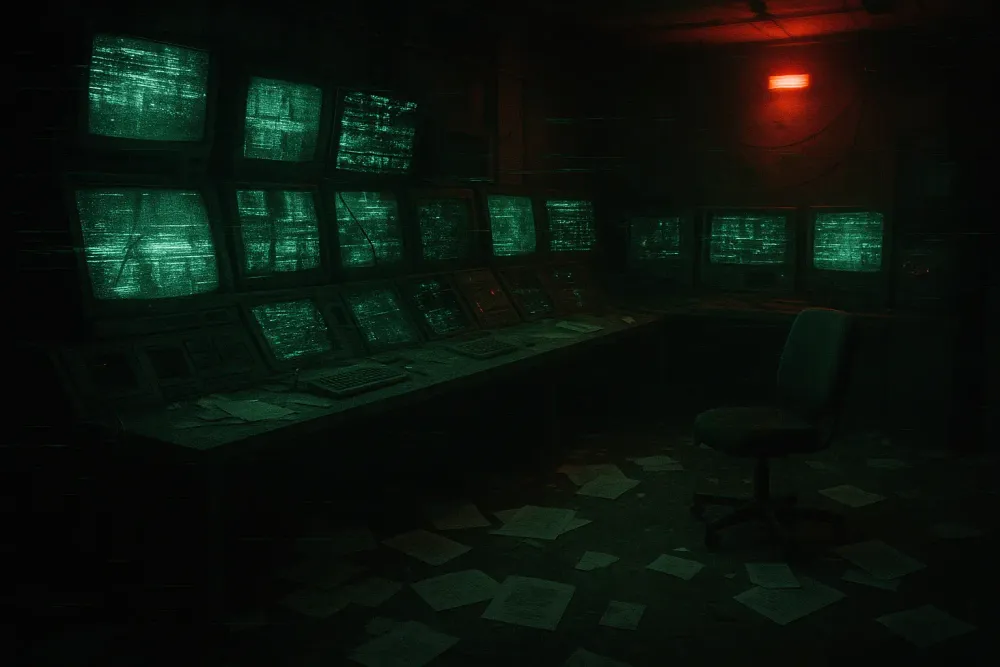
Secret Invasion arrives with one of the MCU’s juiciest premises: a clandestine Skrull insurgency, a wounded Nick Fury pulled back from orbit to fix a problem only he can read, and a tone that promises John le Carré by way of Marvel. On paper, it’s perfect. In practice, the series often feels smaller than its ideas, delivering moody atmosphere and standout scenes while leaving too much potential on the table.
🧩 Story & setup — Paranoia as a playground
Years after the promise to find Skrulls a home, factions have splintered. Gravik leads a radicalized group who’ve grown tired of waiting, embedding agents across governments and media. Terror escalates precisely because no one can tell who’s real.
That’s the hook. And in early episodes, it works. Cuts to black, hushed meetings, sudden betrayals—the show convinces you that every handshake is a trapdoor. Fury’s return (older, slower, rattled) is the emotional anchor: he’s not the omniscient puppeteer anymore; he’s a man who stayed away too long and broke more than he mended.
But the further we go, the more the plot funnels toward a conventional showdown. The conspiracy narrows, the world shrinks, and the stakes—meant to be existential—collapse to a handful of sets and a timeline that feels rushed.
🧠 Characters — Great performances, uneven arcs
-
Nick Fury (Samuel L. Jackson): Tired, haunted, and human. Jackson leans into vulnerability without losing the coiled menace that made Fury iconic. His best scenes are quiet ones: apologies that come late, a lie told too well, a truth told too softly.
-
Talos (Ben Mendelsohn): The beating heart. A father and reluctant general whose idealism keeps scraping against reality. His scenes with Fury rekindle the emotional core established in Captain Marvel—two old friends arguing about the bill for promises made.
-
Sonya Falsworth (Olivia Colman): A glorious chaos agent. Colman steals every scene with gleeful ruthlessness, wielding smiles like scalpels. She’s the show’s most confident tonal swing—and it lands.
-
Gravik (Kingsley Ben-Adir): Charismatic, wounded, and underwritten. The motivation is credible; the execution is hurried. His ideology deserves more room than speeches delivered between set pieces.
-
G’iah (Emilia Clarke): A daughter caught between cause and conscience. Her late-game power pivot reframes the conflict but also exposes the show’s tendency to escalate without earning escalation.
Strong ingredients, then—but arcs sometimes stop where they should turn, and turns sometimes leap where they should build. The result is a string of memorable moments that don’t always cohere into memorable growth.
🎛️ Tone, craft & espionage flavor
When Secret Invasion leans into espionage texture, it shines: dead drops, burner phones, coded signals, compromised safehouses. The sound design hums with dread; the score presses like a held breath. Conversations carry barbs; even the light feels interrogatory.
Visually, the show favors grounded locations—grey offices, chilly apartments, underlit basements—over cosmic splendor. That restraint sells the premise: if shapeshifters are everywhere, spectacle is the enemy of tension.
The issue isn’t the tone; it’s consistency. Episodes oscillate between sharp spycraft and hurried MCU escalations. By the time “the thing everyone is chasing” becomes literal super-DNA, the series has drifted away from the delicious paranoia it promised.
💥 Action & set pieces
Action here is quick, brutal, and often personal—close-quarters scuffles, executions that land like slaps, gunfights that feel messy rather than balletic. That’s a feature, not a bug, for a spy story.
But the finale leans into CGI power-ups, trading cat-and-mouse tension for a super-powered slugfest. It’s not bad, exactly; it’s just the opposite of what made the earlier episodes tick. The intimate becomes generic. The thesis—trust no one—turns into punch the big bad.
🧭 MCU fit & consequences
The series wants to ripple outward: presidential decisions, public panic, the ethics of infiltration, the cost of broken alliances. When it stops to imagine those consequences, it’s gripping. A single speech can move the setting’s Overton window; a single reveal can scramble a decade of trust.
Yet the follow-through is thin. After six episodes, the geopolitical board should look radically different. Instead, most pieces slide back toward familiar squares, as if the show was afraid to scar the wider MCU. For long-time fans, that hedging feels like a missed opportunity.
🎯 What works (a lot)
- Jackson’s lived-in Fury: tired eyes, razor tongue, and a moral calculus that’s finally catching up to him.
- Colman’s Sonya: the joyful monster of the piece, iconically British and casually terrifying.
- Mendelsohn’s Talos: decency weaponized; sincerity as insurgency.
- Paranoia craft in the early run: interrogations with teeth, doubles and triple crosses that make emotional sense.
- A real point of view about broken promises and the people who pay for them.
🧱 What falters
- Pacing: sprint-stop-sprint structure that compresses revelations and dilutes tension.
- Scale: a global conspiracy staged like a provincial quarrel.
- Antagonist depth: Gravik’s worldview is compelling; the room he’s given to express it isn’t.
- Endgame choices: escalation to power fantasy undercuts the grounded thriller the show sells best.
👨👧👦 Our experience & recommendation
From a family angle, Secret Invasion is best for teens and up. The violence includes executions, torture implications, and a persistent air of dread. Younger viewers might find it bleak; older teens may be riveted by the “who can you trust?” hook.
As Marvel fans, we wanted this to be the definitive Fury story—a meditation on the cost of secrets with the courage to dent the MCU’s status quo. What we got is a good series with great scenes, haunted by the specter of a great series it could have been. The mood, performances, and early plotting are strong enough to recommend; just calibrate expectations for a finale that won’t shake the universe the way its premise suggests.
🕵️ Nick Fury’s decline and the show’s most honest choice
Secret Invasion is built around Nick Fury as a declining man — older, tired, less certain than the version we’ve watched operate in the background of the MCU for fifteen years. The show takes seriously the idea that the spy who always had a plan might have run out of plans, that the man who assembled the Avengers might not be able to assemble the right team for this particular threat. This is not a comfortable idea for a franchise that usually treats its legacy characters as inexhaustible resources.
Samuel L. Jackson plays it with a quality he rarely gets to use in the MCU — genuine uncertainty, physical diminishment, emotional exposure. The performance is quieter than the character’s reputation suggests, and that restraint is the point. Fury made promises to a refugee population that he never fulfilled. The Skrulls waited. Secret Invasion is the bill coming due, and Jackson makes sure you feel the weight of it in every scene.
This is what the show’s overall reception tended to undervalue. The finale’s power-fantasy pivot drew the most attention, and the criticism is fair — but Fury’s arc underneath that pivot is one of the more honest character declines the MCU has attempted. A man reckoning with what his secrecy cost the people who trusted him is exactly the story this character needed, even if the show doesn’t always find the room to tell it properly.
Pros
- Samuel L. Jackson’s most vulnerable and layered Nick Fury yet
- Olivia Colman’s scene-stealing Sonya Falsworth
- Early-episode paranoia, spycraft, and moral ambiguity land
- Talos/Fury dynamic gives the show its human core
Cons
- Uneven pacing and a rushed, power-heavy finale
- Global stakes staged on too small a canvas
- Gravik’s ideology deserved deeper exploration
- Big swings without lasting consequences for the wider MCU
🗣️ Conclusion
Secret Invasion is a moody, well-acted spy story that never fully becomes the seismic event its logline promises. As character study—especially of Nick Fury—it’s frequently excellent. As a paranoid thriller, it’s compelling until the final sprint. As an MCU chapter, it’s cautious where it should be bold. Worth watching for the performances and the vibes; just don’t expect the ground to shift beneath your feet.
📺 Movie night sorted: thousands of films and shows are streaming on Prime Video — free for 30 days. Worth a look before you buy the disc.
Related Dadnology review: The Marvels – Cosmic Chaos With Heart (and a Lot of Cats)
📌 FAQ – Frequently asked questions
Do I need to watch Secret Invasion for the MCU timeline?
Are there post-credit scenes?
When does Secret Invasion take place?
Is Rhodey a Skrull here—and since when?
How violent is it for kids?
Is Secret Invasion essential MCU viewing?
Does Secret Invasion connect to The Marvels?
Keep this in your inbox
One email a week: what we actually watched, built and reviewed — the stuff worth a dad's time. No hype, no daily spam.
Dadnology Weekly
One email a week: the LEGO, gaming and movie news worth a dad's time — plus what we actually reviewed. No hype, no daily spam.
Disclaimer: This review and its visuals were created with the help of AI. Some links may be affiliate links – we may earn a commission if you make a purchase, at no extra cost to you.
Current deals in Movies & TV
Verified live discounts tracked on Amazon
![The Legend of Korra — The Complete Series [Blu-ray]](https://m.media-amazon.com/images/I/51+1TXyb7aL._SL500_.jpg)
Movies & TV · Tested by Dadnology
The Legend of Korra — The Complete Series [Blu-ray]
4.5/5“A new Avatar, a modern city, a masked revolution”Read our review
Movies & TV · Tested by Dadnology
Zack Snyder's Justice League (4K Ultra HD)
4/5“Four hours. One vision. This is the film.”Read our review
Movies & TV · Tested by Dadnology
Space Jam (4K Ultra HD + Digital)
4/5“It's gonna be a whole new ball game”Read our reviewYou might also like
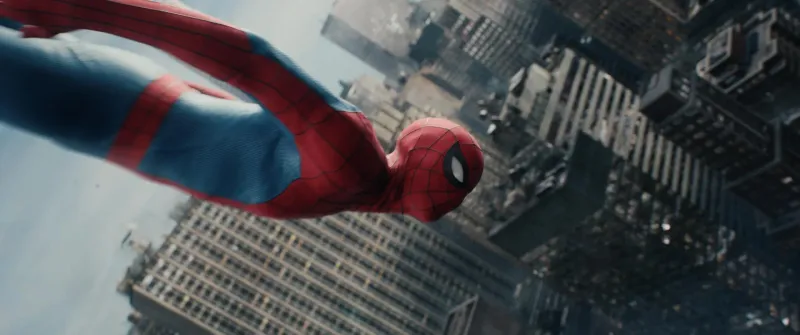
Spider-Man: Brand New Day review: The best Marvel film yet made
Spider-Man: Brand New Day is the best Marvel film we've ever seen. Tom Holland delivers his finest performance across four films, Sadie Sink's Jean Grey is a genuine highlight, and the Hulk/Punisher integration works far better than it has any right to. Action, comedy, goosebumps and quiet moments, all in one film. A perfect 5/5.
Daredevil: Born Again – Season 2: The devil and the Kingpin hit harder
Season 2 of Born Again proves the reboot was no fluke. Daredevil simply rocks here — bruising action, real emotional stakes, and Vincent D'Onofrio's Fisk continuing his reign as one of the best villains on TV. The Jessica Jones appearance is a genuine highlight (more of her, please), and episode 8 is a flawless, goosebump-inducing 10. The season as a whole lands an excellent 4/5 — and that finale alone is worth the subscription.
MCU watch order 2026 – All Marvel movies & series in timeline
As a lifelong Marvel fan, the MCU is more than a movie franchise – it's an emotional journey through heroism, sacrifice, and epic storytelling. The way films and series connect across timelines, characters, and genres is absolutely unique in cinema history. From Iron Man's first flight to the multiverse madness of recent phases, every chapter adds depth and excitement to this living, breathing universe. Whether you're watching solo or with your kids, the MCU delivers action, humor, and heart like no other. It's not just a saga – it's a part of my world.