
She-Hulk: Attorney at Law – Season 1: Not your average Hulk story
She-Hulk offers a unique, comedic take on the MCU with courtroom drama and fourth-wall breaks. It’s bold and entertaining, but not for everyone.
This post contains affiliate links. We may earn a commission if you make a purchase, at no extra cost to you. As an Amazon Associate, Dadnology earns from qualifying purchases.
🌌 Introduction
This review is part of the MCU Watch Order – explore all Marvel shows and movies in timeline order!
The MCU goes full sitcom in She-Hulk: Attorney at Law, a series that’s equal parts Ally McBeal, superhero spoof, and pop-culture commentary. It’s a divisive show—but one that’s daring in its format and refreshingly different in its execution.
🧩 Plot – A legal life with a Super twist
Jennifer Walters is a successful lawyer and cousin to Bruce Banner. After a car accident exposes her to his blood, she transforms into She-Hulk—a 6-foot-7 green powerhouse with all the strength of the Hulk and none of the rage issues.
But rather than jumping into world-saving battles, Jen wants to keep her job, her normal life, and her dating profile. What unfolds is a legal dramedy sprinkled with superpowers, celebrity cameos, and Marvel in-jokes.
Each episode tackles a new legal case—whether it’s a shape-shifter faking an identity or Wong suing a rogue magician. These mini-arcs are often hilarious and light-hearted, though sometimes lacking in consequence.
⚖️ Jennifer Walters – Relatable, real, and radiant
Tatiana Maslany is the perfect casting choice. She grounds the series with warmth, charm, and just the right amount of sarcasm. Her Jennifer is someone juggling responsibility, identity, and the weight of becoming something she never asked for.
Jennifer’s struggle to be taken seriously—as a woman, a lawyer, and a Hulk—is a recurring and relatable theme. The show explores sexism in the workplace, toxic fandom, and online harassment without becoming preachy.
Her fourth-wall-breaking asides also make her the Deadpool of the Disney+ era—but with a very different tone.
🧠 Humor and meta-hijinks – A love-it-or-leave-it approach
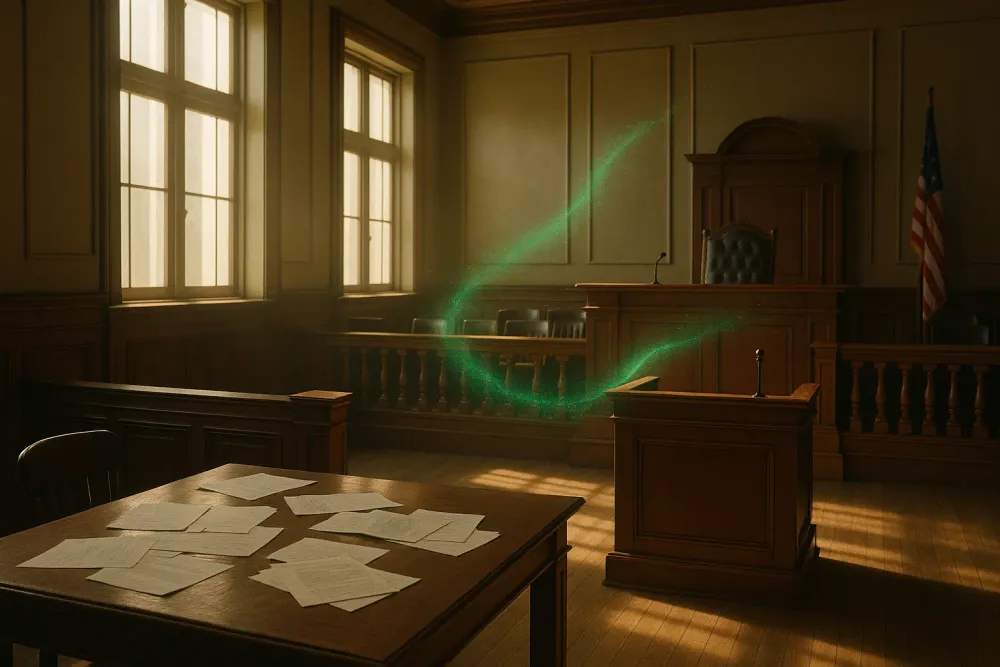
Let’s talk about the elephant in the courtroom: She-Hulk doesn’t follow MCU rules. It breaks them—intentionally.
The show is self-aware to the extreme. It parodies Marvel tropes, critiques fan culture, and even rewrites its own ending by having Jen literally confront the show’s writing algorithm. It’s gutsy, but polarizing.
Some will find this clever and refreshing. Others might call it cringey or off-tone. Your enjoyment of She-Hulk likely depends on your tolerance for tongue-in-cheek comedy and genre-bending.
🧬 Cameos galore – Hulk, Wong, Daredevil & more
One of the show’s biggest draws is its guest stars. Bruce Banner appears early on to help Jen understand her powers—giving fans a peek into the quieter side of Hulk life. (Yes, Smart Hulk is still a thing.)
Wong is a scene-stealer as usual, particularly in his magical litigation episodes. And then there’s Daredevil. Charlie Cox returns in full form, both as Matt Murdock and the man without fear—bringing some serious chemistry to Jen’s love life.
These appearances keep MCU fans engaged, even when the story drifts.
🎬 Visuals and VFX – A mixed bag
Here’s where the cracks show. The CGI for She-Hulk has been widely criticized—and not without reason. While some episodes look solid, others suffer from janky animations or lighting issues, especially in daylight scenes.
That said, the stylized courtroom sets and visual jokes (like onscreen text commentary) make up for it with creativity. The focus is clearly on tone rather than spectacle.
This isn’t Endgame, and it’s not trying to be.
👨👧👦 Family viewing – Know what you’re getting
Despite the sitcom vibe, this show is more suited for teens and adults. There’s suggestive humor, dating scenes, and themes around internet toxicity and harassment that might go over younger viewers’ heads.
But for older kids and adults, it’s a fun detour from the usual MCU formula—and one that invites discussion.
💚 The fourth wall as feminist critical tool
She-Hulk: Attorney at Law is not the first superhero story to break the fourth wall — Deadpool got there first and made it a franchise. But what Deadpool uses the device for (anarchic self-awareness, genre parody) is fundamentally different from what Jen Walters uses it for. When she turns to the camera, she’s not congratulating herself on how meta she’s being. She’s complaining. Specifically, she’s complaining about what the genre is doing to her.
The superhero genre was built, by and large, around male fantasies of transformation and consequence. The hero is given power. He struggles with it. He accepts it. He uses it to save people who matter to him. The structure is ancient. She-Hulk drops a woman into that structure and then has her notice what’s wrong with it.
When Jen pushes back against the expected transformation-as-climax arc — “I’m not doing the whole ‘hero journey’ thing, I watched enough movies, I’m fine” — it reads as a joke, but it’s also a genuine observation. The genre beat exists because the male hero’s emotional journey toward accepting power is the point. For Jen, a woman who has already been navigating a world that underestimates her for her entire career, the acquisition of additional strength is not a revelation. It’s a complication.
The show’s sharpest fourth-wall moments are the ones where Jen objects to being positioned as property in a conflict between men — the Intelligencia subplot, which is essentially organized male resentment at a woman who dared to be strong without earning it in ways the resenters recognize — and when she notes that she’s being asked to do the emotional labor in situations she didn’t create. These aren’t just jokes about tropes. They’re observations about patterns that exist in the real world and that the genre, rather than critiquing, has historically reproduced.
The device has a cost, and the show earns credit for not hiding it. When the commentary becomes more interesting than the story it’s commenting on, you feel it. Some episodes are more concerned with pointing at a problem than with dramatizing it, and the pointing occasionally goes slack. The critique can outrun the show.
The finale — where Jen breaks through the Disney+ interface and into Marvel Studios itself, demanding a rewrite from an AI-powered Kevin Feige stand-in — is either the most ambitious piece of meta-television Phase 4 produced or its most self-indulgent, depending on your tolerance threshold. What keeps it from collapsing entirely is Tatiana Maslany’s performance throughout: Jen’s exasperation is always genuine, never performed as clever, and that genuine quality is what the device requires to function. Without it, the whole construction would feel like a show congratulating itself. With it, it mostly works.
⚖️ Jennifer Walters, attorney: The legal procedural that got lost
The show’s premise is precise in a way that most superhero origin framing is not: Jennifer Walters is a lawyer who happens to be She-Hulk, not a superhero who maintains a legal day job on the side. The distinction matters. The Hulk is not Jen’s identity — it’s a complicating factor in the life she built for herself before any of this happened. She already had a career. She already had an identity. She didn’t need the powers, and she doesn’t particularly want what comes with them.
This framing promises something the genre rarely delivers: a procedural where the superhero elements are the disruption rather than the point. Most superhero shows eventually subordinate the civilian life — the job, the relationships, the ordinary responsibilities — to the hero life. She-Hulk keeps resisting this. Jen doesn’t want to save the world. She wants to win her cases and be taken seriously as a lawyer, and the show follows her through a sequence of cases that are, genuinely, the substance rather than the setup.
The legal structure turns out to be an excellent comedy framework for a world where the rules were written before half the population could turn into giant green people. Who has standing to sue a shape-shifter who stole their identity? Does superhero transformation count as a disclosure obligation? What is the legal status of a magical contract enforced by a sorcerer? The show finds genuine comedic material in these questions rather than using them as a thin pretext for action sequences.
The Emil Blonsky subplot is the season’s most sustained character work outside of Jen herself. Tim Roth’s Abomination — paroled, transformed into a wellness retreat guru — commits to an earnest absurdity that the show never winks at hard enough to undercut. His genuine belief in his own redemption, and Jen’s genuine legal obligation to advocate for it regardless of what she privately thinks, gives the subplot a tension the show doesn’t always sustain elsewhere.
The unresolved tension in the show is structural: She-Hulk wants to be a legal procedural that happens to have a superhero premise, but Marvel’s production machinery keeps nudging it toward being a superhero show that happens to have a courtroom. The season ends without resolving this tension so much as acknowledging it — the finale is more interested in commenting on the problem than solving it. That’s honest, at least, even if it leaves the show as a promising form that didn’t quite get to demonstrate its full potential.
Pros
- Tatiana Maslany shines as Jennifer Walters
- Unique legal-comedy format
- Great cameos (Hulk, Wong, Daredevil)
- Bold fourth-wall-breaking meta humor
Cons
- Inconsistent visual effects
- Weak overarching villain plot
- Not every joke lands
- Ending may feel too absurd for some viewers
🎯 Conclusion
She-Hulk – Season 1 dares to be different—and that’s both its strength and its flaw. It’s a show that knows exactly what it wants to be: quirky, self-aware, and full of sass. Jennifer Walters is a breath of fresh air in a franchise filled with galaxy-shaking battles and tortured heroes. While not every episode hits the mark, and the ending may test your patience, She-Hulk remains a fun, low-stakes MCU comedy with plenty of heart.
📺 Movie night sorted: thousands of films and shows are streaming on Prime Video — free for 30 days. Worth a look before you buy the disc.
Related Dadnology review: Ms. Marvel
❓ FAQ – Frequently asked questions
Is Bruce Banner (Hulk) in She-Hulk?
What’s the connection to Daredevil?
Are there post-credit scenes?
Is She-Hulk required viewing for the MCU?
What’s with the ending? Did She-Hulk really rewrite her own show?
Keep this in your inbox
One email a week: what we actually watched, built and reviewed — the stuff worth a dad's time. No hype, no daily spam.
Dadnology Weekly
One email a week: the LEGO, gaming and movie news worth a dad's time — plus what we actually reviewed. No hype, no daily spam.
Disclaimer: This review and its visuals were created with the help of AI. Some links may be affiliate links – we may earn a commission if you make a purchase, at no extra cost to you.
Current deals in Movies & TV
Verified live discounts tracked on Amazon
![The Legend of Korra — The Complete Series [Blu-ray]](https://m.media-amazon.com/images/I/51+1TXyb7aL._SL500_.jpg)
Movies & TV · Tested by Dadnology
The Legend of Korra — The Complete Series [Blu-ray]
4.5/5“A new Avatar, a modern city, a masked revolution”Read our review
Movies & TV · Tested by Dadnology
Zack Snyder's Justice League (4K Ultra HD)
4/5“Four hours. One vision. This is the film.”Read our review
Movies & TV · Tested by Dadnology
Space Jam (4K Ultra HD + Digital)
4/5“It's gonna be a whole new ball game”Read our reviewYou might also like
X-Men '97 Season 2 review: Apocalypse rises, Magneto falls
Season 2 trades Season 1's speedrun pacing for real confidence, using three timelines and a returning cast we now know intimately to tell its best story yet — right up to a finale that hurts in exactly the way great X-Men stories are supposed to.
Spider-Man: Brand New Day review: The best Marvel film yet made
Spider-Man: Brand New Day is the best Marvel film we've ever seen. Tom Holland delivers his finest performance across four films, Sadie Sink's Jean Grey is a genuine highlight, and the Hulk/Punisher integration works far better than it has any right to. Action, comedy, goosebumps and quiet moments, all in one film. A perfect 5/5.
LEGO 67006 The Marvel Skyline revealed: 1,261 pieces of superhero architecture
LEGO has announced The Marvel Skyline (67006): a 1,261-piece 18+ microscale Architecture-style model spanning Wakanda, Oscorp, and Xavier's School.