
Young Jedi Adventures review – The perfect Star Wars gateway
Young Jedi Adventures is the perfect Star Wars gateway for ages 4 to 7 — gentle, values-driven, and genuinely charming. The parenting pipeline starts here.
This post contains affiliate links. We may earn a commission if you make a purchase, at no extra cost to you. As an Amazon Associate, Dadnology earns from qualifying purchases.
The Star Wars parenting pipeline
After three sessions watching this with my 5-year-old, I can confirm two things: Young Jedi Adventures has outlasted three different Lego Technic sets in terms of sustained attention, and Nubs — the small, round Pooba Jedi who communicates mostly in expressive squeaks — has become a household deity. High praise, both of them.
Here is the honest framing for this review: Young Jedi Adventures is a 4/5 that earns every point of that score by doing its specific job brilliantly. That job is not “entertain adults who love Clone Wars.” That job is “introduce a 4-year-old to the Star Wars universe in a way that is safe, warm, values-rich, and genuinely delightful.” Judged against that benchmark, Young Jedi Adventures is nearly perfect.
Set in the High Republic era — approximately 200 years before A New Hope, a period when the Jedi Order was at its most active and optimistic — the show follows three young Jedi students: Kai Brightstar, a brave and enthusiastic young human; Lys Solay, thoughtful and empathetic; and Nubs, the aforementioned Pooba who operates as the emotional heart of the team and the most effective piece of character design in the High Republic initiative.
The High Republic for tiny humans
The High Republic as a setting is a genuinely interesting choice for a children’s show. By placing the story 200 years before the films, the writers freed themselves from the need to reference any prior Star Wars knowledge — no mention of Darth Vader, no Death Stars, no Palpatine. Young viewers arriving with zero Star Wars background are on equal footing with children who have already seen the films.
The High Republic is also, deliberately, a more hopeful era than most Star Wars stories occupy. The Jedi are trusted community figures, not hunted survivors. The galaxy is being actively explored and connected. There is genuine optimism in the storytelling premise, and that optimism is the right emotional foundation for content aimed at four-year-olds.
The show uses the setting to create a variety of locations — forest planets, trading outposts, ancient temples, diverse alien communities — that give the animation team room for beautiful, varied backgrounds. The art direction is genuinely impressive for a children’s show. The colors are warm, the character designs are clear and expressive, and the alien diversity of the High Republic is well represented.
What makes it work for 4-year-olds
The core mechanics of Young Jedi Adventures are precisely calibrated for the target age. Every episode follows a similar structure: a problem appears, the young Jedi attempt to solve it, there is usually a complication, and the resolution comes through cooperation, honesty, or listening to others rather than through combat or power.
There is no violence. Characters are not hurt. Conflicts are resolved through communication. The Jedi younglings fail sometimes, and learning from failure is framed as entirely normal rather than shameful. These are exactly the values early childhood development research suggests you want to reinforce in 4 to 6-year-olds, packaged inside a beloved franchise.
The voice acting is excellent. The pacing is appropriate — episodes are short enough to hold attention without being so brief they feel incomplete. And the humor, which is gentle and physical rather than ironic or adult-facing, lands consistently at the target age level.
What the show absolutely does not do — and is not trying to do — is hold adult attention. Parents watching alongside their children will find it gentle to a point that approaches meditative. That is fine. The show is not for you. Judge it by whether it works for its intended audience.
The values hidden in the gentle stories
The underrated thing about Young Jedi Adventures is how well it embeds actual values without being didactic. The lessons are always implicit in the story rather than delivered as speeches.
An episode about Kai’s impatience teaches him why slowing down and listening matters — not through a lecture from a master, but through watching what his impatience costs his friends. An episode about honesty shows the specific, concrete consequences of a small lie in a way four-year-olds can understand and follow. An episode about inclusion shows what it feels like to be left out, and why it matters to notice and respond to that feeling.
These are good lessons. Delivered badly, they feel like moral homework. Delivered through the Star Wars universe, through characters children have already invested in, they land differently. The show trusts young viewers to follow cause and effect even without explicit moralising.
The gateway function: A ten-year Star Wars plan
Here is the practical pitch for why this matters to parents: Young Jedi Adventures is the first step in a long, carefully sequenced Star Wars journey that, if managed well, ends with your teenager watching Andor with you and crying at the right moments.
The sequence, as best as the Dadnology household has mapped it, goes approximately like this. Young Jedi Adventures at ages 4 to 7, establishing the Force, the Jedi, the concept of the light side, and the fundamental idea of belonging to something larger than yourself. The Clone Wars at roughly ages 8 to 10, introducing genuine moral complexity, consequence, and the beginning of real emotional stakes. Rebels at 10 to 12, which takes the Clone Wars foundations and builds toward genuine darkness and the most beautiful animated Star Wars series ever made. Ahsoka at 12 or older, once they have done the animated homework. Andor by 14 or so, which is the best written Star Wars ever made and asks questions that need mature processing.
Young Jedi Adventures is genuinely the foundation of this pipeline. By the time a child who watched it at age 5 reaches Clone Wars, they already have an intuitive relationship with what the Force means, what a Jedi is, and why the community around them matters. The show does invisible preparatory work.
| Factor | Young Jedi Adventures | Resistance | Skeleton Crew |
|---|---|---|---|
| Target Age | 4-7 years | 6-10 years | 8-13 years |
| Parent Enjoyability | Very low (not designed for adults) | Low-moderate | Moderate-high |
| Violence Level | None | Mild | Moderate action |
| Star Wars Connection | High Republic, standalone | Sequel era, some film links | Post-Return of the Jedi |
| Gateway Effectiveness | Excellent for under-7s | Good for sequel-era fans | Best for Goonies-generation parents |
Rating it fairly: Not adult TV
The most common mistake in Young Jedi Adventures reviews is applying adult criteria to a children’s show. Critics who give it low marks for being “repetitive” or “too simple” are accurately describing the show’s properties while completely missing the point. Preschool television is necessarily repetitive by design — consistent structure helps young children feel safe and build anticipation. Simple conflict resolution is developmentally appropriate, not a storytelling failure.
The 4/5 rating reflects what the show sets out to do and how well it does it. It is not a rating relative to Clone Wars or Rebels. It is a rating that says: if you put this on for your 4-year-old, it will introduce them to Star Wars values in the warmest possible way, the production quality is excellent, and Nubs alone is worth the subscription.
No show in the Star Wars animated catalogue does a better job for its specific audience. That is what earns the 8.
Pros and cons
Pros
- Perfectly calibrated for ages 4 to 7 — the most appropriate Star Wars content for that age group
- Values-rich storytelling without being preachy — lessons are implicit in the story
- Nubs is an outstanding character design — immediately beloved by young viewers
- Beautiful art direction for a children's show — the High Republic looks genuinely inviting
- Completely safe viewing — no violence, no deaths, entirely appropriate for preschoolers
- Strong gateway function — builds Star Wars intuition that enriches all future viewing
Cons
- Not designed for adults — parent co-viewing at this age is an act of love, not entertainment
- Deliberately repetitive episode structure, which is developmentally correct but can feel predictable to parents
- The High Republic era connections to the wider saga are not accessible to very young viewers
From the screen to the shelf: for the youngest fans, a fun brick build like the LEGO Dark Falcon (75389) review fits the bill — and the best LEGO Star Wars sets guide and LEGO Star Wars hub cover more.
The verdict: The perfect first step
Star Wars: Young Jedi Adventures is not the show you watch because you love Star Wars. It is the show you put on because you love your child and you want Star Wars to mean something to them the way it means something to you.
Kai, Lys, and Nubs are warm, well-designed, values-rich companions for a 4-year-old’s first steps into a larger world. The show does invisible work — building the emotional and conceptual vocabulary that will make Clone Wars land properly four years from now, and Rebels properly after that, and Andor properly after that.
The parenting pipeline is real. Nubs is non-negotiable.
The Final Word: Start here. Your future Saturday-night Star Wars co-viewing sessions depend on it.
🧒 Screen time you can feel good about: Amazon Kids+ bundles kid-safe shows, books and games in one subscription — with parental controls that actually work.
Frequently asked questions
Is Young Jedi Adventures suitable for toddlers?
What age is Star Wars Young Jedi Adventures for?
Is Young Jedi Adventures canon?
Should I watch this before Clone Wars?
What is Nubs in Young Jedi Adventures?
Keep this in your inbox
One email a week: what we actually watched, built and reviewed — the stuff worth a dad's time. No hype, no daily spam.
Dadnology Weekly
One email a week: the LEGO, gaming and movie news worth a dad's time — plus what we actually reviewed. No hype, no daily spam.
Disclaimer: This review and its visuals were created with the help of AI. Some links may be affiliate links – we may earn a commission if you make a purchase, at no extra cost to you.
Current deals in Movies & TV
Verified live discounts tracked on Amazon
![The Legend of Korra — The Complete Series [Blu-ray]](https://m.media-amazon.com/images/I/51+1TXyb7aL._SL500_.jpg)
Movies & TV · Tested by Dadnology
The Legend of Korra — The Complete Series [Blu-ray]
4.5/5“A new Avatar, a modern city, a masked revolution”Read our review
Movies & TV · Tested by Dadnology
Zack Snyder's Justice League (4K Ultra HD)
4/5“Four hours. One vision. This is the film.”Read our review
Movies & TV · Tested by Dadnology
Space Jam (4K Ultra HD + Digital)
4/5“It's gonna be a whole new ball game”Read our reviewYou might also like
Star Wars Resistance review – Solid but not essential
Resistance is the animated show that exists in the gap between two stronger series. Competent, occasionally charming, and clearly aimed at a younger audience than Clone Wars or Rebels. Kids who loved the sequel era will enjoy it; adults can safely deprioritize. 3.5/5.
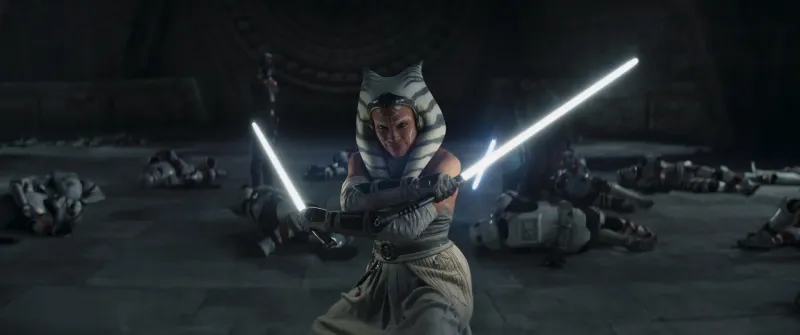
Ahsoka review – The best live-action Star Wars series
Confusing cold, a masterpiece prepared. Ahsoka is a direct sequel to Rebels and the best live-action Star Wars series there is — provided you watch Clone Wars and Rebels first. Do the homework. Rating: 5/5.
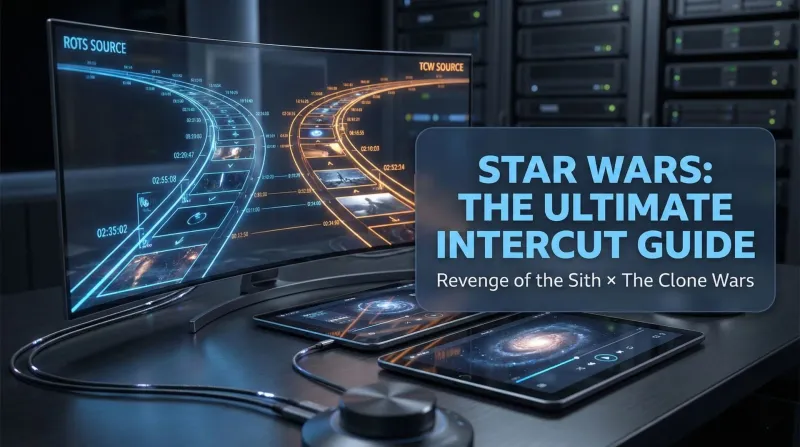
How to watch Star Wars: Revenge of the Sith with The Clone Wars
Intercutting Revenge of the Sith with The Clone Wars S7 (episodes 9–12) elevates the film from good to unforgettable. The parallel timelines restore scale and heart—Ahsoka and Rex mirror and challenge Anakin’s path, politics gain teeth, and Order 66 hits like a freight train. Use our exact timestamps and scene cues for a smooth, one-night experience. It won’t fix every clunky line, but the net gain is massive. For Star Wars families, this is the way.