
The Core review: A deep-Earth expedition into pure guilty pleasure territory
A review of the 2003 sci-fi spectacle The Core. Why this underground journey is an essential watch for disaster fans.
This post contains affiliate links. We may earn a commission if you make a purchase, at no extra cost to you. As an Amazon Associate, Dadnology earns from qualifying purchases.
🌪️ This review is part of the Top 30 Natural Disaster Movies – see where every disaster movie lands in our definitive ranking.
At Dadnology, we love a movie that solves a global problem with pure engineering (and a lot of nukes). The Core is a standout because it takes the concept of the “Hero’s Journey” literally—plunging us 4,000 miles beneath our feet.
Released in 2003, it was the subterranean answer to the space-obsessed 90s. If we can’t fly high, we’ll drill deep. While it doesn’t reach the emotional 5/5 heights of The Perfect Storm, it is a mandatory 3.5/5 for any disaster fan who enjoys high-stakes “what-if” scenarios.
1. The “Terranauts”: An expert group of misfits
The film shines thanks to its cast. Aaron Eckhart plays the brilliant geophysicist Dr. Josh Keyes, who discovers the rotation issue. But the real stars are the specialists: Hilary Swank as the ambitious pilot, Stanley Tucci as the arrogant star scientist, and Delroy Lindo as the genius who built the ship “Virgil” in the desert.
This is the classic Dadnology “Expert Group.” Everyone has a specific job; everyone is the best in their field. Stanley Tucci, in particular, steals every scene he’s in with his witty, condescending remarks. The chemistry inside the ship—while the hull groans under millions of tons of pressure—creates genuine tension despite the absurdity of the premise.
2. The Virgil: The ultimate subterranean “dad-mobile”
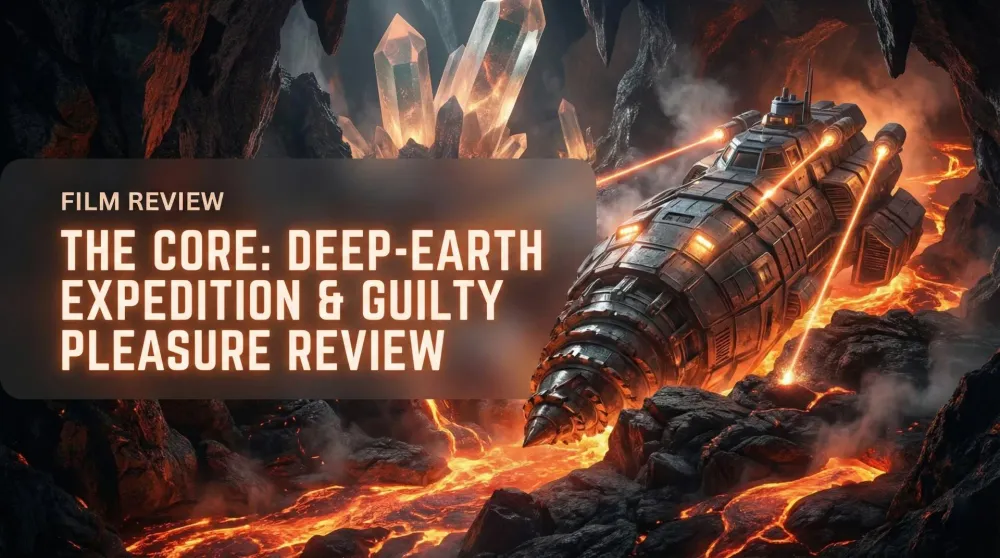
Forget the Tesla or the grill—the Virgil is what we really want. It’s a ship made of modular segments, utilizing laser beams to melt solid rock, and constructed from a material that gets stronger as the pressure increases.
The visual effects inside the Earth—from giant diamond geodes to oceans of liquid magma—are fantastically designed. On a modern display, the contrasts between the dark rock and the glowing core are still impressive. It operates on the “Rule of Awesome”: if it looks cool and drives the plot, we don’t worry about the laws of thermodynamics.
| Character | Role | The 'Dad' Rating |
|---|---|---|
| Dr. Josh Keyes | The Thinker | 9/10 - Finds a solution for every global catastrophe. |
| Dr. Ed 'Braz' Brazzelton | The Inventor | 10/10 - Built a ship in the desert. Ultimate respect. |
| Rat | The Hacker | 8/10 - DJ Qualls controls the internet's flow of information. |
| Commander Iverson | The Leader | 9/10 - Bruce Greenwood is the rock the team needs. |
3. The home theater workout: When the Earth shakes
If you want to know if your subwoofer can handle sustained, low-frequency pressure, The Core is your best test candidate.
- Low-End Punch: The drilling sequences and the moments where the Virgil breaks through solid crystal structures generate a physical bass that you can feel in your seat.
- Atmospheric Detail: The creaking of the hull under pressure and the roar of the magma around the ship utilize the surround channels excellently to pull you into the cockpit.
4. The logic of disaster: Bad science, good action
The Core operates on the “Rule of Escalation.” It starts with pacemakers failing and ends with massive super-bolts of lightning leveling Rome. The science is absolutely bonkers (it won several ‘worst science’ awards from NASA), but the way the film commits to its own internal logic is admirable.
At its heart, it’s a movie about sacrifice. Much like Armageddon, the crew knows not everyone will make it back to the surface. These emotional beats are surprisingly effective, giving the film a human touch that grounds the “Unobtainium” nonsense.
5. The survival lesson: Improvise, adapt, overcome
What can we learn from The Core? When the plan fails, find a bigger hammer (or more nuclear warheads). It celebrates the human ability to find solutions under extreme pressure.
For the dads in our community, it’s the perfect film to switch off your brain and enjoy. It reminds us that sometimes you just have to keep the team together and stay the course, no matter how hot it gets outside. A well-earned 3.5/5 for the fun factor.
6. The anti-Armageddon (underground edition)
If the late 90s were obsessed with flying up to save the world — Armageddon, Deep Impact, Independence Day — then The Core is the contrarian answer that asks: what if the threat was beneath our feet? Released in 2003, it took the exact template of the all-star-team-on-an-impossible-mission disaster movie and pointed it straight down, drilling 4,000 miles into the planet instead of blasting into orbit. It’s essentially Armageddon in reverse, right down to the doomed-crew sacrifices and the “ragtag experts save humanity” structure. That novelty alone gives it a charm a hundred identical asteroid movies lack.
It’s also become a beloved cult artifact for its gloriously, proudly terrible science. The film was so cavalier with physics that it racked up “worst science in a movie” recognition, and the term “Unobtainium” — the magic material the ship Virgil is made from — became an industry punchline (James Cameron later borrowed it for Avatar). But there’s a difference between dumb-and-lazy and dumb-and-committed, and The Core is firmly the latter. It builds an internally consistent (if absurd) world and plays it with total sincerity, which is exactly why disaster fans have kept it in rotation for two decades.
7. Bad science, surprising heart
Here’s what separates The Core from genuinely bad disaster movies: it has a real cast doing real work, and it actually makes you care. Aaron Eckhart, Hilary Swank, Delroy Lindo, and a scene-stealing Stanley Tucci treat the material with just enough conviction (and Tucci with just enough wit) to ground the nonsense. When the inevitable sacrifices come — and like Armageddon, not everyone is making it back to the surface — they land with surprising emotional weight. That’s the secret ingredient: the film knows it’s silly, but it never treats its characters as disposable.
That blend of bonkers spectacle and genuine pathos is why The Core earns a respectable 3.5/5 rather than landing in the bargain bin. It’s a sustained low-frequency workout for your subwoofer, a parade of imaginative subterranean vistas (glowing geodes, oceans of magma), and a reminder that a disaster movie doesn’t need accurate science to be a great time — it just needs to commit. For switch-your-brain-off home-cinema fun, it remains a reliable, underrated pick.
Pros
- A genuinely novel 'drill down instead of fly up' premise
- A committed, likable cast led by a scene-stealing Stanley Tucci
- Imaginative subterranean visuals and set design
- Surprisingly effective emotional sacrifices
- A sustained, demo-worthy low-frequency subwoofer workout
Cons
- Award-winningly bad science from start to finish
- Overlong and slow in stretches of the descent
- Dated early-2000s CGI in a few wider shots
The final verdict
The Core is a 3.5/5 spectacle that isn’t afraid to be an old-school disaster flick. It offers a wild ride, great characters, and enough bass to wake the neighbors. If you’re looking for an adventure that ignores the laws of physics but keeps its heart in the right place, this journey to the center of the Earth is for you.
Who is it for? This is the disaster movie for fans of the Armageddon-style “expert team on a doomed mission” formula who want a fresh, subterranean spin on it. If you enjoy committed, big-hearted, scientifically-illiterate spectacle — and you’ve got a subwoofer that craves a workout — The Core is a hugely entertaining pick. It’s a solid older-kids family watch (PG-13, with some emotional farewells), and a great companion to Armageddon for a “up vs. down” disaster double bill. Leave your physics degree at the door, climb aboard the Virgil, and enjoy one of the most lovable guilty pleasures the genre has produced.
It’s worth a final word on why films like The Core endure while slicker, more “respectable” blockbusters fade. It’s because they’re made with genuine conviction rather than cynical calculation — you can feel that everyone involved, from the cast to the production designers dreaming up glowing geodes the size of cathedrals, was actually having fun. That sincerity is contagious. Two decades on, The Core is exactly the kind of unpretentious, big-hearted adventure that a dad can throw on for the kids on a rainy Sunday, knowing it’ll spark grins, eye-rolls, and maybe even a few questions about how the planet actually works. That’s a win in any home cinema, and a reminder that the disaster genre is at its most charming when it’s chasing wonder rather than realism. Sometimes the best journeys are the ones that ignore the map entirely.
📺 Movie night sorted: thousands of films and shows are streaming on Prime Video — free for 30 days. Worth a look before you buy the disc.
Related Dadnology review: Sunshine Review
Is 'Unobtainium' a real thing?
Why does the Earth's magnetic field matter?
Where was The Core filmed?
Keep this in your inbox
One email a week: what we actually watched, built and reviewed — the stuff worth a dad's time. No hype, no daily spam.
Dadnology Weekly
One email a week: the LEGO, gaming and movie news worth a dad's time — plus what we actually reviewed. No hype, no daily spam.
Disclaimer: This review and its visuals were created with the help of AI. Some links may be affiliate links – we may earn a commission if you make a purchase, at no extra cost to you.
Current deals in Movies & TV
Verified live discounts tracked on Amazon
![The Legend of Korra — The Complete Series [Blu-ray]](https://m.media-amazon.com/images/I/51+1TXyb7aL._SL500_.jpg)
Movies & TV · Tested by Dadnology
The Legend of Korra — The Complete Series [Blu-ray]
4.5/5“A new Avatar, a modern city, a masked revolution”Read our review
Movies & TV · Tested by Dadnology
Zack Snyder's Justice League (4K Ultra HD)
4/5“Four hours. One vision. This is the film.”Read our review
Movies & TV · Tested by Dadnology
Space Jam (4K Ultra HD + Digital)
4/5“It's gonna be a whole new ball game”Read our reviewYou might also like
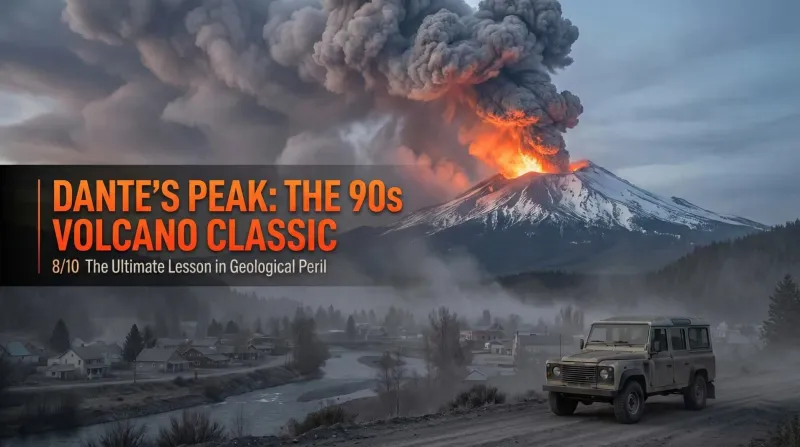
Dante’s Peak: Why this 90s volcano classic is the ultimate lesson in geological peril
Dante’s Peak is a 4/5 blast of nostalgia and heat. It perfectly captures the 'slow-burn' dread of a natural disaster before exploding into a chaotic, ash-drenched escape. With Pierce Brosnan bringing peak charisma and some of the best practical miniature work of the decade, it remains the king of the volcano sub-genre.
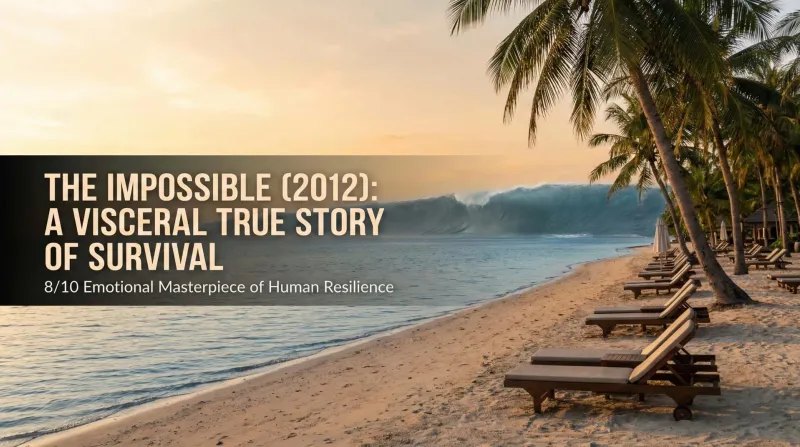
The Impossible: Why this heartbreaking true story is the gold standard for tsunami cinema
The Impossible is a 4/5 emotional juggernaut. It features one of the most terrifyingly realistic disaster sequences ever filmed, followed by a deeply moving exploration of human resilience. With incredible performances and a focus on the 'impossible' odds of survival, it is a mandatory, albeit difficult, watch.

The 10 best natural disaster movies of all time: The Dadnology elite
A perfect 5/5 collection. If you only have time for the legends, start here. This list features the most visceral sound design, the most heartbreaking sacrifices, and the best 'Dad-trucks' ever put on screen. These aren't just movies; they are experiences.