
The Falcon and the Winter Soldier – Season 1: A grounded MCU drama with uneven flight
Marvel’s grounded series tackles legacy, trauma, and identity. While not flawless, it's a meaningful step for the MCU's next era.
This post contains affiliate links. We may earn a commission if you make a purchase, at no extra cost to you. As an Amazon Associate, Dadnology earns from qualifying purchases.
🌌 Introduction
This review is part of the MCU Watch Order – explore all Marvel movies and shows in timeline order!
After Avengers: Endgame, the MCU had a monumental question to answer: Who would become the next Captain America? The Falcon and the Winter Soldier takes on that question headfirst, focusing on Sam Wilson and Bucky Barnes as they wrestle with legacy, grief, and the pressures of a fractured world.
As the second major Disney+ MCU series, it delivers a grounded, character-driven narrative — one that’s more political thriller than superhero epic.
🧩 Plot overview
Sam Wilson, still uncertain about wielding Steve Rogers’ shield, gives it up to the government — only to watch them appoint a new Captain America: John Walker. Meanwhile, Bucky struggles with his past and his identity in a post-HYDRA world.
The duo is forced to reunite when a group of radical super-soldiers, the Flag Smashers, threatens global stability. Along the way, they confront old enemies like Baron Zemo, encounter new faces like the mysterious Power Broker, and slowly rebuild their fractured friendship.
At its core, the show is about transition — personal, political, and symbolic.
⚖️ Strengths & weaknesses
The strength of the series lies in its leads. Anthony Mackie and Sebastian Stan have excellent chemistry, and their banter gives the show a buddy-cop energy that works well.
Thematically, it also takes bold steps: addressing racial identity, the burdens of heroism, and the symbolism of Captain America in a divided America. The introduction of Isaiah Bradley adds historical weight, highlighting how Black soldiers were treated in secret government programs.
However, the series stumbles in execution. The Flag Smashers are underdeveloped villains, and key plot points — especially involving the Power Broker — feel rushed or muddled. Some episodes meander, while others cram too much into a short runtime.
🎬 Action, tone & worldbuilding
Visually, the show delivers solid action sequences. The opening aerial chase is thrilling, and later fight scenes — especially those with John Walker — are brutal and emotionally charged.
Tonally, it shifts between serious political drama and buddy-comedy, not always successfully. When it works, it adds depth. When it doesn’t, the pacing suffers.
The series expands the post-Endgame world, giving us a glimpse into the global chaos left behind and how governments and institutions try to control the superhero narrative. It’s a relevant backdrop — but one that needed more room to breathe.
👨👧👦 Our experience & recommendation
For MCU fans, The Falcon and the Winter Soldier is still a must-watch. It may not have the narrative cohesion or character nuance of Daredevil or Agents of S.H.I.E.L.D., but it makes up for it with powerful moments and a significant character journey.
Watching it with older kids (12+) can spark conversations about justice, legacy, and what it means to carry a symbol. The show may not always soar, but it lands enough emotional punches to make the journey worthwhile.
🦅 Sam Wilson and the weight of the Shield
The central dramatic question of The Falcon and the Winter Soldier is whether Sam Wilson should pick up Steve Rogers’s shield and become Captain America. The show is honest that this question is not just about worthiness or succession — it is specifically about what it means for a Black man to take up the identity of America’s greatest symbol. That distinction is not decorative. It is the show’s load-bearing argument.
The Isaiah Bradley subplot is where this argument becomes irreducible. Bradley was a Black super-soldier subjected to government experimentation during the Korean War, imprisoned for thirty years for unauthorized combat actions that saved the lives of soldiers the government had already written off, and then erased from official history — so completely that even Nick Fury’s files had no record of him. He is not a minor backstory element. He is the show’s argument about what America actually did with the sacrifice of Black soldiers and what the Captain America mythology obscures. When Sam meets him and learns this history, the scene doesn’t play as an info-dump. It plays as a gut punch. Bradley has every right to his contempt, and the show doesn’t ask him to soften it.
This is what makes Sam’s final speech land. He doesn’t pretend the history didn’t happen. He doesn’t offer a resolution that erases it. He says: this is the country I live in, this is the symbol I’m holding, and I’m going to make it mean something anyway — not because America has earned it, but because people like Bradley deserve to have someone try. It is a conditional patriotism, and it’s more honest than most superhero films are willing to be.
Anthony Mackie has to carry the show’s political argument in his body language and make it feel earned rather than scripted. The final sequence — in the suit, with the shield, after everything the show has put him through — lands because Mackie has done the work across six episodes to get there. He doesn’t play Sam Wilson as a man who was always going to take the shield. He plays him as a man who chose to, knowing what it costs, knowing it doesn’t solve anything. That’s harder acting than it looks.
🔧 Bucky Barnes and the accountability ledger
Bucky Barnes is the show’s emotional throughline, working through what it means to have been the Winter Soldier — to have killed people not as a soldier operating under orders but as a controlled weapon, without consent, without memory, and then to have those memories returned. He is in therapy. His therapist has given him three rules. He’s violating all three of them constantly, and the show knows this is not a failing — it’s a man using the only frameworks available to him even when they don’t quite fit.
What Bucky’s arc actually requires is methodical, unglamorous, and specific. He has a list. Two lists: people he harmed and people who harmed him. The season requires him to work through both — to make direct amends where he can, to disentangle himself from the people who used him where he must. It’s presented without fanfare. The list isn’t a plot device. It’s a ritual he invented because he needed something concrete to hold onto when the abstract idea of accountability was too large to manage.
The Yori Nakajima subplot is where this gets genuinely difficult. Bucky befriended the father of a man the Winter Soldier killed, in the same neighborhood, under the pretense of regular human connection. He told himself it was making amends; the show reveals it was also avoidance — getting close to the grief without ever having to hand it over. The confrontation scene, when it finally comes, is the quietest and best thing in the series. It requires Bucky to let someone else carry the grief rather than managing it through action. He can’t fix it. He can only say what he did.
The Barnes-Wilson dynamic works because the show doesn’t rush it and doesn’t sentimentalize it. They are not friends at the start. They are two people Steve Rogers cared about, stuck together by circumstance, too tired and too complicated for easy warmth. The trust that builds between them is earned through proximity and shared experience — not through a montage, not through a heart-to-heart on a roof. By the finale they have each other’s backs, not because the story required a bond, but because they’ve been through enough together that anything else would be dishonest. That’s the show at its best: character development that arrives late, quiet, and completely legible.
Pros
- Strong performances by Anthony Mackie and Sebastian Stan
- Bold themes around race and legacy
- Great action set pieces
- Emotional character arcs and payoff
Cons
- Inconsistent pacing and tone
- Underdeveloped villains
- Rushed finale and twists
- Falls short of MCU’s best series
🗣️ Conclusion
The Falcon and the Winter Soldier – Season 1 tries to juggle legacy, trauma, and geopolitics — and while it doesn’t always succeed, it still delivers a meaningful evolution for Sam Wilson and Bucky Barnes. For fans of the MCU, it’s an important transition chapter, even if the storytelling could’ve flown a bit higher.
📺 Movie night sorted: thousands of films and shows are streaming on Prime Video — free for 30 days. Worth a look before you buy the disc.
Related Dadnology review: What If…? – Season 1: A Multiversal Experiment With Mixed Results
📌 FAQ – Frequently asked questions
Is *The Falcon and the Winter Soldier* essential viewing in the MCU?
What rating is the show suitable for?
Does Steve Rogers appear in the series?
Is this better or worse than *WandaVision*?
Who is Isaiah Bradley and why does he matter?
Does John Walker become a villain?
Keep this in your inbox
One email a week: what we actually watched, built and reviewed — the stuff worth a dad's time. No hype, no daily spam.
Dadnology Weekly
One email a week: the LEGO, gaming and movie news worth a dad's time — plus what we actually reviewed. No hype, no daily spam.
Disclaimer: This review and its visuals were created with the help of AI. Some links may be affiliate links – we may earn a commission if you make a purchase, at no extra cost to you.
Current deals in Movies & TV
Verified live discounts tracked on Amazon
![The Legend of Korra — The Complete Series [Blu-ray]](https://m.media-amazon.com/images/I/51+1TXyb7aL._SL500_.jpg)
Movies & TV · Tested by Dadnology
The Legend of Korra — The Complete Series [Blu-ray]
4.5/5“A new Avatar, a modern city, a masked revolution”Read our review
Movies & TV · Tested by Dadnology
Zack Snyder's Justice League (4K Ultra HD)
4/5“Four hours. One vision. This is the film.”Read our review
Movies & TV · Tested by Dadnology
Space Jam (4K Ultra HD + Digital)
4/5“It's gonna be a whole new ball game”Read our reviewYou might also like
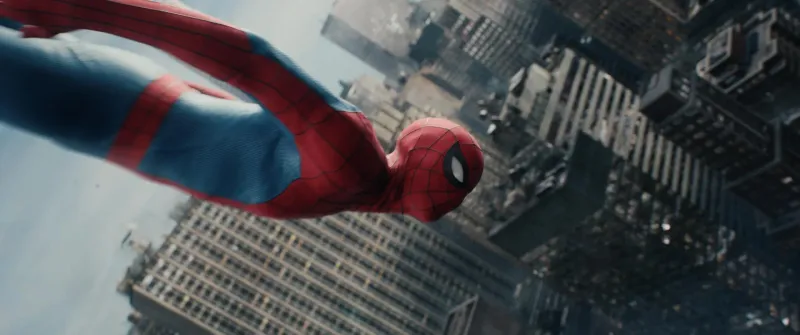
Spider-Man: Brand New Day review: The best Marvel film yet made
Spider-Man: Brand New Day is the best Marvel film we've ever seen. Tom Holland delivers his finest performance across four films, Sadie Sink's Jean Grey is a genuine highlight, and the Hulk/Punisher integration works far better than it has any right to. Action, comedy, goosebumps and quiet moments, all in one film. A perfect 5/5.
Daredevil: Born Again – Season 2: The devil and the Kingpin hit harder
Season 2 of Born Again proves the reboot was no fluke. Daredevil simply rocks here — bruising action, real emotional stakes, and Vincent D'Onofrio's Fisk continuing his reign as one of the best villains on TV. The Jessica Jones appearance is a genuine highlight (more of her, please), and episode 8 is a flawless, goosebump-inducing 10. The season as a whole lands an excellent 4/5 — and that finale alone is worth the subscription.
MCU watch order 2026 – All Marvel movies & series in timeline
As a lifelong Marvel fan, the MCU is more than a movie franchise – it's an emotional journey through heroism, sacrifice, and epic storytelling. The way films and series connect across timelines, characters, and genres is absolutely unique in cinema history. From Iron Man's first flight to the multiverse madness of recent phases, every chapter adds depth and excitement to this living, breathing universe. Whether you're watching solo or with your kids, the MCU delivers action, humor, and heart like no other. It's not just a saga – it's a part of my world.