
The Incredible Hulk – A lone monster in a growing universe
Edward Norton’s Hulk film delivers action and emotional weight — but feels a bit out of sync with the MCU.
This post contains affiliate links. We may earn a commission if you make a purchase, at no extra cost to you. As an Amazon Associate, Dadnology earns from qualifying purchases.
🎬 Introduction
This review is part of the MCU Watch Order – explore all MCU movies and shows in order!
The Incredible Hulk is a 2008 superhero film directed by Louis Leterrier and starring Edward Norton, Liv Tyler, and Tim Roth. While technically part of the MCU, this film often feels like the odd one out — darker, quieter, and more self-contained than its peers.
Released shortly after Iron Man, it’s one of the MCU’s earliest experiments. It explores Bruce Banner’s struggle with identity and rage, delivering a very different flavor of superhero film — one focused less on team-building and more on isolation, control, and survival.
🧪 Story & characters
The story follows Bruce Banner, a scientist living in exile after a failed experiment turned him into the Hulk. As he searches for a cure in Brazil, he’s relentlessly pursued by the U.S. military, led by General Ross. Meanwhile, a soldier named Emil Blonsky volunteers to become something even more monstrous — leading to the emergence of Abomination.
Edward Norton brings a subdued and serious tone to Bruce. His portrayal is thoughtful and internalized, highlighting Banner’s guilt and anxiety. While less charismatic than Mark Ruffalo’s later take, it’s emotionally rich and grounded.
Liv Tyler as Betty Ross adds tenderness, though the chemistry never fully sparks. Tim Roth brings menace to Blonsky but remains one-dimensional by the final act. Still, his transformation into Abomination is memorable and brutal.
💥 Action & style
What The Incredible Hulk lacks in humor or levity, it makes up for in intensity. From tight alleyway chases to military raids and explosive monster fights, this film pulls no punches. The Harlem battle in particular is a highlight, delivering raw, visceral superhero combat.
Visually, the Hulk is more beast than hero — all muscle and fury. The darker palette fits the tone but lacks the polish of later MCU entries. Some CGI looks dated, yet key moments (like the factory showdown) remain powerful.
Craig Armstrong’s score is heavy and brooding, though not as iconic as other MCU soundtracks. Still, it supports the film’s grounded atmosphere.
👨👧👦 Our experience & recommendation
Watching The Incredible Hulk with my daughter was intense — in a good way. She was fascinated by Bruce’s transformations and loved the big fights, but missed the humor and warmth of other Marvel heroes.
This movie feels less like a superhero romp and more like a chase thriller with sci-fi elements. That might not be for every kid, but for older ones (12+), it’s a unique ride with emotional weight and solid action.
It’s not the most beloved MCU chapter, but it plays a quiet, important role — and introduces Abomination, who still matters years later. As part of a full timeline watch, it deserves its place.
💚 Bruce Banner’s specific guilt and what the film does with it
The Incredible Hulk frames Bruce Banner’s problem differently than any subsequent MCU film does. In The Avengers and beyond, Banner and the Hulk become an uneasy partnership — and eventually Banner integrates them into the Professor Hulk configuration that appears in Endgame. The 2008 film treats the Hulk as an unambiguous threat that needs to be cured, not managed, not negotiated with. That’s a different premise, and it produces a different kind of story.
The framing allows the film to give Banner’s guilt a specific, accountable shape. He volunteered for the gamma experiment. He was attempting to recreate the Super-Soldier Serum, and something went catastrophically and irreversibly wrong. Every subsequent Hulk incident is, in Banner’s private accounting, something he caused. That is a heavier burden than merely having been exposed to something — it is the burden of having chosen to pursue it.
Edward Norton’s performance is built around this guilt. The portrayal is quieter than almost every other MCU lead. Banner moves through his scenes with a specific kind of containment that reads as someone who has organized his entire life around not feeling anything too intensely. Emotion is a Hulk trigger, and Norton plays the discipline required to avoid emotion not as a superpower but as an exhausting daily practice — the discipline of someone who has learned that feeling too much has consequences measured in destroyed buildings and dead soldiers.
The film’s opening sequence — the condensed origin story delivered via credits montage — handles the setup efficiently. We don’t need to watch the experiment fail in real time. We understand the sequence of events and their emotional weight in under two minutes, and then the film starts where the actual story is: Banner already in hiding, already guilty, already trying to fix it.
Betty Ross represents the film’s clearest statement of what the Hulk has cost Banner. She is the relationship he cannot have safely, which means she is the film’s answer to the question of what specifically he has lost. Not freedom in the abstract. Not normalcy as a concept. Intimacy, in particular, with a specific person. The film is more emotionally precise than it gets credit for.
🏴 What The Incredible Hulk gets right that later films forgot
The reputation of The Incredible Hulk suffers almost entirely from factors external to the film itself: the recasting of Banner, the reported Norton/Marvel conflict, and the awkward way it was folded into later MCU continuity. Strip those away and what remains is a competent, emotionally grounded thriller with a clear premise, a coherent arc, and several sequences that hold up better than many of their contemporaries.
Tim Roth’s Emil Blonsky is a more interesting villain origin than the MCU usually provides. He’s a soldier who sees the Hulk in action and wants what it has — not because of ideology or revenge, but because he has spent his career trying to be the most effective weapon possible and the Hulk represents an efficiency he will never reach by conventional means. It’s a comprehensible motivation. It’s also a tragic one, because what he actually wants is to matter, and the Abomination is what happens when that ambition outpaces his judgment.
The Brazil sequence — the opening chase through the favela — is the film’s best action set piece and arguably one of the better opening action sequences in Phase 1. It’s well-directed and specific about space and geography in a way the later city-destruction sequences rarely achieve. You know where everyone is and what the terrain means for the chase. That specificity is a craft choice, not an accident.
What the film loses in later MCU integration is its tone. This is a serious film about a man trying to cure a condition that is making his life unlivable. It doesn’t have the MCU house tone. The jokes are rare and dry. The film trusts its premise rather than apologizing for it with quips. The Avengers-era MCU decided that levity was the house style, and The Incredible Hulk predates that decision — which is why it reads as the odd one out rather than as a precursor.
The Hulk’s design in this film is worth noting specifically: larger, more bestial, less expressive than the CGI Hulk that appears from The Avengers onward. This is the right choice for a film that treats the Hulk as a threat. The later version is more sympathetic, but the 2008 version is more frightening, and frightening is what this story needed.
Pros
- Edward Norton delivers a complex and emotional Bruce Banner
- Dark, grounded tone adds variety to the early MCU
- Great monster action – especially the Harlem fight
- Introduces Abomination, who returns in later MCU stories
- Standalone feel allows for a unique viewing experience
Cons
- Doesn’t fully connect with the rest of the MCU
- Some CGI has aged poorly
- Lacks humor and lighter character moments
📝 Conclusion
The Incredible Hulk is the MCU’s most misunderstood chapter. While it doesn’t have the connective magic of later entries, it brings raw emotion and serious action to the table. Norton’s performance and the brutal set pieces make it a worthwhile stop on any Marvel journey.
Recommendation: Watch it as part of your MCU timeline — especially if you want to see every angle of what the Hulk has meant to this universe.
📺 Movie night sorted: thousands of films and shows are streaming on Prime Video — free for 30 days. Worth a look before you buy the disc.
Related Dadnology review: The Consultant – Marvel’s Clever Short That Quietly Connects the Dots
📌 FAQ – Frequently asked questions
Is The Incredible Hulk suitable for kids?
How does The Incredible Hulk fit into the marvel-cinematic-universe-series timeline?
How long is The Incredible Hulk?
Is there a post-credit scene?
Is The Incredible Hulk required MCU viewing?
Why was Edward Norton replaced as Bruce Banner?
Keep this in your inbox
One email a week: what we actually watched, built and reviewed — the stuff worth a dad's time. No hype, no daily spam.
Dadnology Weekly
One email a week: the LEGO, gaming and movie news worth a dad's time — plus what we actually reviewed. No hype, no daily spam.
Disclaimer: This review and its visuals were created with the help of AI. Some links may be affiliate links – we may earn a commission if you make a purchase, at no extra cost to you.
Current deals in Movies & TV
Verified live discounts tracked on Amazon
![The Legend of Korra — The Complete Series [Blu-ray]](https://m.media-amazon.com/images/I/51+1TXyb7aL._SL500_.jpg)
Movies & TV · Tested by Dadnology
The Legend of Korra — The Complete Series [Blu-ray]
4.5/5“A new Avatar, a modern city, a masked revolution”Read our review
Movies & TV · Tested by Dadnology
Zack Snyder's Justice League (4K Ultra HD)
4/5“Four hours. One vision. This is the film.”Read our review
Movies & TV · Tested by Dadnology
Space Jam (4K Ultra HD + Digital)
4/5“It's gonna be a whole new ball game”Read our reviewYou might also like
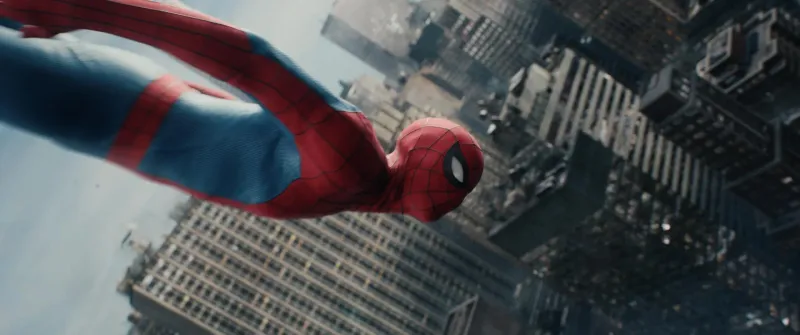
Spider-Man: Brand New Day review: The best Marvel film yet made
Spider-Man: Brand New Day is the best Marvel film we've ever seen. Tom Holland delivers his finest performance across four films, Sadie Sink's Jean Grey is a genuine highlight, and the Hulk/Punisher integration works far better than it has any right to. Action, comedy, goosebumps and quiet moments, all in one film. A perfect 5/5.
Daredevil: Born Again – Season 2: The devil and the Kingpin hit harder
Season 2 of Born Again proves the reboot was no fluke. Daredevil simply rocks here — bruising action, real emotional stakes, and Vincent D'Onofrio's Fisk continuing his reign as one of the best villains on TV. The Jessica Jones appearance is a genuine highlight (more of her, please), and episode 8 is a flawless, goosebump-inducing 10. The season as a whole lands an excellent 4/5 — and that finale alone is worth the subscription.
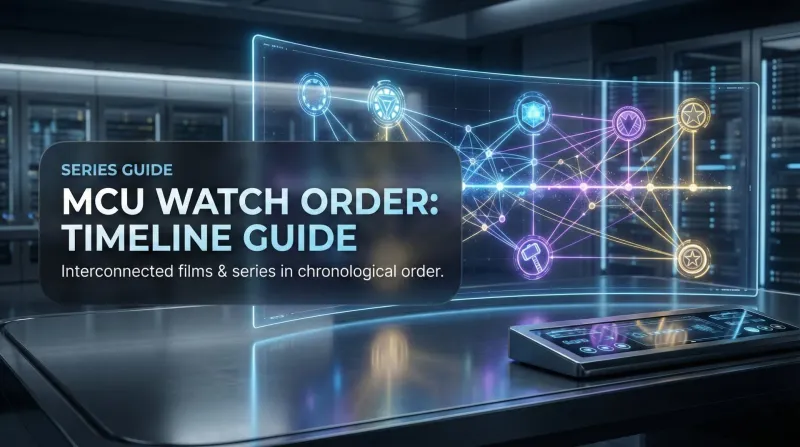
MCU watch order 2026 – All Marvel movies & series in timeline
As a lifelong Marvel fan, the MCU is more than a movie franchise – it's an emotional journey through heroism, sacrifice, and epic storytelling. The way films and series connect across timelines, characters, and genres is absolutely unique in cinema history. From Iron Man's first flight to the multiverse madness of recent phases, every chapter adds depth and excitement to this living, breathing universe. Whether you're watching solo or with your kids, the MCU delivers action, humor, and heart like no other. It's not just a saga – it's a part of my world.