
What If…? – Season 1: A multiversal experiment with mixed results
Marvel dives into the multiverse with bold alternate takes on classic characters. Some episodes shine, others stumble – but the concept is undeniably intriguing.
This post contains affiliate links. We may earn a commission if you make a purchase, at no extra cost to you. As an Amazon Associate, Dadnology earns from qualifying purchases.
🌌 Introduction
This review is part of the MCU Watch Order – explore all Marvel movies and shows in timeline order!
With What If…? – Season 1, Marvel takes its first animated leap into the vast unknown of the multiverse. Each episode asks a single question: What if one pivotal moment in the MCU had gone differently? The result is a collection of alternate realities – some thrilling, some bizarre, and some surprisingly emotional.
While it doesn’t directly advance the main MCU timeline, What If…? expands our understanding of what’s possible in this ever-growing universe.
🧩 Story structure & highlights
Unlike other MCU entries, What If…? is an anthology. Each episode presents a standalone timeline, narrated by the cosmic observer known as The Watcher.
Some standout concepts include:
- Peggy Carter receiving the super soldier serum and becoming Captain Carter.
- T’Challa becoming Star-Lord in a hopeful reimagining of Guardians of the Galaxy.
- A dark timeline where the Avengers are systematically eliminated.
- A horrifying Marvel Zombies apocalypse.
- Doctor Strange breaking reality in a desperate bid to save Christine.
The series gradually builds toward a multiversal crisis, leading to a crossover finale that ties the individual stories together – even introducing the concept of the “Guardians of the Multiverse”.
🌀 Animation style & voice acting
Visually, the show adopts a cel-shaded animation style that strikes a balance between comic book and cinematic realism. It works well for most episodes, though action scenes can occasionally feel stiff compared to live-action Marvel fare.
A highlight of the show is the return of many original MCU actors lending their voices, including the late Chadwick Boseman in his final performance. Others, like Tony Stark and Steve Rogers, are voiced by soundalikes – with mixed results.
The animation gives Marvel the freedom to explore concepts that would be difficult or expensive in live-action – like massive galactic battles, undead heroes, or time-bending sorcery.
⚖️ Uneven episode quality
While the concept is brilliant, the quality of the episodes varies:
- Some episodes, like Doctor Strange Supreme’s arc, are deeply moving and visually stunning.
- Others, like Party Thor or the Killmonger episode, feel rushed or lack emotional weight.
This inconsistency can make the season feel uneven. Still, the overarching narrative helps unify the series by the end, setting up the multiverse logic that will carry into future MCU films like Doctor Strange in the Multiverse of Madness and Loki Season 2.
👨👧👦 Our experience & recommendation
As a family-friendly Marvel experiment, What If…? – Season 1 offers both fun and conversation starters. Some episodes are more lighthearted, while others delve into surprisingly dark territory. It’s a good opportunity to introduce multiverse concepts to younger viewers in a digestible format.
That said, the series may be too complex or emotionally intense for very young kids. We’d recommend it for ages 12+, especially for fans already familiar with the main MCU timeline.
🌀 What If…? at its best: The episodes that justify the concept
The anthology format produces wildly uneven results across Season 1 — some episodes are genuine thought experiments with something to say, others feel like truncated concept sketches that stop before the interesting part. The difference between the two categories comes down to a single question: does the episode follow its premise all the way to its actual conclusion, or does it stop at the fun part and call it a day?
The Doctor Strange episode — “What If… Doctor Strange Lost His Heart Instead of His Hands?” — is the season’s high-water mark because it does the first thing. It takes the question seriously, follows it through to a genuinely devastating conclusion, and doesn’t flinch from what the answer actually implies. Strange’s obsession destroys the universe he was trying to protect — the concept isn’t just a twist, it’s an argument about the character. The episode works as a standalone tragedy and as a recontextualization of everything Strange is capable of when love becomes the thing he refuses to lose. It’s the darkest episode the show produced in Season 1, and the most complete.
The Killmonger episode — “What If… Killmonger Rescued Tony Stark?” — works for the opposite reason. The show gives Killmonger the moral high ground from the start: he saves Tony Stark before the Humvee attack, builds his credibility inside the military-industrial complex, and positions himself as the competent, strategic man that the MCU always suggested he was. The episode then watches the consequences cascade. What makes it work is that Killmonger isn’t a villain here — he’s a man with legitimate grievances making comprehensible choices that still lead to harm. The episode never condemns him outright, which is a genuinely uncomfortable place for an MCU story to sit.
Then there’s Party Thor — “What If… Thor Were an Only Child?” — which is a different kind of success entirely. It’s pure comedic energy applied to the MCU’s most self-serious god, and it’s funny precisely because the show treats the absurdity with complete conviction. Thor throwing a galaxy-sized party on Earth isn’t played for winking irony — it’s played as what would actually happen if this man had no one to answer to. The humor lands because the characterisation is accurate.
What these three episodes demonstrate: the anthology format is only as good as the show’s willingness to commit. When it commits to tragedy, to moral ambiguity, or to full comedic absurdity without hedging — it produces the best animated Marvel content since the format existed. When it doesn’t commit, when it stops at the high-concept pitch and coasts — the result is a highlight reel with nothing underneath.
👁️ The Watcher: Observer, narrator, and the limits of non-intervention
Jeffrey Wright’s Watcher is the narrative spine that holds Season 1 together. He’s an omniscient being who observes every branch of the multiverse, bound by a strict oath of non-interference — and he functions as both narrator and the season’s central ethical problem.
As a framing device, the Watcher gives the show a perspective above any individual story. He knows how each episode ends before it starts, and he carries the accumulated weight of every tragedy the series presents. That weight matters. By the time the season reaches its final episodes, the Watcher isn’t just a narrator introducing scenarios — he’s someone who has watched civilisations end, watched heroes fail catastrophically, watched innocent people die in multiversal disaster — and has done nothing. The show doesn’t frame this as obviously wrong. It frames it as a philosophical position that the season will eventually force to collapse under its own logic.
The oath of non-interference is borrowed from classical observer traditions — the watcher who must not act, whose power is precisely defined by restraint. The show takes the paradox seriously: the Watcher possesses information that could prevent every disaster he witnesses. His inaction isn’t apathy; it’s a conviction that intervention makes things worse in aggregate. Whether you find that convincing depends on how much sympathy you extend to utilitarian frameworks — and the season’s finale is structured as a direct challenge to that sympathy.
When the Guardians of the Multiverse assemble in the finale, the Watcher has to break his oath. He intervenes, uses the knowledge he accumulated as a voyeur to act, and transforms from narrator into character. It’s the season’s most consequential structural choice, and it reframes everything that came before: every moment he watched without acting was a choice, not a given.
Wright’s voice work is what makes the abstraction land. The Watcher is rendered as a vast CGI entity — there’s no face to read, no physical performance to follow. Everything comes through the voice, and Wright gives it genuine gravity and loneliness. He sounds like someone who has seen too much and is now uncertain whether having seen everything is the same as understanding any of it. That uncertainty is what makes the finale’s reversal feel earned rather than convenient. His arc across Season 1 also lays essential groundwork for his continued centrality in Seasons 2 and 3 — where the oath he broke becomes a thread that keeps pulling.
Pros
- Creative multiverse-based storytelling
- Unique animated style opens new possibilities
- Some emotionally powerful episodes
- Final arc ties the stories together well
Cons
- Inconsistent episode quality
- Not all MCU actors returned to voice roles
- Less emotional depth than live-action series
🗣️ Conclusion
What If…? – Season 1 is a bold and creative step into uncharted territory. While it doesn’t always stick the landing, the series opens up thrilling new storytelling doors for the MCU. For fans open to something different – and willing to accept the ups and downs – it’s a fun multiversal ride worth taking.
📺 Movie night sorted: thousands of films and shows are streaming on Prime Video — free for 30 days. Worth a look before you buy the disc.
📌 FAQ – Frequently asked questions
Is *What If…?* part of the main MCU timeline?
Which *What If…?* episodes are the best?
Is *What If…?* suitable for kids?
Does What If...? Season 1 connect to the live-action MCU?
Which What If...? Season 1 episode is considered the best?
Keep this in your inbox
One email a week: what we actually watched, built and reviewed — the stuff worth a dad's time. No hype, no daily spam.
Dadnology Weekly
One email a week: the LEGO, gaming and movie news worth a dad's time — plus what we actually reviewed. No hype, no daily spam.
Disclaimer: This review and its visuals were created with the help of AI. Some links may be affiliate links – we may earn a commission if you make a purchase, at no extra cost to you.
Current deals in Movies & TV
Verified live discounts tracked on Amazon
![The Legend of Korra — The Complete Series [Blu-ray]](https://m.media-amazon.com/images/I/51+1TXyb7aL._SL500_.jpg)
Movies & TV · Tested by Dadnology
The Legend of Korra — The Complete Series [Blu-ray]
4.5/5“A new Avatar, a modern city, a masked revolution”Read our review
Movies & TV · Tested by Dadnology
Zack Snyder's Justice League (4K Ultra HD)
4/5“Four hours. One vision. This is the film.”Read our review
Movies & TV · Tested by Dadnology
Space Jam (4K Ultra HD + Digital)
4/5“It's gonna be a whole new ball game”Read our reviewYou might also like
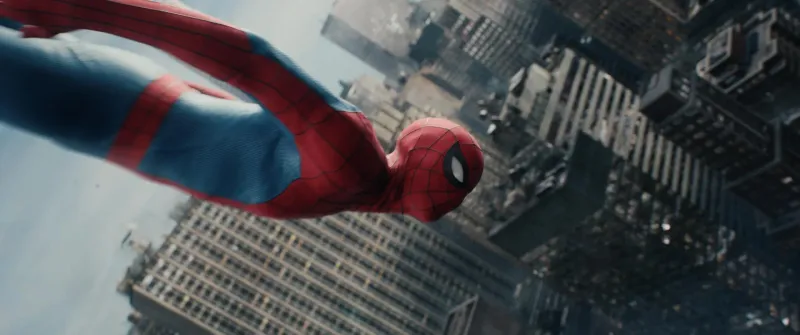
Spider-Man: Brand New Day review: The best Marvel film yet made
Spider-Man: Brand New Day is the best Marvel film we've ever seen. Tom Holland delivers his finest performance across four films, Sadie Sink's Jean Grey is a genuine highlight, and the Hulk/Punisher integration works far better than it has any right to. Action, comedy, goosebumps and quiet moments, all in one film. A perfect 5/5.
Daredevil: Born Again – Season 2: The devil and the Kingpin hit harder
Season 2 of Born Again proves the reboot was no fluke. Daredevil simply rocks here — bruising action, real emotional stakes, and Vincent D'Onofrio's Fisk continuing his reign as one of the best villains on TV. The Jessica Jones appearance is a genuine highlight (more of her, please), and episode 8 is a flawless, goosebump-inducing 10. The season as a whole lands an excellent 4/5 — and that finale alone is worth the subscription.
MCU watch order 2026 – All Marvel movies & series in timeline
As a lifelong Marvel fan, the MCU is more than a movie franchise – it's an emotional journey through heroism, sacrifice, and epic storytelling. The way films and series connect across timelines, characters, and genres is absolutely unique in cinema history. From Iron Man's first flight to the multiverse madness of recent phases, every chapter adds depth and excitement to this living, breathing universe. Whether you're watching solo or with your kids, the MCU delivers action, humor, and heart like no other. It's not just a saga – it's a part of my world.