
What If…? – Season 3: A shaky finish to Marvel’s multiverse anthology
Marvel’s What If…? Season 3 starts strong but quickly loses steam. A mixed bag of ideas leads to an underwhelming end to the animated trilogy.

This post contains affiliate links. We may earn a commission if you make a purchase, at no extra cost to you. As an Amazon Associate, Dadnology earns from qualifying purchases.
🌌 Introduction
This review is part of the MCU Watch Order – explore all Marvel movies and shows in timeline order!
The third and final season of What If…? arrives with high expectations – and unfortunately, doesn’t quite deliver. While the opening episodes hint at a satisfying sendoff, the season slowly unravels into an uneven mix of rushed ideas and missed opportunities.
🧩 High hopes, low payoff
Episodes 1–3 show real potential. They reintroduce intriguing twists on familiar characters, explore lesser-known corners of the MCU, and embrace the multiverse concept with confidence.
But starting with Episode 4, the quality noticeably dips. The writing becomes flatter, and the scenarios feel less creative or emotionally resonant. Instead of building toward a climax, the series limps toward the end.
It feels like Marvel was ready to move on.
⌛ Multiverse Burnout?
By now, we’ve seen dozens of alternate timelines, variants, and cosmic mashups. Season 3 doesn’t offer much new in terms of narrative weight or innovation.
Where earlier seasons felt like bold “what if” experiments, Season 3 leans too much on repetition. Some ideas are clever but underdeveloped. Others are simply forgettable.
There’s still fun to be had, especially in the first third – but it’s clear the series is out of momentum.
🎬 Visuals and style
The animation style remains consistent with prior seasons: stylized, painterly, cel-shaded. Some episodes feature gorgeous action sequences or creative set pieces, but many lack the visual punch we’ve come to expect.
There’s also a lack of tonal variety. Earlier seasons moved between comedy, horror, tragedy, and epic drama. Season 3 feels more flat, both visually and emotionally.
👨👧👦 Our family take
As a family series, What If…? Season 3 is still fine – it’s short, digestible, and occasionally thought-provoking. For younger MCU fans, there are plenty of cool moments and stylized action.
But for dads hoping to share something bold or meaningful, this final season doesn’t offer the same spark. It’s popcorn content – watchable, but forgettable.
🎬 What If…? Season 3 as multiverse conclusion
What If…? Season 3 carries a dual burden that most anthology seasons don’t have to manage: it needs to work as a collection of standalone “what if” premises — each episode its own contained experiment — while simultaneously functioning as the conclusion to a multiverse storyline that has built across three seasons and dozens of hours of television. That tension is present in every episode, and how well the show resolves it determines how satisfying it feels as a finale.
The dual purpose matters because it sets up a specific expectation. If Season 3 were purely episodic, you’d judge each episode on its own terms. If it were purely serialized, you’d judge the arc’s resolution. What What If…? has always attempted — and what Season 3 has to land — is both simultaneously. Certain episodes are designed to pay off threads introduced in Season 1 or Season 2. Others are fresh premises. The problem is that the connective tissue feels uneven: the payoff episodes tend to be the stronger ones, and the standalone premises in the latter half feel like they’re filling time between those narrative beats rather than contributing to the season’s larger argument.
Strange Supreme’s arc is where the dual-burden tension resolves most cleanly. He began Season 1 as the show’s most devastating creation — a cautionary tale so complete that his entire universe was deleted as a consequence. Season 1 didn’t redeem him. It used him to illustrate what unlimited power and unchecked grief actually cost. The fact that Season 3 finds a structural role for him — a context where his particular combination of capability and accumulated guilt has specific utility — is the show’s most considered piece of long-form storytelling. He is the character most suited to a situation where sacrifice is the answer, because he is the only character who has already paid the ultimate price and knows exactly what it costs.
The Watcher’s evolution across the three seasons follows a different trajectory. He began as a figure defined by non-intervention: the oath-breaker of Season 1 who assembled the Guardians of the Multiverse was treated as a catastrophic exception to his nature. By Season 3, his relationship with intervention has normalized into a character trait. He gets involved. The philosophical question — should an omniscient observer act? — has been answered empirically by the show’s own events, and Season 3 operates in the aftermath of that answer rather than re-examining it. Whether that represents character development or the writers running out of philosophical road is a matter of interpretation.
Captain Carter’s continued thread across all three seasons positions her as the show’s most stable protagonist: the What If answer that gets to inhabit the same moral space as her prime-universe counterpart without requiring a tragedy to explain her. Season 3 uses this stability deliberately — she’s the character who can engage with the finale’s stakes from a position of genuine agency rather than trauma-driven motivation.
The animation quality in Season 3 shows incremental improvement in action choreography, particularly in sequences involving Strange Supreme and the multiverse-scale confrontations. The show’s signature painterly aesthetic remains intact, and several action set pieces demonstrate a kinetic confidence that earlier seasons occasionally lacked. Visually, it’s not a step backward — the issue is that strong animation in service of underwritten premises doesn’t rescue those premises.
🌌 The Strange Supreme thread: Three seasons of one man’s guilt
Strange Supreme is the single most important original character What If…? ever produced, and the most sustained argument for why the anthology format can work at a character level even when individual episodes disappoint. He appears across all three seasons. He carries something across all of them. That is genuinely rare in a show whose premise is structural amnesia.
His function in Season 1 is simple and complete: he is what happens when you let a Marvel protagonist have everything they want. Stephen Strange got the Ancient One’s power, mastered the dark dimension, consumed entities that should not be consumed — and unmade a universe. The episode doesn’t leave him with a redemption path. It leaves him with the rubble of a reality he destroyed and no one left to apologize to. As origin stories go, it is one of the MCU’s most uncompromising pieces of writing, animated or otherwise.
The guilt he carries from that event is structural rather than episodic. Most What If…? characters appear once and disappear — their what-if premise is resolved (or left deliberately unresolved) within forty minutes, and that’s the end of them. Strange Supreme has to keep existing. He has to exist in the multiverse that remains after he destroyed his own. Season 2 handles this by giving him purpose: he becomes a steward of lost and endangered universes, rescuing fragments of realities that would otherwise be extinguished. It is not redemption — he knows it isn’t, the show knows it isn’t — but it is something to do. A direction that his particular combination of capacity and willingness to absorb costs makes him suited for.
What Strange Supreme represents as an MCU character, set against the main-timeline Stephen Strange, is the show’s clearest statement about what the MCU’s narrative machinery normally protects its protagonists from. The main Strange is saved, again and again. The Ancient One shows him what he needs to see. Tony Stark’s sacrifice gives him the information that winning is possible. Wong is always there. The institutional scaffolding of the Sorcerer Supreme role catches him every time he starts to fall. Strange Supreme had none of that scaffolding. He had power, grief, a dead Christine Palmer, and a universe he couldn’t put back together no matter how many times he tried. The show’s argument isn’t that the main Strange is lucky — it’s that the main Strange’s decency was preserved by the support structures around him, and that without those structures, the same man becomes something else entirely.
Season 3’s resolution for him is the only one that makes narrative sense: a sacrifice that is genuinely final. Not a redemption arc that forgets what he did. Not a restoration that undoes the cost. A context in which his specific combination of power and already-paid price has a use, and he uses it, and then he is gone. For a character who has been living in a debt he cannot repay since the first episode of Season 1, that ending is structurally clean in a way that few MCU character conclusions manage to be. It doesn’t ask you to feel better about what happened in his universe. It just asks you to recognize that his arc has found its completion.
Pros
- Strong first three episodes
- Still visually polished
- Fun for casual Marvel fans
Cons
- Episodes 4–8 are weak or rushed
- Lack of emotional depth or cohesion
- No true payoff for the anthology’s arc
- Feels like Marvel has lost interest in the concept
🗣️ Conclusion
What If…? – Season 3 is a disappointing end to an ambitious animated experiment. While not outright bad, it lacks the heart, energy, and surprise that made earlier seasons memorable. The first few episodes tease greatness, but the rest of the season struggles to follow through. For completionists, it’s worth finishing. For everyone else, it’s a cautionary tale about creative burnout. The multiverse may be limitless – but Marvel’s imagination here feels strangely limited.
📺 Movie night sorted: thousands of films and shows are streaming on Prime Video — free for 30 days. Worth a look before you buy the disc.
Related Dadnology reviews: Ant-Man and the Wasp: Quantumania – A Journey into the Quantum Madness · What If…?
📌 FAQ – Frequently asked questions
Is What If…? Season 3 the last season?
Are there any standout episodes in Season 3?
Does the series connect to the wider MCU?
Is Season 3 suitable for kids?
Is What If Season 3 the last season?
Do I need to watch Seasons 1 and 2 before Season 3?
Keep this in your inbox
One email a week: what we actually watched, built and reviewed — the stuff worth a dad's time. No hype, no daily spam.
Dadnology Weekly
One email a week: the LEGO, gaming and movie news worth a dad's time — plus what we actually reviewed. No hype, no daily spam.
Disclaimer: This review and its visuals were created with the help of AI. Some links may be affiliate links – we may earn a commission if you make a purchase, at no extra cost to you.
Current deals in Movies & TV
Verified live discounts tracked on Amazon
![The Legend of Korra — The Complete Series [Blu-ray]](https://m.media-amazon.com/images/I/51+1TXyb7aL._SL500_.jpg)
Movies & TV · Tested by Dadnology
The Legend of Korra — The Complete Series [Blu-ray]
4.5/5“A new Avatar, a modern city, a masked revolution”Read our review
Movies & TV · Tested by Dadnology
Zack Snyder's Justice League (4K Ultra HD)
4/5“Four hours. One vision. This is the film.”Read our review
Movies & TV · Tested by Dadnology
Space Jam (4K Ultra HD + Digital)
4/5“It's gonna be a whole new ball game”Read our reviewYou might also like

What If…? – Season 2: Bold stories, bigger risks, and one outstanding episode
Marvel’s *What If…? – Season 2* is a strong step forward for the anthology series. The episodes are more consistent, the animation is more dynamic, and the concepts feel bolder than before. While not every story is equally memorable, Episode 6 – featuring the brand-new character Kahhori – is a visual and emotional masterpiece. Season 2 shows Marvel is learning from past entries and taking creative risks. It’s still experimental, but with clearer direction, better pacing, and deeper meaning. A multiverse worth exploring.
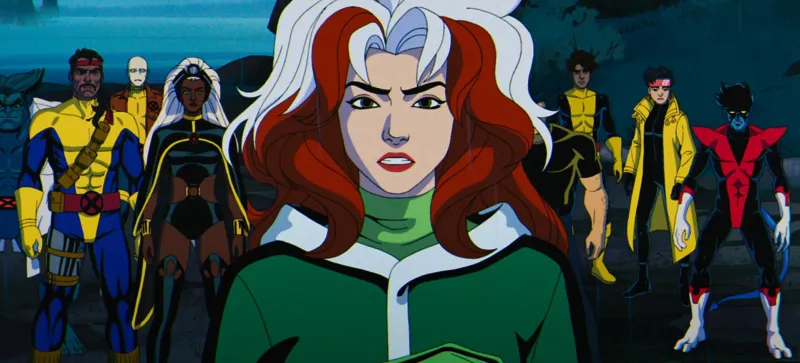
X-Men '97 Season 2 review: Apocalypse rises, Magneto falls
Season 2 trades Season 1's speedrun pacing for real confidence, using three timelines and a returning cast we now know intimately to tell its best story yet — right up to a finale that hurts in exactly the way great X-Men stories are supposed to.
LEGO 67006 The Marvel Skyline revealed: 1,261 pieces of superhero architecture
LEGO has announced The Marvel Skyline (67006): a 1,261-piece 18+ microscale Architecture-style model spanning Wakanda, Oscorp, and Xavier's School.