
X-Men '97 Season 1 review: Nostalgia overdrive, real stakes
A high-speed Season 1 revival that weaponizes 90s nostalgia while grappling with mature themes of legacy and loss — and gets stronger with every rewatch, especially the back half.

Image courtesy of Marvel Animation / The Walt Disney Company.
This post contains affiliate links. We may earn a commission if you make a purchase, at no extra cost to you. As an Amazon Associate, Dadnology earns from qualifying purchases.
🌌 Introduction
🦸 This review is part of the MCU Watch Order – watch every Marvel movie and series in timeline order.
The return of the X-Men to the small screen isn’t just a reboot; it is a calculated “nostalgia masterclass” designed to perform a high-stakes firmware update on the Saturday morning ritual of our youth. By picking up exactly where the 1992–1997 X-Men: The Animated Series left off, X-Men ‘97 serves as a strategic “DNA bridge” between Gen X/Millennial childhoods and the modern Marvel Cinematic Universe (MCU).
However, evaluating this as a time-crunched father requires pragmatic metrics. While it is a sincere, high-octane labor of love, Season 1 earns a 4/5. That rating went up on a full rewatch — the show’s 10-episode limit still forces it to speedrun through legendary comic arcs that originally required years of narrative “legacy support,” but knowing where the back half is headed changes how the early episodes read. We’ve moved from the simple, episodic rituals of the 90s into a substantive, darker narrative that transforms childhood sentiment into a complex meditation on what it means to grow up in a world that still fears you.
🧩 Story & themes — Legacy, lineage, and “the mutant metaphor” 2.0
At its core, X-Men ‘97 is about the messy reality of fatherhood, inheritance, and responsibility. The narrative weight centers on Scott Summers (Cyclops), whose leadership is tested as his moral centering begins to boil over into frustration. The emotional anchor is the “hardware hand-off” between Scott, Madelyne Pryor (the clone of Jean Grey), and their son Nathan (Cable). This arc dives deep into the lore, even featuring a cameo from Mother Askani (Rachel Summers), signaling that the Summers lineage remains the most complicated family tree in Marvel’s database.
The show uses the “Mutant Metaphor” to address modern intolerance, forcing a choice between Charles Xavier’s compassion and Magneto’s “peace through strength” survivalism.
Core Theme Snapshot
- The Burden of Leadership: Scott Summers’ boiling resentment toward a world that demands protection but refuses to offer a “thank you.”
- Grief and Growth: The shattering of innocence during the “Remember It” event on Genosha, which serves as a tragic system-wide crash for mutantkind.
- Parental Sacrifice: The “forced system migration” of sending Nathan into the future—a bittersweet farewell that hits any parent with the weight of a thousand gigabytes.
😈 Tone & style — A matured aesthetic
The atmosphere of X-Men ‘97 is a far cry from the “Fox Kids” era restrictions. While the 90s series was forbidden from even mentioning “concussions,” this revival features unshackled combat. Wolverine’s claws finally do real damage, and death is permanently on the table. It isn’t the TV-MA “gore and splatter” of the upcoming Marvel Zombies, but it is a matured, high-stakes superhero story.
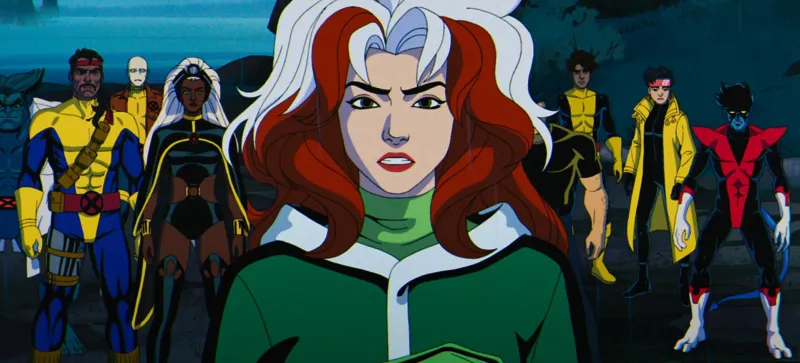
Visually, the show utilizes a “2.5D” style—using modern digital tech to emulate our memories of the 90s hand-drawn vibes. It’s fluid and dynamic, backed by the return of the iconic theme song and “legacy cast” members like Cal Dodd (Wolverine), Lenore Zann (Rogue), George Buza (Beast), and Alison Sealy-Smith (Storm). In a brilliant move of recasting with purpose, original Jean Grey actress Catherine Disher now voices Val Cooper, while original Jubilee Alyson Court appears as the alternate-version Abscissa.
| Feature | 90s Original | '97 Revival |
|---|---|---|
| Visuals | Hand-drawn (often static) | Digital-aided / Fluid "2.5D" |
| Stakes | Concussions forbidden | Death is on the table |
| Combat | Claws for prop destruction | Claws for real damage |
| Narrative | Saturday morning cereal vibes | Serialized high-stakes melodrama |
🧭 Context & connections — Navigating the animated multiverse
X-Men ‘97 is the flagship of the “Marvel Animated Multiverse,” recently validated by an Emmy nomination for Outstanding Animated Program alongside Blue Eye Samurai. It sits in a broader television strategy that includes Phase 6’s Eyes of Wakanda and the adult-rated Marvel Zombies.
For the time-crunched dad, the “homework” is manageable. While it honors the original 76 episodes, the ‘97 revival provides enough context to jump in mid-stream. Notably, Hudson Thames reprises his role as Peter Parker here, creating a connective tissue to 2026’s Your Friendly Neighborhood Spider-Man.
Future Roadmap
- Confirmed Longevity: Season 3 arrives in 2027 and Season 4 in 2028—a predictable schedule that is a parent’s best friend.
- Multiverse Cameos: Keep your eyes peeled for Iron Man, Daredevil, and Spider-Man appearing in brief multiversal cameos.
- The Apocalypse Tease Paid Off: this finale’s Apocalypse hint became the actual spine of the next season — read our X-Men ‘97 Season 2 review for how the “Age of Apocalypse” arc plays out, Magneto’s death included.
👨👧👦 Our experience & recommendation — The “Dadnology” verdict
Is X-Men ‘97 worth your limited “me-time”? Absolutely. It is an entertaining and sincere labor of love. My 4/5 rating still carries a real critique of its “speedrunning” nature — classic comic arcs like Inferno are condensed into 25-minute windows, and compared to the 90s era, which had 65-episode orders allowing for “filler” episodes that gave characters breathing room to process trauma, the 10-episode crunch of modern streaming can feel like a data transfer happening too fast for the hardware to process.
Family Value: This is a top-tier show for family bonding with older kids (10+). It provides excellent conversation starters regarding tolerance and the cost of leadership.
Dadnology Pro-Tip: The “Remember It” episode is an emotional gauntlet. It’s the kind of television that stays with you long after the credits—maybe don’t watch it right before bedtime if you’re already feeling the weight of a long work week.
Rewatch value: The back half is where it sings
With Season 2 now complete, we went back through Season 1 in full, and it holds up better on a second pass than almost anything else we’ve rewatched this year. The first few episodes still carry a little “speedrun” wobble — a lot of setup compressed into not much runtime — but once the season pivots into its back half, starting around Genosha, it stops feeling like a nostalgia exercise and becomes some of the best serialized writing in any Marvel animation, live-action included. Knowing exactly where Magneto’s trial, Bishop’s warning and Cable’s arrival are all headed on a rewatch makes every earlier scene land with more weight, not less — the mark of a season that was actually plotted end-to-end rather than improvised episode by episode. That’s the reason the rating moved from a first-watch 3.5 to a rewatch-informed 4: some shows lose a little shine on a second viewing, and this one gains it.
💔 Genosha and the weight of genuine consequence
The Genosha massacre is the moment X-Men ‘97 announces its intentions unambiguously. The episode structures itself as a celebration — a political breakthrough, a mutant nation gaining international recognition, characters finally exhaling after years of persecution — and then destroys it. The attack comes without warning, in the middle of joy, which makes the destruction hit with a force that a conventional battle episode could not have achieved. The show knows exactly what it is doing: it is telling you that this is not the series you watched on Saturday mornings, and the rules are different now.
What this means for a revival of a beloved 1990s cartoon is specific. The original X-Men: The Animated Series operated under Saturday morning television constraints that made genuine consequence structurally impossible. Characters were knocked unconscious, not killed. Arcs resolved. The status quo restored. X-Men ‘97 has no such constraints, and it uses its freedom precisely and deliberately rather than just to show it can. Genosha is not shock value — it is the show’s central thesis made visible. You cannot have a story about whether coexistence is possible without demonstrating what happens when the most dangerous people in the world decide the answer is no.
Gambit’s death in particular is handled with the kind of earned weight that comes from understanding a character completely. He has spent years defined by his inability to commit — to Rogue, to the team, to any cause that would require him to stop being slippery. He dies in an act of total commitment, protecting the woman he loves with a sacrifice that admits no ambiguity. The show knows his arc well enough to recognize that this is the only ending that makes narrative sense for who he is. That is not the work of a series that views its characters as franchise assets.
The Genosha episode accomplishes something for the season’s larger argument that no amount of exposition could: it proves the show’s stakes are real. X-Men ‘97 is about whether inclusion is achievable, whether safety is possible, whether the case for coexistence can survive contact with people who are determined to disprove it. The massacre is the answer the show’s villains want to give — and the rest of the season is the X-Men’s response to it.
The legacy continuation format enables all of this in a way a new series couldn’t. Thirty years of established character history means the emotional payoffs arrive without setup costs. When Rogue holds Gambit at the end, you don’t need an episode to explain why that scene matters — you already know. This is the specific advantage of revival storytelling done correctly: the weight is already banked, and the show just has to spend it well.
Pros
- Nostalgic masterclass bridging generations
- Mature themes of legacy and loss
- Stunning '2.5D' visual style
- Original voice cast returns
- High stakes where death is on the table
Cons
- Rushed pacing due to 10-episode limit
- Speedruns through legendary comic arcs
From the screen to the shelf: the X-Mansion is the team’s home in this revival — build Xavier’s school with the LEGO Marvel The X-Mansion (76294) review.
🧍 Collect the team: X-Men ‘97 Funko pops
Funko has been rolling out a proper X-Men ‘97 line, and it covers the roster deep enough to actually build a shelf team rather than just a single figure — heroes and villains both. If the show has you nostalgic for the whole cast, not just Wolverine, this is where to start: Magneto, Apocalypse and Sabretooth anchor the villain side, while Storm, Professor X, Archangel, Jubilee, Bishop, Cable and Psylocke round out the team.
📝 Conclusion
A spectacular Season 1 that proves the X-Men are at their best when they are forcing us to choose between hope and survival. It transforms childhood sentiment into a complex meditation on what it means to grow up — and it only gets stronger on a rewatch.
📺 Movie night sorted: thousands of films and shows are streaming on Prime Video — free for 30 days. Worth a look before you buy the disc.
Buy now(Ad)
📌 FAQ – Frequently asked questions
Is X-Men '97 suitable for kids?
Do I need to watch the original 90s series?
Is it part of the MCU?
Will there be more seasons?
Do I need to watch the original X-Men animated series to enjoy X-Men 97?
Is X-Men 97 connected to the MCU films?
Keep this in your inbox
One email a week: what we actually watched, built and reviewed — the stuff worth a dad's time. No hype, no daily spam.
Dadnology Weekly
One email a week: the LEGO, gaming and movie news worth a dad's time — plus what we actually reviewed. No hype, no daily spam.
Disclaimer: This review and its visuals were created with the help of AI. Some links may be affiliate links – we may earn a commission if you make a purchase, at no extra cost to you.
Current deals in Movies & TV
Verified live discounts tracked on Amazon
![The Legend of Korra — The Complete Series [Blu-ray]](https://m.media-amazon.com/images/I/51+1TXyb7aL._SL500_.jpg)
Movies & TV · Tested by Dadnology
The Legend of Korra — The Complete Series [Blu-ray]
4.5/5“A new Avatar, a modern city, a masked revolution”Read our review
Movies & TV · Tested by Dadnology
Zack Snyder's Justice League (4K Ultra HD)
4/5“Four hours. One vision. This is the film.”Read our review
Movies & TV · Tested by Dadnology
Space Jam (4K Ultra HD + Digital)
4/5“It's gonna be a whole new ball game”Read our reviewYou might also like
X-Men '97 Season 2 review: Apocalypse rises, Magneto falls
Season 2 trades Season 1's speedrun pacing for real confidence, using three timelines and a returning cast we now know intimately to tell its best story yet — right up to a finale that hurts in exactly the way great X-Men stories are supposed to.

Your Friendly Neighborhood Spider-Man: Retro vibes, modern heart
Spider-Man is at his best when he’s just a kid from Queens trying to do the right thing. This series proves that by lowering the 'homework' barrier and focusing on visual excellence, Marvel can defeat superhero fatigue.
LEGO 67006 The Marvel Skyline revealed: 1,261 pieces of superhero architecture
LEGO has announced The Marvel Skyline (67006): a 1,261-piece 18+ microscale Architecture-style model spanning Wakanda, Oscorp, and Xavier's School.