
Halo TV series review – Paramount's live-action saga in order
Our complete guide to the Halo TV series. Both seasons reviewed and ranked, the Silver Timeline explained, and how the divisive live-action saga holds up.
This post contains affiliate links. We may earn a commission if you make a purchase, at no extra cost to you. As an Amazon Associate, Dadnology earns from qualifying purchases.
📺 The live-action Halo, explained
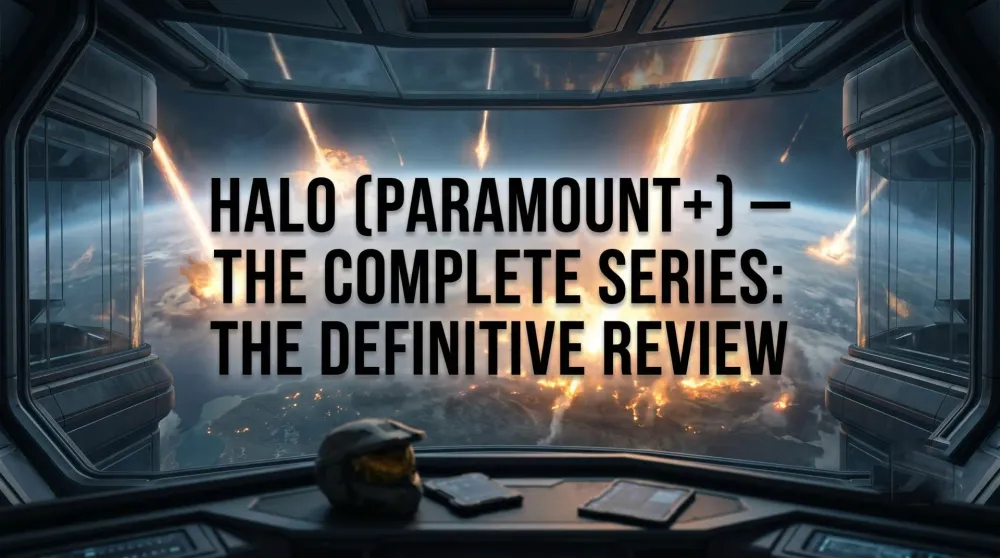
For two decades, fans dreamed of seeing Master Chief on screen in a big-budget, live-action series. Paramount delivered it across two seasons (2022 and 2024) — and the result became one of the most divisive video game adaptations ever made. This hub is your complete guide to that saga: both seasons reviewed and ranked, the controversial “Silver Timeline” explained, and an honest take on whether the live-action Halo is worth your time.
At Dadnology, our headline verdict is simple: two solid-but-divisive seasons, both a 4/5, best enjoyed if you can meet them on their own terms rather than demanding a faithful adaptation. Below, we break down each season and lay out exactly what to expect.
Series content
Explore all articles, reviews, and guides in this series.
“Halo Season 1 is Paramount's big-budget swing at bringing Master Chief to live-action, and it is one of the most divisive video game adaptations ever made. This review takes an honest, Tech-Dad look: the production values and action are genuinely strong, Pablo Schreiber makes a compelling Chief, and the world is convincing — but the decision to take the helmet off, invent a 'Silver Timeline,' and lean on original storylines infuriated purists. We break down what works, what doesn't, and why it lands at a 4 if you can meet it on its own terms.”
“Halo Season 2 is the course-correction a lot of fans were hoping for. This review takes an honest, Tech-Dad look at how Paramount's second season improved on the first: a darker, grittier, more focused tone, a stronger sense of the war's stakes, less of the divisive personal subplots, and a build toward the iconic Fall of Reach. We cover what works, the lingering Silver-Timeline issues, and why the better-paced, more confident season still lands at an 8.”
Outside of the Main Timeline — Multiverse & Specials (0)
No entries found
Try adjusting your filters or search terms.
🎬 The Silver Timeline: Why this show is different
The single most important thing to understand before watching is the Silver Timeline. Paramount made a deliberate choice to set the series in its own continuity, separate from the games’ canon. This gave the writers freedom to tell original stories — but it also meant the show changed things fans hold dear, most controversially by having Master Chief remove his helmet early and often, and by adding personal storylines the games never told.
For longtime players, whose entire relationship with the Chief is built on the faceless, stoic helmet, these liberties landed hard, and the fan backlash defined the show’s reputation. The fairest way to approach it: this is a “set in the Halo universe” original story, not a beat-for-beat adaptation. Watch it expecting the games and the deviations will dominate. Watch it as a parallel sci-fi take, and there’s a well-produced, spectacle-rich show to enjoy.
📊 Ranking the seasons
Both seasons earn a 4 from us, but they get there differently, and one is the clear high point:
- Halo Season 1 (4/5) — the bold, controversial start. Strong production values, a great Pablo Schreiber as the Chief, and genuine spectacle, undercut for fans by the Silver Timeline’s biggest liberties. The more divisive of the two.
- Halo Season 2 (4/5) — the course-correction. Darker, tighter, and more focused, it dials back the divisive subplots and builds to a powerful Fall of Reach. The stronger, more confident season, and the one to point doubters toward.
If you only have time for one, Season 2 is the more rewarding watch — but it builds directly on Season 1, so the saga is best experienced in order.
🪖 The Fall of Reach: The saga’s high point
The standout of the entire live-action run is Season 2’s depiction of the Fall of Reach — the catastrophic Covenant assault on humanity’s fortress world. It is one of the most important events in all of Halo lore (the subject of the foundational novel and the beloved game Halo: Reach), and the show treats it with real gravity. By anchoring its biggest material to this doomed last stand, Season 2 finally taps into the games’ genuine emotional core — the power of watching heroes fight a battle they cannot win. It is the moment the series feels most like Halo.
👨 The dad angle: How to watch it
A few practical notes for parents. The Halo show is more mature than the games — both seasons carry sci-fi violence, language, and mature themes that put it firmly at 16+, with Season 2 if anything darker than the first. This is after-bedtime viewing, not a family watch with younger kids.
For the adult fan, the pitch is straightforward: set your expectations as a games fan before pressing play, treat it as a parallel-universe story, and enjoy the spectacle of seeing the world you’ve played in for twenty years rendered in big-budget live-action. The hour-long episodes are easy to take one at a time, and if Season 1 lost you, Season 2 is genuinely worth coming back for. For the full games saga that inspired it all, see our Halo Universe Hub and the Halo games ranked.
❓ FAQ: The Halo TV series
How many seasons of the Halo TV series are there?
What is the Silver Timeline in the Halo show?
Which Halo season is better?
Should I watch the Halo show if I love the games?
Do I need to play the Halo games to follow the show?
Keep this in your inbox
One email a week: what we actually watched, built and reviewed — the stuff worth a dad's time. No hype, no daily spam.
Dadnology Weekly
One email a week: the LEGO, gaming and movie news worth a dad's time — plus what we actually reviewed. No hype, no daily spam.
Disclaimer: This review and its visuals were created with the help of AI. Some links may be affiliate links – we may earn a commission if you make a purchase, at no extra cost to you.
Current deals in Movies & TV
Verified live discounts tracked on Amazon
![The Legend of Korra — The Complete Series [Blu-ray]](https://m.media-amazon.com/images/I/51+1TXyb7aL._SL500_.jpg)
Movies & TV · Tested by Dadnology
The Legend of Korra — The Complete Series [Blu-ray]
4.5/5“A new Avatar, a modern city, a masked revolution”Read our review
Movies & TV · Tested by Dadnology
Zack Snyder's Justice League (4K Ultra HD)
4/5“Four hours. One vision. This is the film.”Read our review
Movies & TV · Tested by Dadnology