
Iron Man: The full Tony Stark arc — Where the MCU began and ended
The full Tony Stark arc across eight MCU films — from a billionaire weapons dealer in a cave to the three words that ended the Infinity Saga. Every film reviewed and rated.
This post contains affiliate links. We may earn a commission if you make a purchase, at no extra cost to you. As an Amazon Associate, Dadnology earns from qualifying purchases.
🎬 This hub is part of our MCU Hub — the full timeline, the post-credit scene guide, and the Tony Stark and Thanos character arcs.
The story the MCU was always telling
The Marvel Cinematic Universe begins with three words: I am Iron Man.
Tony Stark says them at a press conference in Malibu, casually discarding the secret identity convention that every superhero story before him had treated as sacred. He doesn’t need a mask. He is the brand. He is the suit. He is the story. And in that moment, the MCU commits to something the superhero genre had not quite done before: building an entire franchise around a single character’s ego learning to become responsibility.
It takes eight films and fifteen years. It ends with three words: I am Iron Man. This time a whisper. This time a choice that kills him.
That bookend is not a coincidence or a clever callback. It is the architecture. Tony Stark’s arc is the MCU’s arc — everything Phase 1 through 3 builds is, at root, the story of a man who made weapons, watched those weapons kill people, decided to stop the bleeding, and slowly discovered that the full cost of actually stopping it is everything.
This hub tracks that arc film by film, in order, with our honest per-film ratings and the moments that matter most for understanding Stark as a character rather than as a plot engine.
Series content
Explore all articles, reviews, and guides in this series.
Iron Man


The foundation: The solo trilogy
Iron Man (2008): The cave
The original Iron Man holds up better than almost anything from 2008, and the reason is simple: it is, fundamentally, a character study. Tony Stark is a weapons manufacturer who gets captured by the people using his weapons, builds a suit to escape, and comes home changed. The arc is clean and the execution is exceptional.
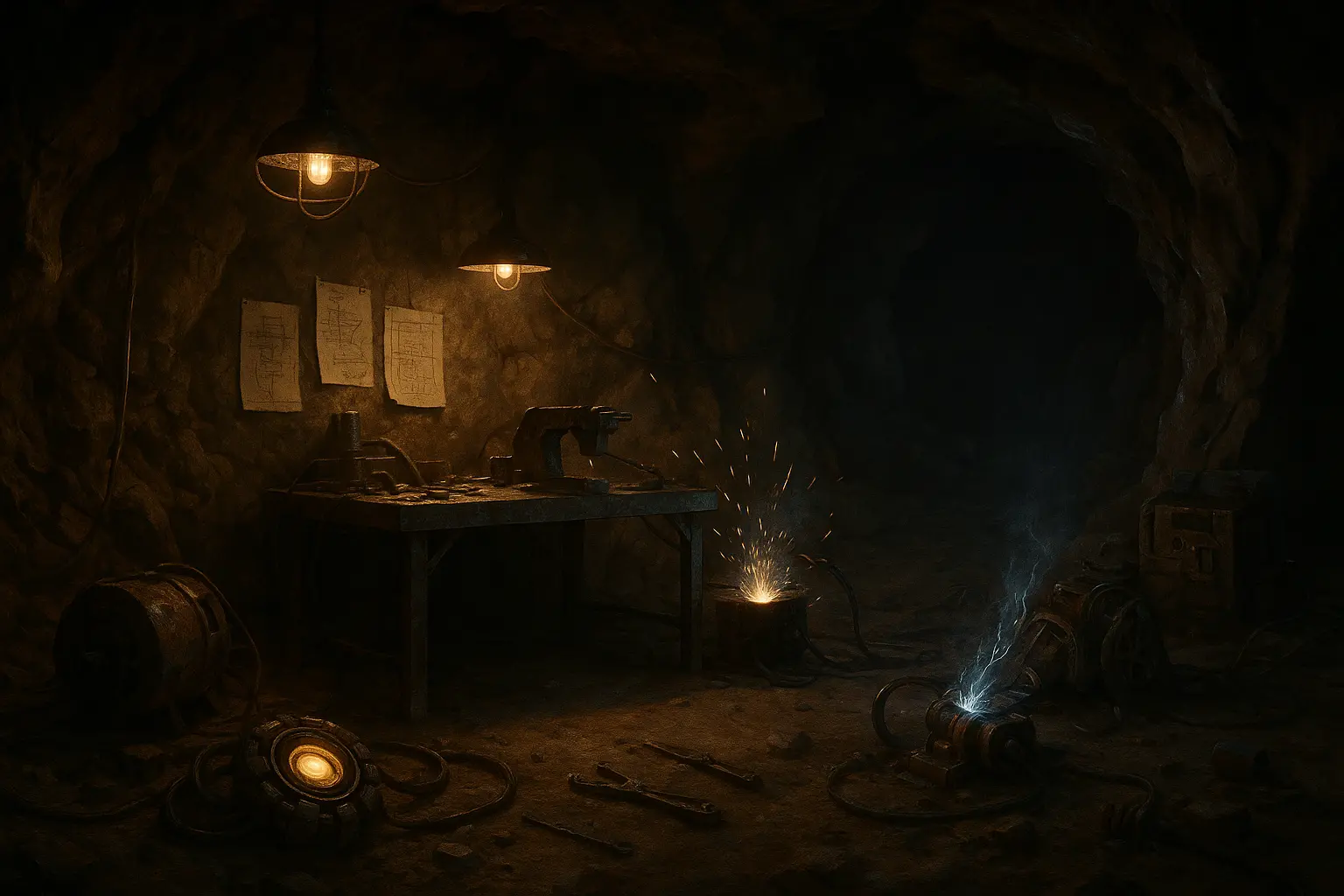
What Robert Downey Jr. does with Tony in this film is the foundation of everything. The character is charismatic and deeply defensive — every joke is armour before he has any armour. The cave sequence, where he builds the first suit with improvised tools and a chest full of shrapnel, is genuinely tense because the film understands that intelligence is Tony’s only asset when everything else is stripped away.
The press conference ending is the pivot. Tony could have lied. The script gives him an easy out. He doesn’t take it. Saying I am Iron Man is not a boast — it is a reckoning. He is saying: I have been hiding behind systems and brands and the Stark name my whole life, and I am done. That decision defines every film that follows.
Iron Man 2 (2010): Legacy and poison
Iron Man 2 is the weakest of the trilogy, but it addresses something the first film didn’t: what does it cost to be the person who says I am Iron Man on live television? The answer here is your liver, your sanity, and your ability to stop living in your father’s shadow.
Tony is dying from palladium poisoning and tells nobody, self-destructing in the meantime, quietly wrestling with the sense that he will never measure up to the man who created Stark Industries. The scene where he watches a home movie of Howard Stark explaining that his greatest creation is Tony is genuinely moving, and it sets up the father-son throughline that runs through Civil War and Endgame.
The problem is the third act collapses into a fight the character work doesn’t quite earn. But as a Stark chapter it is more essential than its reputation suggests.
Iron Man 3 (2013): The man in the suit
Iron Man 3 is the best of the solo films and the most underappreciated. Set after the battle of New York, it is entirely about Tony’s PTSD: the panic attacks, the compulsive suit-building at 3am, the inability to sleep in the same room as Pepper. He cannot process that he nearly died carrying a nuclear warhead through a wormhole and that he did it on instinct, without hesitation, without being sure he’d make it back.
The film’s central question — what is Iron Man without the suit — is asked literally, when Tony spends most of the third act as a regular man solving problems with intelligence and improvisation rather than repulsor blasts. The answer it gives is the one the whole trilogy has been building toward: Tony Stark is Iron Man. The suit is a product. The man is the hero.
That this film gets dismissed as the one with the Mandarin twist is one of the MCU’s great critical misfires.
Learning to play with others: The Avengers arc
Tony Stark’s evolution through the Avengers films is the story of a man learning that the ego which makes him exceptional is also what makes him dangerous.
The Avengers introduces the conflict plainly: Tony is brilliant and abrasive and correct about most things and nearly impossible to work with. The team dynamic works despite him rather than because of him, and he knows it. The key moment is quiet — the shawarma scene after the battle, after the sacrifice, after Tony nearly died again for something bigger than himself. He sits in a restaurant with five people he has just decided he trusts. No dialogue. He is present in a way the Tony Stark of the first film never was.
Captain America: Civil War is the film where the arc breaks. Tony signs the Sokovia Accords because he carries the deaths of everyone Ultron killed and every civilian caught in his collateral damage. He is right about accountability. He is also furiously, dangerously wrong about how to apply it in this specific moment. The confrontation with Rogers, the reveal about his parents, the collapse of everything he built — this is Tony at his most complex and his most human. Robert Downey Jr. gives the best performance of the MCU’s first half here, and the emotional damage reverberates all the way to Endgame.
The Infinity Saga conclusion
Infinity War is where Tony’s arc becomes tragedy in the classical sense. He has spent years obsessing over a nightmare: the Avengers failing, everyone dying. He was right. The snap happens. Doctor Strange tells him there was only one scenario where they won, and this is it. The camera stays on Tony’s face as Parker dies in his arms, and he cannot save him.
Endgame is where it ends. Five years after the snap, Tony Stark has the life he wanted before all of this: a house by a lake, a daughter who calls him daddy, a quiet morning routine. He built it. He is happy. And then Steve Rogers knocks on the door.
The conversation where Tony decides to help is the character’s finest scene. He does the time-space math, tells Morgan he loves her three thousand, and goes. He knows what it will probably cost. He goes anyway.
The final snap is not defiance. It is not the press conference bravado of 2008. It is a man who has spent fifteen years becoming someone who can say those words and mean them as responsibility, not ego. He says them, snaps the gauntlet, and saves everyone he could not save before.
The MCU has never quite matched that scene. It probably never will.
The legacy: Ironheart
Ironheart takes Tony’s legacy and hands it to Riri Williams — a teenage engineering prodigy from Chicago who builds her own suit without the Stark name, the Stark money, or the Stark contacts. The series earns a 4, and what it gets right is the decision not to replace Tony. It asks instead what his shadow builds in someone who grew up on stories about him. That is the right question, and the series has enough originality to answer it on its own terms.
Tony Stark doesn’t need a sequel. He has a legacy. That’s the right ending.
Build it: trace Tony’s armoury on the shelf, from the LEGO Iron Man Mark 3 (76344) to the Mark 4 bust (76327).
Is Iron Man 3 worth watching in the context of Tony Stark's full arc?
Which film best captures Tony Stark as a character?
Does Ironheart do justice to Tony Stark's legacy?
How do I watch the Iron Man films in the context of the full MCU?
Is the original Iron Man still worth watching in 2026?
Keep this in your inbox
One email a week: what we actually watched, built and reviewed — the stuff worth a dad's time. No hype, no daily spam.
Dadnology Weekly
One email a week: the LEGO, gaming and movie news worth a dad's time — plus what we actually reviewed. No hype, no daily spam.
Disclaimer: This review and its visuals were created with the help of AI. Some links may be affiliate links – we may earn a commission if you make a purchase, at no extra cost to you.
Current deals in Movies & TV
Verified live discounts tracked on Amazon
![The Legend of Korra — The Complete Series [Blu-ray]](https://m.media-amazon.com/images/I/51+1TXyb7aL._SL500_.jpg)
Movies & TV · Tested by Dadnology
The Legend of Korra — The Complete Series [Blu-ray]
4.5/5“A new Avatar, a modern city, a masked revolution”Read our review
Movies & TV · Tested by Dadnology
Zack Snyder's Justice League (4K Ultra HD)
4/5“Four hours. One vision. This is the film.”Read our review
Movies & TV · Tested by Dadnology