
The three nature shows that turn kids into scientists
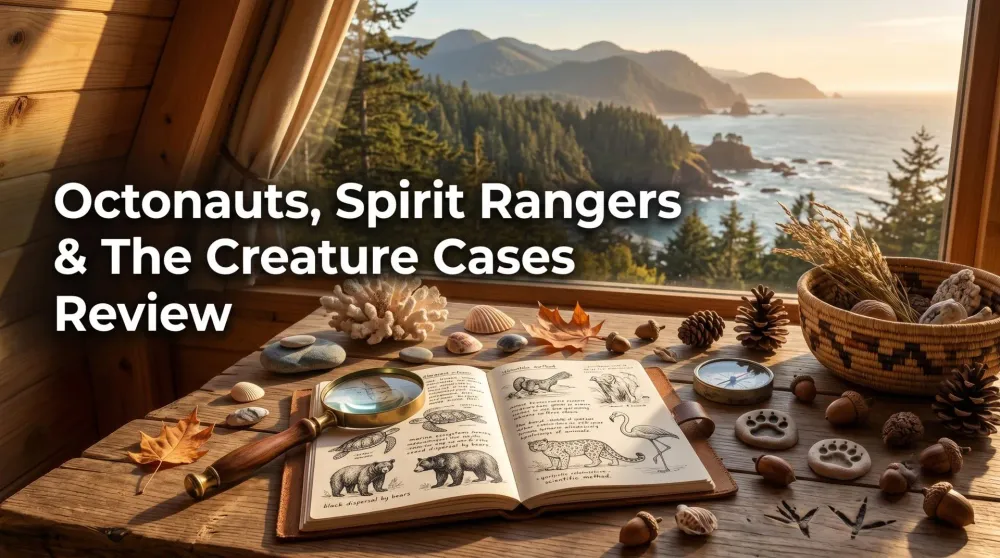
The complete hub for three brilliant educational nature shows — Octonauts (plus Above & Beyond and the movies), Spirit Rangers, and The Creature Cases.
This post contains affiliate links. We may earn a commission if you make a purchase, at no extra cost to you. As an Amazon Associate, Dadnology earns from qualifying purchases.
🐙 This hub is part of our Octonauts Hub — every series, movie, the Above & Beyond spin-off, and the toy buying guides.
The curriculum nobody enrolled them in
There is a specific dinner-table experience familiar to parents of small children who have spent time with these shows: your four-year-old corrects your understanding of something you thought you knew. You mention the ocean. They mention bioluminescence, or the pistol shrimp’s cavitation bubble, or the parrotfish’s role in producing beach sand. You nod. You ask where they learned it. They look at you with patient disappointment and explain that they covered this weeks ago.
Three shows did that to our son, and they did it without ever feeling like school. Octonauts runs a marine-biology curriculum disguised as underwater rescue missions. Spirit Rangers teaches ecology and Chumash ecological knowledge through a trio of siblings protecting their national park. The Creature Cases turns animal behaviour into detective work, where every mystery resolves into real biology. Three different lenses, one outcome: a kid who asks why instead of just what.
This hub reviews all three in full. They are not a franchise — there is no shared universe, no crossover episodes. They are simply the three best educational nature shows we have found, and they belong together because that is exactly how they function on our family TV.
Series content
Explore all articles, reviews, and guides in this series.
Octonauts: The ocean, the land, and the movies
Octonauts is the deepest of the three — not just in subject matter but in volume. The original series structures every episode around a rescue mission that requires understanding the featured creature. The Creature Report at the end delivers the facts, but the child has already spent 18 minutes caring about the animal, which means the facts attach to an emotional memory rather than floating free as isolated information. That is educational design, not luck.
What makes Octonauts a starting point rather than a single show is everything around it. Octonauts: Above & Beyond keeps the same crew but moves onto land, broadening the educational scope from reefs to rainforests, deserts, and mountains. Then there are the three Netflix movies — Ring of Fire, Great Barrier Reef, and Caves of Sac Actun — each a 58-minute family-movie event with more emotional weight than a standard episode (Great Barrier Reef in particular handles coral bleaching with real care). If your child latches onto the original series, there is a genuine pipeline of more to grow into, and every piece of it holds the same quality bar.
Spirit Rangers: Ecology with a second lens
Spirit Rangers does something the other two do not: it presents traditional Chumash ecological knowledge alongside Western biology as genuinely equal frameworks for understanding nature. An episode might explain both the scientific mechanism of seed dispersal by bears and the Chumash understanding of what that relationship means for the community of creatures who depend on it.
Kids leave each episode with two lenses on the same system, which is a more sophisticated ecological education than most adults received. The cultural representation is not decoration — the show was developed in consultation with the Chumash Nation, and it shows in how seriously the knowledge is treated. The show generates its richest dinner-table conversations when a parent co-watches and engages with the cultural questions rather than just the animal facts.
The Creature Cases: Science as detective work
The Creature Cases treats animal behaviour as a mystery to be solved. Detectives Kit the snow leopard and Sam the flamingo take on cases that look like puzzles but always resolve into a real biological explanation. Why does this animal do this specific thing? What system is the behaviour serving?
The case-solving format replicates how science actually works — observe, hypothesise, test, explain — which means children who watch it regularly start approaching real animals with the same instinct. That shift from what is it to why is it doing that is the single most durable educational outcome any show has produced in our house. It is the most plot-driven of the three, which makes it the easiest sell for a child who needs a story to stay engaged.
Why all three work where others don’t
The educational television landscape for young children is large and mostly mediocre. Most educational shows tell children facts. These three teach children to ask questions — and the distinction matters more than it sounds.
What connects them is not subject matter alone but method. All three operate on the same principle: children learn best when they care about the answer before they receive it. The Octonauts crew must rescue a creature they have just met, so the child must care about the creature first. Spirit Rangers must solve a conservation problem in their park, so the child must understand why the park matters. The Creature Cases presents a mystery about an animal’s behaviour, so the child must want to know the answer.
Facts delivered after caring are retained. Facts delivered before caring are forgotten. This is not a controversial pedagogical position — it is consistently supported by research on how children learn. These shows apply it correctly, which is why the dinner-table conversations happen. Together they constitute an informal curriculum in animal biology, ecology, conservation, and scientific reasoning, and none of them is trying to replace school. They are doing the thing school often does not: making the subject feel urgent.
Family age suitability
Octonauts (original) works from age 3 — possibly the most reliable entry point for very young viewers of any educational show on this list. The animation is bright, the characters are immediately likeable, and the rescue plots are comprehensible even without full story understanding. By age 4-5, the Creature Report facts start lodging in long-term memory. Above & Beyond is slightly more complex and works best from age 4, with broader educational scope. The movies run from age 4 for Ring of Fire and age 5 for Great Barrier Reef and Caves of Sac Actun.
Spirit Rangers works best from age 4. The cultural representation layer is valuable at any age, but the ecological reasoning benefits from slightly more cognitive development, and the show rewards co-watching.
The Creature Cases works from age 4, with a sweet spot around 5-7 for the case-solving engagement — it is the one most likely to hook a slightly older, more plot-hungry viewer.
The Dadnology verdict
These are the three best educational nature shows currently available for young children, and it is not particularly close. They are in our weekly rotation because they work. Our son is a better observer of the natural world because of them. He asks more interesting questions. He knows facts that surprise adults. He approaches animals with curiosity rather than anxiety.
You do not need all three to get the benefit — any one of them will start the dinner-table effect. But each adds a different angle, and a child who watches all three gets ocean biology, ecological stewardship, and scientific reasoning from three directions at once. That is the outcome. These shows are how we got there.
All seven reviews in this collection appear in the cards above — individual ratings, full analysis, and buying links for each.
🧒 Screen time you can feel good about: Amazon Kids+ bundles kid-safe shows, books and games in one subscription — with parental controls that actually work.
Related Dadnology reviews: Octonauts and the Caves of Sac Actun Review: Underground Science · Octonauts Review: The Marine Biology Class Kids Actually Beg For · Best Octonauts Toys Guide · Octonauts Birthday Party Ideas
What are the three best educational nature shows for kids?
Where should I start?
What is the difference between Octonauts and Octonauts Above and Beyond?
Are Spirit Rangers and The Creature Cases connected to Octonauts?
What age are these shows for?
Keep this in your inbox
One email a week: what we actually watched, built and reviewed — the stuff worth a dad's time. No hype, no daily spam.
Dadnology Weekly
One email a week: the LEGO, gaming and movie news worth a dad's time — plus what we actually reviewed. No hype, no daily spam.
Disclaimer: This review and its visuals were created with the help of AI. Some links may be affiliate links – we may earn a commission if you make a purchase, at no extra cost to you.
Current deals in Movies & TV
Verified live discounts tracked on Amazon
![The Legend of Korra — The Complete Series [Blu-ray]](https://m.media-amazon.com/images/I/51+1TXyb7aL._SL500_.jpg)
Movies & TV · Tested by Dadnology
The Legend of Korra — The Complete Series [Blu-ray]
4.5/5“A new Avatar, a modern city, a masked revolution”Read our review
Movies & TV · Tested by Dadnology
Zack Snyder's Justice League (4K Ultra HD)
4/5“Four hours. One vision. This is the film.”Read our review
Movies & TV · Tested by Dadnology