
The Bourne Supremacy review – Ludlum's Hong Kong trap
An impostor is killing in Hong Kong under the Bourne name, and the men who need David Webb to stop it take his wife to make sure he agrees. 5/5.
This post contains affiliate links. We may earn a commission if you make a purchase, at no extra cost to you. As an Amazon Associate, Dadnology earns from qualifying purchases.
📖 Introduction
🧠 This review is part of our guide to Bourne: books vs movies — which story belongs to which medium, and why they share almost nothing but a name.
Here is the sentence that explains why so few people have read The Bourne Supremacy: the 2004 film of that name has no impostor, no Hong Kong, no Chinese conspiracy, and no version of this plot in it at all. It took a title off a shelf. So an entire generation believes they know this story, and they know a different one.
The actual book is Ludlum’s meanest idea, and it is a direct consequence of the first novel’s premise.
🧠 The story
David Webb is out. He teaches at a university in Maine, he is married to Marie, and the man who wore the Bourne name has been put away with some difficulty and a lot of therapy.
Then somebody starts killing in Asia and leaving the name Jason Bourne behind.
This is the move that makes the trilogy work. In the first book, Bourne was a legend built out of nothing — a manufactured record of kills stapled to a real man. A fiction is exactly the kind of thing somebody else can pick up and wear. So the impostor is not a coincidence or a twist; it is the bill arriving for what American intelligence did in 1980.
What follows is the part that still makes readers uncomfortable, and should. The officials who need the impostor found — Ambassador Raymond Havilland and Undersecretary Edward McAllister — know perfectly well that Webb would refuse. So they take Marie, let Webb believe the wrong people have her, and steer him toward Hong Kong with the only motivation that has ever moved him. They do not consider this a hard call.
Underneath sits the geopolitical machinery: Sheng Chou Yang, a Chinese official whose rise is being paved with assassinations and whose ambitions could unravel the arrangements holding Hong Kong together. Washington wants him gone and cannot be seen anywhere near it.
Marie, to the book’s enormous credit, does not spend six hundred pages in a chair. She gets loose early, works the Canadian consular network through Catherine Staples, and is running her own half of the plot for most of the novel. The two threads converge properly rather than conveniently.
🎭 Craft
Two things are noticeably better here than in the first book, and one is worse.
Better: the location writing. Ludlum’s Hong Kong and Macau are dense, humid and specific in a way his Zurich never was — night markets, the Walled City, the harbour crossings, the particular way business and intelligence sat in the same rooms in that city before 1997. He clearly went, and it shows on the page.
Also better: D’Anjou. Echo, the old Medusa hand who trained the impostor and now has to help clean it up, is the best supporting character in the trilogy — a man who built a monster for money and is honest with himself about it. Every scene he is in is a good scene.
Worse: the plotting is heavier. The first novel had one question. This one has a conspiracy with layers, a second intelligence service, a Chinese political subplot and an impostor’s backstory to service, and the middle third occasionally stops to explain itself. Ludlum’s habitual italics are also at full strength.
None of that costs it the fifth star, because the core keeps working. Every time the book cuts back to Webb, the temperature rises.
🔁 Where it sits in the trilogy
Identity is the best of the three and Ultimatum is the biggest, which leaves this one in an awkward middle position it does not deserve.
Read as a set, the three books are one argument told three times with the volume going up. The first asks what happens to a man when an agency invents a person and pins it to him. The second asks what happens when that invention turns out to be transferable — anyone can be Jason Bourne, because Jason Bourne was never anyone. The third finally lets the man and the enemy the fiction was built to catch stand in the same room.
Supremacy is the hinge, and it is the only one of the three where Webb’s ordinary life is the thing at stake rather than his identity. He has already won that fight when the book opens. He has the wife, the job, the name he was born with. The novel exists to demonstrate how little any of that weighs against a government that has decided it needs him back.
The practical answer to where a new reader should start remains The Bourne Identity, every time, and the reading order matters more here than it does with most series — the trilogy is a continuous story with one antagonist and it assumes you were present. But the reader who stops after the first book because “the second one is the Hong Kong one, isn’t it” is skipping the most interesting variation on the idea.
👨👧 The dad perspective
The thing that hits differently once you have a family is not the impostor. It is Havilland.
The most frightening person in this novel is not the killer using Webb’s name or the Chinese official planning a coup. It is the elegant, entirely reasonable ambassador who decides that a man’s wife is an acceptable instrument, arranges it, and then explains — patiently, and with genuine regret — why there was no alternative. He is not a villain by his own lights. He is a professional making a resource allocation, and the resource is a marriage.
That is the note this trilogy keeps hitting and the reason it belongs on the paranoid end of the spy shelf rather than beside the competence fantasies. Nobody in Ludlum ever gets rescued by the institution. The institution is the weather.
Reading commitment: longer-feeling than the first book despite a similar page count. Give it a fortnight of evenings rather than a weekend.
Audiobook: workable, but the cast of Chinese, British and American names across three cities is a lot to hold by ear. Audible’s 30-day trial covers something this length — check the catalogue on the day rather than assuming a specific title is in it.
Age guidance: 15 and up, same as the first. More on-page violence, and one interrogation sequence that is genuinely unpleasant.
✅ Pros & cons
Pros
- The impostor premise is the perfect sequel idea — it falls straight out of what the first book established
- Hong Kong and Macau are Ludlum's best-realised settings
- D'Anjou is the strongest supporting character in the trilogy
- Marie has her own working plotline instead of being stored offstage
- Havilland is a quietly terrifying portrait of institutional reasoning
Cons
- Considerably more plot machinery than the first novel, and the middle sags under it
- The Chinese political subplot is broad-brush and dated
- The italics problem is worse here, not better
- Assumes the first book completely — a poor entry point
Conclusion: The book the film never touched
The Bourne Supremacy is the most under-read novel on this shelf, entirely because a very good film borrowed its name for a completely different story. If you have only seen the 2004 version, you have not encountered this plot in any form.
What is here is Ludlum working at full strength: a sequel premise that grows out of the original idea rather than repeating it, his best locations, and a coercion at its centre that is still hard to read forty years on. It is heavier going than Identity and it earns the same score for different reasons.
The Final Word: the nastiest idea in the trilogy, executed properly. Five out of five.
Is The Bourne Supremacy book good?
Is the 2004 film based on the book?
Do I need to read The Bourne Identity first?
Where is the book set?
How long is it?
Keep this in your inbox
One email a week: what we actually watched, built and reviewed — the stuff worth a dad's time. No hype, no daily spam.
Dadnology Weekly
One email a week: the LEGO, gaming and movie news worth a dad's time — plus what we actually reviewed. No hype, no daily spam.
Disclaimer: This review and its visuals were created with the help of AI. Some links may be affiliate links – we may earn a commission if you make a purchase, at no extra cost to you.
Current deals in Books & media
Verified live discounts tracked on Amazon
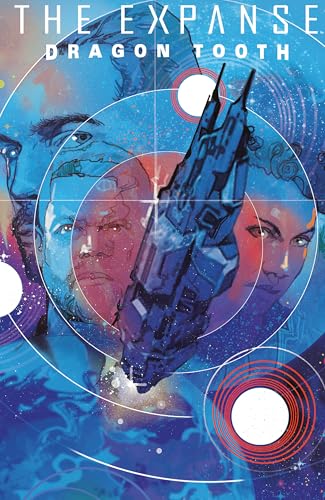
The Expanse: Dragon Tooth (Graphic Novel)
The official bridge between the show and Book 7. Fill the 30-year gap with this canonical comic series.
Price as of Oct 11, 09:11 PM UTC. Subject to change.

Jurassic Park - 4K Ultra HD
Experience the movie that defined a generation in stunning 4K resolution. A visual masterpiece.
Price as of Oct 11, 09:11 PM UTC. Subject to change.

The Art of The Legend of Vox Machina (Hardcover)
The official art book — stunning behind-the-scenes visuals from the making of the series.
Price as of Oct 11, 09:11 PM UTC. Subject to change.
You might also like
The Bourne Ultimatum review – Two old men, one last hunt
Overstuffed, and the Medusa subplot is a detour, but the Webb-versus-Carlos spine is the best thing in the trilogy and the ending genuinely lands. Rating: 5/5.
The Bourne Identity review – The best thriller opening
One of the two or three best thriller openings ever written, attached to a genuinely strange central idea that no screen version has ever attempted. Long, paranoid, and gripping from the first page. Rating: 5/5.
The Bourne Supremacy (2004) review – Where the camera won
Tense, propulsive and considerably less interesting than the film before it. Marie is disposed of as a plot device, the handheld style starts eating its own action, and Bourne becomes unbeatable. The Moscow chase and the last scene are excellent. 3.5/5.