
The Bourne Identity review – The best thriller opening
Fishermen pull a man full of bullets out of the Mediterranean. He has no memory and a Swiss bank number under his skin. One of the great thrillers. 5/5.
This post contains affiliate links. We may earn a commission if you make a purchase, at no extra cost to you. As an Amazon Associate, Dadnology earns from qualifying purchases.
📖 Introduction
🧠 This review is part of our guide to Bourne: books vs movies — which story belongs to which medium, and why they share almost nothing but a name.
Some books earn their reputation on one chapter. The Bourne Identity earns it on the first page.
Fishermen in the Mediterranean pull what they assume is a corpse out of the water. It is not a corpse. It is a man who has been shot several times, who has been in the sea long enough that he should be dead, and who — when he eventually comes round in a drunk doctor’s house on a small island — has no idea who he is. No name, no history, no country. What he does have is a piece of microfilm surgically implanted under the skin of his hip, carrying the number of a Swiss bank account.
That is the setup, and it is one of the great thriller openings. But the reason this book is still worth reading forty-five years later, and the reason it towers over its own film adaptations, is what the answer turns out to be.
🧠 The story
Most people who know Bourne from the screen assume the reveal is that he was an assassin. That is not it, and the real answer is far stranger.
Jason Bourne is not a man. He is a fiction — a legend invented by American intelligence, complete with a manufactured record of kills, and attached to a real operative for one purpose: to be so provokingly successful that the terrorist Carlos would break cover to eliminate a competitor. The man wearing the identity is David Webb, a Foreign Service officer with his own history and his own reasons for agreeing.
So the amnesia is not the plot. The amnesia is an accident that happens to a plan already running, and it leaves Webb reconstructing an identity that was never real in the first place — inside an operation that will not admit it exists, hunted by the terrorist it was designed to attract, and increasingly suspected by the people who built it.
That is a genuinely original idea and it holds up completely. Every discovery makes his situation worse rather than clearer.
Marie St. Jacques enters the book as a hostage — Webb takes her to get out of a bad situation — and becomes the novel’s other centre. Ludlum handles that transition better than the setup deserves: she stays frightened for a long time, her decision to help him is worked for, and she ends up the one person who can make the institutional side listen.
🎭 Craft, and the 1980 of it all
Ludlum is not a stylist. The prose is functional, the paragraphs are long, and he uses italics for emphasis roughly four times more often than any editor should have permitted.
None of it matters, because he had two things almost nobody else had. The first is pacing: this is a six-hundred-page novel that reads like a two-hundred-page one, because every chapter ends with the ground shifting. The second is paranoia. Ludlum’s real subject is not spycraft, it is the sensation of being processed by an organisation that has stopped being able to tell the difference between its own asset and its own problem. Every conversation with an official in this book is quietly terrifying.
The Zurich sequence in the first third — a man walking into a bank to withdraw money from an account he cannot remember opening, knowing the withdrawal will trigger something — is a masterclass in tension built entirely out of paperwork.
Where it shows its age: the technology is charmingly period, the geopolitics are Cold War, and there is a running strand of psychiatric explanation in the last act that would be handled very differently now. None of it breaks the book.
🎯 The antagonist is a real person, and that matters
One thing the films could never keep: Bourne’s enemy in this novel is not an agency, a programme or a rogue director. It is Carlos the Jackal — the actual Venezuelan terrorist, working under that name, in a novel published while he was still at large.
That single choice does more work than it looks like. A fictional antagonist can be sized to the hero. A real one cannot, and Ludlum does not try. Carlos in this book is barely present on the page for hundreds of pages at a stretch; he is a rumour, a method, a pattern of payments, a name that makes competent people change the subject. He is frightening in the way weather is frightening.
There is a neat piece of literary history folded into that, and it runs straight through this site’s other spy shelf. Ilich Ramírez Sánchez was not born with the nickname. Journalists reporting on the hunt for him turned up a copy of Frederick Forsyth’s The Day of the Jackal during a search of a London flat connected to the case, and the press had its headline. Who that particular paperback actually belonged to has been argued about ever since. It made no difference: the name stuck, and eight years later Ludlum put it at the centre of his novel.
So the chain runs Forsyth’s invented assassin, to a real terrorist named after him by a newspaper, to Ludlum building his best book around that man. The genre eating its own tail, and the reason both novels sit on the same shelf here.
👨👧 The dad perspective
This is the book that a lot of us read at fifteen and remember as pure velocity. It reads differently later, and better.
What lands now is not the chases. It is the specific horror of a man discovering that he is extremely good at things he cannot remember learning. Webb catches himself calculating exits, reading rooms, moving in a way he does not recognise — and the book is entirely clear that this is not cool. It frightens him. He has been shaped into something by people who never asked, and he cannot un-shape it.
That is a considerably darker idea than the films are interested in, and it is the reason this trilogy sits at the paranoid end of the spy shelf rather than the heroic one.
Reading commitment: long but genuinely fast. This is the one Ludlum that survives being read in short evening sessions, because the chapter breaks do the work.
Audiobook: good, though the volume of aliases and account numbers takes some concentration by ear. Audible’s 30-day trial covers a book this size — check what is in the catalogue on the day rather than assuming.
Age guidance: 15 and up. The violence is frequent but not dwelt on, the sexual content is mild by modern standards, and the real intensity is psychological.
✅ Pros & cons
Pros
- One of the two or three best openings in thriller fiction
- The central idea — Bourne as manufactured bait — is genuinely original and unused on screen
- Six hundred pages that read like two hundred
- Marie is written as a person rather than a device, which was not a given in 1980
- The Zurich bank sequence is tension built entirely out of procedure
Cons
- Ludlum's prose is functional at best, and the italics are relentless
- The psychiatric material in the final act has dated noticeably
- Cold War geopolitics needs a little patience from a reader born after it
- Long enough that the middle third sags slightly on a re-read
Conclusion: The one the films could not use
The Bourne Identity is the best thing Robert Ludlum wrote and one of the genuinely great popular thrillers. It has an opening that has never been bettered, an idea at its centre that no adaptation has dared attempt, and a paranoid engine that makes six hundred pages disappear.
The 2002 film is excellent and it is not this. It took the image of a man in the water and built something modern on it, because a Cold War hunt for Carlos the Jackal was not a film anybody wanted in 2002. Fair enough. But if you only know the screen version, you have not met the actual idea.
The Final Word: the best opening in the genre attached to its strangest premise. Five out of five, without hesitation.
Is The Bourne Identity book worth reading?
How different is the book from the 2002 film?
Who is Jason Bourne in the novel?
Do I need to read the Bourne books in order?
Is the book very long?
Keep this in your inbox
One email a week: what we actually watched, built and reviewed — the stuff worth a dad's time. No hype, no daily spam.
Dadnology Weekly
One email a week: the LEGO, gaming and movie news worth a dad's time — plus what we actually reviewed. No hype, no daily spam.
Disclaimer: This review and its visuals were created with the help of AI. Some links may be affiliate links – we may earn a commission if you make a purchase, at no extra cost to you.
Current deals in Books & media
Verified live discounts tracked on Amazon
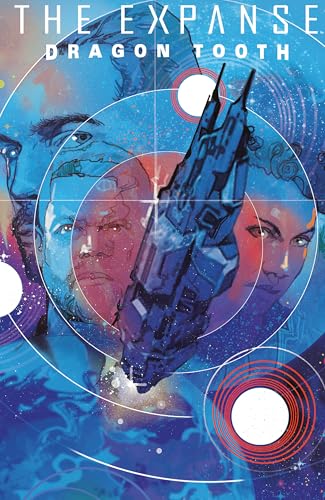
The Expanse: Dragon Tooth (Graphic Novel)
The official bridge between the show and Book 7. Fill the 30-year gap with this canonical comic series.
Price as of Oct 11, 09:11 PM UTC. Subject to change.

Jurassic Park - 4K Ultra HD
Experience the movie that defined a generation in stunning 4K resolution. A visual masterpiece.
Price as of Oct 11, 09:11 PM UTC. Subject to change.

The Art of The Legend of Vox Machina (Hardcover)
The official art book — stunning behind-the-scenes visuals from the making of the series.
Price as of Oct 11, 09:11 PM UTC. Subject to change.
You might also like
The Bourne Ultimatum review – Two old men, one last hunt
Overstuffed, and the Medusa subplot is a detour, but the Webb-versus-Carlos spine is the best thing in the trilogy and the ending genuinely lands. Rating: 5/5.
The Bourne Supremacy review – Ludlum's Hong Kong trap
Ludlum's nastiest setup and his most sustained sequence of paranoia. The impostor premise is brilliant, the Hong Kong material is his best location writing, and the coercion at its centre still lands hard. Rating: 5/5.
The Bourne Identity (2002) review – The reset button
Still the best Bourne film and one of the best spy films of the century. Damon underplays it completely, the action has weight and consequence, and the Mini chase is the last great practical car sequence of its era. 4.5/5.