
The Matarese Circle review – Ludlum's other masterpiece
Two career enemies who have killed each other's families are forced to work together, because both their agencies now want them dead. Ludlum's best premise. 5/5.
This post contains affiliate links. We may earn a commission if you make a purchase, at no extra cost to you. As an Amazon Associate, Dadnology earns from qualifying purchases.
📖 Introduction
🌀 This review is part of the Robert Ludlum hub — the Bourne trilogy, the standalones, and what he was actually writing about.
Ask somebody who has read all of Robert Ludlum which book is his best, and a surprising number of them will not say Bourne. They will say The Matarese Circle.
The reason is the premise, and it is the best one he ever had.
🧠 The story
Brandon Scofield works for American Consular Operations. Vasili Taleniekov works for the KGB. They are both very good, they have been aimed at each other for most of their working lives, and the damage is not abstract: each of them has killed somebody the other loved. Scofield’s wife. Taleniekov’s brother. These are not misunderstandings to be cleared up in chapter twelve. They are the reason each man would happily shoot the other on sight.
Then, on the same evening and for reasons neither understands, both services decide their own man has become a liability.
That is the setup, and it is close to perfect. Two people who genuinely hate each other, each with no remaining institution, each holding half of the only information that explains what is happening. The alliance is not a partnership. It is two men who cannot afford to sleep at the same time, working out how far they can push before the other one decides the account is worth settling after all.
Ludlum takes his time with it, and it is the best writing of his career. The early sections are almost entirely mistrust. There is no bonding montage, no shared drink that fixes it. What develops instead is something colder and more interesting: professional respect between two people who continue to believe the other should be dead.
Behind them is the Matarese. In April 1911, a Corsican named Guillaume de Matarese called five ruined businessmen to his villa and put a proposition to them — that assassination could be a service sold to whoever needed it. Seventy years later the organisation finances terrorist groups across Europe and the Middle East with a single objective: paralyse governments badly enough that its own people are invited in to run things.
🎭 The craft
It is a 1979 Ludlum, so the usual applies. The prose is functional. The italics are relentless. There are chapters that stop to explain themselves.
What is different here is the centre of gravity. The Bourne books are about one man; this one is about a relationship, and Ludlum turns out to be far better at that than his reputation suggests. Scofield and Taleniekov are properly distinct — Scofield is burnt out and vicious, Taleniekov is the more disciplined and, quietly, the more decent of the two — and the book lets that asymmetry do real work.
The Corsica material is the other standout. The 1911 sequence, and the very old woman who was there and remembers it, is the eeriest thing Ludlum wrote: a scene that reads like a fairy tale dropped into a Cold War thriller, and it recalibrates the whole book. Everything after it carries the weight of something that has been running patiently for seventy years.
Where it strains: the conspiracy’s reach becomes very large by the last act, in the way conspiracies in these books always do, and the reveal of who is inside it is more satisfying as a structure than as a surprise. The women in it are thinly written even by the standards of the shelf.
🔀 Against the Bourne books
Worth setting side by side, because they are the same author at his two peaks and they are not doing the same thing.
The Bourne Identity is a novel about identity. Its horror is internal — a man finding out he is extremely good at things he cannot remember learning, and being frightened by every discovery. It has the better opening and the stranger idea.
The Matarese Circle is a novel about loyalty, and its horror is external. Neither man has any confusion about who he is. Both know exactly what they have done and to whom. What is taken from them is not memory but the thing that made the work bearable — the belief that they were on a side.
Bourne is the more famous and probably the better book. This one is the more grown-up, and it is the one you can hand to somebody who says they have had enough of amnesiac assassins. Both sit at the same paranoid end of the spy shelf, and both are the exact inverse of a Clancy novel, where the institution is competent and the machine works.
🎬 The film that never happened
A footnote worth knowing, because it is the best casting nobody ever got.
MGM bought the rights in 2008. David Cronenberg was set to direct, with Denzel Washington as Scofield and Tom Cruise as Taleniekov. Cronenberg making a Cold War two-hander about mutual loathing curdling into trust is a film that would have been genuinely worth having.
MGM filed for Chapter 11 in November 2010 and it never came back. Nothing has been attempted since.
👨👧 The dad perspective
The part that stays with you is not the conspiracy. It is what the two men have left.
Scofield has nothing. No wife, no service, no cause he can still name. Taleniekov has a brother he could not save and an institution that has just written him off. Both are in their forties and both have spent their entire adult lives doing something that has now been taken away and revealed as pointless. What the book is quietly about is two people discovering, far too late, that the thing they gave everything to did not need them and never noticed.
That is a heavier idea than a thriller needs to carry, and Ludlum handles it without a single speech about it. It lands harder at forty than it can possibly have landed at twenty.
Reading commitment: around six hundred pages, and the middle is denser than Bourne. Two weeks of evenings, and the first hundred pages ask for a bit of patience before the two men are in the same room.
Audiobook: good — the two-hander structure carries well by ear, and the alternating point of view keeps it clear. Audible’s 30-day trial covers a book this size; check what is actually in the catalogue on the day.
Age guidance: 15 and up. The violence is frequent and the tone is bleak, but nothing here is gratuitous.
✅ Pros & cons
Pros
- The best premise Ludlum ever had — two enemies with real, unforgivable history, forced together
- Scofield and Taleniekov are genuinely distinct, and the mistrust is never resolved cheaply
- The 1911 Corsica sequence is the eeriest thing he wrote
- Works completely as a standalone — no series homework
- A real idea underneath it: what is left of a professional when the side disappears
Cons
- The conspiracy's reach gets implausibly large in the final act
- The women in it are thin even by 1979 standards
- The usual Ludlum italics, at full volume
- The first hundred pages are slow before the two leads converge
Conclusion: The Ludlum for people who know Ludlum
The Matarese Circle is the book to reach for once Bourne is behind you, and for a lot of readers it is simply the better novel. The premise is unimprovable, the two-hander at its centre is the best character work he did, and the Corsican material gives a Cold War thriller a genuinely strange heart.
It is not as famous, it has never been filmed, and it is a standalone that asks nothing of you. That combination makes it the easiest great Ludlum to recommend.
The Final Word: his best idea, and he did not waste it. Five out of five.
Is The Matarese Circle worth reading?
Do I need to read anything else first?
What is the Matarese?
Is there a sequel?
Was there ever a film?
Keep this in your inbox
One email a week: what we actually watched, built and reviewed — the stuff worth a dad's time. No hype, no daily spam.
Dadnology Weekly
One email a week: the LEGO, gaming and movie news worth a dad's time — plus what we actually reviewed. No hype, no daily spam.
Disclaimer: This review and its visuals were created with the help of AI. Some links may be affiliate links – we may earn a commission if you make a purchase, at no extra cost to you.
Current deals in Books & media
Verified live discounts tracked on Amazon
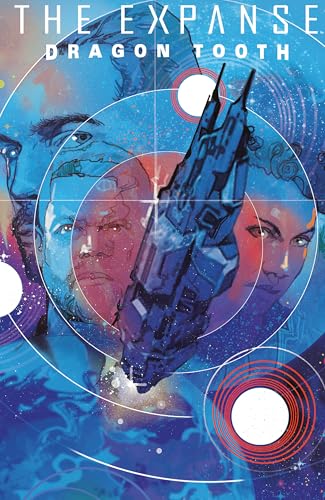
The Expanse: Dragon Tooth (Graphic Novel)
The official bridge between the show and Book 7. Fill the 30-year gap with this canonical comic series.
Price as of Oct 11, 09:11 PM UTC. Subject to change.

Jurassic Park - 4K Ultra HD
Experience the movie that defined a generation in stunning 4K resolution. A visual masterpiece.
Price as of Oct 11, 09:11 PM UTC. Subject to change.

The Art of The Legend of Vox Machina (Hardcover)
The official art book — stunning behind-the-scenes visuals from the making of the series.
Price as of Oct 11, 09:11 PM UTC. Subject to change.
You might also like
The Bourne Identity review – The best thriller opening
One of the two or three best thriller openings ever written, attached to a genuinely strange central idea that no screen version has ever attempted. Long, paranoid, and gripping from the first page. Rating: 5/5.
The Bourne Ultimatum review – Two old men, one last hunt
Overstuffed, and the Medusa subplot is a detour, but the Webb-versus-Carlos spine is the best thing in the trilogy and the ending genuinely lands. Rating: 5/5.

Bourne: Books vs movies – Almost nothing in common
Only The Bourne Identity (2002) has a real connection to a novel, and it keeps the premise rather than the plot. Everything after that shares a title and nothing more. Read the books for the paranoia, watch the films for the craft — they are not competing versions of one story.