gaming

The Zelda Timeline Explained – Every Game in the Right Order

Patrick W.

The official Zelda timeline, untangled. Lore order, release order, and the order a busy dad should actually play them in.
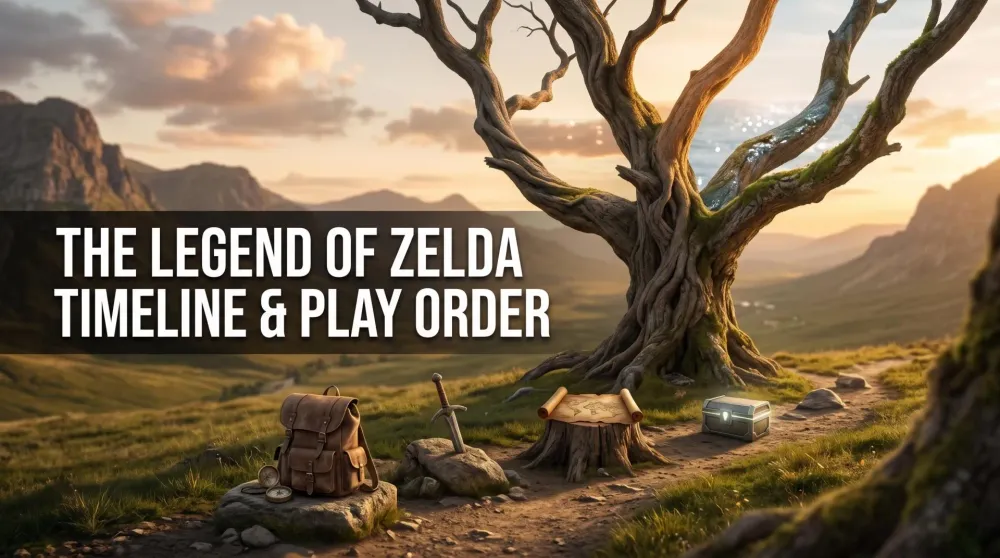
A branching timeline of every Legend of Zelda game from the NES original to Tears of the Kingdom

This post contains affiliate links. We may earn a commission if you make a purchase, at no extra cost to you.

⏳ The Zelda Timeline, Untangled

🗡️ This guide is part of the Legend of Zelda Hub – every mainline game reviewed and rated, all in one place.

If you’ve ever tried to read the official Legend of Zelda timeline, you know the feeling: a wall of branching arrows, three parallel histories, and a “downfall” path that exists because Link loses. It’s the kind of thing you start reading after the kids are in bed and abandon twenty minutes later, none the wiser. Let’s fix that — properly, and in plain dad-English.

Made your decision? Scroll to the full reviews below. Still curious how it all fits together? Read on — it’s genuinely a fun rabbit hole once someone draws you the map.


First, The Honest Truth: Order Barely Matters

Here’s the thing nobody tells you before you fall down the wiki hole: Zelda is an anthology, not a saga. Almost every game stars a different Link, a different Princess Zelda, and a freshly rebuilt Hyrule. The recurring names are a theme — courage, wisdom, power, repeated across ages — not a continuous plot you’ll lose track of by skipping around.

That’s deliberate. Nintendo only stitched the official timeline together years after the fact (it was first published in full in the 2011 art book Hyrule Historia), partly to answer fan questions, partly because the games were never designed to be played in a fixed sequence. So if you came here worried you’ll be “spoiled” or “lost” by playing the wrong one first — relax. You won’t.

What I judge every Zelda on is simple, and it’s the Dadnology lens: does it respect your time? A great Zelda lets you make real progress in a 30-minute window after bedtime, then drops you back into it a week later without making you relearn everything. With that in mind, here’s the timeline — first the lore, then the version that actually helps you.

Ad

Nintendo Switch 2 (opens in a new tab)

The single console that plays the most Zelda — modern, remakes, and the back catalogue.

Nintendo Switch 2

Series Content

Explore all articles, reviews, and guides in this series.
The original 1986 The Legend of Zelda on NES, with Link exploring the overworld of Hyrule

#1The Legend of Zelda (NES) Review: Where It All Began

10 / 10
Released:

The Legend of Zelda (1986) was a genuine revolution. On a grey NES cartridge, Nintendo handed players an open world with no fences, a battery save that let you keep your progress, and a map full of secrets it never explained. You were simply dropped into Hyrule and trusted to explore, burn the right bush, bomb the right wall and find your own way. Forty years on it still plays beautifully — and on the dedicated Game & Watch handheld it is the perfect bedside dose of where this whole legend began.

Zelda II: The Adventure of Link on NES, with Link in a side-scrolling battle against an Iron Knuckle

#2Zelda II: The Adventure of Link (NES) – The Black Sheep

Released:

Zelda II: The Adventure of Link (1987) is the strangest, most divisive entry in the entire series — and the one mainline Zelda I have not yet played. Rather than iterate on the original's top-down exploration, Nintendo swerved hard into side-scrolling action with RPG mechanics: experience points, leveling, magic spells, towns full of NPCs and a brutal difficulty curve. It is beloved by some and bounced off by many. This is an honest overview of where it sits, why it matters, and why I am keeping it on my list — without pretending I have beaten a game I have not.

The Legend of Zelda: A Link to the Past on SNES, with Link exploring the Light World of Hyrule

#3Zelda: A Link to the Past Review – SNES Masterpiece

10 / 10
Released:

The Legend of Zelda: A Link to the Past (1991) is, for many of us, the classic par excellence — one of the greatest games ever made, and one that you can still sit down and play perfectly today. It took the open spirit of the original, gave it the power of the SNES, and built the template every 2D Zelda has followed since: the dual Light and Dark Worlds, brilliant interlocking dungeons, the spin attack, the Master Sword. It is not just a milestone; it is a complete, flawless adventure that has barely aged a day.

The Legend of Zelda: Link's Awakening on Game Boy, with Link exploring Koholint Island

#4Zelda: Link's Awakening (Game Boy) Review - Classic

9 / 10
Released:

The Legend of Zelda: Link's Awakening (1993) was the series' first handheld adventure, and it remains one of its most beloved. Stranded on the mysterious Koholint Island, Link must wake the Wind Fish to escape — a quest that grows stranger, funnier and more quietly heartbreaking the deeper it goes. Built on the A Link to the Past template but shrunk onto a Game Boy, it is dense, inventive and full of personality, with a bittersweet ending that has stuck with players for thirty years. Proof that a portable Zelda could be every bit as essential as the console games.

The Legend of Zelda: Ocarina of Time on N64, with Link drawing the Master Sword in the Temple of Time

#5Zelda: Ocarina of Time Review - The Best Game Ever

10 / 10
Released:

The Legend of Zelda: Ocarina of Time (1998) is, for a huge number of us, the greatest game ever made. On the Nintendo 64 it solved problems nobody else had cracked — how to fight in 3D with Z-targeting, how to make a vast world navigable with Epona and warp songs, how to give a coming-of-age story real weight by skipping Link seven years into the future with a single pull of the Master Sword. Decades on, its influence is everywhere and its magic is undimmed. With a full remake on the way, there has never been a better time to talk about why it still matters.

The Legend of Zelda: Majora's Mask on N64, with the menacing moon looming over Clock Town

#6Zelda: Majora's Mask Review - The Dark Masterpiece

9 / 10
Released:

The Legend of Zelda: Majora's Mask (2000) is the boldest, strangest entry in the series — a direct N64 sequel to Ocarina of Time that traps Link in a three-day time loop as a malevolent moon falls toward the doomed land of Termina. Built on the Song of Time, mask transformations and the interlocking daily routines of its grief-stricken townsfolk, it trades epic scope for dense, melancholy depth. Divisive, demanding and unforgettable, it is the cult favourite that rewards patience with one of gaming's most affecting experiences.

The Legend of Zelda: The Wind Waker, with cel-shaded Link sailing the Great Sea in the King of Red Lions

#7Zelda: The Wind Waker Review - A Cel-Shaded Classic

9 / 10
Released:

The Legend of Zelda: The Wind Waker (2002) was the most controversial entry in the series at reveal — its cartoonish cel-shaded art style sparked a fan backlash — and is now one of the most beloved. On the GameCube, Nintendo swapped Hyrule for the Great Sea, a vast ocean dotted with islands that Link sails between aboard a talking boat, conducting the wind with a magic baton. The art has aged better than any realistic game of its era, the charm is off the charts, and the 2013 Wii U HD remaster smoothed its few rough edges. A timeless adventure that proves style beats spectacle.

The Legend of Zelda: Twilight Princess, with Wolf Link and Midna in a shadowy, twilight-soaked Hyrule

#8Zelda: Twilight Princess Review - The Darkest Hyrule

9 / 10
Released:

The Legend of Zelda: Twilight Princess (2006) was Nintendo's answer to the fans who wanted a darker, realistic Zelda after The Wind Waker. It delivered the moodiest Hyrule in the series — a land creeping with twilight — alongside the transforming Wolf Link, the largest overworld of its era, and Midna, widely regarded as the best companion character Zelda has produced. Released on both GameCube and the launch of the Wii (with mirrored motion controls), and later remastered in HD on Wii U, it is a grand, gothic, deeply satisfying adventure that leans into atmosphere and character like no Zelda before it.

The Legend of Zelda: Phantom Hourglass on Nintendo DS, with cel-shaded Link sailing and a stylus-drawn map

#9Zelda: Phantom Hourglass Review - Stylus Sailing DS

10 / 10
Released:

The Legend of Zelda: Phantom Hourglass (2007) is the boldest control experiment in the series — a Nintendo DS adventure played entirely with the stylus. A direct sequel to The Wind Waker, it returns to the cel-shaded Great Sea, but now you move, fight, sail and solve puzzles by touching, tapping and drawing on the screen. Its standout moments use the DS hardware in ways no other Zelda could, including one of the most ingenious puzzles Nintendo has ever designed. Charming, inventive and far better than its reputation suggests, it is a handheld gem that fully justifies its touchscreen ambitions.

The Legend of Zelda: Spirit Tracks on Nintendo DS, with Link driving a train and the spirit of Princess Zelda beside him

#10Zelda: Spirit Tracks Review - Link Rides the Rails

9 / 10
Released:

The Legend of Zelda: Spirit Tracks (2009) is the charming DS follow-up to Phantom Hourglass, and one of the most quietly progressive games in the series. Link travels the land by train, driving along spirit tracks between regions, while Princess Zelda — separated from her body — becomes a genuine companion who can possess Phantom armour to solve puzzles and fight alongside you. It keeps the stylus controls and cel-shaded charm of its predecessor while improving on its structure, delivering inventive co-operative puzzles and the best version of Zelda-as-character in the handheld era.

The Legend of Zelda: Skyward Sword, with Link riding a Loftwing above the clouds of Skyloft

#11Zelda: Skyward Sword Review - The Master Sword Origin

9 / 10
Released:

The Legend of Zelda: Skyward Sword (2011) is the chronological starting point of the entire series — the origin of the Master Sword, of the Link-and-Zelda bond, and of the cycle that echoes through every later game. Built around Wii MotionPlus for genuine one-to-one sword control, it is the most divisive mainline Zelda: loved for its gorgeous art, excellent dungeons and strong story, criticised for its motion controls and heavy hand-holding. The 2021 Switch HD remaster adds button controls and quality-of-life fixes that smooth its rough edges, making this the moment to give Skyward Sword another look.

The Legend of Zelda: A Link Between Worlds on 3DS, with Link merged as a painting on a Hyrule wall

#12Zelda: A Link Between Worlds Review - A 3DS Triumph

10 / 10
Released:

The Legend of Zelda: A Link Between Worlds (2013) is a direct 3DS sequel to A Link to the Past, set on the same beloved Hyrule map, and one of the smartest games in the series. Its signature wall-merging mechanic lets Link flatten into a painting to slip along walls and solve spatial puzzles, while a revolutionary item-rental system makes every tool available from the start — letting you tackle dungeons in almost any order. That freedom quietly previewed the open philosophy of Breath of the Wild years early. Brisk, brilliant and endlessly clever, it is one of the finest handheld Zeldas ever made.

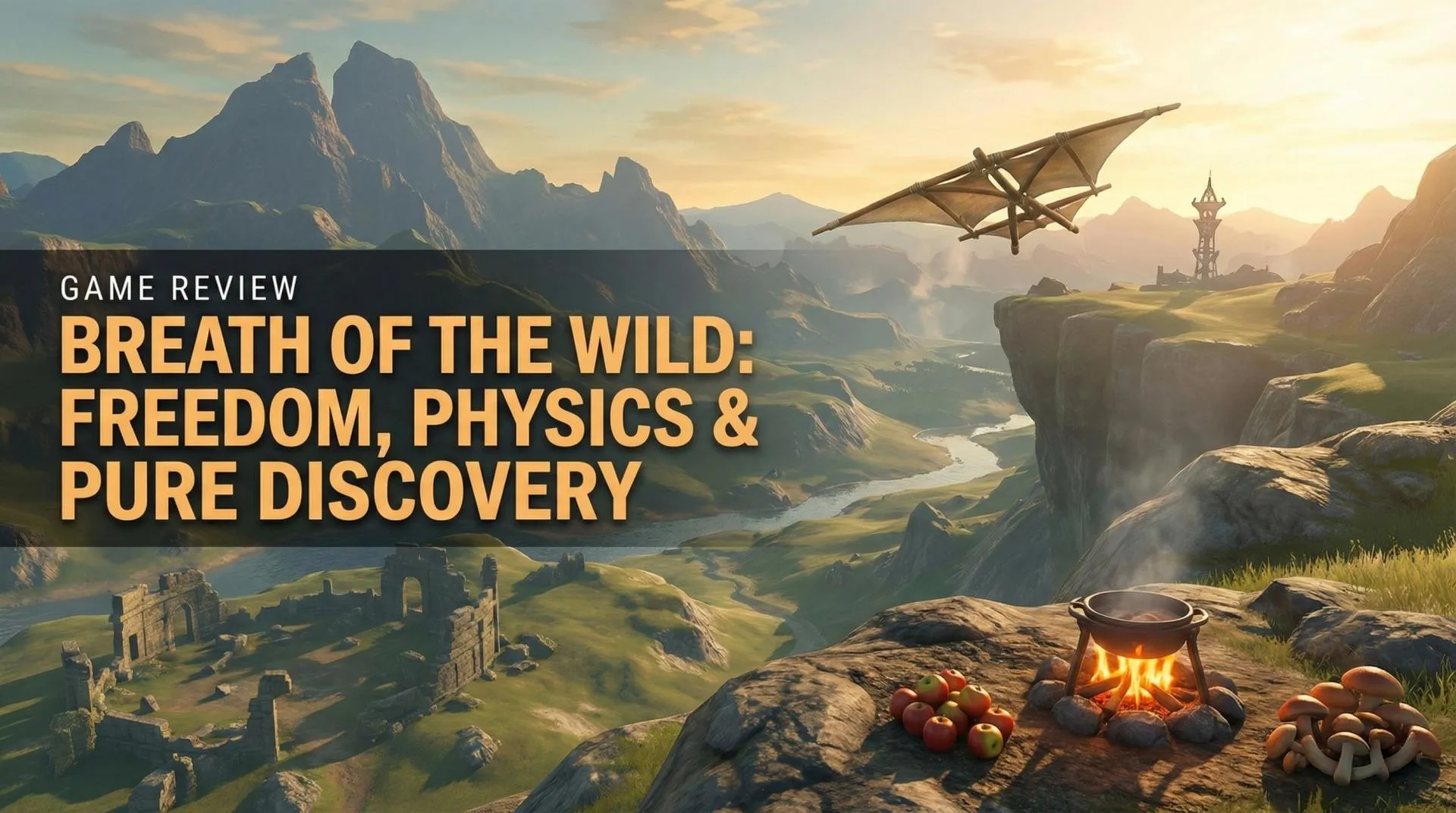
Link overlooking a vast Hyrule from a cliff at sunrise

#13The Legend of Zelda: Breath of the Wild – Freedom, Physics, and Pure Discovery

10 / 10
Released:

Breath of the Wild reinvented Zelda with a physics-driven sandbox where systems collide and curiosity leads. Hyrule is entirely climbable, weather and elements interact logically, and puzzles support countless solutions without traditional dungeon items. You improvise with wind, fire, metal, and momentum to reach goals your way. As a dad player, the freedom fits short sessions or long weekends. On Switch 2, higher stability, faster loads, and cleaner image make revisiting Hyrule feel fresh without losing its wandering magic today.

The Legend of Zelda: Link's Awakening Switch remake, with toy-like Link on the diorama island of Koholint

#14Zelda: Link's Awakening Switch Review - A Remake Gem

10 / 10
Released:

The Legend of Zelda: Link's Awakening (2019) is a loving, ground-up Nintendo Switch remake of the 1993 Game Boy classic. Koholint Island is rebuilt in a gorgeous toy-like diorama art style, with modern controls, quality-of-life improvements and a new Chamber Dungeons mode — while preserving the dense dungeon design, dreamlike strangeness and devastating ending that made the original a landmark. It is the definitive way to experience one of the most beloved adventures in the series, and proof that a remake can honour a classic completely. A near-flawless reimagining.

Link gliding over Hyrule in The Legend of Zelda: Tears of the Kingdom

#15The Legend of Zelda: Tears of the Kingdom – Reinventing Perfection

10 / 10
Released:

*The Legend of Zelda: Tears of the Kingdom* takes the open-world freedom of *Breath of the Wild* and elevates it to astonishing new heights. With three interconnected layers of exploration, endless creativity, and a deeply emotional story, it’s a masterpiece that rewards curiosity. Whether in short handheld bursts or long weekend sessions, this is gaming magic redefined. On the Nintendo Switch 2, Hyrule looks breathtakingly alive — in 4K on the TV when docked, and crisp and bright on the larger handheld screen.

The Legend of Zelda: Echoes of Wisdom on Switch, with Princess Zelda summoning echoes of objects in a toy-like Hyrule

#16Zelda: Echoes of Wisdom Review - The Princess Leads

9 / 10
Released:

The Legend of Zelda: Echoes of Wisdom (2024) is a landmark: the first mainline game in which you play as Princess Zelda herself, with Link cast as the one who needs rescuing. Armed with the Tri Rod, Zelda summons 'echoes' — copies of objects and enemies — to solve puzzles and fight her way through a charming, toy-like Hyrule rendered in the diorama art style of the Link's Awakening remake. The result is a creative, sandbox-flavoured top-down adventure that hands players genuine freedom of expression. A delightful, important entry that finally lets the princess be the hero.

Disclaimer: This review and its visuals were created with the help of AI. Some links may be affiliate links – we may earn a commission if you make a purchase, at no extra cost to you.

The Official Lore Order (The Branching Map)

The whole timeline pivots on one game: Ocarina of Time. Everything before it is shared history; everything after it splits into three. Here’s how it breaks down.

The Beginning: Before the Split

It opens with Skyward Sword — the literal origin of the Master Sword and the very first hero. From there the early era runs through The Minish Cap and Four Swords (two we haven’t reviewed yet), and arrives at Ocarina of Time, the most important hinge in the series. At the end of Ocarina, the timeline shatters into three.

Branch 1 — The Child Era

This is the path where Link, victorious, is sent back to his childhood to live the years Ganondorf stole. It leads to Majora’s Mask (a direct sequel — same Link, three days, one doomed moon) and later Twilight Princess, the moodiest, most grown-up Hyrule in the series.

Branch 2 — The Adult Era

Here the Hero of Time vanished back to childhood, leaving the future without a hero. Ganondorf eventually returns, the gods flood the land, and Hyrule becomes an ocean. That’s the setup for The Wind Waker, followed by its DS sequels Phantom Hourglass and Spirit Tracks.

Branch 3 — The Downfall Era

The strangest branch: the “what if Link had died” timeline. With no hero, Ganon’s power festers across generations. This branch holds some of the most beloved 2D games — A Link to the Past, Link’s Awakening, A Link Between Worlds, and eventually the ones that started it all: The Legend of Zelda on NES and its black-sheep sequel Zelda II: The Adventure of Link.

Ad

The Legend of Zelda: Breath of the Wild (opens in a new tab)

The best modern entry point. No timeline homework required.

The Legend of Zelda: Breath of the Wild

And Then There’s the Modern Era

Breath of the Wild and Tears of the Kingdom sit far at the end of the timeline, long after all three branches converge — and Nintendo has very pointedly refused to pin them to a single one. That’s not laziness; it’s a clean reset. These two need no prior knowledge whatsoever, which is exactly why they’re the best on-ramps for a newcomer. (The newest top-down adventure, Echoes of Wisdom, hasn’t been given a firm official placement either — enjoy the theories, but don’t lose sleep over it.)

The Release Order (The Simpler Map)

If the three branches make your head spin, here’s the version I’d actually hand a friend: play them in the order Nintendo made them. It’s a tour through gaming history itself — you watch the series invent the top-down adventure, leap into 3D with Ocarina, experiment wildly on the DS and Wii, and finally blow the doors off with the open-world era.

The cards above are sorted exactly this way, oldest to newest. You can read down the list like a logbook: 1986’s genre-defining original, the SNES masterpiece in 1991, the 3D revolution in 1998, the cel-shaded ocean of 2002, the motion-control swing of 2011, and the physics sandbox that reset everything in 2017. Each card links to our full, honestly-rated review.

So What Order Should You Play In?

Forget both maps for a second. Here’s the framework I’d give any dad starting today:

If you want the modern, do-anything Zelda: Start with Breath of the Wild, then Tears of the Kingdom. This is the path of least resistance and arguably the highest ceiling the series has ever hit.

If you want classic, guided, “proper” Zelda: Start with A Link to the Past or Link’s Awakening, then graduate to Ocarina of Time. This is the heart of what made the series legendary.

If you only ever play one: Make it Ocarina of Time or Breath of the Wild. Different eras, same verdict — both are 10/10 high-water marks, and both are perfect first Zeldas for different kinds of player.

If you’re torn between starting old or new: Ask yourself one question — do I want freedom or focus? Breath of the Wild gives you a mountain and says “figure it out.” A Link to the Past hands you a brilliant, tightly-designed adventure with a clear path. Neither is wrong. Pick the mood you’re in.

Ad

The Legend of Zelda: Tears of the Kingdom (opens in a new tab)

The deepest sandbox Nintendo has built. Play it after Breath of the Wild.

The Legend of Zelda: Tears of the Kingdom

Pros

  • Almost every game stands completely alone — start anywhere, skip freely
  • The two best entry points (Breath of the Wild, Ocarina of Time) need zero lore knowledge
  • The timeline rewards curiosity without ever punishing newcomers who ignore it

Cons

  • The official three-branch split genuinely is confusing on paper
  • A few entries (the modern era, Echoes of Wisdom) are deliberately left vague — there's no tidy 'final' answer

The Bottom Line

For most dads: don’t overthink the timeline. Start with Breath of the Wild for the modern open world, or grab a classic and work forward. The lore is a wonderful bonus you can explore later — ideally with a kid asking “wait, is that the same Link?”

If you want a single console that covers the most ground, the Nintendo Switch 2 plays the modern games, the remakes, and the back catalogue in one place.


Our full reviews of every mainline Zelda appear above — each rated honestly, in release order, with the dad-life verdict on whether it respects your limited gaming hours.

Do I need to play the Zelda games in order?

No. Almost every Zelda game tells a self-contained story with a new Link and a new Hyrule, so you can start anywhere. The timeline is a fun lore layer, not a prerequisite. The only pairs worth playing in order are Ocarina of Time then Majora’s Mask, and Breath of the Wild then Tears of the Kingdom.

What is the official Zelda timeline order?

It starts with Skyward Sword, runs through Ocarina of Time, then splits into three branches: the Child Era (Majora’s Mask, Twilight Princess), the Adult Era (Wind Waker, Phantom Hourglass, Spirit Tracks), and the Downfall Era (A Link to the Past, Link’s Awakening, the original NES game and Zelda II). Breath of the Wild and Tears of the Kingdom sit at the far end after the branches converge.

Where do Breath of the Wild and Tears of the Kingdom fit on the timeline?

Nintendo has deliberately placed them at the very end of the timeline, long after the three branches converge, and has avoided committing to a single branch. Treat them as a fresh start: they need zero prior knowledge, and Tears of the Kingdom is a direct sequel to Breath of the Wild.

What order should I actually play the Zelda games in?

Play by quality and entry point, not chronology. Start with Breath of the Wild for the modern open world, or A Link to the Past and Link’s Awakening for the classic 2D feel, or Ocarina of Time for the all-time great. Then follow whatever era hooked you.

Which Zelda game is the best place to start?

For most dads in 2026, Breath of the Wild on Switch — it’s approachable, needs no timeline knowledge, and you can play in short bursts. If you prefer guided, classic Zelda, start with A Link to the Past or Ocarina of Time.

Patrick W. Founder & Editor

Father of two, keen nature & landscape photographer, and smart-home tinkerer based in rural Germany. Camera gear gets tested outdoors in real conditions — not on a studio bench — and the house runs on a home network more elaborate than it strictly needs to be. Everything reviewed here has to survive real family life: school runs, sticky fingers, and the odd toddler stress-test. Reviews are based on hands-on use, not press samples or sponsored placements. How we test →

More about Dadnology