
Agents of S.H.I.E.L.D. S2 finale – Inhumans rise, Ultron echoes
The explosive S.H.I.E.L.D. Season 2 finale deepens MCU ties with Ultron connections and sets up a new age of Inhumans.

This post contains affiliate links. We may earn a commission if you make a purchase, at no extra cost to you. As an Amazon Associate, Dadnology earns from qualifying purchases.
🔥 Introduction
This review is part of the MCU Watch Order – explore all MCU movies and shows in order!
Season 2 of Agents of S.H.I.E.L.D. already delivered consistently strong storytelling, but its final two episodes push everything into high gear. With major character developments, thrilling action, and a seamless crossover with Avengers: Age of Ultron, this finale demonstrates just how powerful the MCU’s TV storytelling can be.
🧬 Story & characters
The season-long build-up to the Inhuman storyline pays off spectacularly here. Skye (Chloe Bennet) comes into her own as Daisy Johnson, finally embracing her powers and her identity. Her conflict with Jiaying – both emotional and ideological – gives the finale real depth.
Meanwhile, Coulson’s leadership is tested as alliances fray and secrets explode into the open. The tension between S.H.I.E.L.D. and the Inhumans escalates into a full-on confrontation, one that feels earned and meaningful thanks to strong writing across the season.
The MCU crossover element – particularly involving Loki’s scepter and the Sokovia situation – is expertly woven into the plot. It’s not just a reference; it matters. These connections make the universe feel truly shared and dynamic.
💣 Visuals & highlights
From the emotional confrontations to large-scale battles, the finale never loses its pace or focus. Standout moments include:
- The heartbreaking standoff between Skye and Jiaying.
- Mack wielding an axe in what would become a series-defining move.
- Coulson’s devastating loss and shocking injury.
- The final reveal of the Terrigen Crystals entering the food chain.
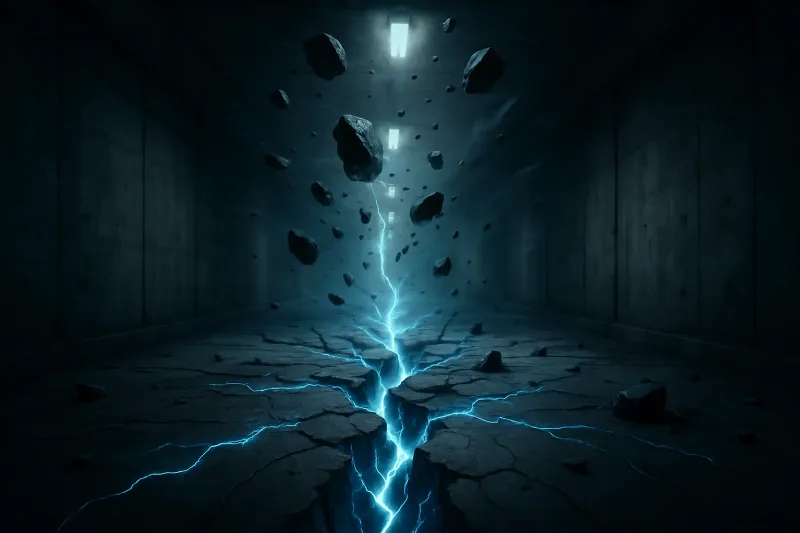
The visual effects, especially for a network TV show, are impressive. Skye’s seismic powers feel grounded yet powerful, and the kinetic editing keeps the viewer on edge without being overwhelming.
👨👧👦 Our experience & recommendation
Watching this finale with older kids or teens offers the perfect mix of action, emotion, and larger-than-life comic book storytelling. As a father, the tension between Skye and her parents is especially resonant – capturing the pain of betrayal and the strength of chosen family.
What makes this two-parter special is its ability to mix spectacle with sincerity. It’s not just explosions – it’s people we’ve come to care about making tough choices in impossible situations. That’s peak MCU, no matter the format.
🌊 Jiaying and the logic of Separatism: Why the Season 2 villain is genuinely tragic
Jiaying (Dichen Lachman) is the season’s primary antagonist, but she’s constructed with more care than most Marvel villains ever receive. She is Skye’s mother. She is the leader of Afterlife — the hidden Inhuman community that has survived in secret for generations. She is also a woman who was killed by Daniel Whitehall, her body dissected so HYDRA’s scientists could harvest her regenerative abilities to restore an aging monster. She rebuilt herself from that. Literally. The show doesn’t let you forget it.
Her turn toward violence isn’t irrational. Her position is that Inhumans cannot trust any government or institution, because history has shown — repeatedly, personally — that governments exploit and destroy people with powers they don’t understand. HYDRA did it. The SSR did it. SHIELD itself, in its compromised incarnations, has done it. Jiaying is not a conspiracy theorist. She’s a survivor with evidence. The tragedy of the Season 2 finale is that she is both right about the danger and catastrophically wrong about the solution.
SHIELD at this moment — Coulson’s SHIELD, rebuilt from the ruins of the HYDRA infiltration — is not HYDRA. The team that has been operating through Season 2 has demonstrated, repeatedly, that it can be trusted with knowledge of Inhumans. But Jiaying cannot separate what SHIELD is from what it has been. She cannot evaluate the specific people in front of her; she can only see the institution and what that institution has historically represented. Her threat assessment is trauma-informed, not paranoid — and that’s what makes her a genuinely tragic figure rather than just an obstacle.
The show frames this as a failure of categorical thinking. Jiaying treats SHIELD as a class of threat rather than a collection of individuals with their own moral agency. This mirrors the season’s broader argument: institutions are made of people, and the quality of the institution depends on who’s inside it. Coulson rebuilt SHIELD precisely because he believed the institution could be something different. Jiaying cannot believe that. She has too much evidence to the contrary.
That Skye — Daisy — is the one who has to stop her is the episode’s most painful structural choice, and it earns it. The show gave Jiaying enough moral coherence across the season that this moment lands with real weight. You understand why Skye loves her. You understand why Skye has to let her go. The confrontation between them doesn’t feel like a hero defeating a villain. It feels like a daughter choosing what kind of person she wants to be when the person she loves has become someone she can’t follow.
That’s not a standard network TV finale beat. That’s something closer to the emotional register the MCU films reach on their best days.
🔗 MCU synchronization in practice: The Age of Ultron connection
One of the more technically impressive things the Season 2 finale accomplishes is its coordination with Avengers: Age of Ultron. The two pieces of content were designed to be watched in sequence — the film first, then these episodes — and the payoff requires that you’ve seen both. This isn’t a casual reference. The Terrigen crystals entering the ocean food chain at the close of Episode 22 is a direct narrative consequence of events set in motion in the film, and the resulting cascade — Inhumans emerging globally without Afterlife’s knowledge or preparation — drives the entire engine of Season 3.
The Age of Ultron crossover works because it treats the MCU as a shared consequence space. Loki’s scepter, the Sokovia incident, the Avengers’ operational tempo — these aren’t Easter eggs dropped to reward attentive fans. They’re conditions that change what SHIELD can and can’t do, who it answers to, and how much political cover Coulson has for the decisions he’s making. The show earns the crossover by making the film’s events matter to its characters, not just its mythology.
What’s easy to undervalue here is the coordination required to make this work. In 2015, for a network television show to operate in tight alignment with a theatrical release, the writers needed to know months in advance what the film was doing — and Marvel Studios needed to trust the television team with that information. That’s not a small thing. The Marvel television productions of this era were operating in a structurally awkward position: significant enough to share the universe, but not integrated into the film development process in the way that the streaming-era Marvel shows would eventually be. The fact that the SHIELD writers’ room managed to plant seeds that pay off within the same viewing sequence — the film opens the question, the finale closes it — represents a genuinely impressive logistical achievement as much as a creative one.
The Terrigen ending is what makes this finale feel consequential rather than just satisfying. A finale that resolves all its threads is fine. A finale that resolves its threads and then drops something irreversible into the world — something that won’t be cleaned up, that will continue to produce consequences — is rarer. The crystals in the food chain can’t be recalled. Whatever world it creates is the world Season 3 has to deal with. That commitment to consequences over a tidy reset is what separates the SHIELD finales that work from the MCU television that simply goes through motions.
Pros
- Tight pacing and high emotional stakes
- Excellent use of the Inhuman storyline
- Effective crossover with Age of Ultron
- Big character moments for Skye, Coulson, and Mack
- Game-changing setup for future seasons
Cons
- Some elements feel rushed due to episode limit
- No traditional post-credit moment (though the final scene works as one)
📝 Conclusion
The Agents of S.H.I.E.L.D. Season 2 finale is everything fans could want: dramatic, powerful, and deeply tied into the larger MCU. With impactful moments and thrilling developments, it solidifies the show’s importance in the universe – and leaves you hungry for more.
📺 Movie night sorted: thousands of films and shows are streaming on Prime Video — free for 30 days. Worth a look before you buy the disc.
Related Dadnology review: Ant-Man – Small Hero, Big Impact
📌 FAQ – Frequently asked questions
Is this episode suitable for kids?
How long are the episodes?
How does it fit into the MCU timeline?
Is there a post-credit scene?
Is this episode best watched after Avengers: Age of Ultron?
Does Jiaying return in later seasons?
Keep this in your inbox
One email a week: what we actually watched, built and reviewed — the stuff worth a dad's time. No hype, no daily spam.
Dadnology Weekly
One email a week: the LEGO, gaming and movie news worth a dad's time — plus what we actually reviewed. No hype, no daily spam.
Disclaimer: This review and its visuals were created with the help of AI. Some links may be affiliate links – we may earn a commission if you make a purchase, at no extra cost to you.
Current deals in Movies & TV
Verified live discounts tracked on Amazon
![The Legend of Korra — The Complete Series [Blu-ray]](https://m.media-amazon.com/images/I/51+1TXyb7aL._SL500_.jpg)
Movies & TV · Tested by Dadnology
The Legend of Korra — The Complete Series [Blu-ray]
4.5/5“A new Avatar, a modern city, a masked revolution”Read our review
Movies & TV · Tested by Dadnology
Zack Snyder's Justice League (4K Ultra HD)
4/5“Four hours. One vision. This is the film.”Read our review
Movies & TV · Tested by Dadnology
Space Jam (4K Ultra HD + Digital)
4/5“It's gonna be a whole new ball game”Read our reviewYou might also like
Agents of S.H.I.E.L.D. – Season 5: Time loops, Kree rule, and a snap that never came
Season 5 of *Agents of S.H.I.E.L.D.* is daring, emotional, and beautifully written. A two-part arc that takes us through dystopian futures, alien threats, and heartbreaking farewells. One of the MCU’s best.

Ant-Man – Small hero, big impact
Ant-Man proves that size doesn’t matter when it comes to superhero storytelling. With Paul Rudd’s charismatic performance, brilliant visuals that explore the microverse, and a story full of clever twists and emotional moments, this film delivers one of the best origin stories in the MCU. The father-daughter relationship adds heartfelt depth, and the comedic timing is pitch-perfect. A true fan-favorite that brings something refreshingly different to the MCU’s Phase 2 lineup – and a film that holds up beautifully on rewatch.
LEGO 67006 The Marvel Skyline revealed: 1,261 pieces of superhero architecture
LEGO has announced The Marvel Skyline (67006): a 1,261-piece 18+ microscale Architecture-style model spanning Wakanda, Oscorp, and Xavier's School.