
Black Widow – Espionage, family, and a long-overdue spotlight
Set after Civil War, this solo outing finally gives Natasha Romanoff the emotional depth and explosive story she deserves.
This post contains affiliate links. We may earn a commission if you make a purchase, at no extra cost to you. As an Amazon Associate, Dadnology earns from qualifying purchases.
🎬 Introduction
This review is part of the MCU Watch Order – explore all MCU movies and shows in order!
Though released years later, Black Widow takes place shortly after the events of Captain America: Civil War. On the run from the authorities due to the Sokovia Accords, Natasha Romanoff goes off the grid — and into her past. This film finally offers the spotlight Natasha always deserved, blending spy-thriller action with deeply personal storytelling.
🕵️♀️ Story & characters
The film begins with Natasha on the run, but things quickly pivot into a story about family, identity, and unfinished business. When Yelena, her “sister” from a fake Soviet-era spy family, reenters her life, they’re both pulled back into the shadows of the Red Room — the cruel organization that shaped them.
Scarlett Johansson delivers a powerful, grounded performance, portraying Natasha not just as a superhero, but as a woman with trauma, regrets, and a fierce sense of justice. Florence Pugh’s Yelena is an instant standout — sarcastic, skilled, and incredibly human. The dynamic between the sisters is the beating heart of the film.
David Harbour and Rachel Weisz round out the dysfunctional spy family with humor and depth. Despite the chaos of their past, there’s real warmth beneath their interactions.
The villain, Dreykov, and Taskmaster bring weight to the narrative, even if Taskmaster’s arc feels a bit underused. Still, the reveal adds emotional punch.
💣 Action & visuals
Black Widow leans into its spy-thriller roots with fast-paced fight choreography, intense close-combat sequences, and daring escapes. Whether it’s a tense prison break or a sky-high battle aboard a collapsing facility, the action never lets up — but never feels hollow.
The hand-to-hand fights are visceral and well-shot, especially the early apartment brawl between Natasha and Yelena, which instantly communicates their history and skill. The practical effects and stunt work are some of the best in the MCU.
👨👧👦 Our experience & recommendation
Watching Black Widow with my daughter was a different kind of MCU experience — more grounded, more emotional. She was especially drawn to the sisterly bond between Natasha and Yelena. We talked afterward about family, trust, and making your own choices.
The film has fewer fantastical elements than other MCU entries, making it feel more intimate and personal — but no less impactful. It’s a great entry point for younger viewers who enjoy action but want relatable characters too.
Despite being a posthumous story for Natasha, the film adds immense value to her arc and makes her ultimate fate in Endgame even more poignant.
🕷️ The Red Room and what it represents
The Red Room is the Soviet program that built Natasha Romanoff — and Black Widow (2021) puts that program back at the centre of the story as its primary source of dread. General Dreykov didn’t just run a training regime for assassins; he ran a system designed to make people into tools by removing the one thing that would make them dangerous to him: the ability to choose not to comply. The widows under his control are not complicit in what they do. Their agency has been chemically removed. They operate, they kill, they follow orders — and none of it is a choice. This is the most explicit thing the MCU has ever done with a story about institutional violence that specifically targets women as a class, and the film is clearer about it than most of the coverage gave it credit for.
What this does for Natasha’s character is more significant than the film telegraphs. She has spent the better part of eleven years’ worth of screen time carrying what she calls “red in her ledger” — guilt for things she did before she was an Avenger, before she was free, before she had a choice. Black Widow reframes some of that guilt. It doesn’t absolve her entirely — the film is too honest for a clean slate — but it insists on the context. She was not fully autonomous when she did those things. The ledger is complicated by the fact that it was written under duress.
The film’s most important structural choice is bringing in Yelena Belova as an equal lead. Yelena is also a Black Widow who was freed from Dreykov’s control, but she didn’t escape the program the way Natasha did — through years of SHIELD rehabilitation and a self-constructed narrative of redemption. Yelena was freed recently, abruptly, and without a story that explains what she went through or validates what it cost her. Her specific anger at Natasha isn’t jealousy in the petty sense; it’s the anger of someone who went through the same thing and arrived to find that someone else had already been celebrated for surviving it. Natasha got the redemption arc, the team, the cause, and the legacy. Yelena got freed and handed a syringe.
Florence Pugh plays this with a quality that’s immediately distinct from every other MCU introduction in recent memory. Yelena arrives as a personality rather than a role. Her running commentary on Natasha’s habit of striking poses during combat — the hair flip, the chin-down landing — is genuinely funny but also calibrated: it’s the sarcasm of someone who went through identical training and is irritated that her sister turned it into a brand. Pugh establishes in roughly twenty minutes of screen time that Yelena is worth following beyond this film, which is exactly what the MCU needed her to do.
👨👩👧👦 The fake family and the real one: What the Belova dynamic achieves
The film’s structure is built around a reunion of four people who were never actually a family. Natasha, Yelena, Alexei, and Melina were a cover unit assigned to a mission in Ohio in 1995 — parents and daughters for the purposes of a three-year intelligence operation. The cover held. The mission completed. Then they were extracted and separated and none of them saw each other again for twenty years. What Black Widow examines, with more care than you’d expect from a mid-tier MCU action film, is what happens when people who were performing a family discover that the performance left actual residue.
David Harbour’s Alexei is the key to why the comedy works as well as it does. He is not played as a buffoon deployed for comic relief. He is played as a specific, recognisable type: a man who genuinely believes in the version of himself that he performed, who loved the fake family in a way that was real even if its context was fabricated, and who has spent twenty years in a cell mythologising a period of his life that the people who were there remember very differently. He’s funny because he’s accurate. The detail of a man trying on his Red Guardian suit to find it no longer fits, insisting that it’s the suit that shrank, is not cheap pratfall humour — it’s character. Harbour plays sincerity and self-delusion as the same quality, which is exactly right.
Rachel Weisz’s Melina operates from the opposite position. Where Alexei doesn’t understand what was done to them, Melina understands it precisely. She knows the program. She knows what compliance looks like and what it costs. Her emotional reserve reads as earned rather than cold — this is a woman who learned to contain her reactions because the context she was in made reacting dangerous, and she hasn’t entirely unlearned it even though the danger is different now.
What the family structure does for the film’s argument is provide the central irony: the Red Room created this cover family as a disposable operational tool, and the people inside it developed genuine attachment despite the tool-purpose. The program that removes agency from its subjects produced, as a side effect, four people with real relationships. The dinner scene — all four of them at a table together for the first time since Ohio, trying to have a conversation that keeps brushing against the fact that everything between them was scripted and nothing between them was — is the film’s emotional core. Nobody quite says what they mean. Nobody quite says what they feel. But the feelings are real, which is the whole point.
Pros
- Deep dive into Natasha’s backstory and emotional journey
- Outstanding chemistry between Scarlett Johansson and Florence Pugh
- Visceral action and spy-thriller pacing
- Strong supporting cast with humor and depth
- Bridges an important gap between Civil War and Infinity War
Cons
- Late release reduced its narrative impact in real time
- Taskmaster could have been developed more fully
📝 Conclusion
Black Widow may have arrived later than expected, but it delivers a powerful, intimate story that finally gives Natasha the narrative weight she earned. It’s a unique MCU film — less cosmic, more human — with strong performances, fantastic action, and a heartfelt core. Whether you’re a longtime fan or new to the franchise, it’s a must-watch.
Recommendation: Absolutely worth watching — especially for fans of Natasha, spy thrillers, or emotionally driven action stories.
📺 Movie night sorted: thousands of films and shows are streaming on Prime Video — free for 30 days. Worth a look before you buy the disc.
Related Dadnology reviews: Agents of S.H.I.E.L.D. Season 3 Finale · Team Thor Part 1 & 2 – What Was Thor Doing During Civil War?
📌 FAQ – Frequently asked questions
Is Black Widow suitable for kids?
How long is Black Widow?
Where does Black Widow fit into the MCU timeline?
Is there a post-credit scene?
When does Black Widow take place in the MCU timeline?
What happens to Natasha at the end of Black Widow?
Keep this in your inbox
One email a week: what we actually watched, built and reviewed — the stuff worth a dad's time. No hype, no daily spam.
Dadnology Weekly
One email a week: the LEGO, gaming and movie news worth a dad's time — plus what we actually reviewed. No hype, no daily spam.
Disclaimer: This review and its visuals were created with the help of AI. Some links may be affiliate links – we may earn a commission if you make a purchase, at no extra cost to you.
Current deals in Movies & TV
Verified live discounts tracked on Amazon
![The Legend of Korra — The Complete Series [Blu-ray]](https://m.media-amazon.com/images/I/51+1TXyb7aL._SL500_.jpg)
Movies & TV · Tested by Dadnology
The Legend of Korra — The Complete Series [Blu-ray]
4.5/5“A new Avatar, a modern city, a masked revolution”Read our review
Movies & TV · Tested by Dadnology
Zack Snyder's Justice League (4K Ultra HD)
4/5“Four hours. One vision. This is the film.”Read our review
Movies & TV · Tested by Dadnology
Space Jam (4K Ultra HD + Digital)
4/5“It's gonna be a whole new ball game”Read our reviewYou might also like
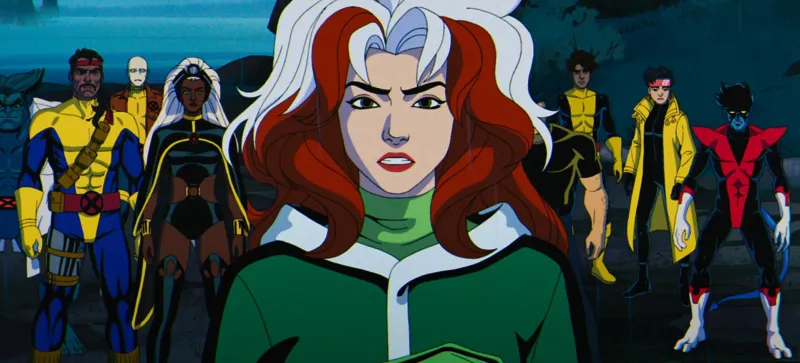
X-Men '97 Season 2 review: Apocalypse rises, Magneto falls
Season 2 trades Season 1's speedrun pacing for real confidence, using three timelines and a returning cast we now know intimately to tell its best story yet — right up to a finale that hurts in exactly the way great X-Men stories are supposed to.
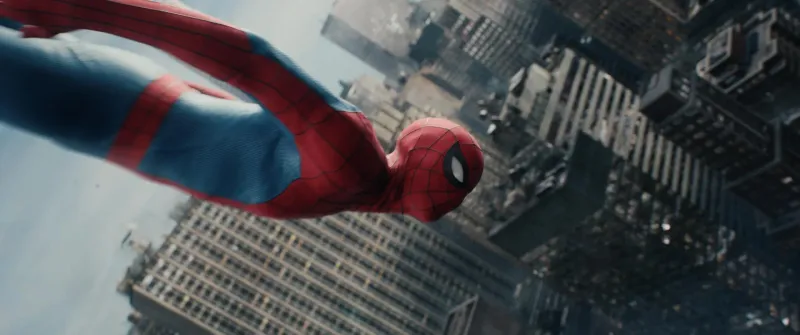
Spider-Man: Brand New Day review: The best Marvel film yet made
Spider-Man: Brand New Day is the best Marvel film we've ever seen. Tom Holland delivers his finest performance across four films, Sadie Sink's Jean Grey is a genuine highlight, and the Hulk/Punisher integration works far better than it has any right to. Action, comedy, goosebumps and quiet moments, all in one film. A perfect 5/5.
LEGO 67006 The Marvel Skyline revealed: 1,261 pieces of superhero architecture
LEGO has announced The Marvel Skyline (67006): a 1,261-piece 18+ microscale Architecture-style model spanning Wakanda, Oscorp, and Xavier's School.