Cloak & Dagger – Season 2: Expanding the shadows of New Orleans
Cloak & Dagger returns with a deeper dive into social themes, teenage struggles, and mystical threats – engaging but not quite groundbreaking.
This post contains affiliate links. We may earn a commission if you make a purchase, at no extra cost to you. As an Amazon Associate, Dadnology earns from qualifying purchases.
🌩️ Introduction
This review is part of the MCU Watch Order – explore all Marvel movies and shows in order!
After establishing its unique identity in Season 1, Cloak & Dagger returns with a second season that pushes its two teen heroes into darker, more personal territory. While the MCU tends to focus on gods and billionaires, Cloak & Dagger roots itself in human trauma, real-world injustice, and mystical undertones – all through the lens of adolescence.
🧬 Story & character development
Season 2 wastes no time diving into the aftermath of Season 1. Tyrone is now a fugitive, hiding in a church, while Tandy tries to reclaim some normalcy. But peace doesn’t last long. A new enemy emerges in the form of Andre Deschaine, a jazz musician whose powers feed on despair – and who is, quite literally, trying to ascend to godhood.
As Tandy and Tyrone grow into their powers, they also face emotional and moral challenges. Tandy deals with her mother’s trauma and her own past abuses, while Tyrone fights systemic injustice and the guilt of his family’s suffering. Their bond strengthens and becomes the emotional core of the show, with moments of intimacy, frustration, and growing trust.
🎭 Themes & tone
Cloak & Dagger doesn’t shy away from difficult subjects. It touches on abuse, sex trafficking, racism, addiction, and mental health – all while grounding them in superhero metaphor. The show often feels more like a YA drama with magical realism than a classic Marvel entry, which can be both a strength and a limitation.
At its best, it’s emotionally raw and socially aware. At its worst, it veers into melodrama or pacing issues.
🎨 Visuals & style
Visually, the show is a standout among Marvel TV productions. The dream-like sequences, spiritual visions, and shadow metaphors are well-executed and give the show a unique tone. New Orleans continues to be a character in itself – mystical, moody, and atmospheric.
The effects aren’t blockbuster-level, but they are well-utilized. Scenes like Tandy’s glowing daggers or Tyrone’s teleporting cloak are cleverly staged and impactful without being overdone.
👨👧👦 Dadnology perspective
As a dad watching with teens, Cloak & Dagger offers a compelling bridge between superhero action and grounded, coming-of-age storytelling. It doesn’t feature major MCU heroes or big events, but it resonates with themes of agency, recovery, and connection.
It’s not a must-watch for MCU timeline purists, but for fans of character-driven stories, it’s definitely worth the time.
⚖️ What Cloak & Dagger did that the MCU didn’t: Intersectionality as superpower
Cloak & Dagger Season 2 deepens the show’s most radical creative choice: making race and class not merely background elements but fundamental to how the superpowers work. This is the most politically engaged storytelling in the Marvel television catalogue, and it earns that distinction by being specific rather than gestural.
Tyrone’s Cloak powers — the ability to disappear, to pull people into darkness, to exist in the shadows between spaces — are explicitly linked throughout Season 2 to his experience as a Black man in America. The police harassment subplot, in which Tyrone is framed for murder by a corrupt officer, runs parallel to his supernatural story without the show allowing either thread to resolve the other. He cannot Cloak his way out of systemic racism. He cannot fight his way out of it. The darkness he controls is the same darkness that follows him through the world, and Season 2 refuses to let that metaphor become a neat solution. That restraint takes courage in a genre that tends to resolve political problems through individual heroism.
Tandy’s Dagger powers — light, hope, the exposure of hidden truth — are similarly connected to her experience of assault and survival. Season 2’s serial trafficking storyline addresses this directly and with more unflinching attention than the show’s YA-adjacent tone would suggest it capable of. Tandy’s light is not invulnerability; it’s the specific brightness that people who have survived real darkness sometimes develop as a coping mechanism, pointed outward. The show understands that this is a precarious position.
The trade-off is real: Cloak & Dagger Season 2 is dense and sometimes heavy, and it doesn’t always balance the social commentary with the mechanics of its plot. Andre Deschaine as the season’s primary villain is compelling in theory — a jazz musician feeding on despair and ascending to something divine — but the story around him occasionally strains under the weight of what the show is trying to say through him. There are episodes where the thematic ambition outruns the execution.
But it swings at things that most MCU content won’t touch, and that ambition is worth acknowledging plainly. The Hulu Marvel shows were always operating on smaller budgets and with less institutional protection than the Disney+ productions. That Cloak & Dagger used that relative freedom to tell stories about racial injustice, trafficking, and addiction — and to connect those stories to the mechanics of its superpowers — is the most interesting thing about it.
🔗 The Runaways crossover: What happens when two Marvel Freeform shows share space
Season 2 of Cloak & Dagger includes a crossover with Runaways — the only instance in the non-Disney+ MCU where two separate shows directly shared characters across their stories. Tandy, Tyrone, Nico Minoru, and Karolina Dean occupy the same scenes for a stretch of the season’s back half, which is a remarkable thing to say about two shows that were produced by different creative teams, filmed on different schedules, and built around different emotional registers.
The crossover works for a specific reason: both shows share enough aesthetic DNA that the characters don’t feel like they’re from different fictional universes. Young adult protagonists navigating adult-scale threats with emerging powers, grounded in specific locations with particular social textures — Cloak & Dagger’s New Orleans and Runaways’ Los Angeles are doing similar things, just in different keys. When Nico and Karolina show up in Cloak & Dagger’s world, they don’t feel imported. They feel like people from a neighboring story who stepped through a door.
The practical achievement involved is worth noting. Coordinating a crossover between two shows that had different filming schedules, different production teams, and different budget levels — without destabilizing either show’s own narrative — requires careful writing. The crossover episodes are substantial enough to feel like a genuine event rather than a stunt cameo, but brief enough that neither show loses its own structural momentum. It functions as its own self-contained chapter within both seasons simultaneously, which is a neater trick than it sounds.
What the crossover reveals about both shows’ relative strengths is instructive. Cloak & Dagger’s grounded New Orleans setting contrasts with Runaways’ Hostel aesthetic in ways that make the differences visible: Tandy and Tyrone are urban survivors dealing with immediate systemic threats, operating in the real world without a home base. The Runaways are fugitives dealing with inherited family crimes, managing a household and a team dynamic and an alien backstory from a mansion they’ve occupied illegally. Putting these two groups in the same room highlights how different their modes of operation are, and the crossover episodes are smart enough to let that contrast generate its own tension rather than papering over it.
The missed opportunity is worth acknowledging honestly. The crossover was designed as a bridge toward further integration of the Freeform Marvel shows, with discussions of additional crossovers apparently ongoing before both series were cancelled in 2019. What exists is a one-off that works on its own terms but leaves you aware — particularly in retrospect — of what a longer Freeform Marvel universe might have built. The foundation was there. The institutional will to build on it wasn’t.
Pros
- Tandy and Tyrone remain compelling leads
- Strong emotional and social themes
- Visually unique with mystical elements
- Atmospheric New Orleans setting
Cons
- Teen drama moments can feel cliché
- Slow pacing at times
- Limited MCU connectivity
🎤 Conclusion
Cloak & Dagger – Season 2 doesn’t redefine the genre, but it carves out a thoughtful, emotionally resonant corner of the Marvel TV universe. With rich character development, mystical undertones, and relevant themes, it’s a series that speaks to a different kind of Marvel fan – one who values emotion over explosions.
📺 Movie night sorted: thousands of films and shows are streaming on Prime Video — free for 30 days. Worth a look before you buy the disc.
Related Dadnology reviews: Jessica Jones – Season 2: Digging Deeper into Trauma and Power · Luke Cage – Season 2: The Bulletproof Hero Returns to Harlem
📌 FAQ – Frequently asked questions
Is there a post-credit scene?
Do I need to watch Season 1 first?
Can I skip this series in the MCU Watch Order?
Does Cloak and Dagger get cancelled after Season 2?
Does Season 2 connect to the Runaways crossover?
Keep this in your inbox
One email a week: what we actually watched, built and reviewed — the stuff worth a dad's time. No hype, no daily spam.
Dadnology Weekly
One email a week: the LEGO, gaming and movie news worth a dad's time — plus what we actually reviewed. No hype, no daily spam.
Disclaimer: This review and its visuals were created with the help of AI. Some links may be affiliate links – we may earn a commission if you make a purchase, at no extra cost to you.
Current deals in Movies & TV
Verified live discounts tracked on Amazon
![The Legend of Korra — The Complete Series [Blu-ray]](https://m.media-amazon.com/images/I/51+1TXyb7aL._SL500_.jpg)
Movies & TV · Tested by Dadnology
The Legend of Korra — The Complete Series [Blu-ray]
4.5/5“A new Avatar, a modern city, a masked revolution”Read our review
Movies & TV · Tested by Dadnology
Zack Snyder's Justice League (4K Ultra HD)
4/5“Four hours. One vision. This is the film.”Read our review
Movies & TV · Tested by Dadnology
Space Jam (4K Ultra HD + Digital)
4/5“It's gonna be a whole new ball game”Read our reviewYou might also like
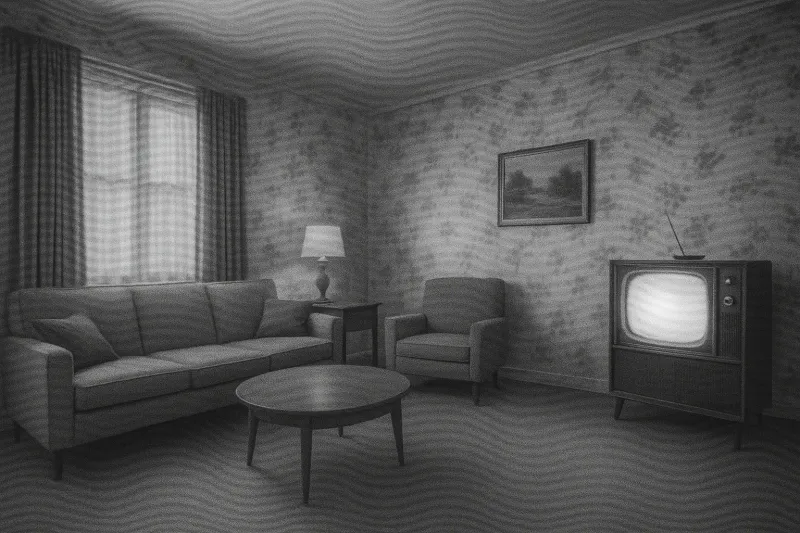
WandaVision – A bold, bizarre, and brilliant start to Phase 4
*WandaVision* is a unique Marvel experience – nostalgic, mysterious, and emotionally resonant. It explores Wanda’s grief and power in innovative ways. An unusual but rewarding series that starts Phase 4 strong.
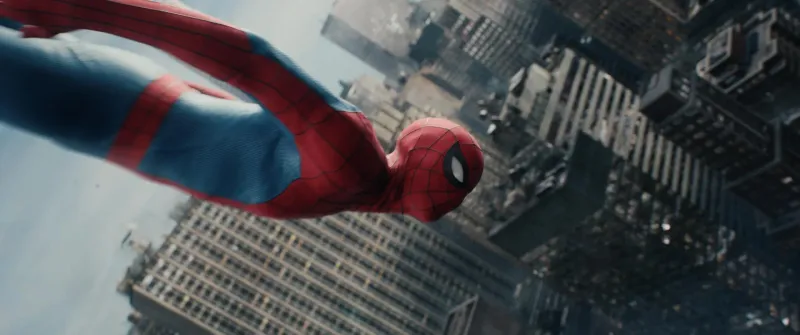
Spider-Man: Brand New Day review: The best Marvel film yet made
Spider-Man: Brand New Day is the best Marvel film we've ever seen. Tom Holland delivers his finest performance across four films, Sadie Sink's Jean Grey is a genuine highlight, and the Hulk/Punisher integration works far better than it has any right to. Action, comedy, goosebumps and quiet moments, all in one film. A perfect 5/5.
MCU watch order 2026 – All Marvel movies & series in timeline
As a lifelong Marvel fan, the MCU is more than a movie franchise – it's an emotional journey through heroism, sacrifice, and epic storytelling. The way films and series connect across timelines, characters, and genres is absolutely unique in cinema history. From Iron Man's first flight to the multiverse madness of recent phases, every chapter adds depth and excitement to this living, breathing universe. Whether you're watching solo or with your kids, the MCU delivers action, humor, and heart like no other. It's not just a saga – it's a part of my world.