
WandaVision – A bold, bizarre, and brilliant start to Phase 4
WandaVision kicks off Phase 4 with a genre-defying blend of sitcom nostalgia, mystery, and emotional storytelling.
This post contains affiliate links. We may earn a commission if you make a purchase, at no extra cost to you. As an Amazon Associate, Dadnology earns from qualifying purchases.
📺 Introduction
This review is part of the MCU Watch Order – explore all Marvel movies and shows in timeline order!
With WandaVision, the MCU steps into uncharted territory. This is not a movie. It’s not a traditional superhero series either. It’s a love letter to television history, a deep dive into grief and identity, and the opening chapter of Marvel’s new multiversal era.
Starting with a 1950s black-and-white sitcom aesthetic and evolving into a full-blown MCU mystery-drama, WandaVision challenges audience expectations—and succeeds.
🧠 Story & structure
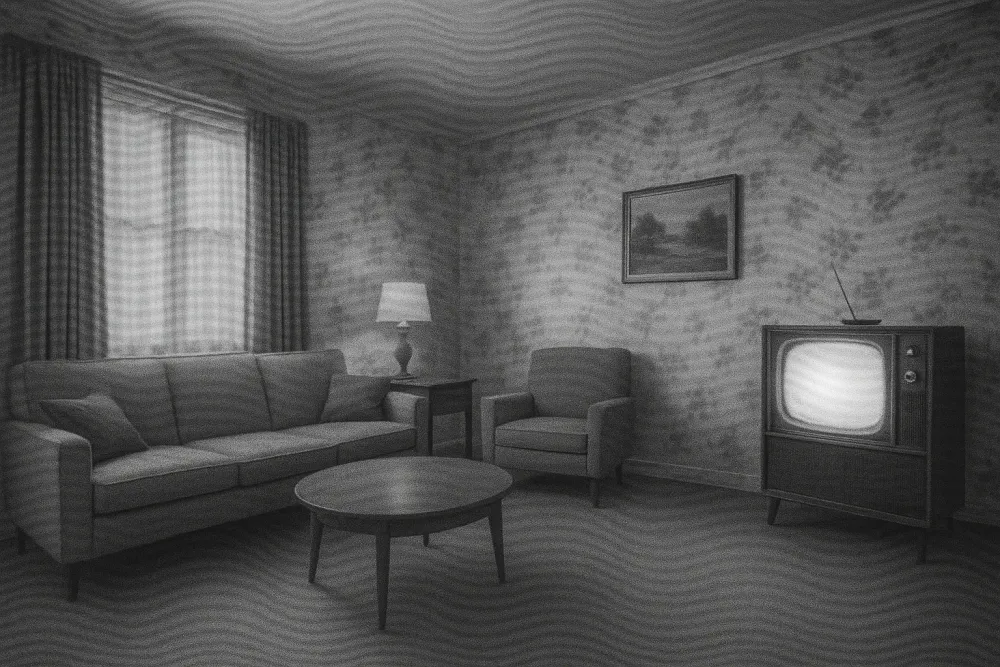
Each episode of WandaVision mimics a different decade of American sitcoms, from The Dick Van Dyke Show to Modern Family. But beneath the nostalgia is a slow-burning mystery: why are Wanda and Vision in this strange world? Who’s controlling it? Is Vision even alive?
The brilliance lies in the format:
- Episodes 1–3 play almost entirely in sitcom parody.
- Episode 4 flips the script, showing the real-world S.W.O.R.D. perspective.
- Episodes 5–9 blend genres, unravel secrets, and build emotional momentum.
The pacing may feel strange to some, but the payoff is powerful.
🎭 Characters & performances
Elizabeth Olsen delivers her most nuanced performance yet. She transitions seamlessly from charming sitcom wife to broken, grieving superhero. Her portrayal of Wanda’s trauma is the show’s emotional core.
Paul Bettany also shines as Vision, adding layers to his character with humor, depth, and introspection.
Breakout supporting roles include:
- Kathryn Hahn as Agatha Harkness – a scene-stealer with a great twist.
- Teyonah Parris as Monica Rambeau – introducing a future MCU powerhouse.
- Randall Park and Kat Dennings, bringing heart and humor to the outside world.
🌀 Themes & symbolism
At its core, WandaVision is about grief:
- Wanda builds a fantasy to avoid confronting her trauma.
- Her powers grow out of control as she clings to illusion.
- The series explores control, loss, and letting go in poignant ways.
It also signals a shift in Marvel’s tone. No longer afraid to be weird, introspective, and stylistically bold, WandaVision opens new storytelling doors.
🎨 Visual style
The show’s attention to detail is remarkable:
- Period-accurate costumes, lighting, and aspect ratios
- Subtle shifts in tone and color as Wanda loses control
- Visual effects used sparingly but powerfully, especially in the finale
This is one of the MCU’s most creative visual undertakings.
🔮 MCU relevance
While it may feel self-contained at first, WandaVision has huge implications:
- Sets up Doctor Strange in the Multiverse of Madness
- Introduces Monica Rambeau’s powers
- Reveals the origin of the Scarlet Witch title
- Brings back the X-Men’s Quicksilver actor (with a twist)
It’s the true beginning of the multiverse storyline that will ripple throughout Phase 4 and beyond.
👨👧👦 Our experience & recommendation
Watching WandaVision was an event—especially week to week. For Marvel fans, the weekly mysteries and Easter eggs were thrilling. For our family, the early episodes were fun to watch together, while the later episodes brought deep, emotional moments.
Younger kids might not follow the format shifts or slower pacing, but older children and teens will appreciate the emotion and Marvel connections.
📺 WandaVision as sitcom archaeology: What each era actually captures
WandaVision’s formal conceit is straightforward on paper and deranged in practice: Wanda Maximoff has used her reality-warping powers to create a bubble reality modeled on American sitcoms from the 1950s through the 2000s. Each episode inhabits a different decade’s visual grammar, comedic style, and domestic ideology. What the show actually captures with each era goes well beyond aesthetic pastiche.
The 1950s episode doesn’t just look like The Dick Van Dyke Show — it reproduces the specific gendered pressure of mid-century domestic comedy, where the entire joke structure rests on women performing extraordinary competence inside spaces that officially don’t acknowledge their competence. Wanda has to cook a dinner she doesn’t know how to cook, for guests who cannot know who she really is, while managing a husband whose nature must remain hidden. The comedy lands because the anxious concealment is indistinguishable from the era’s actual comedic logic.
The 1960s episode captures the manic pace and studio-audience energy of Bewitched-era comedy, where magic was always about maintaining appearances for neighbors who must not know. It’s the same structural conceit: power hidden, power managed, power apologized for. The 1970s finds The Brady Bunch’s blended-family warmth — kids appearing who shouldn’t exist, fitting into a domestic arrangement held together by collective good faith. The 1980s gives us Family Ties anxiety about prosperity and what you’re allowed to want. The 90s delivers the multicam warmth of Full House, earnest and slightly desperate.
This is why WandaVision works as grief metaphor, and not just as clever formal exercise. Each era’s comedic framework is a different kind of protection — a different way of containing reality inside a manageable story shape. Wanda isn’t just hiding. She’s cycling through every framework human storytelling has ever offered for managing domestic life, searching for one that can hold what she’s lost. She isn’t stupid. She just can’t find the format.
The production craft required to pull this off is genuinely staggering. Different aspect ratios, different shooting styles, different color grades, different sound design. The show doesn’t merely dress its actors in period clothing; it reproduces the actual texture of television from each era, right down to the film grain, the laugh-track mix, the commercial-break jingle logic. The team who built this had to understand each decade’s production conventions deeply enough to replicate them, not parody them — and the distinction matters. Parody keeps you safe. Replication makes you feel it.
💔 The grief engine: What WandaVision is actually about when the sitcoms stop
WandaVision is a show about grief structured as a mystery. The mystery — what is wrong with this town, who is Wanda, what happened to Vision — is the mechanism for slowly revealing the grief underneath. Each crack in the sitcom surface is a symptom. The investigation happening outside the Hex is the audience’s surrogate, asking the same question the show doesn’t want to answer too quickly: what did this woman lose, and what did she do about it?
What the show is actually arguing is that grief and love are not separable. The reality Wanda creates is not delusion in the clinical sense. She is not lying to herself; she knows, on some level, that it isn’t real. What she cannot do is choose to feel it all at once. Vision is dead. Wanda has the power to not accept that — not the power to pretend it didn’t happen, but the power to keep the story running a little longer. Every parent watching this who has ever refused to read the last page of a bedtime book will understand exactly what she’s doing.
The Vision-Wanda relationship inside Westview works precisely because both of them know, in their bones, that this is borrowed time. The scene where Vision asks what she’s hiding from him, where he says “what is grief, if not love persevering” — and the quieter moment where he acknowledges he wasn’t there when she lost Pietro, when she lost her parents, so he doesn’t know what she carries — is the emotional center of the entire show. He loves her past his own confusion. She’s built a world around the fact that he can’t leave it.
Agatha Harkness arrives as a villain but functions as the narrative mechanism that forces Wanda to look at what she’s done. Not as a monster. As someone who used enormous power in a very human way and hurt real people in the process — people with families, with their own griefs, trapped inside hers. The show doesn’t excuse this. It also doesn’t prosecute it beyond what the story requires. It just makes her feel the weight of it.
WandaVision’s place in the MCU’s emotional register is specific: it is the show that most successfully made the abstract grief of Infinity War and Endgame personal rather than cosmic. Thanos snapped. Half the universe was gone. The MCU treated this as plot. WandaVision asked what it actually felt like to lose someone you loved in that snap — not as a universe, but as one woman sitting alone with the reality of it. That’s a harder story to tell, and they told it.
Pros
- Creative and unique storytelling structure
- Powerful performances, especially from Elizabeth Olsen
- Emotional depth and exploration of grief
- Great MCU tie-ins and character introductions
- Bold stylistic choices across episodes
Cons
- Pacing may feel slow in early episodes
- Final battle leans into standard CGI fare
- Some reveals (like 'Quicksilver') may frustrate long-time fans
🗣️ Conclusion
WandaVision is unlike any MCU story told before. It’s weird, heartfelt, mysterious, and bold. As both a tribute to television and an emotional exploration of Wanda’s loss, it stands tall among Marvel’s best efforts. It’s a strong start to Phase 4 and an invitation to a new, more experimental Marvel.
📺 Movie night sorted: thousands of films and shows are streaming on Prime Video — free for 30 days. Worth a look before you buy the disc.
📌 FAQ – Frequently asked questions
What is the setting of WandaVision?
Is Vision really alive in the show?
What are the post-credit scenes?
What is the significance of the Scarlet Witch?
What’s up with ‘Quicksilver’?
What is Westview and why did Wanda create it?
Is WandaVision required viewing before Doctor Strange in the Multiverse of Madness?
Keep this in your inbox
One email a week: what we actually watched, built and reviewed — the stuff worth a dad's time. No hype, no daily spam.
Dadnology Weekly
One email a week: the LEGO, gaming and movie news worth a dad's time — plus what we actually reviewed. No hype, no daily spam.
Disclaimer: This review and its visuals were created with the help of AI. Some links may be affiliate links – we may earn a commission if you make a purchase, at no extra cost to you.
Current deals in Movies & TV
Verified live discounts tracked on Amazon
![The Legend of Korra — The Complete Series [Blu-ray]](https://m.media-amazon.com/images/I/51+1TXyb7aL._SL500_.jpg)
Movies & TV · Tested by Dadnology
The Legend of Korra — The Complete Series [Blu-ray]
4.5/5“A new Avatar, a modern city, a masked revolution”Read our review
Movies & TV · Tested by Dadnology
Zack Snyder's Justice League (4K Ultra HD)
4/5“Four hours. One vision. This is the film.”Read our review
Movies & TV · Tested by Dadnology
Space Jam (4K Ultra HD + Digital)
4/5“It's gonna be a whole new ball game”Read our reviewYou might also like
Agents of S.H.I.E.L.D. – Season 5: Time loops, Kree rule, and a snap that never came
Season 5 of *Agents of S.H.I.E.L.D.* is daring, emotional, and beautifully written. A two-part arc that takes us through dystopian futures, alien threats, and heartbreaking farewells. One of the MCU’s best.
Cloak & Dagger – Season 2: Expanding the shadows of New Orleans
*Cloak & Dagger – Season 2* continues the journey of Tandy and Tyrone with more magic, emotion, and growth. A decent season that delivers character depth and atmosphere, though it dips into teen drama clichés.
MCU watch order 2026 – All Marvel movies & series in timeline
As a lifelong Marvel fan, the MCU is more than a movie franchise – it's an emotional journey through heroism, sacrifice, and epic storytelling. The way films and series connect across timelines, characters, and genres is absolutely unique in cinema history. From Iron Man's first flight to the multiverse madness of recent phases, every chapter adds depth and excitement to this living, breathing universe. Whether you're watching solo or with your kids, the MCU delivers action, humor, and heart like no other. It's not just a saga – it's a part of my world.