
Hawkeye – Season 1: Bow & arrow, family, and Fisk’s return
Hawkeye brings comic-book archery, heartfelt family drama, and Fisk’s return in a stylish and emotional post-Endgame adventure.

This post contains affiliate links. We may earn a commission if you make a purchase, at no extra cost to you. As an Amazon Associate, Dadnology earns from qualifying purchases.
🌌 Introduction
This review is part of the MCU Watch Order – explore all Marvel movies and shows in timeline order!
Finally, Marvel gives us Hawkeye the way we’ve always wanted: arrow trickery, holiday New York, and heartfelt mentorship. This is not just a spin-off—it’s a beautifully executed comic adaptation that delivers in every way.
🧩 Story overview & characters
After surviving the Snap, Clint Barton looks for time off with his family—but trouble finds him in the form of a New York mob mess. Enter Kate Bishop (Hailee Steinfeld), a fierce and witty archer who idolizes Clint and finds herself tangled in his mess.
As they team up to uncover a conspiracy tied to his past, Clint mentors Kate while rediscovering his own identity. Meanwhile, Vincent D’Onofrio returns as Wilson Fisk (Kingpin), reinventing the character with new layers of menace and tragic complexity. Their dynamic sets up brilliant tension.
🔥 Arrow battles, action & heart
Big comic-style action scenes—like bow vs sword duels, rooftop escapes, holiday market chases, and apartment shootouts—are fluid and fun.
But the real power comes in quieter moments: parents arguing, guilt haunted by his Ronin past, mentorship over an arrow range, and grief during holiday scenes.
It’s these emotional beats that make the humor and action feel grounded.
🏙️ Visuals, tone & direction
Set during Christmas in New York, the city feels warm, chaotic, and vibrant. Snowy streets, holiday lights, toy archery ranges—they all capture a nostalgic magic.
The tone strikes a brilliant balance between lighthearted holiday fun, gritty street-level stakes, and grounded family drama.
Directors took care to keep things relatable even amid escalating multiverse conspiracies—especially when connecting to Echo, Daredevil, and Spider-Man: No Way Home.
🧠 Family legacy & comic DNA
Clint Barton’s comic arc is woven into every beat—arrows, trick shot identities, aging, and already being replaced by younger heroes. Kate Bishop adds fresh energy, tech-savvy skills, and a mentor–protege bond that feels earned.
The writing understands that Hawkeye is about passing the torch—and emotional healing—while staying fun.
👨👧👦 Our experience & recommendation
This is the perfect Marvel series for family holiday nights. With cozy holiday warmth, team-up chemistry between Clint and Kate, and an emotional rumble under the surface, it’s both comforting and exciting.
Recommended for ages 12+, it has just enough action and complexity to intrigue teenagers, while still being approachable for newer Marvel viewers.
🏹 Kate Bishop and the problem of living up to a legend
Hailee Steinfeld’s Kate Bishop arrives in the MCU already knowing exactly who she wants to be. She wants to be Hawkeye. She saw Clint Barton at the Battle of New York when she was a child — standing on a rooftop, drawing a bow while the city disintegrated around him — and the image of a man with no powers holding his own among gods became the formative image of her entire life.
This motivation works because it is specific in the right way. Kate didn’t want to be Iron Man; Iron Man has a suit. She didn’t want to be Thor; Thor has divine origin. She wanted to be the person who is good enough without any of that. Clint Barton’s particular species of competence — trained, earned, deeply mortal — is what she was chasing. That’s a smarter foundational motivation than most origin stories manage, and the show understands why it matters.
What Steinfeld does with Kate is play someone whose physical capability is already extraordinary — she wins a boxing match in the opening episodes that establishes she is not learning to fight, she already knows how — but whose emotional and experiential development is nowhere close to catching up. She’s exceptional at archery. She’s considerably less good at reading situations, understanding consequences, and knowing when the right move is to stop. The gap between her technical skill and her judgment is where the character lives, and it’s a more interesting gap than the usual gap in origin stories, which is “learns to fight.”
Clint’s initial response to Kate is exhaustion. He doesn’t want a protege. He wants to get home to his family for Christmas, which is a specific and modest desire for a man who has saved the world several times. But the show uses his resistance honestly rather than as a obstacle to be overcome. Clint’s reluctance to mentor isn’t just grumpiness or holiday impatience — it is a genuine ambivalence about what he would actually be passing on. He has been Hawkeye. He has been Ronin. The skills and the identity come with a history, and the show is honest about the fact that he isn’t sure that’s a gift.
What the Clint-Kate dynamic ultimately achieves is a passing-the-torch narrative that doesn’t flatten the complications of what’s being passed. Kate gets a mentor who respects her enough to tell her the truth about what the job costs. Clint gets a reason to reckon honestly with what he’s become. Neither of them gets exactly what they wanted.
🔫 The Ronin problem: Clint Barton’s dark years as the season’s emotional engine
Between Infinity War and Endgame, Clint Barton lost his entire family to the Snap and responded by becoming Ronin — a masked vigilante who traveled the world killing criminals, operating outside any moral framework except his own grief. The show doesn’t linger on the details of those five years, but it doesn’t need to. The reaction of everyone Ronin hurt does the work.
The tracksuit mafia know the name. Maya Lopez knows the face. Wilson Fisk knows who is responsible for what happened to the people under his protection. The Ronin past is not backstory the show tells you about; it is a debt that shows up in every room Clint walks into, carried by people who have personal reasons to want the person in that suit to answer for what he did.
What the Ronin history does for Clint as a character is give him a genuine moral complication rather than a tragic one. He wasn’t just sad during those five years. He was doing something wrong. The people he killed may have been criminals by reasonable definition, but the Ronin period represents Clint using his violence without accountability, without oversight, and without justification beyond his own grief. The show takes that seriously. It doesn’t dress it up as dark heroism or a sympathetic rampage. It treats it as something that needs to be reckoned with.
The show handles Clint’s reckoning with consistent understatement. He doesn’t perform elaborate penance or give speeches about redemption. But the guilt is present in nearly everything he does, and his insistence on being home for Christmas — which could read as sentiment — is more specifically his reassertion of what he is now versus what he was during those five years. He is a father who wants to be at the table. Ronin was not.
Maya Lopez (Alaqua Cox) is the character whose grief most specifically and personally connects to that history. Her father was killed by Ronin, and the show gives her enough screen time that the loss registers as real rather than as motivation-by-backstory. She is not wrong to want accountability. She has the right grievance.
This creates the show’s most interesting moral complication and the one it is most honest about: Kate Bishop grew up idolizing the man who killed Maya Lopez’s father. The show doesn’t resolve that, because it can’t.
Pros
- Jeremy Renner and Hailee Steinfeld shine
- Vincent D’Onofrio’s Fisk is chilling and magnetic
- Holiday New York setting is charming and atmospheric
- Great mix of emotion, action, and humor
- True-to-comic themes and character arcs
Cons
- Some Marvel fan-babble for newcomers
- A few plot threads (Echo setups) feel incomplete
- Less epic scale than other MCU shows
🗣️ Conclusion
Hawkeye – Season 1 is a masterclass in comic-book adaptation and holiday charm. With ass-kicking arrows, heartfelt mentorship, smart dialogue, and Kingpin’s brilliant return, it stands out in Marvel’s post‑Endgame era. If you love the comic series, you’ll feel right at home—and if you’re a fan curious for heartfelt action, this is a perfect intro to street-level MCU. Simply put: the best Marvel series since Endgame.
📺 Movie night sorted: thousands of films and shows are streaming on Prime Video — free for 30 days. Worth a look before you buy the disc.
Related Dadnology reviews: Deadpool & Wolverine – The Ultimate MCU Fan-Service Explosion · Moon Knight
📌 FAQ – Frequently asked questions
Why is Vincent D’Onofrio’s Fisk such a highlight?
Is Hawkeye heavily tied into other Disney+ shows?
How comic-accurate is this series?
Is the show appropriate for kids?
Who is Maya Lopez and why does she matter?
Does Clint Barton’s hearing loss feature in the show?
Keep this in your inbox
One email a week: what we actually watched, built and reviewed — the stuff worth a dad's time. No hype, no daily spam.
Dadnology Weekly
One email a week: the LEGO, gaming and movie news worth a dad's time — plus what we actually reviewed. No hype, no daily spam.
Disclaimer: This review and its visuals were created with the help of AI. Some links may be affiliate links – we may earn a commission if you make a purchase, at no extra cost to you.
Current deals in Movies & TV
Verified live discounts tracked on Amazon
![The Legend of Korra — The Complete Series [Blu-ray]](https://m.media-amazon.com/images/I/51+1TXyb7aL._SL500_.jpg)
Movies & TV · Tested by Dadnology
The Legend of Korra — The Complete Series [Blu-ray]
4.5/5“A new Avatar, a modern city, a masked revolution”Read our review
Movies & TV · Tested by Dadnology
Zack Snyder's Justice League (4K Ultra HD)
4/5“Four hours. One vision. This is the film.”Read our review
Movies & TV · Tested by Dadnology
Space Jam (4K Ultra HD + Digital)
4/5“It's gonna be a whole new ball game”Read our reviewYou might also like
Loki – Season 2: Multiversal mayhem and the burden of purpose
*Loki – Season 2* continues Marvel’s bold multiversal storytelling. Tom Hiddleston is phenomenal once again, and the retro-futuristic visuals are among the best on Disney+. The philosophical themes and character growth make it worth watching, but the increasingly complex time mechanics can be overwhelming. If you love the weirdness, you’ll enjoy the ride – but casual viewers may feel lost in the chaos. Despite the narrative overload, it’s a visually rich and emotionally powerful continuation of Loki’s journey.
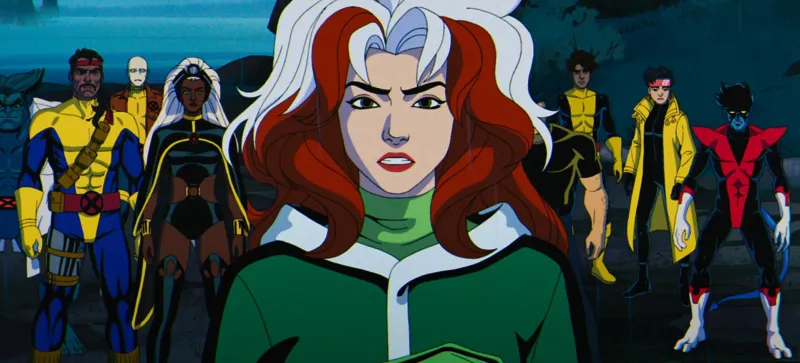
X-Men '97 Season 2 review: Apocalypse rises, Magneto falls
Season 2 trades Season 1's speedrun pacing for real confidence, using three timelines and a returning cast we now know intimately to tell its best story yet — right up to a finale that hurts in exactly the way great X-Men stories are supposed to.
LEGO 67006 The Marvel Skyline revealed: 1,261 pieces of superhero architecture
LEGO has announced The Marvel Skyline (67006): a 1,261-piece 18+ microscale Architecture-style model spanning Wakanda, Oscorp, and Xavier's School.