
Jessica Jones Season 1 – Gritty, grounded, and unapologetically different
A noir thriller with a superpowered twist – Jessica Jones Season 1 is a bold entry in the MCU.

This post contains affiliate links. We may earn a commission if you make a purchase, at no extra cost to you. As an Amazon Associate, Dadnology earns from qualifying purchases.
🎬 Introduction
This review is part of the MCU Watch Order – explore all MCU movies and shows in order!
Forget spandex, alien invasions, and shield-throwing heroes. Jessica Jones Season 1 strips away the classic MCU formula and delivers something far more personal – a brooding, noir thriller that explores trauma, identity, and survival through the lens of a reluctant heroine.
🦸 Story & characters
Jessica Jones (Krysten Ritter) is a superpowered private investigator in Hell’s Kitchen. She drinks too much, keeps everyone at arm’s length, and is haunted by her past. Specifically, by Kilgrave (David Tennant) – a mind-controlling psychopath who once held Jessica captive. When she learns he’s back, Jessica is forced to confront her deepest trauma and reclaim her agency.
This isn’t about saving the world. It’s about saving yourself. And that’s what makes it hit so hard.
Krysten Ritter is phenomenal in the lead role – sarcastic, broken, resilient, and fiercely independent. She gives Jessica depth and vulnerability without ever asking for pity. You root for her not because she’s perfect, but because she refuses to give up.
The supporting cast elevates the story: Trish Walker (Rachael Taylor) adds heart and history, Malcolm (Eka Darville) brings redemption, and Jeri Hogarth (Carrie-Anne Moss) adds complex shades of grey.
But it’s Kilgrave who steals the spotlight. David Tennant delivers a chilling, unforgettable performance that makes your skin crawl. Unlike other MCU villains, Kilgrave’s evil is deeply human – manipulation, control, gaslighting. The horror is real, and it’s personal.
🎥 Visuals & tone
Visually, Jessica Jones embraces the shadows. It’s dark, both thematically and literally – from neon-soaked alleyways to grey apartments. The aesthetic screams noir, with slow pacing, inner monologues, and a sense of creeping dread.
Fight scenes are brutal and realistic – no flashy choreography here. Jessica isn’t a trained fighter. She throws punches like a brawler. She breaks doors with a kick and takes hits that actually hurt.
The series excels at atmosphere. Every frame feels intentional, from the color grading to the haunting score. And it never lets you forget the emotional stakes at the center of Jessica’s journey.
👨👧👦 Our experience & recommendation
As a dad, this is one MCU show I wouldn’t watch with younger kids – but for mature teens and adults, it’s one of the most rewarding deep dives into character Marvel has ever attempted. It’s not about powers, it’s about people – broken ones, healing ones, dangerous ones.
Watching Jessica Jones Season 1 felt like discovering a new genre inside the MCU – one where trauma is taken seriously and strength isn’t about lifting buildings, but about standing back up after you’ve been crushed.
It’s a different kind of hero’s journey – one that doesn’t end with applause, but with survival.
The pacing will frustrate some viewers, particularly mid-season where the show slows to a deliberate crawl as it builds toward its finale. Stick with it. The payoff in the last four episodes is exceptional — the kind of climax that only works because the show spent time earning it. The same is true of the supporting cast: the show plants characters in the background who return with significance, and the restraint it takes to trust that structure is exactly what separates thoughtful drama from filler.
For context on the MCU’s broader catalogue: this is one of the few entries that functions entirely on its own terms. You don’t need the wider franchise to make sense of it. It stands alone, and it is better for that.
🧠 Kilgrave and the mind-control horror: Why David Tennant’s performance hits differently
Most superhero villains work through force. You can fight force. You can build armour against it, train to deflect it, find allies to share the burden. What you cannot fight is a man who doesn’t need to threaten you — who simply tells you what to do, and you do it, and somewhere in the wreckage of your own agency you can’t fully separate his commands from your own choices. That’s Kilgrave. And that’s why he’s still, a decade on, the MCU’s most genuinely unsettling antagonist.
David Tennant plays Kilgrave with a studied, baffled entitlement that is more disturbing than any amount of scenery-chewing malevolence could be. He’s not performing evil. He genuinely doesn’t understand why his behaviour is wrong. In one of the season’s most quietly devastating scenes, Kilgrave explains — with complete sincerity — that he has never once had to ask for anything in his life. Consent is a concept that simply never formed in his world. He doesn’t consider himself a monster. He considers himself efficient. The horror of the scene is not what he says but how little he registers the weight of it. Tennant makes that blankness feel earned, not scripted.
The writers made a deliberate choice to frame Kilgrave’s power as an allegory for coercive control and abuse. His victims remember everything they did under his influence. They can replay the sequence of events, feel the full horror of their own actions, and still cannot draw a clean line between their will and his. For Jessica, that ambiguity is the wound. Her PTSD is written with unusual specificity: the flashbacks, the self-medication, the counting to 89 (her private coping mechanism), the hypervigilance in public spaces, the refusal to let anyone get close enough to become leverage. The show was praised by trauma counselors and abuse survivors’ organisations for the accuracy of its portrayal — a genuinely rare distinction for network-adjacent superhero television.
What the show gets most right is that Jessica’s recovery is not linear and not triumphant. She doesn’t defeat Kilgrave and then feel better. She defeats him and then has to figure out who she is on the other side of that — which turns out to be its own kind of struggle. Season 1 is still regularly cited in serious discussions about how superhero media can engage with real-world trauma without either exploiting it or sanitising it away. That reputation is deserved. You watch it, and you understand why physical powers are almost beside the point. The fight was never about strength.
It’s worth noting what this means for the MCU as a franchise context. The Avengers deal with extinction-level threats. Jessica deals with a man who made her a prisoner in her own head. Both are genuinely horrifying, but only one of them maps onto anything a real person might recognise from their own life — or from someone they love. That proximity is where the show’s lasting power comes from. It’s not the most fun Marvel story. It is, arguably, the most honest one.
For adults watching it cold in 2025 — particularly those with years of MCU fatigue behind them — Season 1 functions as a useful reminder of what the franchise is capable of when it commits to a single story told with craft and intent. The thirteen-episode run is long by modern standards, but the slow middle section exists for a reason: the show is building a psychological portrait, and that takes time. If you’ve bounced off superhero television before, this is the one worth giving a genuine chance. It earns the investment.
Pros
- Krysten Ritter gives a raw, powerful performance
- David Tennant’s Kilgrave is terrifying and unforgettable
- Bold storytelling with mature themes
- Noir atmosphere and character-driven pacing
- Breaks the typical MCU mold in the best way
Cons
- Pacing can be slow in the middle episodes
- Themes are heavy – not for all viewers
📝 Conclusion
Jessica Jones Season 1 proves that superhero stories can be intimate, uncomfortable, and real. It’s a triumph of character, theme, and tone – a show that isn’t afraid to go dark and stay there. If you’re looking for something deeper and different within the MCU, this is the one.
📺 Movie night sorted: thousands of films and shows are streaming on Prime Video — free for 30 days. Worth a look before you buy the disc.
Related Dadnology reviews: Agents of S.H.I.E.L.D. Season 2 (Episodes 1–20) · Daredevil Season 1 – Blind Justice at Its Gritty Best
📌 FAQ – Frequently asked questions
Is Jessica Jones Season 1 suitable for kids?
How long is the season?
How does Jessica Jones fit into the MCU timeline?
Is there a post-credit scene?
Is Jessica Jones Season 1 part of the MCU canon?
Is the show suitable for survivors of abuse or trauma?
Keep this in your inbox
One email a week: what we actually watched, built and reviewed — the stuff worth a dad's time. No hype, no daily spam.
Dadnology Weekly
One email a week: the LEGO, gaming and movie news worth a dad's time — plus what we actually reviewed. No hype, no daily spam.
Disclaimer: This review and its visuals were created with the help of AI. Some links may be affiliate links – we may earn a commission if you make a purchase, at no extra cost to you.
Current deals in Movies & TV
Verified live discounts tracked on Amazon
![The Legend of Korra — The Complete Series [Blu-ray]](https://m.media-amazon.com/images/I/51+1TXyb7aL._SL500_.jpg)
Movies & TV · Tested by Dadnology
The Legend of Korra — The Complete Series [Blu-ray]
4.5/5“A new Avatar, a modern city, a masked revolution”Read our review
Movies & TV · Tested by Dadnology
Zack Snyder's Justice League (4K Ultra HD)
4/5“Four hours. One vision. This is the film.”Read our review
Movies & TV · Tested by Dadnology
Space Jam (4K Ultra HD + Digital)
4/5“It's gonna be a whole new ball game”Read our reviewYou might also like
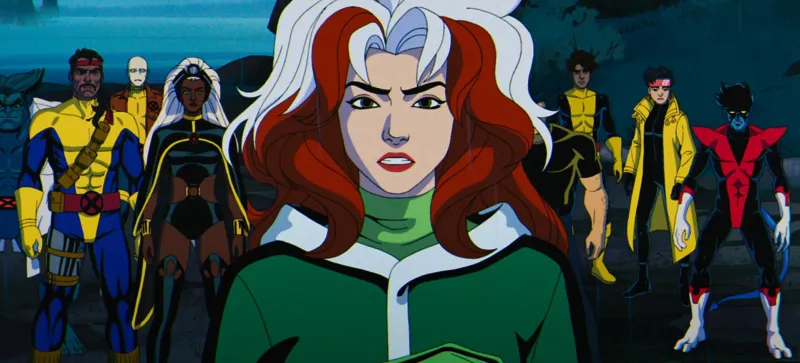
X-Men '97 Season 2 review: Apocalypse rises, Magneto falls
Season 2 trades Season 1's speedrun pacing for real confidence, using three timelines and a returning cast we now know intimately to tell its best story yet — right up to a finale that hurts in exactly the way great X-Men stories are supposed to.

Spider-Man: Brand New Day review: The best Marvel film yet made
Spider-Man: Brand New Day is the best Marvel film we've ever seen. Tom Holland delivers his finest performance across four films, Sadie Sink's Jean Grey is a genuine highlight, and the Hulk/Punisher integration works far better than it has any right to. Action, comedy, goosebumps and quiet moments, all in one film. A perfect 5/5.
LEGO 67006 The Marvel Skyline revealed: 1,261 pieces of superhero architecture
LEGO has announced The Marvel Skyline (67006): a 1,261-piece 18+ microscale Architecture-style model spanning Wakanda, Oscorp, and Xavier's School.