
Two Apex Predators: Novel vs. Movie analysis
A comparative analysis of Crichton's novel and Spielberg's film. Discover how two masterpieces evolved from the same DNA into different beasts.
This post contains affiliate links. We may earn a commission if you make a purchase, at no extra cost to you. As an Amazon Associate, Dadnology earns from qualifying purchases.
1.0 Introduction: The source code of a modern myth
Michael Crichton’s 1990 novel and Steven Spielberg’s 1993 film adaptation of Jurassic Park stand as two distinct but equally monumental works in the science fiction landscape. One is a masterfully crafted techno-thriller, a cautionary tale built on a bedrock of meticulously researched science that feels chillingly plausible. The other is a cinematic revolution, a blockbuster that blended awe-inspiring wonder with primal terror, forever changing not only the visual language of film but also our collective cultural image of the dinosaur. While born from the same electrifying premise, these two creations are not simply a blueprint and its copy; they are a fascinating case of divergent evolution in storytelling.
This analysis will dissect the key similarities and differences between the novel and the film, not to declare a “better” version, but to understand how each masterpiece uniquely leverages the strengths of its medium. By examining their shared narrative DNA and the critical mutations in tone, character, and structure, we can appreciate how both the page and the screen were used to explore profound themes of science, hubris, and nature’s terrifying, indomitable power. Ultimately, the book and film, while sharing a genetic blueprint, evolved into two separate, magnificent species of storytelling, each a perfect predator in its own domain.
2.0 Shared DNA: The foundational premise and core themes
Before exploring their significant divergences, it is essential to establish the common ground that makes both the novel and the film recognizably Jurassic Park. These shared elements form the core narrative engine that captivated audiences in both formats, providing a robust and thrilling foundation upon which each creator built their unique vision. This foundational premise is the amber-preserved source code from which both masterpieces were cloned.
At the heart of both stories lies the revolutionary and audacious concept of resurrecting dinosaurs. The narrative begins with the extraction of prehistoric mosquito blood from Dominican amber, from which scientists clone dinosaur genetic material. To complete the fragmented genomes, they ingeniously splice in DNA from modern frogs and, to prevent breeding, ensure all creations are female. This breakthrough allows the immensely wealthy John Hammond to construct a sprawling and nearly complete theme park on the remote island of Isla Nublar. To secure investor confidence, he invites a select group of experts, including paleontologist Dr. Alan Grant, for an inspection tour. The dream collapses into a nightmare when a deliberate act of corporate espionage triggers a catastrophic failure of the park’s systems, unleashing the prehistoric predators upon the island’s human inhabitants. This shared narrative spine, rooted in the central cautionary theme of humanity’s arrogant attempt to dominate nature, ensures that both versions of the story serve as powerful meditations on the pathological failure of complex systems.
This shared foundation of plot and theme is precisely what allows for such a rich comparative analysis, for it is from this common ancestor that the two versions launch into their most fascinating evolutionary divergences.
3.0 Divergent evolution: Critical differences in tone, plot, and character
The primary differences between Crichton’s novel and Spielberg’s film are not mere omissions but deliberate artistic choices that fundamentally alter the tone, character arcs, and overall experience of the story. While the film retains the novel’s core plot, it re-engineers characters and softens the narrative’s sharpest edges to create a different kind of beast—one tailored for the spectacle of the big screen rather than the chilling intimacy of the page.
From page to screen: A shift in tone
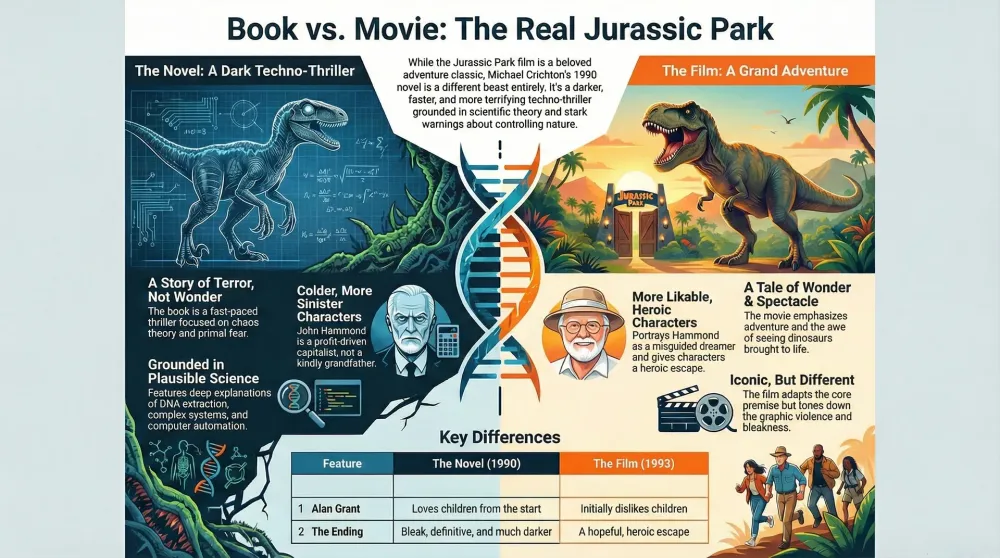
The most immediate and impactful difference lies in the tonal shift between the two works. Crichton’s novel is an uncompromising techno-thriller, significantly grislier and bloodier than its cinematic counterpart. The book is filled with a more consistent sense of dread and includes scenes of violence that were deemed too intense for the film, such as dinosaurs attacking babies on the mainland and a far more brutal, extended death sequence for Dennis Nedry. It is a dark, violent narrative that leans heavily into its scientific horror elements.
In contrast, Spielberg’s film, while containing moments of genuine terror, is crafted as a more family-friendly adventure. The experience is a carefully calibrated blend of wonder, terror, and excitement, designed to awe audiences as much as to frighten them. The film’s tone is less that of a grim cautionary tale and more of a grand, thrilling spectacle, making it accessible to a much broader audience than the novel’s starker, more violent narrative.
Character mutations: Re-engineering the cast
To facilitate this tonal shift, Spielberg and his screenwriters made substantial changes to the story’s key characters, altering motivations, relationships, and even their ultimate fates to better serve a cinematic narrative of awe and redemption.
-
John Hammond: The transformation of John Hammond is the cornerstone of the film’s shift from a dark techno-thriller to a story of wonder. The novel’s Hammond is an “incredibly unsympathetic” megalomaniac. Driven by greed, he dislikes his own grandchildren, dismisses the danger as his park collapses, and relentlessly blames others for the disaster. The film wisely recasts him as a charismatic, grandfatherly showman played with warmth by Richard Attenborough. This Hammond is a flawed dreamer, an empathetic anchor for the audience’s awe, who has a powerful moment of realization and human touch—a role the book’s greedy antagonist could never fill.
-
Dr. Alan Grant: To solve the problem of a purely intellectual protagonist, the filmmakers gave Grant an emotional arc. One of the film’s most significant inventions is his dislike of children, which serves as a major character journey and a running gag. In the novel, the bearded Dr. Grant explicitly likes children. This change provides the cinematic Grant with a clear path to heroism as he becomes the reluctant protector of Lex and Tim.
-
Dr. Ellie Sattler: The film establishes Drs. Grant and Sattler as a romantic couple, introducing a “love interest” element common in blockbuster filmmaking. In the novel, however, their relationship is purely professional; Dr. Sattler is Grant’s student.
-
The Grandchildren (Lex and Tim): The film wisely inverts the ages of the grandchildren. In the book, Tim is the older, computer-savvy sibling, while eight-year-old Lex is portrayed as an “annoying” and “underdeveloped” character. The film makes Lex the older child, retaining Tim’s dinosaur expertise but giving Lex the role of the resourceful hacker, making them a more balanced and capable duo. This change also adds another concrete example of divergent plot devices: in the novel, Tim keeps the night-vision goggles for an extended period, where they play a recurring role, unlike in the film where they serve a single high-impact scene.
-
Ian Malcolm: While Jeff Goldblum’s iconic performance captures the character’s wit, the novel’s Ian Malcolm is “significantly more intellectual.” He spends much more of the book explaining the intricacies of chaos theory and, after being severely injured, delivers many of his philosophical insights in a morphine-induced fever dream, making his role more that of a detached, academic prophet of doom.
-
Donald Gennaro: The film amalgamates multiple characters into the single figure of the “bloodsucking lawyer” Donald Gennaro, who meets an early demise on a toilet. In the novel, the lawyer on the tour is a different character entirely. Donald Gennaro is a separate figure who remains in the control room for much of the disaster and survives for a longer period.
| Feature | Novel (1990) | Movie (1993) |
|---|---|---|
| Tone | Dark, violent techno-thriller with horror elements | Awe-inspiring adventure with moments of tension |
| John Hammond | A cold, profit-driven capitalist willing to sacrifice people | A misguided but charming visionary who loves his grandkids |
| The Ending | The island is firebombed by the Costa Rican air force; the destruction is total | The survivors escape by helicopter; the island is left to nature |
| Velociraptors | Hyper-intelligent, nocturnal monsters that gnaw through cages | Scary but ultimately defeated by the T-Rex |
| Ian Malcolm | Bedridden for half the book, delivering long philosophical lectures | Injured but remains the charismatic voice of reason |
Structural integrity: Chaos Theory on the page
Exclusive to the literary version is a unique structural device that embodies the story’s central theme. Each chapter is presented as an “iteration” and is visually accompanied by a rendering of the Heighway Dragon fractal curve. This fractal structure is not merely a literary gimmick; it is the visual manifestation of Ian Malcolm’s intellectual dominance in the novel. While the film uses Malcolm for witty one-liners about chaos, the book’s very architecture is built from his mathematical prophecies. In a fittingly ironic twist, physicist William Harter, who investigated the curve, remarked to Donald Knuth that Crichton’s illustrations are “upside down” or “as dead dragons,” adding a layer of expert commentary on the park’s flawed design.
These calculated deviations in tone, character, and structure created two fundamentally different narrative experiences, launching Spielberg’s adaptation on its own unique trajectory toward cinematic immortality.
4.0 The cinematic revolution: A new species of blockbuster
While Crichton’s novel was a masterclass in literary tension, Spielberg’s film adaptation achieved its own legendary status by becoming a landmark in cinematic history. Its uniqueness lies not just in adapting a compelling story, but in revolutionizing the very technology of filmmaking, creating a new species of blockbuster that would leave an indelible footprint on the cultural landscape. Those effects hold up astonishingly well three decades on — the 4K Ultra HD restoration is the definitive way to see exactly why the industry changed overnight.
The birth of the digital dinosaur
Jurassic Park’s most celebrated achievement was its technical prowess as the first film to seamlessly integrate computer-generated images (CGI) and animatronics into live-action scenes. The visual effects were so revolutionary that they fundamentally altered the course of the industry. Initially, the plan was to create the full-motion dinosaurs using go-motion puppets, but after a secret digital test of a T-rex skeleton by ILM animators proved astonishingly convincing, Spielberg made the pivotal decision to shift to a primarily CGI-driven approach.
To bridge the gap between traditional and digital animation, ILM and Tippett Studio co-developed an ingenious tool they called the Dinosaur Input Device, or DID. This was a modified stop-motion armature—a physical skeleton—covered in sensors that monitored the orientation of each joint and fed the data into a computer. The DID was more than just a tool; it was a symbolic link between eras. It allowed traditionally trained stop-motion animators, masters of an art form from the past, to lend their unparalleled expertise in animal motion to give life to the digital models of the future, mirroring the film’s own theme of resurrecting the past through modern technology.
Reshaping the cultural landscape
The film’s impact extended far beyond Hollywood. Its portrayal of dinosaurs as fast, intelligent, and bird-like animals dramatically changed their depiction in all subsequent media. Spielberg’s creatures, informed by contemporary paleontological theories, were dynamic and terrifyingly alive, setting a new standard for everything from other films to documentaries. The acclaimed BBC series Walking with Dinosaurs, for example, is widely regarded as a “‘documentary version of Jurassic Park,’” a testament to the film’s influence.
Furthermore, the film burned a series of iconic, visually-driven moments into our collective pop-culture consciousness. The concentric ripples in a glass of water heralding the T-rex’s approach, the tense chase scene with the Jeep, and the chilling sequence of velociraptors hunting children in a stainless-steel kitchen have been referenced and parodied for decades, demonstrating a mastery of visual storytelling.
Spielberg’s film did not just adapt a book; it birthed a new era of filmmaking, an evolutionary leap that distinguishes it sharply from the unique literary strengths of its source material.
5.0 The literary blueprint: A techno-thriller masterclass
Where Spielberg’s film triumphed through visual spectacle and adventure, Michael Crichton’s novel stands as a masterpiece of the techno-thriller genre for entirely different reasons. Its power is derived from its intellectual rigor, its deep grounding in scientific theory and process, and its uncompromisingly dark and cautionary vision. The book is not an adventure; it is a meticulously constructed argument about the dangers of unchecked ambition, presented as a thrilling narrative. If you only know the film, Crichton’s original novel is genuinely a different, darker beast — well worth reading even after forty viewings of the movie.
“Fiction as fact”: Crichton’s narrative technique
A signature of Michael Crichton’s literary style is his ability to present “fiction as fact,” a technique that lends his speculative stories an unnerving air of authenticity. In Jurassic Park, he employs the literary device of the false document to build a world that feels startlingly real. The narrative is frequently interrupted by what appear to be genuine scientific documents—computer outputs, DNA sequence charts, graphs, and academic footnotes—which immerse the reader in the scientific process and make the premise of dinosaur cloning feel not just possible, but terrifyingly plausible.
Intellectual and thematic depth
The novel delves far deeper into the scientific and ethical questions at the heart of the story, offering a more direct and thorough exploration of the perils of DNA manipulation, the corrupting influence of corporate greed, and humanity’s profound egotism. Crucially, chaos theory is not merely a piece of dialogue as it often is in the film; it is the core thematic and structural pillar of the book. Through the extended monologues of Ian Malcolm and the chapter structure itself, Crichton directly engages with the idea that complex systems are inherently unpredictable and doomed to fail. The novel is a darker, more cynical exploration of this concept, presenting the park’s collapse not as a singular accident, but as an inevitable outcome of a system too complex for its creators to ever truly control.
While the film offers a thrilling warning, the novel provides a chilling and deeply scientific thesis, arguing its case with an intellectual force that remains its defining characteristic.
6.0 Conclusion: A shared legacy of wonder and warning
In the end, Michael Crichton’s novel and Steven Spielberg’s film are not competitors but collaborators in cementing a modern myth. To ask which is “better” is to miss the point entirely; each version of Jurassic Park is a masterpiece, perfectly adapted to the unique strengths of its medium. They are two apex predators ruling over different territories of our imagination.
The novel is an intellectually dense, cautionary techno-thriller that chills the reader with its plausible science, dark themes, and unflinching depiction of systemic collapse. It is a book that makes you think, grounding its terror in the authentic language of scientific documents and the inexorable logic of chaos theory.
The film, in contrast, is a visually revolutionary cinematic adventure that redefined the blockbuster. It trades the novel’s intellectual density for pure, unadulterated spectacle, balancing awe-inspiring wonder with primal, heart-pounding terror. Spielberg captured the spirit of Crichton’s warning but translated it into a new, universally accessible language of sight and sound.
Despite their differences, both versions of Jurassic Park tap into a deep human fascination with the past and a potent anxiety about the future. Together, they have ensured that the story’s potent blend of scientific fascination and hubris will, like the dinosaurs themselves, never go extinct from our collective imagination.
📺 Movie night sorted: thousands of films and shows are streaming on Prime Video — free for 30 days. Worth a look before you buy the disc.
🎧 Prefer the darker half? Crichton’s novel makes a gripping commute listen — a free 30-day Audible trial is the easiest way to experience the techno-thriller the movie left on the cutting-room floor.
Related Dadnology content: our Jurassic Park review and Michael Crichton’s Jurassic Park book review cover each half of this comparison in full.
Keep this in your inbox
One email a week: what we actually watched, built and reviewed — the stuff worth a dad's time. No hype, no daily spam.
Dadnology Weekly
One email a week: the LEGO, gaming and movie news worth a dad's time — plus what we actually reviewed. No hype, no daily spam.
Disclaimer: This review and its visuals were created with the help of AI. Some links may be affiliate links – we may earn a commission if you make a purchase, at no extra cost to you.
Current deals in Movies & TV
Verified live discounts tracked on Amazon
![The Legend of Korra — The Complete Series [Blu-ray]](https://m.media-amazon.com/images/I/51+1TXyb7aL._SL500_.jpg)
Movies & TV · Tested by Dadnology
The Legend of Korra — The Complete Series [Blu-ray]
4.5/5“A new Avatar, a modern city, a masked revolution”Read our review
Movies & TV · Tested by Dadnology
Zack Snyder's Justice League (4K Ultra HD)
4/5“Four hours. One vision. This is the film.”Read our review
Movies & TV · Tested by Dadnology
Space Jam (4K Ultra HD + Digital)
4/5“It's gonna be a whole new ball game”Read our reviewYou might also like
Jurassic World: Chaos Theory – Season 4: Consequences hit hard
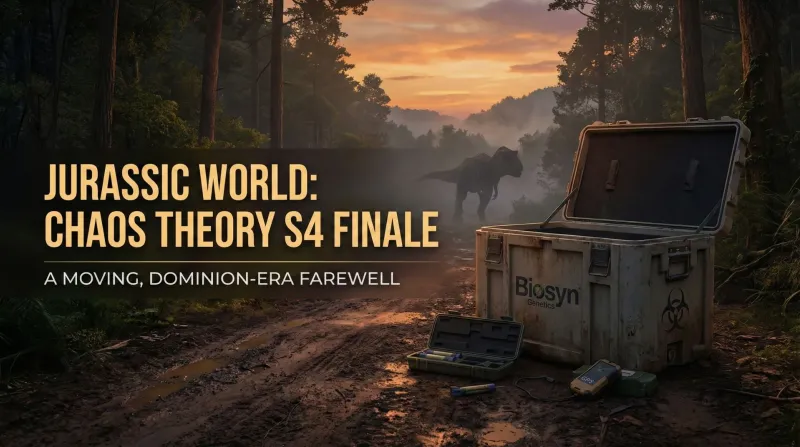
A powerful farewell to the Nublar Six. *Chaos Theory – Season 4* runs in parallel to *Jurassic World Dominion*, echoing its world of trafficking routes, relocation ops, and public dinosaur anxiety while keeping the focus on our six. Character promises are honored, scares land, and the ending lingers with earned warmth. Watch *Dominion* first, then this season for maximum resonance. We’re sad it’s over, grateful it was this good. **Rating: 4.5/5.**
Jurassic World Rebirth – Thrills, teeth, and top-tier dino action
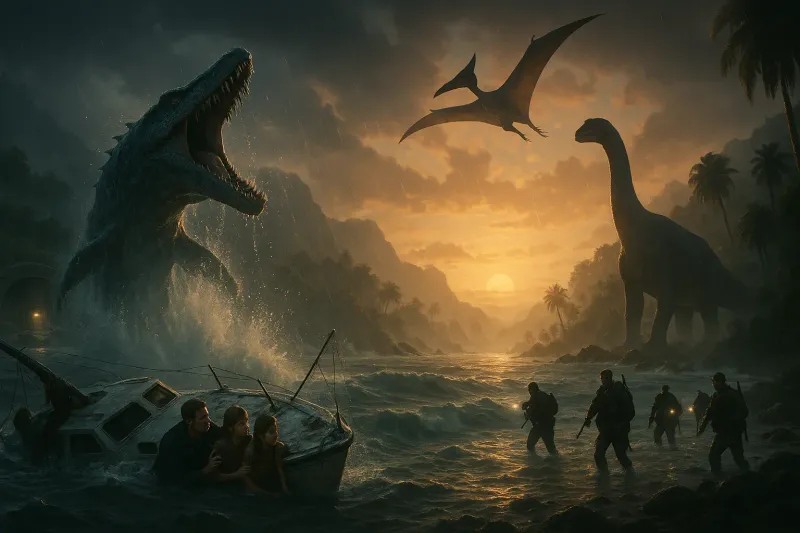
Thrilling, lean, and genuinely tense, Jurassic World Rebirth restores the franchise’s bite with clearly staged set pieces, superb sound, and gorgeous, tactile dinosaurs. Some dialogue is wooden, but the suspense builds smartly to a coherent, crowd-pleasing finale. This is best for older kids and teens: intensity over gore, real peril, plenty of roar. We loved it—big-screen fun with family conversation starters about risk, responsibility, and science. For us it’s a 4.5/5 and a top-three Jurassic adventure. We’ll rewatch it together.
Jurassic Park (Novel) – The science thriller that changed everything
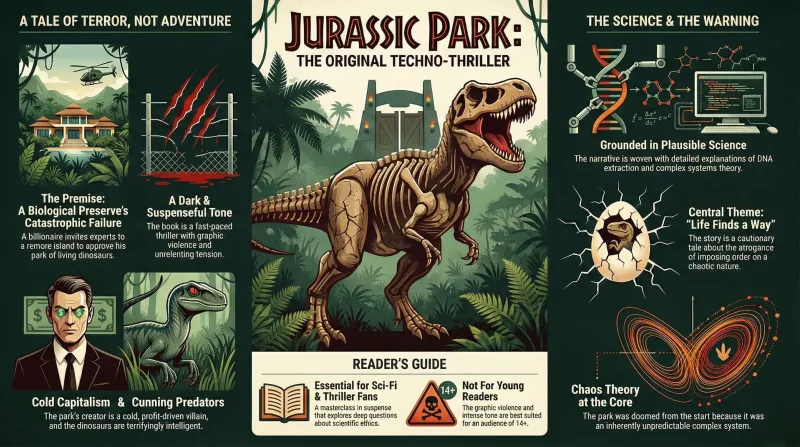
The novel that started it all is a must-read, even if you've memorized the movie. It's darker, more violent, and richer in scientific detail. Crichton's writing propels you through a disaster that feels frighteningly plausible. A gripping cautionary tale about science without conscience.