Jurassic World: Fallen Kingdom Intro – The Camp Cretaceous Crossover Explained
The dramatic prologue of Jurassic World: Fallen Kingdom directly connects to Camp Cretaceous – here’s how it fits into the timeline.
This post contains affiliate links. We may earn a commission if you make a purchase, at no extra cost to you. As an Amazon Associate, Dadnology earns from qualifying purchases.
🦖 Introduction
🦕 This review is part of the Jurassic World Watch Order 2025 – watch all Jurassic Park and Jurassic World movies, Camp Cretaceous, and Chaos Theory in timeline order.
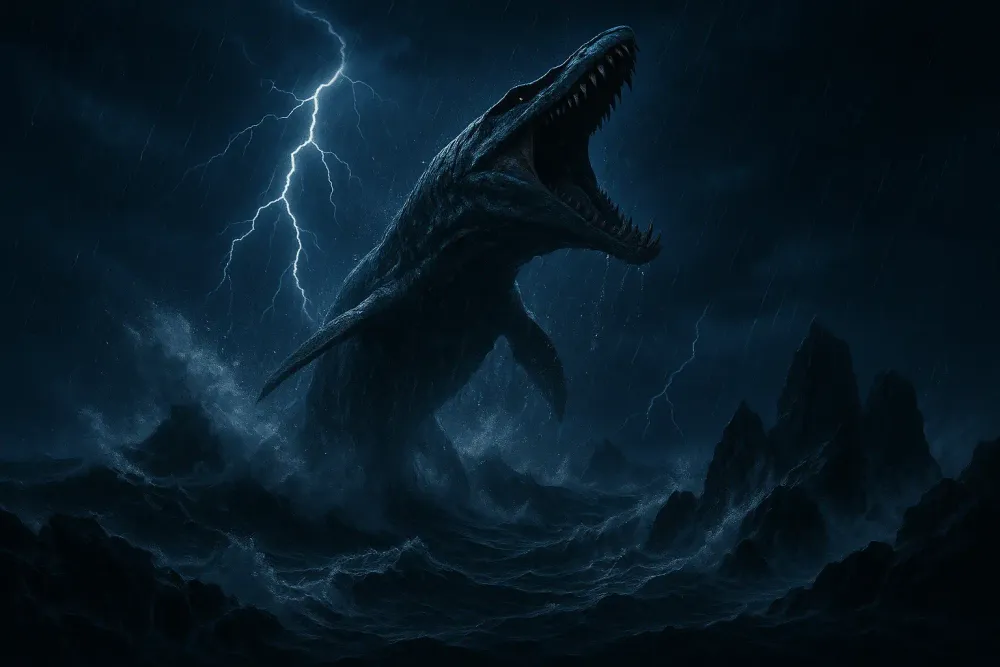
The eerie prologue of Jurassic World: Fallen Kingdom shows a covert operation to recover Indominus rex DNA from the lagoon. With rain pouring and danger lurking, this sequence sets the tone for the darker direction the franchise is about to take.
But what makes this intro so special? It perfectly overlaps with Camp Cretaceous Season 3, bringing together the animated and cinematic universes like never before.
🎥 Scene Breakdown & Crossover Context
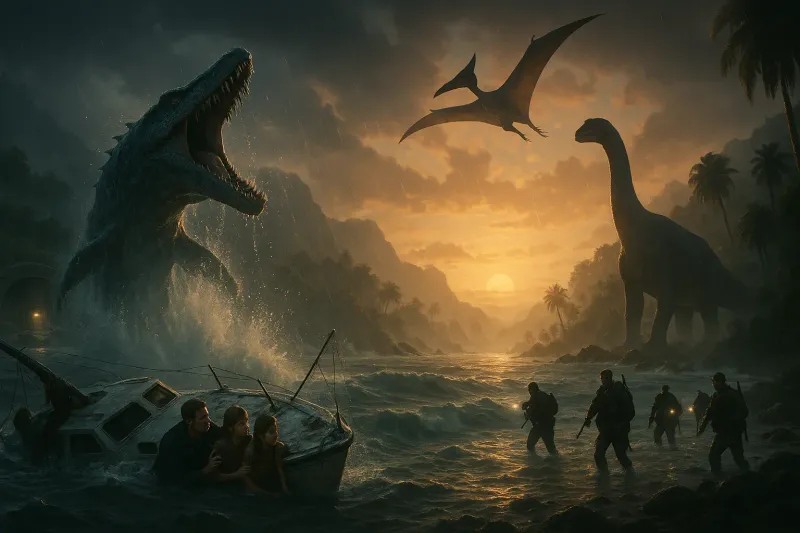
In the Fallen Kingdom intro, mercenaries enter Isla Nublar undetected, unaware that the Mosasaurus is still very much alive. The short scene ends in disaster – with one of the most iconic underwater jump scares in the franchise.
Meanwhile, Camp Cretaceous gives fans a second angle: the campers witnessing these events and reacting in real time. It’s one of the clearest examples of narrative crossover in the Jurassic saga.
Importantly, the rest of Fallen Kingdom happens later – after the world begins to debate whether the dinosaurs should be saved. But this intro? It’s the final scene on Isla Nublar immediately after Jurassic World and the Camp Cretaceous timeline.
🎬 The Full Scene Decoded: Two Minutes That Changed the Franchise
Most viewers watching Fallen Kingdom in 2018 experienced the lagoon scene as pure spectacle: mercenaries, lightning, a submarine, and the world’s largest aquatic predator reasserting its dominance. It’s a great cold open. But without Camp Cretaceous, roughly half of what the scene implies is invisible.
Here’s what actually happens: a contracted team, hired by Eli Mills on behalf of Benjamin Lockwood’s foundation, attempts to recover Indominus rex DNA from the Lagoon floor. They need the genetic material to complete the Indoraptor prototype. The team uses a submersible to enter the flooded Mosasaurus enclosure — which was sealed after the events of Jurassic World but never properly cleared. One member of the crew is eaten by the Mosasaurus. The rest barely escape.
For Fallen Kingdom, this is prologue. For Camp Cretaceous, it is a climax.
Episode 9 of Season 3 puts the six campers on the shoreline during the exact same sequence. They see the helicopter. They see the crates being loaded. What they don’t know — and neither does the audience watching the episode for the first time — is that these aren’t rescue workers. They’re not there for the kids. They are there for the DNA. The campers are invisible to the operation, which is simultaneously their salvation (they aren’t captured) and their nightmare (no one is coming for them).
It’s a simple crossover executed with remarkable precision. The filmmakers didn’t need to do this. The animated series could have invented its own escape scenario. Instead, they threaded the kids into an existing scene from a feature film — and doing so retroactively elevated both pieces of media. The intro of Fallen Kingdom gained stakes it didn’t originally have. And the campers’ escape gained a context — the machinery of the main timeline grinding past while they scramble to survive in the margins.
For franchise fans, this kind of continuity is the good stuff. It’s not a reference for the sake of nostalgia. It changes how you read both scenes.
🦕 What the Indominus DNA Actually Means — and Why It Matters
The Indominus rex was destroyed at the end of Jurassic World (2015) — eaten by the Mosasaurus. But its DNA survived in the lagoon, embedded in its bones. That DNA is the reason the mercenaries are there. It’s the blueprint for something worse.
In Fallen Kingdom and by extension Jurassic World: Dominion, we learn that this recovered genetic material was used to refine the Indoraptor — a smaller, weaponizable hybrid designed for sale to military contractors. The Indominus was a mistake made public. The Indoraptor was a mistake made on purpose, smaller and “controllable,” designed specifically to be pointed at things and told to attack.
The lagoon intro, then, is not just a scary cold open. It is the moment the second phase of InGen’s weapons programme becomes possible. Without those bones, there is no Indoraptor. Without the Indoraptor, there is no climax to Fallen Kingdom. And without that climax, the legal and ethical debate over hybrid creation — which carries all the way through Dominion — has no catalyst.
This is also the moment where Camp Cretaceous becomes essential Jurassic viewing rather than optional animated spin-off. The kids don’t know what they’re watching. They see mercenaries loading cargo. We — the audience who have seen Fallen Kingdom — know exactly what that cargo means. The horror of the scene is dramatic irony: the campers are witnessing the birth of the next monster, and they don’t know it.
🎭 How to Watch This Scene With Kids (A Practical Guide)
The crossover moment is genuinely one of the most satisfying payoffs in recent franchise storytelling — but only if the viewing order is right. Here’s the setup that works:
First: Watch Camp Cretaceous Seasons 1, 2, and the first eight episodes of Season 3 in order. Don’t rush it. Let the kids become the kids. By Episode 8, your child should care about whether Darius, Ben, Yaz, Brooklynn, Kenji, and Sammy make it off the island.
Then: Watch Season 3, Episode 9. This is where Camp Cretaceous and Fallen Kingdom collide. Episode 9 shows the lagoon operation from the campers’ vantage point — confusing, chaotic, and frightening for reasons the kids don’t yet understand. At the end of the episode, the animated series leaves Isla Nublar.
Then: Start Fallen Kingdom. The opening sequence now plays completely differently. You’ve spent hours with six children who were standing right there. You know the island the mercenaries are infiltrating. You know the lagoon. You know what’s in it.
That shift in perspective — from neutral spectator to invested audience — is what good crossover storytelling achieves. It doesn’t require you to have watched the animated series, but if you have, the cold open lands with a weight that most feature film cold opens never achieve.
For families working through the full Jurassic saga in timeline order, this is the payoff moment that justifies the investment. Two seasons of kids’ animation, leading to a two-minute scene in a blockbuster sequel — and both feel more complete because of the other.
🌊 The Mosasaurus: What the Intro Tells Us About Scale
There’s a third element to this scene that tends to get overshadowed by the crossover discussion: the Mosasaurus reveal confirms something the franchise had been implying since 2015 and hadn’t stated clearly.
The park is gone. The gates are sealed. The enclosures are flooded or broken. And the Mosasaurus is still alive, still active, and apparently doing fine without human management. It has eaten something — the mercenary, yes, but also presumably years of whatever wanders into its lagoon. It hasn’t starved. It hasn’t declined. It has, if anything, flourished.
This is the ecological argument that Dominion later tries to make explicit: these animals are not fragile exhibits. They are apex predators adapting to new circumstances. The Mosasaurus surviving in an abandoned lagoon is the proof of concept the later films lean on when they argue that dinosaurs, once released, cannot be contained.
For parents watching with kids who ask why the Mosasaurus is still there after three years of park closure: that’s the answer. It didn’t need the park. The park needed it.
Ad
Jurassic World: Fallen Kingdom (Blu-ray) (opens in a new tab)
Experience the dark and thrilling opening sequence.

Pros
- Canon crossover with Camp Cretaceous
- Dark tone and cinematic suspense
- Perfect bridge between film and animation
Cons
- Very short sequence
- Main story takes place months later
📝 Conclusion
The intro of Jurassic World: Fallen Kingdom is a short but crucial piece of Jurassic lore. It connects directly with Camp Cretaceous, confirms continuity, and sets the tone for the chaos to come.
Recommendation: Don’t skip it. Even if you’re rewatching the franchise, this crossover moment is essential viewing.
📺 Movie night sorted: thousands of films and shows are streaming on Prime Video — free for 30 days. Worth a look before you buy the disc.
📌 FAQ – Frequently Asked Questions
What happens in the intro of Jurassic World: Fallen Kingdom?
Camp Cretaceous Season 3 (Netflix) (opens in a new tab)
Watch the crossover from the kids' perspective.
Is the rest of Jurassic World: Fallen Kingdom set later?
Where does the intro fit in the Jurassic World timeline?
Who hired the mercenaries in the Fallen Kingdom intro?
Do you need to watch Camp Cretaceous before Fallen Kingdom?
Keep this in your inbox
One email a week: what we actually watched, built and reviewed — the stuff worth a dad's time. No hype, no daily spam.
Dadnology Weekly
One email a week: the LEGO, gaming and movie news worth a dad's time — plus what we actually reviewed. No hype, no daily spam.
Disclaimer: This review and its visuals were created with the help of AI. Some links may be affiliate links – we may earn a commission if you make a purchase, at no extra cost to you.
You might also like
Jurassic World: Chaos Theory – Season 4: Consequences Hit Hard
A powerful farewell to the Nublar Six. *Chaos Theory – Season 4* runs in parallel to *Jurassic World Dominion*, echoing its world of trafficking routes, relocation ops, and public dinosaur anxiety while keeping the focus on our six. Character promises are honored, scares land, and the ending lingers with earned warmth. Watch *Dominion* first, then this season for maximum resonance. We’re sad it’s over, grateful it was this good. **Rating: 4.5/5.**
Jurassic World Rebirth – Thrills, Teeth, and Top-Tier Dino Action
Thrilling, lean, and genuinely tense, Jurassic World Rebirth restores the franchise’s bite with clearly staged set pieces, superb sound, and gorgeous, tactile dinosaurs. Some dialogue is wooden, but the suspense builds smartly to a coherent, crowd-pleasing finale. This is best for older kids and teens: intensity over gore, real peril, plenty of roar. We loved it—big-screen fun with family conversation starters about risk, responsibility, and science. For us it’s a 4.5/5 and a top-three Jurassic adventure. We’ll rewatch it together.
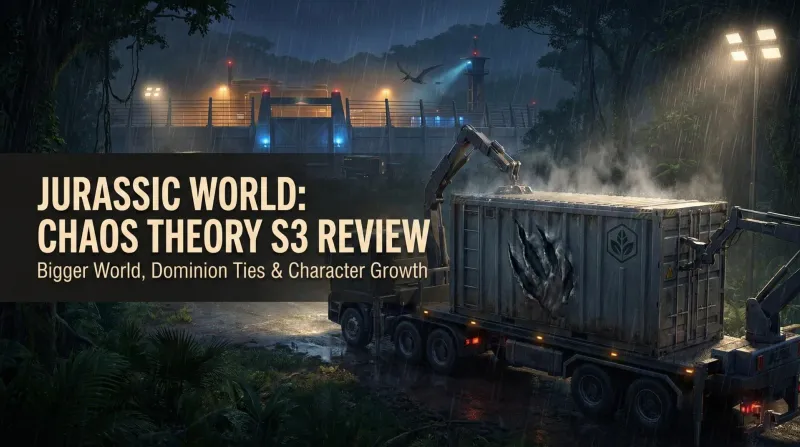
Jurassic World: Chaos Theory – Season 3: The World Feels Bigger (and Worse)
Chaos Theory – Season 3 is outstanding: character-forward, suspenseful, and rich with franchise texture. The young leads shine, the animation and set pieces feel cinematic, and the Dominion tie-ins are smartly placed—adding stakes without fan-service overload. Even if Dominion left you lukewarm, these crossovers land. This is premium Jurassic storytelling and a must for dino fans. Huge thanks to Netflix for delivering thoughtful, thrilling fan service that respects the lore and the audience.