
Runaways – Season 3: A bittersweet farewell
Time travel, dark magic, and family – the Runaways close their chapter with heart and heroism.
This post contains affiliate links. We may earn a commission if you make a purchase, at no extra cost to you. As an Amazon Associate, Dadnology earns from qualifying purchases.
🦖 Introduction
This review is part of the MCU Watch Order – explore all Marvel movies and shows in order!
The end is here. Runaways – Season 3 closes the book on Marvel’s teen rebel squad, and it does so with style, emotion, and a few surprises.
🧬 Story & characters
As the team faces off against the dark wizard Morgan le Fay, they’re pulled into a web of magic, time shifts, and difficult choices. Each character is pushed to their limits:
- Nico wrestles with dark power.
- Karolina tries to stay grounded.
- Chase and Gert face a heartbreaking arc.
- Molly continues to grow into her strength.
The story is driven more than ever by emotion, sacrifice, and what it means to be a found family. And yes – it gets a little weird, but that’s part of the charm.
🕰️ Time travel, alternate paths, and closure
The inclusion of time travel adds high-stakes tension while also giving the writers an opportunity to explore alternate futures and inner conflicts. It’s a bold move that mostly pays off, especially in the later episodes, where everything comes full circle.
Fans looking for explosive battles may be disappointed, but those who have followed the characters from the start will find the emotional payoff deeply satisfying.
🔮 A magical shift in tone
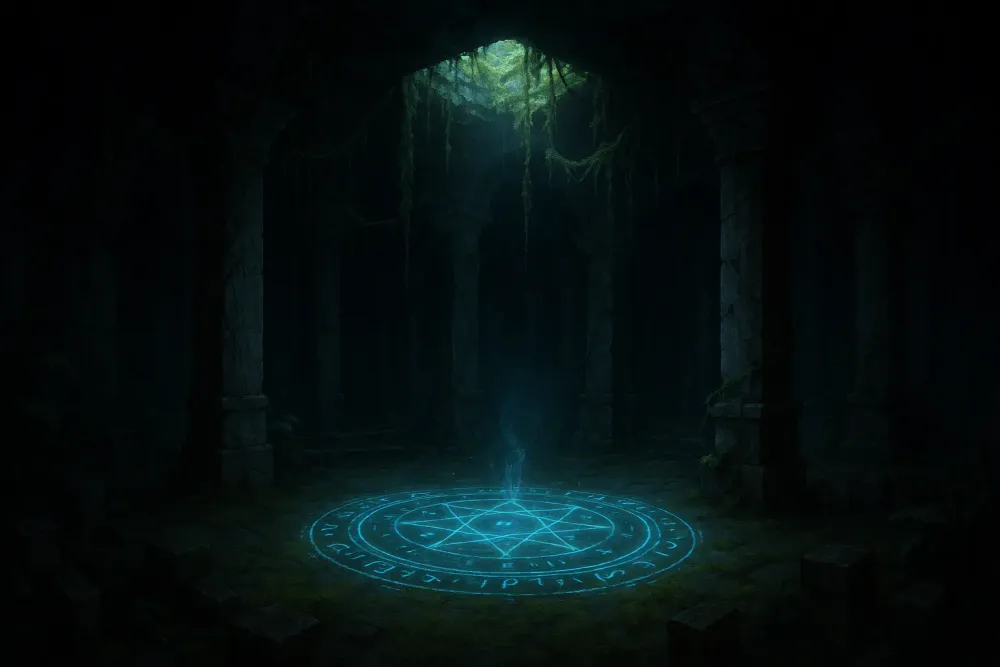
Season 3 leans further into magical storytelling, especially with the arrival of Morgan le Fay, played by Elizabeth Hurley. Her presence adds gravitas and elegance to the plot, even if her screen time is a bit underused.
The mystical tone makes the season feel slightly different from the previous ones – less grounded, but still very much character-focused.
👨👧👦 Our experience & recommendation
Watching this final season was bittersweet. As a dad who watched from the beginning, seeing these teens grow up, struggle, and ultimately triumph was moving. It’s not the flashiest Marvel story, but perhaps one of the most heartfelt. A strong pick for older kids or teens and anyone who enjoys character-driven superhero stories.
🧙 Morgan Le Fay and the magic problem: When Season 3 loses the thread
Runaways Season 3 introduces Morgan Le Fay, played by Elizabeth Hurley, as the primary antagonist — a sorceress connected to Nico’s Staff of One who has been operating in the margins of reality for some time. This is the point where the show’s tonal balancing act collapses, and it’s worth being precise about why.
Seasons 1 and 2 worked because the central conflict was personal: these specific kids versus these specific parents, people who knew each other’s weaknesses and histories and still chose to be on opposite sides. Morgan Le Fay is a different category of villain — cosmic, magical, with powers that dwarf anything PRIDE could produce — and the show struggles to integrate her into a story that was built on grounded family drama. When your antagonist can literally rewrite reality and possess characters at will, the stakes paradoxically feel lower, because the audience knows the good guys will win through Plot. The specific, earned tension of kids who love their parents having to fight those parents is irreplaceable, and Season 3 doesn’t find an equivalent.
The Hurley casting is a choice that brings a particular kind of B-movie energy — she’s clearly having fun, and “Elizabeth Hurley as a sorceress in a Marvel show” is intrinsically watchable — but that energy sits awkwardly alongside the show’s more earnest character work. There are scenes where she’s terrifying, and scenes where the tonal register is closer to camp. Morgan Le Fay in the comics is a character of genuine menace. This version is inconsistent in ways that feel like a production running out of runway rather than a deliberate creative choice.
The season does give the characters satisfying individual endings. Gert and Chase, whose relationship had been the show’s emotional constant across all three seasons, get a resolution that earns its sentiment without cheapening the complications that got them there. Nico and Karolina reach something real. Molly grows into herself. The show earns those endings — it just earns them despite the main plot rather than because of it. Hulu cancelled Runaways after Season 3 before any fourth season could course-correct. At 33 episodes, it ends as a show that found its voice in Season 1, refined it in Season 2, and got somewhat lost trying to expand it in Season 3. That’s an honorable trajectory for a Marvel television series of this era.
🌌 The alien backstory finally explained: What Season 3 reveals about the PRIDE
Season 3 delivers on the long-promised explanation of the PRIDE’s relationship to Jonah — the alien being who has been pulling their strings across all three seasons — and it does so in the context of Morgan Le Fay’s competing supernatural claim on the team. Whatever the season’s tonal missteps, this explanatory work is the most important thing it accomplishes, and it’s worth examining on its own terms.
What the backstory reveals is this: the PRIDE members were not simply corrupt adults who chose to sacrifice children. They were people who were manipulated into a situation they did not fully understand, whose capacity for moral resistance was progressively eroded by a combination of genuine belief in what they were doing, real desperation — the life of a dying child, the threat of death, the promise of resources they could not get anywhere else — and a being of effectively unlimited power who understood human vulnerability well enough to exploit it over years. This doesn’t exonerate them. The show doesn’t suggest it does. But it adds a layer to the original premise that matters: PRIDE are not cartoon villains who simply chose evil, and Season 3 is the place where the full shape of their compromise becomes legible.
What the show does with this revelation is track what happens when the PRIDE parents are no longer directed by Jonah. Some seek redemption, with varying degrees of sincerity and success. Some are too compromised to do anything except try to survive. The ones who persist into the season’s back half occupy genuinely uncomfortable moral territory — people who did terrible things with complicated motivations, trying to assess whether those motivations constitute any kind of mitigating factor. The show’s answer is carefully ambiguous: the mitigations are real, and they don’t exonerate.
The Morgan Le Fay plotline creates an interesting structural contrast in this context. Jonah’s manipulation of PRIDE was cosmic and impersonal — an alien entity pursuing its own agenda through human instruments. Morgan’s manipulation of the Runaways kids is supernatural and intensely personal, targeted at their emotional vulnerabilities with a precision that feels almost intimate. The show is constructing a pattern across three seasons: this team was formed to resist control, and the universe keeps finding new forms of it to send at them. Parental authority in Season 1, alien influence in Season 2, supernatural coercion in Season 3. The escalating register of the threats mirrors the escalating register of the kids’ development — each season, they have more capacity to resist, and each season, the thing asking them to submit has more power.
What this says about the show’s central thesis is worth naming plainly: growing up requires learning to distinguish between legitimate authority and exploitative power. The PRIDE parents thought they were doing the former and were doing the latter. The kids, who spent three seasons being told to trust the adults around them, learned to make that distinction in the hardest possible way.
Pros
- Emotional and satisfying conclusion
- Continued strong performances
- Bold story choices (time travel, magic)
- Great use of ensemble cast
Cons
- Slightly uneven pacing
- Less grounded than earlier seasons
🗣️ Conclusion
Runaways – Season 3 closes the chapter with heart and ambition. It may not shake the MCU to its core, but it offers a rewarding journey for fans who invested in these characters. With themes of sacrifice, identity, and growth, it’s a finale worth watching and remembering.
📺 Movie night sorted: thousands of films and shows are streaming on Prime Video — free for 30 days. Worth a look before you buy the disc.
Related Dadnology reviews: Runaways – Season 2: Teenage Rebellion, Superpowered · The Punisher – Season 2: Still Brutal, Still Human
📌 FAQ – Frequently asked questions
Is this the final season?
Do I need to watch the previous seasons?
Is there a crossover with other Marvel shows?
Why was Runaways cancelled?
Do the Runaways cross over with any other MCU characters?
Keep this in your inbox
One email a week: what we actually watched, built and reviewed — the stuff worth a dad's time. No hype, no daily spam.
Dadnology Weekly
One email a week: the LEGO, gaming and movie news worth a dad's time — plus what we actually reviewed. No hype, no daily spam.
Disclaimer: This review and its visuals were created with the help of AI. Some links may be affiliate links – we may earn a commission if you make a purchase, at no extra cost to you.
Current deals in Movies & TV
Verified live discounts tracked on Amazon
![The Legend of Korra — The Complete Series [Blu-ray]](https://m.media-amazon.com/images/I/51+1TXyb7aL._SL500_.jpg)
Movies & TV · Tested by Dadnology
The Legend of Korra — The Complete Series [Blu-ray]
4.5/5“A new Avatar, a modern city, a masked revolution”Read our review
Movies & TV · Tested by Dadnology
Zack Snyder's Justice League (4K Ultra HD)
4/5“Four hours. One vision. This is the film.”Read our review
Movies & TV · Tested by Dadnology
Space Jam (4K Ultra HD + Digital)
4/5“It's gonna be a whole new ball game”Read our reviewYou might also like
Agents of S.H.I.E.L.D. – Season 5: Time loops, Kree rule, and a snap that never came
Season 5 of *Agents of S.H.I.E.L.D.* is daring, emotional, and beautifully written. A two-part arc that takes us through dystopian futures, alien threats, and heartbreaking farewells. One of the MCU’s best.
Agents of S.H.I.E.L.D. – Season 6: A new path in a fragmented universe
*Agents of S.H.I.E.L.D.* Season 6 boldly breaks from the MCU timeline to tell an emotionally rich, action-packed story. While it loses timeline relevance, its character arcs and visuals remain top-tier.
MCU watch order 2026 – All Marvel movies & series in timeline
As a lifelong Marvel fan, the MCU is more than a movie franchise – it's an emotional journey through heroism, sacrifice, and epic storytelling. The way films and series connect across timelines, characters, and genres is absolutely unique in cinema history. From Iron Man's first flight to the multiverse madness of recent phases, every chapter adds depth and excitement to this living, breathing universe. Whether you're watching solo or with your kids, the MCU delivers action, humor, and heart like no other. It's not just a saga – it's a part of my world.