
Thor: The Dark World – A cosmic clash and the rise of the stones
Thor returns to face an ancient evil – and the MCU begins to explore the true power of the Infinity Stones.
This post contains affiliate links. We may earn a commission if you make a purchase, at no extra cost to you. As an Amazon Associate, Dadnology earns from qualifying purchases.
🎬 Introduction
This review is part of the MCU Watch Order – explore all MCU movies and shows in order!
Often seen as one of the more divisive entries in the MCU, Thor: The Dark World is far more important – and enjoyable – than many give it credit for. Released in 2013, this cosmic sequel directed by Alan Taylor pushes the boundaries of Marvel’s mythological worldbuilding, introduces the Aether (an Infinity Stone in disguise), and sets key threads in motion for the rest of the Infinity Saga.
At the heart of it all are the dynamic performances of Chris Hemsworth and Tom Hiddleston, whose portrayal of Thor and Loki anchor the film’s emotional and comedic beats.
🦸 Story & characters
After the events of The Avengers, Thor returns to Asgard with Loki imprisoned for his crimes. But peace doesn’t last long. An ancient enemy, Malekith the Accursed (played by Christopher Eccleston), awakens with a plan to plunge the universe into darkness using a powerful weapon known as the Aether.
While Malekith himself lacks depth as a villain, the real focus of the story is Thor’s personal journey – as a warrior, son, and protector of both Asgard and Earth. His relationship with Jane Foster (Natalie Portman) gets renewed attention, though it’s often overshadowed by his more emotionally charged interactions with Loki.
Loki, as always, steals scenes with wit, unpredictability, and surprising vulnerability. The banter between the brothers – particularly during their reluctant team-up – elevates the entire film.
Even supporting characters like Frigga (Rene Russo) and Heimdall (Idris Elba) get more to do, bringing heart and scope to the Asgardian setting.
🎥 Visuals & lore
Visually, The Dark World is a feast. Asgard looks more alive and majestic than ever before, while the dark world of Svartalfheim offers eerie, otherworldly contrast. The battle sequences are fast-paced and well-choreographed, including a standout final act that has Thor and Malekith battling across dimensions.
This film also marks a major turning point in MCU lore: the Aether is introduced as a chaotic, reality-altering force – later revealed as the Reality Stone. This is one of the first clear steps Marvel took in assembling its long-game around the Infinity Stones. When Volstagg and Sif hand the Aether to the Collector in the post-credit scene, the entire audience got a glimpse of where the MCU was truly heading.
That one scene created a wave of fan theories and helped elevate Marvel’s interconnected storytelling to a whole new level.
👨👧👦 Our experience & recommendation
Watching this film with my daughter was pure fun. The portals, the fantasy elements, and the sibling rivalry between Thor and Loki kept her engaged from beginning to end. It also sparked deeper questions about sacrifice, betrayal, and responsibility.
For dads and kids aged 12 and up, Thor: The Dark World is a surprisingly rich experience – both visually and emotionally. It offers spectacle, laughs, and world-building in equal measure. While the villain may be one of Marvel’s weakest, the relationships and revelations more than make up for it.
And if you’re watching the MCU in timeline order, skipping this film means missing a core piece of the puzzle. This is the moment the Infinity Stones start to feel real – not just MacGuffins, but building blocks of something larger.
🌑 Let’s be honest about the villain
We’ll level with you: The Dark World routinely lands at or near the bottom of MCU rankings, and the main reason is Malekith. Christopher Eccleston — a genuinely terrific actor — is buried under so much prosthetic makeup and so little characterization that his dark elf barely registers as a presence, let alone a threat. His motivation amounts to “make the universe dark,” and the film keeps cutting away from him because there’s simply nothing there to develop. It’s the early-MCU villain problem in its most extreme form.
The surrounding plot is also the franchise at its most generic: a glowing MacGuffin, a portal-based finale, a fairly anonymous fantasy-world aesthetic. It’s the entry that feels most like it was assembled by committee, and you can sense the behind-the-scenes turbulence (the film famously went through significant reshoots). If you came to this review expecting us to call it secretly brilliant, we won’t — as a standalone story, it’s the weakest Thor film and one of the MCU’s lesser efforts.
👑 What actually works: Loki, Frigga, and the stones
So why the generous score? Because everything involving the family of Asgard is genuinely good, and it’s the half of the film people actually remember. Loki gets the best material in the movie: his grief over Frigga’s death, his prison-cell breakdown (briefly hidden behind an illusion of composure), and the reluctant, banter-filled team-up with Thor that fans still quote. The “trust my rage” sequence and Loki’s mid-film fake-out death are highlights of the entire Thor trilogy. Whenever Hemsworth and Hiddleston share the screen, the film snaps to life.
There’s real emotional weight here too — Frigga’s death is the first time the saga made an Asgardian loss land, and it ripples forward into Ragnarok and Infinity War. And then there’s the lore: the Aether is revealed as the Reality Stone, and the Collector post-credits scene was, at the time, one of the clearest signals that Marvel was playing a long game toward Thanos. For a timeline-order watch, that setup genuinely matters. The film is carried entirely by its characters and its connective tissue — and they’re strong enough to make it worth your time despite the forgettable plot wrapped around them.
🔁 Rewatch value & home viewing
The Dark World is admittedly the least rewatched Thor film, but it’s a quick, painless watch, and the Loki material holds up better than the rest. If you’re doing a full chronological rewatch, it earns its place for the Reality Stone and Frigga beats; as a casual pick, most families will reach for Ragnarok first.
For the shelf, the 4K Ultra HD release still impresses on the craft front: Asgard’s golden architecture and the dimension-hopping finale gain real depth in HDR, and Brian Tyler’s score lands with weight in a proper sound system. It streams on Disney+ too, which for a film this far down most fans’ rankings may be the more sensible option.
Bottom line: Thor: The Dark World is, by most measures, the weakest film in the MCU — saddled with a forgettable villain and the franchise’s most generic plot. We won’t pretend otherwise. But it’s redeemed by the things that have always made Thor worth watching: the electric Hemsworth-Hiddleston dynamic, Frigga’s genuinely affecting death, and a Reality Stone reveal that mattered enormously to the long game. As a standalone it’s skippable; as a piece of the saga, and for its strong character beats, it’s better and more enjoyable than its rock-bottom reputation suggests. Watch it for Loki, the lore, and the brothers — and forgive it the rest. And if you’re a completist working through the MCU in order with your kids, it’s a quick, mostly painless stop that pays off later in ways a one-off viewer would never guess.
Pros
- Strong performances from Hemsworth and Hiddleston
- Stunning visuals and well-crafted action scenes
- Crucial Infinity Stone setup
- Great Asgardian world-building and emotional depth
Cons
- Underwhelming main villain
- Romantic subplot lacks chemistry at times
📝 Conclusion
Thor: The Dark World may not be everyone’s favorite MCU film, but it plays a vital role in shaping the franchise’s future. With cosmic stakes, a major Infinity Stone reveal, and one of the best sibling dynamics in the saga, it’s far better than its reputation suggests – and a must-watch for anyone diving into the MCU timeline.
📺 Movie night sorted: thousands of films and shows are streaming on Prime Video — free for 30 days. Worth a look before you buy the disc.
Related Dadnology review: Agents of S.H.I.E.L.D. Season 1 (Episodes 1–16) – A Slow Burn That Pays Off
📌 FAQ – Frequently asked questions
Is Thor: The Dark World suitable for kids?
How long is the movie?
How does Thor: The Dark World fit into the MCU timeline?
Is there a post-credit scene?
Why is Thor: The Dark World considered the weakest MCU film?
What is the Aether, and why does it matter?
Keep this in your inbox
One email a week: what we actually watched, built and reviewed — the stuff worth a dad's time. No hype, no daily spam.
Dadnology Weekly
One email a week: the LEGO, gaming and movie news worth a dad's time — plus what we actually reviewed. No hype, no daily spam.
Disclaimer: This review and its visuals were created with the help of AI. Some links may be affiliate links – we may earn a commission if you make a purchase, at no extra cost to you.
Current deals in Movies & TV
Verified live discounts tracked on Amazon
![The Legend of Korra — The Complete Series [Blu-ray]](https://m.media-amazon.com/images/I/51+1TXyb7aL._SL500_.jpg)
Movies & TV · Tested by Dadnology
The Legend of Korra — The Complete Series [Blu-ray]
4.5/5“A new Avatar, a modern city, a masked revolution”Read our review
Movies & TV · Tested by Dadnology
Zack Snyder's Justice League (4K Ultra HD)
4/5“Four hours. One vision. This is the film.”Read our review
Movies & TV · Tested by Dadnology
Space Jam (4K Ultra HD + Digital)
4/5“It's gonna be a whole new ball game”Read our reviewYou might also like
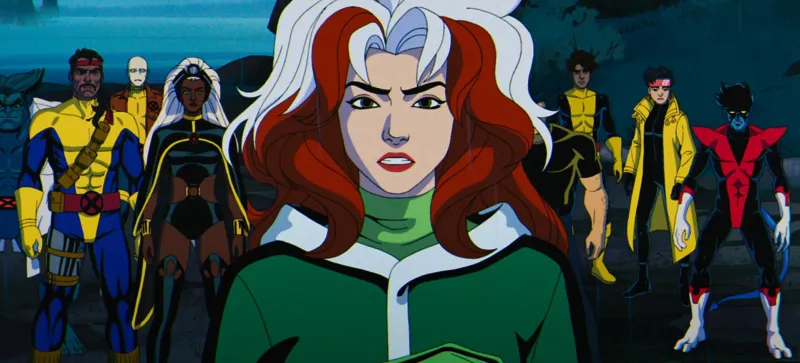
X-Men '97 Season 2 review: Apocalypse rises, Magneto falls
Season 2 trades Season 1's speedrun pacing for real confidence, using three timelines and a returning cast we now know intimately to tell its best story yet — right up to a finale that hurts in exactly the way great X-Men stories are supposed to.
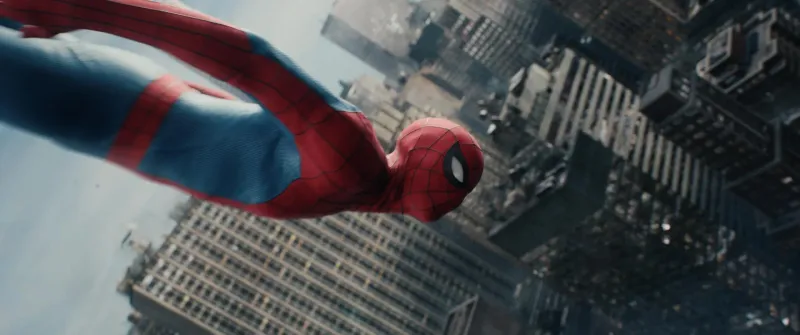
Spider-Man: Brand New Day review: The best Marvel film yet made
Spider-Man: Brand New Day is the best Marvel film we've ever seen. Tom Holland delivers his finest performance across four films, Sadie Sink's Jean Grey is a genuine highlight, and the Hulk/Punisher integration works far better than it has any right to. Action, comedy, goosebumps and quiet moments, all in one film. A perfect 5/5.
LEGO 67006 The Marvel Skyline revealed: 1,261 pieces of superhero architecture
LEGO has announced The Marvel Skyline (67006): a 1,261-piece 18+ microscale Architecture-style model spanning Wakanda, Oscorp, and Xavier's School.