
Clear and Present Danger review – The one about betrayal
Washington starts a deniable war in Colombia, then abandons the soldiers fighting it. The best-selling novel of the 1980s, and the angriest Clancy. 5/5.
This post contains affiliate links. We may earn a commission if you make a purchase, at no extra cost to you. As an Amazon Associate, Dadnology earns from qualifying purchases.
📖 Introduction
⚓ This review is part of our guide to Tom Clancy books in order — every Ryanverse novel in publication and story order, with the honest answer to where to start.
Tom Clancy has a reputation as a writer who loved the American national-security apparatus uncritically. Clear and Present Danger is the book that makes that reputation difficult to defend.
The premise is a drug cartel murdering three senior Americans, and a White House deciding that the ordinary tools are insufficient. What follows is authorised at the top, kept off every record, and run through a chain of people each of whom can plausibly deny knowing the next link. Light infantry teams go into the Colombian mountains under a mandate that officially does not exist, to do things that officially are not happening.
Then the political weather changes. The operation becomes inconvenient. And because it never officially existed, it can be switched off with a phone call — the radios go quiet, the extraction does not come, and the men on the mountainside are left there.
That is the novel. Everything else is the machinery of how a country does that to its own soldiers, and what it costs the two men who decide to go and get them anyway.
🧠 The story
Clancy structures this as a widening circle of complicity, and it is the most sophisticated thing he ever built.
At the outer edge are the soldiers, who know only their immediate mission. Above them are the field officers running a campaign of operations with codenames — RECIPROCITY, SHOWBOAT, EAGLE EYE and the rest — each compartmented from the others. Above them are the people who authorised it in a room, and above them the people who arranged never to be told in so many words. Nobody at any level has done something they cannot justify to themselves. The result is still an abandonment.
Jack Ryan is Acting Deputy Director of Intelligence, standing in for Admiral Greer, who is dying. He has been carefully kept outside the loop, which is the book’s cruellest structural joke: the man whose entire function is knowing things has been managed around. When he does work it out, his response is not a speech but an operation, and the last third of the novel is Ryan and John Clark improvising a rescue that neither has authority to conduct.
The combat writing is superb and completely unromantic. These are small teams in bad terrain being slowly ground down, and Clancy tracks ammunition, water and morale with the same attention he gives sonar in the debut.
🎭 Characters and craft
This is the best Ryan-and-Clark pairing in the series, and it works because they arrive at the same conclusion from opposite directions. Ryan gets there through analysis and moral fury; Clark gets there because men were left in the field and that is not something you do. Neither has to persuade the other, and the novel is smart enough not to waste a scene on it.
Ding Chavez arrives here — a staff sergeant in the mountains, one of the abandoned. He is drawn quickly and well, and Clancy clearly liked him enough to keep him for the next twenty years. Reading it now, knowing he ends up as Clark’s second in Rainbow Six, gives the rescue an extra weight it did not have in 1989.
The antagonists are unusually well handled because they are barely the point. Cortez, the cartel’s intelligence man, is a professional applying professional methods, and the novel treats him as a competent adversary rather than a monster. The real villainy is in Washington and it is entirely procedural — a memo, a deniability structure, a decision not to ask.
It is a long book and it earns the length. At 1989 Clancy was at the peak of his ability to hold six plot strands and land them together.
👨👧 The dad perspective
The thing that makes this novel stick is a very simple idea: somebody sent those men, and then somebody decided it was easier not to bring them back.
You do not need to have been a soldier for that to land. Anyone who has worked inside an organisation knows the shape of it — the decision that nobody quite makes, the responsibility that dissolves as it moves upward, the person at the bottom who pays. Clancy is furious about it in a way he never quite was again, and the fury is what lifts the book above its plot.
There is also a quieter thread worth noticing: Admiral Greer’s illness, and Ryan’s relationship with a mentor who is dying while all this happens. It is handled in a few short scenes and it is the most human writing in the book. Ryan is losing the one senior person who reliably told him the truth, at exactly the moment he most needs one.
Reading commitment: long, and worth it. The multiple strands mean this rewards consecutive evenings rather than scattered ten-minute sessions.
Audiobook: good, with the caveat that the operation codenames are hard to track by ear. Audible’s 30-day trial covers a book this size — check the catalogue on the day.
Age guidance: 16 and up. Sustained combat, drug-war brutality, and a central injustice that benefits from some life experience to sit with properly.
✅ Pros & cons
Pros
- The most morally serious book Clancy wrote — the villain is his own side
- The widening circle of deniability is his most sophisticated structure
- Ryan and Clark in genuine partnership, arriving at the same place from opposite directions
- Unromantic, meticulous combat writing
- Introduces Ding Chavez, who pays off across the next twenty years
Cons
- Long, with a lot of compartmented operations and codenames to track
- Needs the earlier novels to give the Greer material its weight
- The bleakest of the pre-1990s books — there is no comfortable ending here
Conclusion: The angry one
Clear and Present Danger was the best-selling novel of the 1980s, which is a strange fate for a book this hostile to the people who run things. It is Clancy applying everything he knew about how systems work to the question of how a system abandons somebody, and the answer he gives is that it does not require a villain at all — only a sequence of individually defensible decisions.
It is the most complete demonstration of what the competence engine can do when it is pointed inward. The soldiers are good at their jobs. The officers are good at their jobs. The failure is entirely institutional, and the two men who fix it do so without authority and at real risk.
The Final Word: Clancy’s most morally serious novel and one of his three best. Five out of five.
Is Clear and Present Danger worth reading?
Do I need to read the earlier books first?
Is this where Ding Chavez first appears?
How does the book compare to the 1994 film?
Is Clear and Present Danger suitable for teenagers?
Keep this in your inbox
One email a week: what we actually watched, built and reviewed — the stuff worth a dad's time. No hype, no daily spam.
Dadnology Weekly
One email a week: the LEGO, gaming and movie news worth a dad's time — plus what we actually reviewed. No hype, no daily spam.
Disclaimer: This review and its visuals were created with the help of AI. Some links may be affiliate links – we may earn a commission if you make a purchase, at no extra cost to you.
Current deals in Books & media
Verified live discounts tracked on Amazon
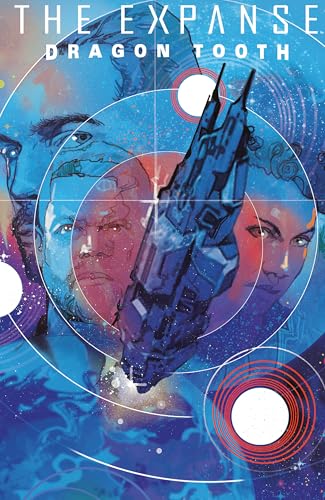
The Expanse: Dragon Tooth (Graphic Novel)
The official bridge between the show and Book 7. Fill the 30-year gap with this canonical comic series.
Price as of Oct 9, 09:11 PM UTC. Subject to change.

Jurassic Park - 4K Ultra HD
Experience the movie that defined a generation in stunning 4K resolution. A visual masterpiece.
Price as of Oct 9, 09:11 PM UTC. Subject to change.

The Art of The Legend of Vox Machina (Hardcover)
The official art book — stunning behind-the-scenes visuals from the making of the series.
Price as of Oct 9, 09:11 PM UTC. Subject to change.
You might also like
The Cardinal of the Kremlin review – The spy novel
Clancy's purest espionage novel and his most underrated. An asset thirty years deep, a KGB investigation closing around him, and an extraction that has to be improvised. Also where John Clark first walks on. Rating: 5/5.
Patriot Games review – When the job follows you home
The one where the threat comes to the house. Ryan is a professor, not an operative, and the novel is built entirely on how badly equipped an ordinary competent man is for people who want to hurt his family. Tense, personal and structurally the best-balanced Clancy. Rating: 5/5.
Clear and Present Danger (1994) review – The angry one
The best of the three Ford films and the one with something to say. Nobody in it is a conventional villain — the abandonment happens because three senior people each optimised for their own position. The ambush sequence and the final confrontation are the franchise at its most serious. 4/5.