
Tom Clancy books in order – Every Jack Ryan novel ranked
All twelve Ryanverse novels Clancy actually wrote, in publication and story order, with the honest answer to which one you should start with.
This post contains affiliate links. We may earn a commission if you make a purchase, at no extra cost to you. As an Amazon Associate, Dadnology earns from qualifying purchases.
The problem with Clancy’s bookshelf
Tom Clancy wrote twelve novels in what readers now call the Ryanverse, and he did not write them in the order the story happens. He published a submarine thriller first, then went backwards to fill in his hero’s earlier life, then sideways to give a supporting character an origin, then forwards again to make that hero President. The result is a shelf where the first book chronologically was published tenth, and where a reader who tries to be clever about it gets a worse experience than one who simply starts at the beginning.
So this page does two things. It lists the novels both ways — the order they were written and the order the story happens — and then it tells you which of those to actually use.
The short version, before the tables: read them as they were published. Clancy’s recurring cast accumulates history, and the later books assume you were there for it. Reading chronologically means meeting characters at their most damaged before you have any reason to care, and it means the technology gets less advanced as you go, which reads as a mistake rather than a period detail.
Series content
Explore all articles, reviews, and guides in this series.
“Tom Clancy sold The Hunt for Red October to the Naval Institute Press for five thousand dollars, and it became the first work of fiction they ever published. What he had written was a submarine chase in which almost nothing happens quickly: a Soviet captain takes a new boat out with the intention of never bringing it back, two navies converge on him, and a CIA analyst named Jack Ryan is the only person who reads the situation correctly. It invented the modern techno-thriller and it remains the leanest, most disciplined book Clancy ever produced.”
“Patriot Games is the novel where Tom Clancy discovered that the most frightening thing he could do to Jack Ryan was leave him at home. A history professor on a research trip to London intervenes in an attempted kidnapping of the Prince and Princess of Wales, and a splinter group calling itself the Ulster Liberation Army decides that the man who ruined their operation should pay for it. Published second and set chronologically first, it is the most domestic book in the series and by some distance the most personal.”
“The Cardinal of the Kremlin is the novel where Tom Clancy wrote a proper spy story. Colonel Mikhail Filitov, codenamed CARDINAL, has been feeding the CIA intelligence from beside the Soviet Defence Minister for thirty years, and the KGB has finally started asking the right questions. Around that runs a race between two missile-defence programmes and a mountaintop research site in Tajikistan. It is the book Bob Woodward said rivalled The Hunt for Red October, and it is the first appearance of a CIA officer named John Clark.”
“Clear and Present Danger is the novel where Tom Clancy turned his procedural eye on his own side. After a drug cartel murders three senior Americans, the White House authorises a covert campaign in Colombia that nobody will ever admit to. Light infantry teams go into the mountains under a deniable mandate, the political weather changes, and their support is quietly switched off. Jack Ryan, Acting Deputy Director of Intelligence, finds out what has been done in his agency's name. It was the best-selling novel of the 1980s and it is the angriest thing Clancy wrote.”
“The Sum of All Fears is Tom Clancy's nuclear novel, and it is the point where his books begin to outgrow themselves. An Israeli bomb lost over Syria during the Yom Kippur War is dug out of a field eighteen years later by terrorists who understand that the weapon itself is only half the plan. The other half is making two nuclear powers misread each other fast enough that neither has time to check. The central sequence is as frightening as anything in the genre. The eight hundred pages around it are not all pulling their weight.”
“Without Remorse is the book where Tom Clancy stopped being reassuring. Set in 1970, it follows John Kelly — a former Navy SEAL who loses almost everything and responds by taking a Baltimore drug ring apart from the inside, one man at a time — while a parallel plot sends him back into North Vietnam on a mission to bring American prisoners home. The two strands are about the same thing: what a country owes the people it sends out, and what happens when it does not pay. It ends with Kelly walking away under a new name, John Clark.”
“Debt of Honor is the most ambitious thing Tom Clancy attempted and the most uneven book he finished. Its first act is a financial attack — a logic bomb inside the American clearing system that deletes the record of who owns what — and that section is genuinely original thriller writing. Its second act is a Pacific shooting war. Its portrayal of the antagonists drew serious criticism at the time and is the book's real weakness. And its final page is the most famous thing Clancy ever wrote, for reasons that had nothing to do with him.”
“Executive Orders picks up minutes after Debt of Honor ends, with Jack Ryan sworn in as President of a country whose Congress, Cabinet and Supreme Court have just been destroyed. The first third is the most unusual thing Clancy ever wrote: a competence thriller about administration, in which the crisis is that there is nobody left to run anything. Then a hostile power unites Iraq with Iran and releases a weaponised strain of Ebola into the American interior, and the book becomes a race that Clancy handles superbly. At 874 pages it is enormous, and it is the best of the late novels.”
“Rainbow Six hands John Clark his own command: a multinational counter-terror unit drawn from the best operators several countries can spare, headquartered in England and available at very short notice. For half the book it is an episodic procedural about a new team learning to work — a hostage rescue here, a bank siege there. Then the pattern behind the incidents resolves into something far larger, and the novel turns into a race to stop a group of people who have decided the planet would be better off without most of the people on it.”
“At over a thousand pages, The Bear and the Dragon is the longest novel Tom Clancy wrote, and it earns both halves of its reputation. China invades Siberia for oil and gold, Russia is admitted to NATO, and President Jack Ryan commits American forces to a land war in Asia. The military sequences are among the best large-scale battle writing in the genre, and they sit inside a book that also contains an enormous amount of political theorising, repetition and briefing. It is genuinely gripping and it is genuinely bloated, and both things are true at once.”
Red Rabbit
“Red Rabbit is Clancy's 2002 prequel, set in 1982, and it fictionalises the assassination attempt on Pope John Paul II. Oleg Zaitzev is a KGB communications officer who processes every message the organisation sends, which means he has read an order he cannot live with. He wants out, with his family. Jack Ryan is a junior CIA analyst on loan to London, nowhere near senior enough to be handling this, which is exactly why the book works. It is a tradecraft novel — surveillance, cover stories, a family walking through an airport — with almost no gunfire in it at all.”
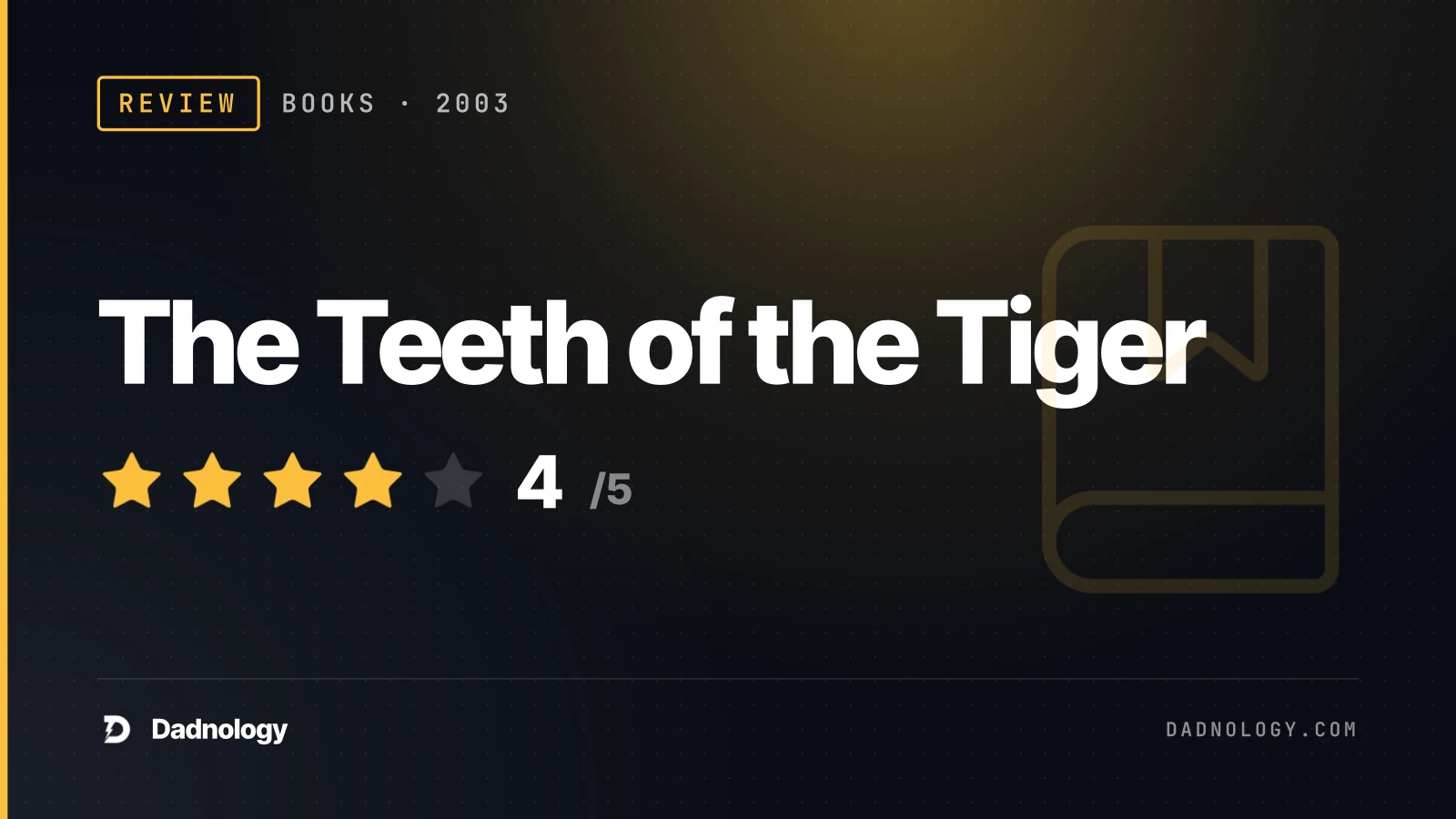
“The Teeth of the Tiger is Tom Clancy's last solo Ryanverse novel and an explicit handover. Set after 9/11, it introduces The Campus — an off-the-books intelligence outfit the elder Jack Ryan created on his way out of office, hidden behind a trading company and sited within sight of Langley and Fort Meade. Into it come Ryan's son as an analyst and his Caruso cousins, a Marine and an FBI agent, as operators. The premise is genuinely sharp. The execution is the lightest thing on the shelf, and the moral questions it raises are ones the book does not really want to answer.”
Outside of the Main Timeline — Multiverse & Specials (0)
No entries found
Try adjusting your filters or search terms.
Publication order — The one to use
These are the twelve novels Tom Clancy wrote himself, in the order they appeared. We have now reviewed all twelve — every one of them is a card above.
| # | Novel | Year | Centres on | Our rating |
|---|---|---|---|---|
| 1 | The Hunt for Red October | 1984 | Jack Ryan | 5 / 5 |
| 2 | Patriot Games | 1987 | Jack Ryan | 5 / 5 |
| 3 | The Cardinal of the Kremlin | 1988 | Jack Ryan | 5 / 5 |
| 4 | Clear and Present Danger | 1989 | Jack Ryan | 5 / 5 |
| 5 | The Sum of All Fears | 1991 | Jack Ryan | 4 / 5 |
| 6 | Without Remorse | 1993 | John Clark | 5 / 5 |
| 7 | Debt of Honor | 1994 | Jack Ryan | 4 / 5 |
| 8 | Executive Orders | 1996 | Jack Ryan | 4.5 / 5 |
| 9 | Rainbow Six | 1998 | John Clark | 5 / 5 |
| 10 | The Bear and the Dragon | 2000 | Jack Ryan | 4 / 5 |
| 11 | Red Rabbit | 2002 | Jack Ryan | 5 / 5 |
| 12 | The Teeth of the Tiger | 2003 | Jack Ryan Jr. | 4 / 5 |
The pattern in that last column is worth a sentence. The four books we rate lowest are all from 1991 onwards, and three of the four are the longest things Clancy wrote. The scores are not tracking subject matter or era — they are tracking whether anybody was still editing him.
Two things worth noticing in the “Centres on” column. John Clark, who starts as a supporting player in The Cardinal of the Kremlin, ends up carrying two entire novels — and they are two of the best in the canon. That is unusual enough that we gave it its own argument. And the final entry hands the series to a different generation entirely, which is where Clancy’s own run stops and the continuation novels begin.
Story order — What it actually changes
The in-universe chronology runs like this:
- Without Remorse — 1970, Vietnam era. The earliest point in the timeline by more than a decade.
- Patriot Games — Ryan as a young academic, before the CIA career.
- Red Rabbit — 1982. Ryan as a junior analyst on loan to London.
- The Hunt for Red October — Ryan established at Langley.
- The Cardinal of the Kremlin → Clear and Present Danger → The Sum of All Fears → Debt of Honor → Executive Orders → Rainbow Six → The Bear and the Dragon → The Teeth of the Tiger.
Only three books actually move — Without Remorse jumps from sixth to first, Red Rabbit from eleventh to third, and Red October is pushed from first to fourth. From there on the two orders agree exactly.
It is tempting to conclude from that arithmetic that the choice barely matters. It does not follow, and this is the part most reading-order pages get wrong: a small permutation at the front of a series changes almost everything, because the first two books are where a reader decides what kind of series this is. Three books moving in the middle would be trivia. These three are the entrance.
Here is what chronological order concretely does:
- You meet John Clark before you meet Jack Ryan. In publication order Clark arrives as a competent fixer in someone else’s story and only gets explained nine years later. Chronologically you get the damage first and the competence second, which makes him a completely different character — closer to a tragedy than to a reliable presence.
- You never get to be surprised by Red October. Read fourth, the submarine book is a good thriller about a character you already know. Read first, it is the book that invented the genre, and the slow realisation that the tension is coming from a sonar room is the whole experience.
- Ryan’s arc becomes a straight line. Publication order has him swing between junior and senior across the shelf — analyst, then a prequel where he is nobody, then President. Chronologically he only ever climbs. That is tidier and considerably less interesting.
So which one?
Publication order, for a first read. Not because chronology is wrong, but because Without Remorse is the darkest book Clancy wrote — a grief-driven revenge novel with a real body count — and opening on it tells you almost nothing true about the series you are starting. You would be meeting the exception first and reading eleven books that do not match it.
Chronological order is genuinely good on a re-read. If you already know where everyone ends up, starting in Vietnam in 1970 and moving forward turns the shelf into one continuous forty-year story rather than twelve thrillers with recurring names. That is a real pleasure and we would not talk anybody out of it.
What we would not do is mix them. Pick one and finish it. The one thing that genuinely spoils this series is reading Red Rabbit in the middle of the President years and losing track of how old anybody is supposed to be.
Where to actually start
Start with The Hunt for Red October unless you have a specific reason not to. It is the debut, so nothing is assumed. It is short by Clancy standards. And it is the purest demonstration of what he was actually good at: the tension comes out of procedure — sonar operators listening, an analyst reading a photograph correctly, officers following a checklist while the situation gets away from them. Nobody in it is a superhero. Everybody in it is competent, and competence under pressure turns out to be extremely exciting.
Start with Without Remorse if submarines genuinely put you off. It is self-contained, it is the leanest prose he ever wrote, and it introduces the best character in the universe. Just know that it is a hard book — a grief-driven revenge story running alongside a rescue mission, and it does not flinch from either.
Do not start with the late books. By the turn of the millennium the novels had grown enormous, and the balance had tipped from story to briefing. They are still worth reading once you are invested. As a first impression they would put you off entirely.
What about everything else with his name on it?
This is the part that confuses people, so it is worth being blunt about it.
The Splinter Cell games carry the Tom Clancy brand and have nothing to do with these books — different character, different continuity, no crossover. They are also genuinely excellent, and we have reviewed the whole series. Rainbow Six is the one real overlap: the game was developed alongside the novel and shares its premise, though the two stories part company quickly.
And the novels published after 2013 are by other authors continuing the franchise. That is a legitimate thing for a publisher to do, and it is not what this page is about.
The Dadnology verdict
Clancy’s reputation has been flattened by the sheer volume of product attached to his name — games, continuation novels, four different screen Jack Ryans. It is easy to forget that underneath all of it are half a dozen genuinely superb thrillers, written by a man who understood that the most gripping thing in a military operation is usually the paperwork.
Read them in the order he wrote them. Start with the submarine. And when you hit the thousand-page mark around the turn of the millennium, feel free to stop — you will already have had the best of it.
For the wider map of what connects to what across books, games and films, the Tom Clancy hub has it. If you finish the shelf and want the same register with less hardware, Vince Flynn’s Mitch Rapp series is the natural next stop. If you want the argument for the other hero, it is on the same page. And Kindle Unlimited’s free trial is the sensible way to test whether the doorstops suit you before committing shelf space — catalogues rotate, so check what is actually in it on the day.
What order should I read the Tom Clancy books in?
Which Tom Clancy book should I read first?
How many Jack Ryan books did Tom Clancy write himself?
Do I need to read the Clancy books in chronological order?
Which Tom Clancy books can I skip?
Keep this in your inbox
One email a week: what we actually watched, built and reviewed — the stuff worth a dad's time. No hype, no daily spam.
Dadnology Weekly
One email a week: the LEGO, gaming and movie news worth a dad's time — plus what we actually reviewed. No hype, no daily spam.
Disclaimer: This review and its visuals were created with the help of AI. Some links may be affiliate links – we may earn a commission if you make a purchase, at no extra cost to you.
Current deals in Books & media
Verified live discounts tracked on Amazon
Books & media · Tested by Dadnology
The Expanse: Dragon Tooth (Graphic Novel)
4.5/5“Bridging the void”Read our review
Books & media · Tested by Dadnology
The Art of The Legend of Vox Machina (Hardcover)
5/5“D&D-virginity meets fantasy chaos — and it's perfect.”Read our review
Books & media · Tested by Dadnology