
Rainbow Six review – Clark gets his own command
John Clark builds a multinational counter-terror unit and runs straight into a conspiracy that wants most of humanity gone. Structurally odd, absurdly readable. 5/5.
This post contains affiliate links. We may earn a commission if you make a purchase, at no extra cost to you. As an Amazon Associate, Dadnology earns from qualifying purchases.
📖 Introduction
⚓ This review is part of our guide to Tom Clancy books in order — every Ryanverse novel in publication and story order, with the honest answer to where to start.
By 1998 Tom Clancy had made Jack Ryan the President of the United States, which is a problem for a thriller writer. A President cannot go anywhere interesting. He gets briefed, he authorises things, and the actual work happens several rungs below him where the reader can no longer follow it.
Rainbow Six is the solution, and it is a good one: get out of the White House entirely and go where the work is. John Clark is handed his own command — a multinational counter-terrorism unit assembled from the best operators several allied countries are willing to give up, based in England, deployable at very short notice, and answerable to almost nobody.
The result is the most structurally peculiar book Clancy wrote, and one of the two or three most enjoyable.
🧠 The story
The first half is essentially an anthology. Rainbow forms, trains, argues about doctrine, and then gets called out: a bank in Switzerland, a hostage situation in Germany, a theme park in Spain. Each incident is a self-contained operation, planned and executed over a chapter or two, and each is built with the meticulous care Clancy reserved for things he genuinely understood — approach routes, entry timing, who covers which door, what happens when a plan survives contact for about nine seconds.
Taken on their own these sequences are the best pure procedural writing in the later novels. Taken as a structure, they are odd: you are two hundred pages into a thriller before you learn what the thriller is about.
Because the incidents are connected. Somebody is manufacturing terrorism, and doing it specifically to demonstrate that the world needs better security. Behind that sits the Horizon Corporation and a group of people who have arrived, by a chain of steps each of which sounded reasonable to them, at the position that the planet would be improved by the removal of most of the humans on it. Their instrument is a modified virus called Shiva, their delivery mechanism is the Sydney Olympics, and their follow-up is a vaccine that does not do what it says.
It is an enormous swing, and it should not work as well as it does. The reason it does is that Clancy plays it entirely straight and entirely procedurally — the conspiracy is a project-managed operation with budgets and staffing problems, which is far more unsettling than a lair would be.
🎭 Characters and craft
Clark in command is the best use anybody found for the character. He is not the avenging figure of Without Remorse here; he is a middle-aged administrator who happens to be extremely dangerous, spending most of his time on personnel, politics and paperwork so that his people can do the job. Clancy clearly enjoys writing him, and the relationship with Domingo Chavez — his subordinate, and by this point his son-in-law — gives the book its warmth.
The team itself is where the book shows its age slightly. A multinational unit means a large roster introduced quickly, and several members never become more than a nationality and a specialism. Clancy is much better at the collective than the individual here, which is fine for the operations and thin for everything between them.
The villains are more interesting than the usual Clancy antagonist because their logic is internally consistent. They are not cackling; they are certain. That certainty, arrived at in comfortable rooms by people who have never had to look at the consequences, is a recognisably modern kind of danger, and the book got there early.
The climax abandons the tactical precision of the earlier operations for something considerably broader, and your mileage will vary on it. It is the one point where the book stops being a procedural and becomes an adventure.
👨👧 The dad perspective
This is the most straightforwardly fun book on the Clancy shelf, and after the weight of Without Remorse that is a relief.
The appeal is team competence. A unit that trains properly, trusts each other, plans carefully and then executes — the deep satisfaction of watching a group of people be good at something together. There is a reason this specific fantasy became a video game and then a genre. If you have ever enjoyed a heist film for the planning rather than the heist, this is the same pleasure at novel length.
Reading commitment: long, but the episodic first half makes it unusually easy to put down and pick up. Each operation is a self-contained unit of two or three chapters, which suits an evening that might get interrupted.
Audiobook: good, with the caveat about the large roster — keeping fourteen operators straight by ear takes some concentration. Audible’s 30-day trial covers a book of this length; check what is in the catalogue on the day rather than assuming.
Age guidance: 16 and up. Considerably more approachable than Without Remorse — the violence is professional rather than personal, and there is nothing here as morally uncomfortable. The hostage sequences are tense but not gratuitous.
The games note: the video game was built alongside the novel by Clancy’s own studio, and the two share a premise and very little else. If your route in was the games, the book will feel both familiar and completely unlike what you expected. Our Splinter Cell series review covers the other half of the Clancy gaming legacy.
✅ Pros & cons
Pros
- Clark in command is the single best use of Clancy's best character
- The individual operations are the finest tactical procedural writing in the late books
- Villains whose logic is genuinely coherent rather than theatrical
- The Clark and Chavez relationship gives the book real warmth
- Enormously readable — the most purely enjoyable Clancy on the shelf
Cons
- The structure is strange: two hundred pages before the actual plot appears
- A large team roster, and several members never become people
- The climax trades tactical precision for adventure, which is a step down
Conclusion: The team book
Rainbow Six should not work. It spends its first half on an anthology, its second on a plot large enough to be silly, and it asks you to keep track of more operators than any reader reasonably can.
It works because Clancy had finally found the right container for John Clark. Not the lone avenger, not the deniable asset in someone else’s book — a commander with a team, a mandate and a phone that rings at three in the morning. Everything good in the novel comes out of that decision.
It is the most fun on the shelf, it spawned an entire corner of the games industry, and it is the second of two John Clark novels that are quietly better than most of the Jack Ryan ones.
The Final Word: structurally odd, absurdly readable, and the best argument that Clark was always the more interesting man. Five out of five.
Is the Rainbow Six book worth reading?
Is the Rainbow Six book connected to the video games?
Do I need to read Without Remorse first?
What is the plot of Rainbow Six?
Is Rainbow Six suitable for teenagers?
Keep this in your inbox
One email a week: what we actually watched, built and reviewed — the stuff worth a dad's time. No hype, no daily spam.
Dadnology Weekly
One email a week: the LEGO, gaming and movie news worth a dad's time — plus what we actually reviewed. No hype, no daily spam.
Disclaimer: This review and its visuals were created with the help of AI. Some links may be affiliate links – we may earn a commission if you make a purchase, at no extra cost to you.
Current deals in Books & media
Verified live discounts tracked on Amazon
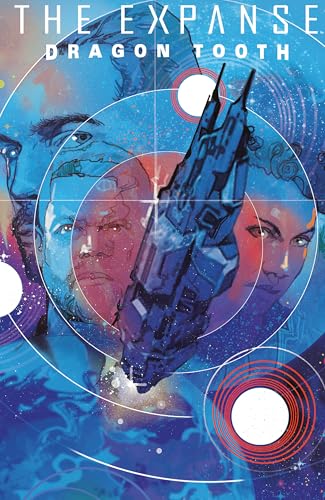
The Expanse: Dragon Tooth (Graphic Novel)
The official bridge between the show and Book 7. Fill the 30-year gap with this canonical comic series.
Price as of Oct 9, 09:11 PM UTC. Subject to change.

Jurassic Park - 4K Ultra HD
Experience the movie that defined a generation in stunning 4K resolution. A visual masterpiece.
Price as of Oct 9, 09:11 PM UTC. Subject to change.

The Art of The Legend of Vox Machina (Hardcover)
The official art book — stunning behind-the-scenes visuals from the making of the series.
Price as of Oct 9, 09:11 PM UTC. Subject to change.
You might also like
Clear and Present Danger review – The one about betrayal
The one where the enemy is Washington. A deniable war, then a political inconvenience, then men on a mountainside with no radio and nobody coming. Ryan and Clark go anyway. Furious, tightly built and genuinely moral. Rating: 5/5.
The Cardinal of the Kremlin review – The spy novel
Clancy's purest espionage novel and his most underrated. An asset thirty years deep, a KGB investigation closing around him, and an extraction that has to be improvised. Also where John Clark first walks on. Rating: 5/5.
Tom Clancy books in order – Every Jack Ryan novel ranked
Publication order is the right default and The Hunt for Red October is the right first book. Story order is a curiosity, not a plan — Without Remorse opens the timeline but is the wrong tone to start on.