
Debt of Honor review – The ending everyone remembers
A financial attack, a Pacific shooting war, and a last chapter that reads very differently after 2001. Ambitious, uneven, and impossible to ignore. 4/5.
This post contains affiliate links. We may earn a commission if you make a purchase, at no extra cost to you. As an Amazon Associate, Dadnology earns from qualifying purchases.
📖 Introduction
⚓ This review is part of our guide to Tom Clancy books in order — every Ryanverse novel in publication and story order, with the honest answer to where to start.
There is no reviewing Debt of Honor without addressing the last chapter, so let us do it first and get it out of the way.
The novel ends with a single aircraft being flown deliberately into the United States Capitol during a joint session of Congress, killing most of the federal government at once. It was published in 1994. Seven years later a great many people went looking for this book.
That is an accident of history and it is not a literary judgement. It has, however, completely swallowed the novel’s reputation — this is now “the one with the ending”, and almost nothing is said about the four hundred pages before it. Which is a shame, because the opening act contains one of the best ideas Clancy ever had, and because the book has a genuine problem that deserves more attention than the ending gets.
🧠 The story
Start with the good, because it is very good.
A cabal of Japanese industrialists, having taken effective control of their government, opens with an attack nobody in thriller fiction had thought of: they do not bomb anything. They plant sabotage code inside the American securities clearing system, engineer a market collapse, and then destroy the record of who traded what. When the dust settles, the United States financial system does not know who owns anything.
That is a superb premise, and the section built on it is the most original writing in Clancy’s career. There is no enemy to shoot. The crisis is entirely informational, the response has to be improvised by people who understand settlement mechanics, and the eventual solution — a decision to simply void the day and restore from an earlier record — is both mundane and completely gripping. Clancy the procedural writer at full power on a subject nobody expected him to touch.
The second act is a Pacific shooting war over the Mariana Islands, and it is competent Clancy naval writing without being remarkable. Ryan, now National Security Advisor, runs the response.
And then the third act ends the way it ends, and the story continues directly into Executive Orders.
🎭 Characters and craft
The problem is the antagonists, and it needs saying plainly rather than tiptoed around.
The Japanese characters in this novel are drawn crudely. Reviewers said so at the time — Christopher Buckley in the New York Times used the word racist and compared the portrayal to wartime propaganda posters — and re-reading it now, the criticism lands. The industrialists are motivated by a nationalist grievance rendered as cultural essence rather than politics, and the novel repeatedly treats Japanese behaviour as explicable by Japaneseness in a way it would never do for an American character.
This matters for how you read the book, not whether you read it. Clancy was writing at the height of American anxiety about Japanese economic power, and the novel is a period document of that anxiety as much as a thriller. It is worth knowing that going in.
The craft elsewhere is uneven. Ryan is at his least interesting — National Security Advisor is another rung further from the work — and the enormous cast means several strands get perhaps two scenes each. The financial material is superb, the naval material is fine, the political material is thin.
👨👧 The dad perspective
The financial act is the reason to read this one, and it is worth saying why it lands harder now than it did in 1994.
Clancy’s insight was that a modern country is not really held together by its weapons but by its records — who owns what, who owes what, and everyone agreeing on the answer. Attack the record and you do not need to attack anything else. Thirty years of ransomware, outages and payment-system failures later, that reads less like a thriller premise and more like a Tuesday.
There is a specific pleasure in the sequence where the response is worked out: a small number of people in a room, most of them not senior, establishing what can be reconstructed and what cannot. It is competence-engine writing at its purest, applied to spreadsheets.
Reading commitment: long, and structurally uneven — the first act is gripping, the middle sags, the ending is short and stays with you.
Audiobook: works, and the financial material is surprisingly good listening. Audible’s 30-day trial covers it; check the catalogue on the day.
Age guidance: 16 and up. The naval combat is conventional, but the ending is upsetting in a way that is difficult to prepare somebody for, and the caricatured antagonists are worth a conversation rather than an unremarked handover.
✅ Pros & cons
Pros
- The financial-attack premise is one of the most original ideas in the genre
- The clearing-system crisis is superb procedural writing on an unexpected subject
- Reads far more presciently now about record-keeping than it did in 1994
- The final chapter is genuinely unforgettable
- Sets up Executive Orders, which is the stronger of the pair
Cons
- The Japanese antagonists are crudely drawn — criticised on release and rightly so
- The Pacific war act is competent but unremarkable, and it is the longest
- Ryan as National Security Advisor is his least engaging incarnation
- Structurally lopsided: the best material is over by the halfway mark
Conclusion: Remembered for the wrong page
Debt of Honor deserves to be known for its first two hundred pages rather than its last two. The idea that you could bring a superpower to its knees by corrupting its bookkeeping was genuinely visionary, and the section that plays it out is among the best things Clancy wrote.
Four out of five, and the missing star is not the ending — it is the antagonists. A thriller can survive a slow middle act. It is harder to fully recommend one whose villains are drawn the way these are, and pretending otherwise would be dishonest.
Read it for the logic bomb, and read it because you cannot start Executive Orders without it.
The Final Word: a brilliant idea, an uneven book, and a final page that history took out of its author’s hands. A four.
Is Debt of Honor worth reading?
What is the ending of Debt of Honor?
Do I need to read it before Executive Orders?
Was Debt of Honor criticised when it came out?
What is the logic bomb in the novel?
Keep this in your inbox
One email a week: what we actually watched, built and reviewed — the stuff worth a dad's time. No hype, no daily spam.
Dadnology Weekly
One email a week: the LEGO, gaming and movie news worth a dad's time — plus what we actually reviewed. No hype, no daily spam.
Disclaimer: This review and its visuals were created with the help of AI. Some links may be affiliate links – we may earn a commission if you make a purchase, at no extra cost to you.
Current deals in Books & media
Verified live discounts tracked on Amazon
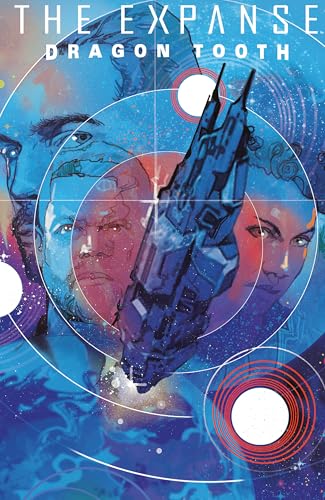
The Expanse: Dragon Tooth (Graphic Novel)
The official bridge between the show and Book 7. Fill the 30-year gap with this canonical comic series.
Price as of Oct 9, 09:11 PM UTC. Subject to change.

Jurassic Park - 4K Ultra HD
Experience the movie that defined a generation in stunning 4K resolution. A visual masterpiece.
Price as of Oct 9, 09:11 PM UTC. Subject to change.

The Art of The Legend of Vox Machina (Hardcover)
The official art book — stunning behind-the-scenes visuals from the making of the series.
Price as of Oct 9, 09:11 PM UTC. Subject to change.
You might also like
The Sum of All Fears review – Too big, still frightening
The escalation sequence is genuinely terrifying and the technical account of the device is the best thing of its kind in fiction. It sits inside a book that has started to sprawl, with subplots that add pages rather than pressure. Frightening and flabby at once. Rating: 4/5.
The Teeth of the Tiger review – The handover book
A franchise reset with a genuinely good idea underneath it and not enough weight on top. The Campus is a smart premise, Jack Jr is a thin protagonist, and the book skips past the moral question its whole plot depends on. Readable, brisk, and the least essential Clancy. Rating: 4/5.
Tom Clancy books in order – Every Jack Ryan novel ranked
Publication order is the right default and The Hunt for Red October is the right first book. Story order is a curiosity, not a plan — Without Remorse opens the timeline but is the wrong tone to start on.