
The Sum of All Fears review – Too big, still frightening
A lost Israeli bomb, a stadium in Denver, and two superpowers reading each other wrong at speed. Terrifying in its middle, bloated at its edges. 4/5.
This post contains affiliate links. We may earn a commission if you make a purchase, at no extra cost to you. As an Amazon Associate, Dadnology earns from qualifying purchases.
📖 Introduction
⚓ This review is part of our guide to Tom Clancy books in order — every Ryanverse novel in publication and story order, with the honest answer to where to start.
The opening of The Sum of All Fears is one of the best setups Clancy ever wrote, and it takes about four pages.
During the Yom Kippur War in 1973, an Israeli aircraft is shot down over Syria carrying a nuclear weapon nobody will ever be able to admit was aboard. The bomb goes into the ground in a farmer’s field. It stays there for eighteen years while the world changes around it, and then somebody digs it up.
What makes it a great premise is not the bomb. It is the deniability. A weapon that officially never existed, in the hands of people who understand that its real power is not the blast but the question everyone will ask afterwards: whose was it?
Because the plan here is not to destroy an American city. The plan is to detonate a device in an American city and arrange matters so that the United States concludes the Soviet Union did it, at a moment when there is no time to check.
That idea is worth a five-star novel. This is a four-star novel with a five-star idea in it.
🧠 The story
The book’s spine is escalation, and when Clancy is on that spine he is untouchable.
The device goes off at a stadium in Denver during a Super Bowl, and it is coordinated with a staged incident involving American forces in Berlin. What follows is roughly a hundred pages of two nuclear powers misreading each other in real time — communications degraded, senior people dead or unreachable, a President under pressure to respond before the window closes, and a set of institutional procedures that were designed for exactly this and are nonetheless not equal to it.
Clancy tracks it with terrifying patience. Nobody in the sequence behaves stupidly. Every decision is defensible on the information available. And the situation still marches towards a nuclear exchange, because the information available is wrong and there is no time to establish that it is. It is the most convincing account of accidental catastrophe in popular fiction, and it is genuinely frightening in a way very little in the genre manages.
Ryan, as Deputy Director of Central Intelligence, is the man who breaks the loop — not with heroics but by getting access to a communications channel and simply talking to the other side. That resolution is the whole thesis of the competence engine in miniature: the catastrophe is stopped by somebody insisting on checking.
🎭 Characters and craft
And then there is everything else, which is where the four comes from.
By 1991 the novels had started to expand outward, and this one carries a substantial subplot about Ryan’s professional standing, another about his marriage, and a good deal of Washington positioning that exists mostly to set up who is where when the crisis arrives. Some of that is necessary. A lot of it is not, and it slows the first three hundred pages badly.
The personal material is the weakest of it. Ryan’s marriage comes under strain through a misunderstanding that the novel keeps alive far longer than is credible, and the reader is well ahead of the characters throughout. It is the kind of subplot that would have been cut in 1984.
The terrorists are also thin — motivated, competent, and not much more. Clancy is far more interested in the device and the escalation than in the people carrying them, which is defensible given what the book is about but leaves a hole where an antagonist should be.
The technical writing, though, is extraordinary. The account of building a working weapon from a damaged one is detailed, plausible and delivered without any relish at all. Clancy understood that the only responsible way to write that material is flatly, and he does.
👨👧 The dad perspective
Worth being straightforward: the detonation sequence is hard to read.
Clancy does not cut away. He describes what a nuclear weapon does to a crowded stadium and the surrounding city with the same procedural care he gives to a sonar contact, and the effect is not spectacle. It is horror delivered in a technical register, which turns out to be far worse than any amount of description.
That is a deliberate and defensible choice, and it is also the reason this is not a book to put on in the background. It asks something of you.
The other thing that lands differently with age is the escalation itself. At twenty it reads as a thriller mechanism. At forty, with some experience of how decisions actually get made under pressure by tired people with partial information, it reads as an entirely plausible account of how something irreversible happens. Nobody in it is a fool.
Reading commitment: heavy. Around eight hundred pages, and the first third is slow. This is a holiday book, not a school-night book.
Audiobook: a reasonable way to get through the slower opening. Audible’s 30-day trial covers it — check the catalogue on the day rather than assuming.
Age guidance: 16 and up, mainly for the attack sequence. There is little else here that a younger reader could not handle, but that section is genuinely distressing.
✅ Pros & cons
Pros
- A superb premise established in four pages — the lost, deniable weapon
- The escalation sequence is the most frightening thing Clancy wrote
- Technically precise about the device without ever being lurid
- The resolution is pure competence engine: catastrophe stopped by checking
- Ryan at his most effective as an analyst rather than an authority
Cons
- Around eight hundred pages, and the first third drags
- The marital subplot is drawn out well past credibility
- The terrorists are functional rather than characters
- This is where the sprawl of the late novels visibly begins
Conclusion: A great novel inside a long one
The Sum of All Fears contains perhaps the single best sustained sequence in Clancy’s career, and it makes you walk three hundred pages to reach it.
Four out of five is the honest reckoning. The escalation material is five-star work — genuinely frightening, morally serious, and built on the insight that catastrophe does not require anybody to be stupid or evil, only to be wrong at speed. The novel around it has started to accumulate the subplots and positioning that would swallow the later books whole.
Read it for the middle. Be patient with the beginning. And be ready for the detonation, because it is not a set piece and it is not meant to be enjoyed.
The Final Word: the most frightening thing he wrote, inside the first book that needed cutting. A solid four.
Is The Sum of All Fears worth reading?
Where does the bomb in the novel come from?
Is the book very different from the 2002 film?
Do I need to read the earlier books first?
How disturbing is the attack sequence?
Keep this in your inbox
One email a week: what we actually watched, built and reviewed — the stuff worth a dad's time. No hype, no daily spam.
Dadnology Weekly
One email a week: the LEGO, gaming and movie news worth a dad's time — plus what we actually reviewed. No hype, no daily spam.
Disclaimer: This review and its visuals were created with the help of AI. Some links may be affiliate links – we may earn a commission if you make a purchase, at no extra cost to you.
Current deals in Books & media
Verified live discounts tracked on Amazon
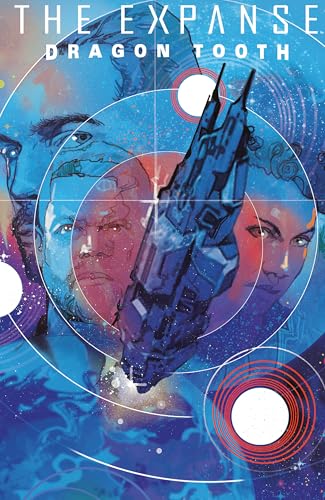
The Expanse: Dragon Tooth (Graphic Novel)
The official bridge between the show and Book 7. Fill the 30-year gap with this canonical comic series.
Price as of Oct 9, 09:11 PM UTC. Subject to change.

Jurassic Park - 4K Ultra HD
Experience the movie that defined a generation in stunning 4K resolution. A visual masterpiece.
Price as of Oct 9, 09:11 PM UTC. Subject to change.

The Art of The Legend of Vox Machina (Hardcover)
The official art book — stunning behind-the-scenes visuals from the making of the series.
Price as of Oct 9, 09:11 PM UTC. Subject to change.
You might also like
Debt of Honor review – The ending everyone remembers
The financial-attack opening is one of the best ideas in the genre, and the last chapter is unforgettable. Between them sits a Pacific war and a portrayal of the antagonists that reviewers called out on release and that has not improved with time. Ambitious and flawed. Rating: 4/5.
The Teeth of the Tiger review – The handover book
A franchise reset with a genuinely good idea underneath it and not enough weight on top. The Campus is a smart premise, Jack Jr is a thin protagonist, and the book skips past the moral question its whole plot depends on. Readable, brisk, and the least essential Clancy. Rating: 4/5.

The Sum of All Fears (2002) review – Right scene, wrong Ryan
The weakest of the four Clancy adaptations we have rated, and not by as much as its reputation suggests. The detonation sequence is superb and unusually grim, Morgan Freeman is excellent, and the central recasting undoes the character. Worth watching once for the middle twenty minutes. 3.5/5.