
Executive Power review – Rapp behind a desk, briefly
Rapp's cover is blown, so they give him an advisory job he immediately ignores. A Saudi prince and an assassin are engineering a war. 5/5.
This post contains affiliate links. We may earn a commission if you make a purchase, at no extra cost to you. As an Amazon Associate, Dadnology earns from qualifying purchases.
📖 Introduction
🎯 This review is part of our guide to Mitch Rapp books in order — every Vince Flynn novel in sequence, with the honest answer to where to start.
Every long-running operative series eventually has to answer an awkward question: what happens when everybody knows who your guy is?
Executive Power is where Vince Flynn answers it. Rapp’s cover is gone. His name is known, his face is known, and the specific value he provided — a man who could go anywhere because nobody had heard of him — no longer exists. So the agency does what large organisations do with an asset that has become a liability: it promotes him. He is made counter-terrorism adviser to Irene Kennedy, given a desk, and expected to advise.
He advises for approximately as long as it takes for something to go wrong somewhere, and then volunteers.
That tension — a man who has been institutionally retired from the only thing he is good at, repeatedly finding reasons to do it anyway — runs under the whole novel and gives it a spine the plot alone would not provide.
🧠 The story
The plot is the most intricate Flynn had attempted, and it holds together.
A radical member of the Saudi royal family and a Palestinian-American assassin are running a campaign whose logic is genuinely chilling: manufacture atrocities on both sides, at the right tempo and with the right attribution, and international pressure will do the rest. The aim is not to win a war but to force a political settlement by making the alternative unbearable. Nobody has to be persuaded of anything; they simply have to be made desperate enough.
It takes the novel from a hostage rescue in the Philippines through Monte Carlo, Amman, Jerusalem, Hebron, Cannes and New York, and Flynn keeps it legible, which is not a small thing at that scale.
The Philippines opening is the standout. It is a straightforward rescue that goes wrong in a small, plausible way, and the sequence is the best pure action writing in the run — economical, geographically clear, and honest about how quickly a plan degrades.
🎭 Characters and craft
The assassin known as David is Flynn’s best antagonist. Where the earlier villains are organisational positions, this one has a coherent internal life: an American upbringing, a chosen identity, and a professionalism that mirrors Rapp’s exactly. The novel is quite deliberate about the mirroring — two men with the same skills, the same tolerance for what the job requires, and different flags.
Rapp himself is at an interesting stage. The advisory role forces him to argue rather than act, which does not suit him and which Flynn uses well; several of the book’s better scenes are Rapp losing an argument he is right about because he has no standing to make it in that room.
Kennedy continues to be the series’ quiet strength, managing a man she cannot control and an institution that does not want to be managed.
The weakness is proportion. Six countries and a large cast means several threads get very little room, and a couple of the political subplots in Washington exist mainly to remind you they are there. This is the first Flynn where the machinery is visible.
The regional politics are handled directly and with clear sympathies. Flynn is not attempting balance and does not pretend to be; readers who want the region treated even-handedly will find this uncomfortable, and it is fair to say so plainly rather than pretend the book is neutral.
👨👧 The dad perspective
The thread worth reading for is the professional one, and it is more relatable than a book about assassins has any right to be.
Rapp is very good at a specific thing. Circumstances have made him unable to do that thing. The organisation’s solution is to move him into a role where he advises other people on how to do it — which is, on paper, a promotion, and which is in practice being retired while still turning up. He handles it badly, keeps finding excuses to do the work himself, and undermines the people who now hold his old job.
Anyone who has watched a genuinely excellent practitioner be promoted into management will recognise every part of this, including the bit where he is not actually wrong about how it should be done and is still making things worse.
Reading commitment: long and fast, but the international sprawl means it rewards consecutive sessions.
Audiobook: manageable, though six countries and a big cast is more work by ear. Audible’s 30-day trial covers it; check what is in the catalogue on the day.
Age guidance: 16 and up. The violence is series-standard; the political content is the heavier element and benefits from some context.
🔍 The blown-cover problem
It is worth dwelling on the premise, because it is the most interesting structural decision in the series and Flynn only half-uses it.
An operative whose identity is known is not simply less effective — he is a different kind of asset. He cannot travel quietly, he cannot approach a target, and every organisation that wants to hurt the United States now has a face and a name to work with. The honest version of this book would have had Rapp genuinely unable to do the work, and would have found something else for him to be.
Flynn does not quite go there. Rapp keeps finding operational reasons to be in the field, and the novel keeps granting them. What survives is the friction rather than the consequence: he is constantly arguing for permission he used to have automatically, and the arguments are the best scenes in the book.
It is a missed opportunity and a good read at the same time, which is roughly the summary of the whole novel.
✅ Pros & cons
Pros
- The most intricate plot in the run, and it stays legible across six countries
- David is Flynn's best antagonist — a genuine mirror rather than an obstacle
- The Philippines rescue is the best pure action sequence in the series
- Takes seriously what happens to an operative whose cover is gone
- Rapp forced to argue rather than act produces his best character scenes
Cons
- Too many threads for the space — several get two scenes and vanish
- The Washington subplots are the thinnest material in the book
- Handles Middle East politics with openly declared sympathies rather than balance
- The first book where you can see the machinery working
Conclusion: The plotter’s book
Executive Power is the most ambitious construction in the early Flynn run and the one that shows most clearly what he had learned since the debut. The central idea — that atrocity can be a negotiating instrument rather than an end — is genuinely disturbing and the book follows it through without flinching.
Five out of five, with the honest note that it is a busier and slightly less emotionally weighted book than Separation of Power. What it gains in scope it spends a little of in focus.
Read it for the Philippines opening, for David, and for the surprisingly sharp portrait of a specialist being managed out of his own speciality.
The Final Word: Flynn’s most intricate plot, and the book that finally asks what Rapp is for. Five out of five.
Is Executive Power worth reading?
Do I need to read the earlier books first?
What is Executive Power about?
Is this book politically sensitive?
How does it compare to the earlier Mitch Rapp books?
Keep this in your inbox
One email a week: what we actually watched, built and reviewed — the stuff worth a dad's time. No hype, no daily spam.
Dadnology Weekly
One email a week: the LEGO, gaming and movie news worth a dad's time — plus what we actually reviewed. No hype, no daily spam.
Disclaimer: This review and its visuals were created with the help of AI. Some links may be affiliate links – we may earn a commission if you make a purchase, at no extra cost to you.
Current deals in Books & media
Verified live discounts tracked on Amazon
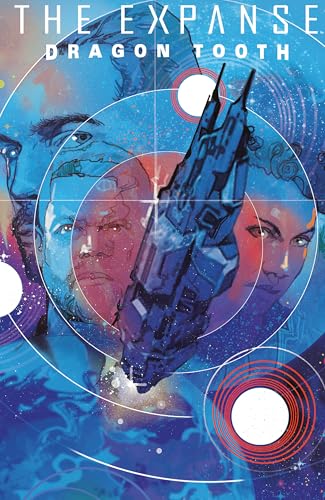
The Expanse: Dragon Tooth (Graphic Novel)
The official bridge between the show and Book 7. Fill the 30-year gap with this canonical comic series.
Price as of Oct 9, 09:11 PM UTC. Subject to change.

Jurassic Park - 4K Ultra HD
Experience the movie that defined a generation in stunning 4K resolution. A visual masterpiece.
Price as of Oct 9, 09:11 PM UTC. Subject to change.

The Art of The Legend of Vox Machina (Hardcover)
The official art book — stunning behind-the-scenes visuals from the making of the series.
Price as of Oct 9, 09:11 PM UTC. Subject to change.
You might also like
Memorial Day review – The one with the second bomb
The best premise in the series: the bomb you find is the one they wanted you to find. Tense, tightly built and genuinely unsettling about how relief makes people stop looking. Also the book where Rapp's methods get hardest to watch. Rating: 5/5.
Separation of Power review – The bill for the last book
The direct continuation, and a better-structured book than the one before it. Two plots that genuinely converge, real personal cost for Rapp, and a domestic conspiracy that is nastier than the nuclear one. Read straight after The Third Option. Rating: 5/5.
Mitch Rapp books in order – Vince Flynn's series explained
Start with Transfer of Power, not with the chronologically first book. Read in publication order. And know that only the first fourteen novels are Vince Flynn's own — everything after The Last Man was written by somebody else.