
Separation of Power review – The bill for the last book
Irene Kennedy is being destroyed from inside Washington while Iraqi warheads sit underground. Rapp wants out and cannot leave. 5/5.
This post contains affiliate links. We may earn a commission if you make a purchase, at no extra cost to you. As an Amazon Associate, Dadnology earns from qualifying purchases.
📖 Introduction
🎯 This review is part of our guide to Mitch Rapp books in order — every Vince Flynn novel in sequence, with the honest answer to where to start.
Separation of Power picks up while the previous book’s dust is still in the air, and it is the point where Vince Flynn demonstrates he can build something more complicated than a siege.
Two things are happening.
At home, Irene Kennedy has just been confirmed as Director of the CIA, and a group of senior American politicians have decided this cannot be allowed to stand. Their plan is not to argue with her appointment; it is to destroy her personally, in a way that also takes down the President who put her there. They have help from a quarter nobody expects, and the campaign is well enough constructed that being innocent is no defence.
Abroad, Iraq’s nuclear programme is far closer to a working weapon than anyone has admitted, the warheads are underground, and Israel has made it clear it will act. Which means a very short window for somebody to do it more quietly first.
Mitch Rapp, meanwhile, wants out. He has been shot by his own side, he has had enough, and he cannot leave — because the man who ordered it is still in office, and retiring with that unresolved is a way of dying later.
🧠 The story
The construction is the achievement here. Flynn’s earlier books run one plot well; this one runs two that start unrelated and converge properly, so that by the final third the domestic conspiracy and the Iraqi operation are constraining each other. Rapp cannot deal with Washington because he is underground in Iraq. He cannot refuse Iraq because the people who want him gone would very much like him unavailable.
The Iraq material is Flynn at his most procedural — infiltration, a subterranean facility, a small team with a narrow timetable and no possibility of extraction if it goes wrong. It is tense in the way the German sequence of the last book was tense: because it is specific.
The Washington material is nastier and better. Flynn understands that a modern political assassination is not a bullet but a story — a document, a source, a hearing, an implication that cannot be disproved quickly enough to matter. Kennedy spends the novel unable to fight back through official channels because the official channels are the weapon.
🎭 Characters and craft
Rapp is at his most human here, largely because the book takes something from him.
His relationship with Anna Rielly has been the one part of his life that is not the job, and his obsession with finding the man who ordered his death eats it. Flynn does not stage this as a tragic sacrifice; he stages it as a man repeatedly choosing the thing he cannot let go of over the person in front of him, and Rielly eventually declining to keep waiting. It is the most honest personal writing in the early books, and it makes the “one last mission” framing mean something.
Kennedy is the other centre. Flynn writes her as genuinely formidable — not a handler for Rapp’s adventures but a professional under sustained attack who keeps operating. Her position is impossible: she is the one person who could clear this up quickly by using what she knows, and using it would confirm exactly what her enemies allege about how the agency operates.
The antagonists remain the weak spot. The conspiracy is well constructed at the level of mechanism and thin at the level of motive — several of the participants simply want power, which is true but not interesting. Flynn’s villains are always better as systems than as men.
👨👧 The dad perspective
The thread worth reading this for is the retirement one, and it is more grown-up than the series usually gets.
Rapp is not tired of the work. He is tired of what the work has made him, and he can see clearly that the longer he does it the fewer people he will have left. The novel understands something specific: that leaving a job like his is not a decision but a negotiation with everything you have already done, and that some of those debts do not let you go.
Anyone who has had a period of work eat the parts of life that were supposed to be protected from it will recognise the shape. The details are absurd — Rapp’s version involves warheads — but the argument he keeps having with Rielly, where he is technically right about the urgency and completely wrong about the priority, is one a lot of households have had.
Reading commitment: moderate to long, and it needs The Third Option first. The two together are a satisfying weekend.
Audiobook: good, though the two-plot structure takes more attention by ear than the siege books. Audible’s 30-day trial covers it — check the catalogue on the day.
Age guidance: 16 and up. The violence is in line with the series; the political material is the denser part.
🔍 Where it leaves the series
The book closes a two-novel arc rather than a single story, and it is worth noticing what it has cost by the end: a relationship, a retirement Rapp genuinely wanted, and any remaining illusion that doing the job well is what keeps you safe. The series is harder from here on.
✅ Pros & cons
Pros
- Two plots that genuinely converge and constrain each other — Flynn's best structure
- Irene Kennedy written as a formidable professional under sustained attack
- The Rapp and Rielly breakdown is treated as a real cost, not a plot beat
- The Iraq infiltration is tight, specific and properly tense
- Understands that modern political assassination is a story, not a bullet
Cons
- Cannot be read without The Third Option before it
- The conspirators' motives are thin — several simply want power
- The foreign-help element strains credulity more than the rest of the plot
- Prose remains strictly functional throughout
Conclusion: The best-built one
Separation of Power is not the best entry point to Vince Flynn and it is probably his best-constructed novel. It resolves what the previous book started, it runs two plots that actually need each other, and it charges its protagonist something he cannot get back.
Five out of five. Read The Third Option and this one back to back — they are effectively a single long book, and together they are the strongest stretch in the series.
The Final Word: the one where the structure catches up with the ideas, and where Rapp pays for the job in something other than blood. Five out of five.
Is Separation of Power worth reading?
Do I need to read The Third Option first?
What happens between Rapp and Anna Rielly?
Is this the best Mitch Rapp book?
How political is Separation of Power?
Keep this in your inbox
One email a week: what we actually watched, built and reviewed — the stuff worth a dad's time. No hype, no daily spam.
Dadnology Weekly
One email a week: the LEGO, gaming and movie news worth a dad's time — plus what we actually reviewed. No hype, no daily spam.
Disclaimer: This review and its visuals were created with the help of AI. Some links may be affiliate links – we may earn a commission if you make a purchase, at no extra cost to you.
Current deals in Books & media
Verified live discounts tracked on Amazon
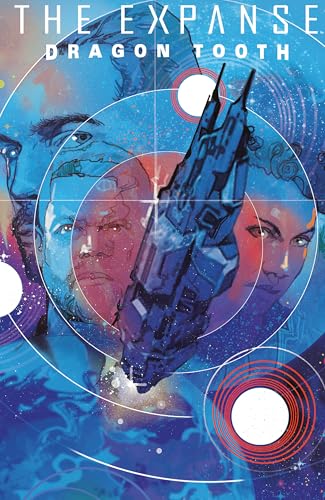
The Expanse: Dragon Tooth (Graphic Novel)
The official bridge between the show and Book 7. Fill the 30-year gap with this canonical comic series.
Price as of Oct 9, 09:11 PM UTC. Subject to change.

Jurassic Park - 4K Ultra HD
Experience the movie that defined a generation in stunning 4K resolution. A visual masterpiece.
Price as of Oct 9, 09:11 PM UTC. Subject to change.

The Art of The Legend of Vox Machina (Hardcover)
The official art book — stunning behind-the-scenes visuals from the making of the series.
Price as of Oct 9, 09:11 PM UTC. Subject to change.
You might also like
Memorial Day review – The one with the second bomb
The best premise in the series: the bomb you find is the one they wanted you to find. Tense, tightly built and genuinely unsettling about how relief makes people stop looking. Also the book where Rapp's methods get hardest to watch. Rating: 5/5.
Executive Power review – Rapp behind a desk, briefly
The most globe-trotting book in the run, and the one that finally asks what Rapp is for once everybody knows his name. Intricate, fast, and unusually good on how an atrocity can be a negotiating position. Rating: 5/5.
Mitch Rapp books in order – Vince Flynn's series explained
Start with Transfer of Power, not with the chronologically first book. Read in publication order. And know that only the first fourteen novels are Vince Flynn's own — everything after The Last Man was written by somebody else.