
Memorial Day review – The one with the second bomb
A nuclear device is intercepted at Charleston and everyone exhales. Rapp works out that the interception was the plan. The best premise in the series. 5/5.
This post contains affiliate links. We may earn a commission if you make a purchase, at no extra cost to you. As an Amazon Associate, Dadnology earns from qualifying purchases.
📖 Introduction
🎯 This review is part of our guide to Mitch Rapp books in order — every Vince Flynn novel in sequence, with the honest answer to where to start.
Memorial Day has the single best idea in the series, and it is worth stating plainly because everything else follows from it.
American intelligence intercepts a nuclear device at Charleston. This is, on any ordinary reading, a triumph. The threat was real, the system found it, the disaster did not happen. Senior people begin talking about how the intelligence apparatus performed exactly as designed. There is an enormous, entirely understandable exhalation.
Mitch Rapp does not exhale, because something is wrong with the shape of it. The operation that delivered that weapon was sloppy — sloppier than the people who planned it have ever been, sloppier than getting a nuclear device across an ocean requires. And a professional does not become careless at the last step.
The device was meant to be found. It was meant to be found precisely so that everyone would stop looking.
The second one is already here.
🧠 The story
That premise gives Flynn something none of his other books have: a clock that everyone except the protagonist believes has already stopped.
Rapp spends the first half of the novel fighting the relief. This is far more interesting than fighting a conspiracy, because nobody obstructing him is corrupt or stupid — they are people who have just been through something appalling, been told it is over, and have entirely reasonable grounds for wanting that to be true. Convincing them otherwise requires him to argue that success was actually the enemy’s plan, which is a very hard thing to sell to a tired room.
Once the pursuit starts it is the tightest writing in the series. The hunt for al-Yamani and the second device runs on a hard deadline over a holiday weekend, with the target being Washington itself, and Flynn keeps the geography and the timeline clean throughout. There is very little fat.
🎭 Characters and craft
Rapp is back in the field here after a spell on desk duty for insubordination, which is a nice piece of continuity — the man who spent Executive Power being managed out of his speciality has been let back in because the situation is bad enough that nobody can afford the principle.
He is also at his hardest. This is the book where his methods for getting information out of people are shown at length, and the novel does not treat them as a regrettable necessity — it treats them as correct. That is the most uncomfortable thing in the series and it should be said directly rather than tiptoed around. Flynn’s position is clear, it is argued for in the text, and a reader who disagrees with it will find this book difficult in a way the earlier ones are not.
Whether that is a flaw depends on what you want from the shelf. As a matter of craft it is undeniably effective; Flynn is writing a scenario constructed to make his answer the only available one, which is what a thesis novel does. As a matter of argument it is a scenario, not evidence, and the novel is not much interested in the difference.
Elsewhere the craft is his best. The supporting cast is smaller than in Executive Power, the plot has one spine rather than six, and the prose does what it always does: gets out of the way.
👨👧 The dad perspective
The reason this book stays with you is not the bomb. It is the relief.
Flynn has noticed something genuinely true about institutions and about people: that the moment after a crisis is survived is the moment everybody stops paying attention, and that this is entirely human and completely exploitable. The system did not fail here through incompetence. It failed because it succeeded, and success is exhausting, and exhausted people want to be finished.
Anybody who has managed anything will recognise it — the bug you fixed that was masking the real one, the near-miss that got treated as a resolved incident. Flynn scales it up to a nuclear weapon, and the mechanism is exactly the same.
It is also the most straightforwardly gripping thing on this shelf. If you want one book that explains why people read fifteen of these, it is this one.
Reading commitment: the tightest in the run. Single plot, hard deadline, and genuinely difficult to put down.
Audiobook: excellent — one spine and a clear timeline make it the easiest of the series to follow by ear. Audible’s 30-day trial covers it; check the catalogue on the day rather than assuming.
Age guidance: 16 and up, and we would lean older. The interrogation material is sustained and the novel’s position on it is not neutral. This is one to discuss rather than simply hand over.
✅ Pros & cons
Pros
- The best premise in the series — the weapon you find is the one they wanted found
- Genuinely insightful about how relief makes institutions stop looking
- Flynn's tightest construction: one spine, a hard clock, almost no fat
- Good continuity — Rapp back in the field after being managed out of it
- The most purely gripping book on the shelf
Cons
- The interrogation material is sustained and the novel argues for it rather than examining it
- Constructs a scenario in which its own answer is the only possible one
- The antagonists remain functional rather than realised
- Least suitable of the series for handing to a younger reader unremarked
Conclusion: The best idea he had
Memorial Day is Vince Flynn at the peak of his craft. The premise is superb, the execution is disciplined, and the observation underneath it — that being told the danger has passed is itself a vulnerability — is the smartest thing in the series.
It is also the book where the series’ politics are least avoidable, and an honest recommendation has to include that. What you make of the interrogation sequences will determine whether you finish this thinking Flynn was a brilliant plotter or a brilliant plotter making an argument you did not agree to hear.
For us it is a five: for the idea, for the clock, and for the fact that the thing everyone celebrates in chapter four is the thing that nearly kills them all.
The Final Word: the best premise and the tightest execution in the run, with a thesis attached that you should know about going in. Five out of five.
Is Memorial Day worth reading?
Can I read Memorial Day as a standalone?
What is Memorial Day about?
Is the interrogation material difficult?
Where does Memorial Day sit in the series?
Keep this in your inbox
One email a week: what we actually watched, built and reviewed — the stuff worth a dad's time. No hype, no daily spam.
Dadnology Weekly
One email a week: the LEGO, gaming and movie news worth a dad's time — plus what we actually reviewed. No hype, no daily spam.
Disclaimer: This review and its visuals were created with the help of AI. Some links may be affiliate links – we may earn a commission if you make a purchase, at no extra cost to you.
Current deals in Books & media
Verified live discounts tracked on Amazon
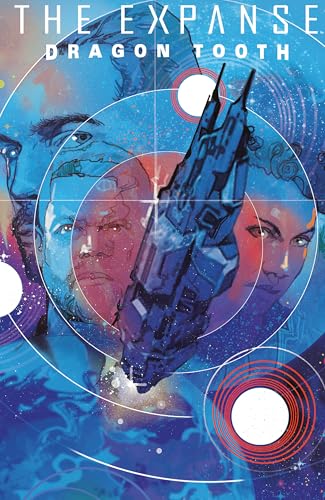
The Expanse: Dragon Tooth (Graphic Novel)
The official bridge between the show and Book 7. Fill the 30-year gap with this canonical comic series.
Price as of Oct 9, 09:11 PM UTC. Subject to change.

Jurassic Park - 4K Ultra HD
Experience the movie that defined a generation in stunning 4K resolution. A visual masterpiece.
Price as of Oct 9, 09:11 PM UTC. Subject to change.

The Art of The Legend of Vox Machina (Hardcover)
The official art book — stunning behind-the-scenes visuals from the making of the series.
Price as of Oct 9, 09:11 PM UTC. Subject to change.
You might also like
Executive Power review – Rapp behind a desk, briefly
The most globe-trotting book in the run, and the one that finally asks what Rapp is for once everybody knows his name. Intricate, fast, and unusually good on how an atrocity can be a negotiating position. Rating: 5/5.
Separation of Power review – The bill for the last book
The direct continuation, and a better-structured book than the one before it. Two plots that genuinely converge, real personal cost for Rapp, and a domestic conspiracy that is nastier than the nuclear one. Read straight after The Third Option. Rating: 5/5.
Mitch Rapp books in order – Vince Flynn's series explained
Start with Transfer of Power, not with the chronologically first book. Read in publication order. And know that only the first fourteen novels are Vince Flynn's own — everything after The Last Man was written by somebody else.