
John Clark – The best character Tom Clancy ever wrote
Jack Ryan has the films, the games and the TV series. John Clark has the two best books. Why Clancy's supporting character quietly became his finest creation.
This post contains affiliate links. We may earn a commission if you make a purchase, at no extra cost to you. As an Amazon Associate, Dadnology earns from qualifying purchases.
The character nobody planned
Jack Ryan has four screen incarnations, a television series, a video-game lineage and his name on the spine of novels written a decade after his creator died. He is the franchise.
John Clark first turns up as a supporting player. He is a fixer — the man Langley calls when a situation requires somebody who will actually go and deal with it, and who can be disowned afterwards. He has no arc in those early appearances. He is a tool the plot picks up.
And then, in 1993, Clancy went back and wrote him a life, and produced the best book of his career outside the debut.
That is the strange fact at the centre of the Ryanverse. Two of its finest novels are not Jack Ryan novels at all. They belong to the man in the background, and the reason is worth spelling out, because it says something about what thrillers are actually for.
Series content
Explore all articles, reviews, and guides in this series.
Why Ryan runs out of road
Jack Ryan’s problem is success. He starts as a CIA analyst, which is a superb position for a thriller protagonist: he has partial information, no authority, and has to convince people who outrank him. Every good Ryan scene is a version of that.
Then Clancy promotes him. Deputy Director. National Security Advisor. Vice President. President. Each step makes him more important and less interesting, because a President cannot go anywhere. He receives briefings. He authorises operations. He is right, and other people carry out what he was right about, several hundred miles away where the actual story is happening.
By The Bear and the Dragon, Ryan has stopped being a character and become an institution — a fixed point of correctness the plot orbits. The books are still enjoyable, but the man at the centre has nothing left to discover.
Clark never has that problem, because Clark was never going to get promoted into a corner office. His entire value is that he goes.
The cost is the point
The deeper reason Clark works is that Clancy, unusually, made his competence expensive.
Ryan is good at his job and it costs him inconvenience — long hours, political enemies, some danger he is visibly bad at handling. Clark is good at his job because something happened to him, and the novel that tells you what is genuinely hard to read.
Without Remorse is a revenge story. It takes almost everything from John Kelly and then follows him, patiently and coldly, as he takes apart the people responsible — not in a rage, but methodically, over weeks. Running alongside it is a military operation to rescue American prisoners from a camp in North Vietnam, planned with all the procedural care Clancy could muster and then abandoned by people at a safe distance.
Both halves make the same argument: the system uses people up and declines to pay what it owes. And the ending is the crucial bit. Kelly is not redeemed. He is recruited — the CIA finds a use for a man it helped break, and he walks away under a new name.
Everything Clark later does carries that. When he is calm in a crisis, it is not heroism, it is the flatness that settled over him thirty years earlier. Clancy rarely did psychological consequence. Here he did, and it holds the character up for the rest of the series.
Then somebody gave him a team
If Without Remorse is the reason Clark matters, Rainbow Six is the reason he is fun.
By 1998 Ryan was President and unusable, so Clancy simply left the White House behind and gave Clark his own command: a multinational counter-terrorism unit, based in England, drawn from the best operators several allied countries would part with.
The Clark of this book is not an avenger. He is a middle-aged administrator who happens to be extremely dangerous — dealing with personnel, budgets, national rivalries and doctrine so that his people can do the job properly. There is a real pleasure in watching a man who was once the most dangerous person in a Baltimore alley worry about helicopter maintenance schedules.
It also gives him something the Ryan books never manage: a peer relationship. Domingo Chavez is his subordinate and, by this point, his son-in-law, and the two of them arguing about method is the warmest writing in late Clancy.
The novel is structurally odd — a first half of self-contained operations before the actual plot shows up — and it is the most readable thing on the shelf anyway.
Where this fits in the wider spy shelf
Clark is the bridge between two things we like a lot around here.
Backwards, he is pure Clancy: the competent professional, the fantasy of a system that works because enough individuals in it do their part properly. Forwards, he is the ancestor of every stealth-game protagonist who was ever handed a mandate and no oversight — our Splinter Cell series review covers the games that took that idea and built a genre on it.
He is also the most useful counterweight to the other kind of spy fiction. Slough House’s heroes are the ones nobody wanted; Clark is the one everybody wants and nobody will admit to employing. Both are stories about what institutions do to the people inside them, from opposite ends. We wrote that argument out in full in Competence vs Failure: the two kinds of spy thriller.
The verdict
Read the two Clark books. If you take nothing else off the Clancy shelf, take those, plus the submarine one.
They work as a self-contained pair — the origin and the command, twenty-eight years apart in story time — and they need almost none of the surrounding series. They contain the best character Clancy created, the leanest prose he wrote, and the only genuine psychological cost in a body of work that is otherwise fairly comfortable about violence.
Jack Ryan got the films. Clark got the books. Audible’s 30-day trial is one way to test whether either survives a commute, though check what is actually in the catalogue on the day.
The full map of the novels, the games and the films is on the Tom Clancy hub, and the reading order has the whole shelf in sequence.
Who is John Clark in the Tom Clancy books?
Which John Clark books should I read?
Is John Clark better than Jack Ryan?
Do I need to read the Jack Ryan books to understand John Clark?
Has John Clark been in any films?
Keep this in your inbox
One email a week: what we actually watched, built and reviewed — the stuff worth a dad's time. No hype, no daily spam.
Dadnology Weekly
One email a week: the LEGO, gaming and movie news worth a dad's time — plus what we actually reviewed. No hype, no daily spam.
Disclaimer: This review and its visuals were created with the help of AI. Some links may be affiliate links – we may earn a commission if you make a purchase, at no extra cost to you.
Current deals in Books & media
Verified live discounts tracked on Amazon
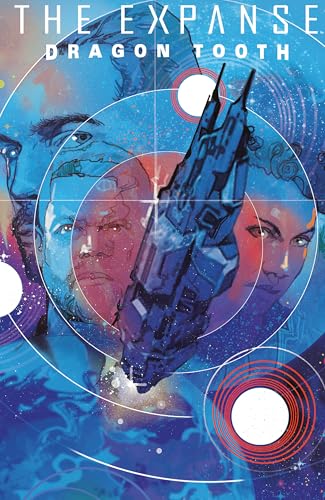
The Expanse: Dragon Tooth (Graphic Novel)
The official bridge between the show and Book 7. Fill the 30-year gap with this canonical comic series.
Price as of Oct 9, 09:11 PM UTC. Subject to change.

Jurassic Park - 4K Ultra HD
Experience the movie that defined a generation in stunning 4K resolution. A visual masterpiece.
Price as of Oct 9, 09:11 PM UTC. Subject to change.

The Art of The Legend of Vox Machina (Hardcover)
The official art book — stunning behind-the-scenes visuals from the making of the series.
Price as of Oct 9, 09:11 PM UTC. Subject to change.