
The Day of the Jackal review – The perfect thriller
A thriller about an assassination that history records as never happening, and it is still unbearably tense. The best-built thriller ever written. 5/5.
This post contains affiliate links. We may earn a commission if you make a purchase, at no extra cost to you. As an Amazon Associate, Dadnology earns from qualifying purchases.
📖 Introduction
🕵️ This review is part of the Frederick Forsyth hub — the novels, the adaptations, and where to start with a writer who researched everything himself.
Charles de Gaulle died in bed in 1970. He was not assassinated. Every reader who picks up The Day of the Jackal knows this, and Forsyth knows they know, and he tells them again in the first chapter.
The book is about a professional assassin hired to kill him. It is roughly five hundred pages long. It contains no twist, no unreliable narrator and almost no interior life. It is the tensest thing on this shelf and it is not close.
🧠 The story
The OAS — the paramilitary group formed by French officers who considered de Gaulle’s withdrawal from Algeria a betrayal — has tried to kill him and failed. Their networks are penetrated, their leadership is scattered, and every French operative they have is known to the police.
So they buy an outsider. An Englishman, no politics, no record, no name. He asks for half a million dollars and total operational secrecy, and he gets both.
What follows is two procedures running in parallel. The Jackal builds his attempt: a false identity assembled from a dead child’s birth certificate, a custom rifle commissioned from a Belgian gunsmith and hidden inside a set of crutches, a stolen car, a series of aliases, a date chosen for reasons of French ritual that cannot be moved.
Against him, a deputy commissaire named Claude Lebel is handed the worst assignment in France: find a man whose name, face, nationality and method are all unknown, without alerting the press, before an unknown date. He does it with telephone calls, index cards and favours from foreign police forces.
Neither man ever meets the other until the end. Neither has a personality worth speaking of. And the book is unputdownable, because Forsyth understood something most thriller writers never learn: suspense is not about doubt over the outcome. It is about watching two competent people work, and knowing that one of them has to be slightly better.
🎭 The craft
Forsyth was a reporter before he was a novelist — Reuters in Paris, the BBC, then Biafra as a freelancer — and the book reads like the best kind of long-form journalism about something that did not happen.
Everything is specific. The forger’s process is specific. The gunsmith’s problem — a weapon that must be accurate at a hundred and thirty metres, break down into pieces that look like medical equipment, and fire a round that will do the job with one shot — is a small engineering essay, and it is riveting. The bureaucratic mechanics of a French passport application are riveting. He achieves this without a single paragraph of atmosphere.
He also wrote it fast. Back in London after Biafra, broke and sleeping on a friend’s sofa, he sat down at a kitchen table in January 1970 and finished it in thirty-five days. It won the Edgar Award for Best Novel in 1972. Most writers spend a career failing to produce anything this tightly built.
The famous flaw is the one Forsyth himself made unavoidable: the identity trick at the heart of the Jackal’s cover — using the birth certificate of a child who died young to obtain a real passport — was reportedly workable in Britain when the novel was published, and the book’s popularity is part of why the loophole was eventually closed. A thriller that changes the actual administration of a country is a rare thing.
🎯 Why it still beats everything
Put this next to a modern thriller and the difference is the absence of noise.
There is no personal stake. Lebel is not avenging anyone. The Jackal has no tragic backstory, and Forsyth deliberately never gives him a real name — he is a set of capabilities in a good suit. There is no romance that matters, no betrayal from within the team, no conspiracy behind the conspiracy.
What is left is pure structure: a fixed deadline, two professionals, and information moving slightly too slowly on one side. Every chapter advances one of the two procedures. Nothing is wasted.
That is why the book has the reputation it does among writers rather than only readers. It is the cleanest demonstration in the genre that plot mechanics alone, done properly, generate more tension than any amount of jeopardy.
It also sits at the extreme competence end of the spy shelf. Where Slough House runs on people who fail and Clancy runs on institutions that work, Forsyth runs on individuals who are simply extremely good at a job, and the pleasure is watching the job get done.
🕵️ The author was not making it up
One detail changes how the book reads, and it only became public decades later.
In 2015 Forsyth confirmed what had been rumoured for years: during his time reporting from Biafra he had been passing information to MI6, and the arrangement lasted around twenty years. He was never paid for it. He set it out himself in a memoir, The Outsider, published the same year.
That is not a scandal and it does not change a word of the novel. What it explains is the texture. The reason the tradecraft in this book feels different from the tradecraft in most thrillers is that Forsyth was not researching a world he had read about; he had spent years in the actual one, as a correspondent in Paris during the OAS period and as an asset afterwards. The forged papers, the dead-letter arrangements, the way an intelligence service treats an outsider it finds useful — all of it is written by somebody who had watched it from close range and understood that the interesting part is the paperwork.
He kept doing his own legwork for the rest of his career, which is why the later books are so uneven in plot and so consistently convincing in detail.
👨👧 The dad perspective
This is the book to hand to someone who says they do not read.
It has no barrier to entry. The chapters are short, the prose is plain, the plot is a straight line, and it is genuinely difficult to stop after one more. Patrick read it essentially in one sitting, which is the standard reaction rather than a boast — the book is engineered for exactly that.
It is also the one on this shelf that reads best in fragments, which matters when reading time comes in twenty-minute pieces after bedtime. Because each chapter is a discrete procedural step, you can put it down without losing the thread, and pick it up three days later knowing exactly where you were. Try that with a Ludlum.
Reading commitment: around five hundred pages and the fastest of them anywhere on this site. A long weekend, or a week of short evenings.
Audiobook: works well, because the structure is so clean. Audible’s 30-day trial covers something this length — check what is actually in the catalogue on the day.
Age guidance: 14 and up. The violence is infrequent and matter-of-fact, and the content that dates worst is a couple of attitudes rather than anything graphic.
✅ Pros & cons
Pros
- Generates enormous tension from an outcome the reader already knows
- The most tightly constructed plot in the genre — nothing is wasted
- Forsyth's reporting background makes every procedure genuinely fascinating
- Short chapters make it the most readable book on this shelf
- Lebel is one of the great unglamorous investigators
Cons
- Almost no interiority — nobody in it has an inner life worth the name
- A few period attitudes, particularly toward women, land badly now
- The French political background needs a few pages of patience up front
- If you want character rather than mechanism, this is not that book
Conclusion: The one everything else is measured against
The Day of the Jackal is the best-built thriller ever written and one of the very few books that is genuinely hard to put down for the reason everybody claims. It gives away its own ending in the first chapter and then holds you for five hundred pages on procedure alone.
Forsyth died in 2025 having written a dozen more, several of them very good. He never wrote another one like this, and neither has anybody else.
The Final Word: the perfect thriller, and the standard the rest of the shelf is measured against. Five out of five.
Is The Day of the Jackal worth reading?
Does it spoil itself? De Gaulle was never assassinated.
Is the Jackal based on a real assassin?
Which film should I watch, 1973 or 1997?
Do I need to know French history to follow it?
Keep this in your inbox
One email a week: what we actually watched, built and reviewed — the stuff worth a dad's time. No hype, no daily spam.
Dadnology Weekly
One email a week: the LEGO, gaming and movie news worth a dad's time — plus what we actually reviewed. No hype, no daily spam.
Disclaimer: This review and its visuals were created with the help of AI. Some links may be affiliate links – we may earn a commission if you make a purchase, at no extra cost to you.
Current deals in Books & media
Verified live discounts tracked on Amazon
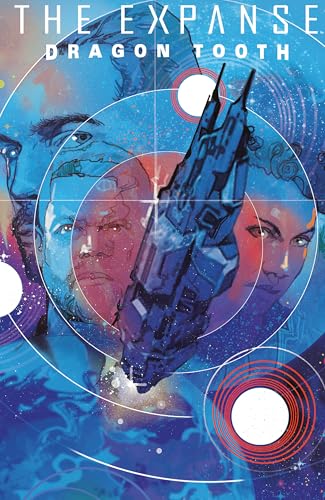
The Expanse: Dragon Tooth (Graphic Novel)
The official bridge between the show and Book 7. Fill the 30-year gap with this canonical comic series.
Price as of Oct 11, 09:11 PM UTC. Subject to change.

Jurassic Park - 4K Ultra HD
Experience the movie that defined a generation in stunning 4K resolution. A visual masterpiece.
Price as of Oct 11, 09:11 PM UTC. Subject to change.

The Art of The Legend of Vox Machina (Hardcover)
The official art book — stunning behind-the-scenes visuals from the making of the series.
Price as of Oct 11, 09:11 PM UTC. Subject to change.
You might also like
The Kill List review – Forsyth's drone-age thriller
The Jackal structure rebuilt for cyber-tracking and drone strikes, and it works — Forsyth's research still carries it. Looser and more sentimental than his best. Rating: 4/5.

The Jackal (1997) review – The guilty pleasure defence
Judged as a Forsyth adaptation it is indefensible. Judged as a nineties thriller it is superb — pacy, cold, brilliantly cast, and one of the most rewatchable action films of its decade. 4.5/5.
The Matarese Circle review – Ludlum's other masterpiece
The best premise Ludlum ever built a book on, and he does not waste it. Two ruined professionals who hate each other, a conspiracy founded in 1911, and six hundred pages that never let the pressure off. Rating: 5/5.