
The Kill List review – Forsyth's drone-age thriller
A Marine tracker hunts an online preacher radicalising killers from a laptop. Late Forsyth, still gripping, missing the ruthless economy of the early books. 4/5.
This post contains affiliate links. We may earn a commission if you make a purchase, at no extra cost to you. As an Amazon Associate, Dadnology earns from qualifying purchases.
📖 Introduction
🕵️ This review is part of the Frederick Forsyth hub — the novels, the adaptations, and where to start with a writer who researched everything himself.
Forty-two years after The Day of the Jackal, Frederick Forsyth wrote the same book again.
That is not a criticism. The structure — two highly competent men, no personal connection, converging on each other through procedure alone — is the best thriller architecture anybody has built, and it turned out to fit the drone age almost perfectly.
🧠 The story
A man calling himself the Preacher is producing video sermons in fluent English, uploading them from somewhere nobody can locate, and young men in Britain and America are watching them and then killing people. Not a network. Not a cell. Individuals, radicalised alone, acting alone, and therefore invisible to every method the security services have.
He goes onto the American kill list, which in this book is an actual document with actual names on it, reviewed at an actual meeting.
The man sent after him is Christopher Carson, a US Marine officer known professionally as the Tracker, working out of a small and deliberately obscure Virginia outfit called TOSA and given the Preacher as a personal assignment after the Preacher’s output leads to the murder of a retired general — who happens to be the Tracker’s father.
That last detail is the book’s first departure from the Jackal formula, and it is a mistake. Forsyth in 1971 would never have given his hunter a personal motive; the whole point was that Lebel was doing a job. Here the motive is supplied in chapter three and then barely used, which makes it both unnecessary and untidy.
What follows is very good. The hunt is genuinely technical: metadata, upload timing, dialect analysis, a teenage hacker in England recruited for reasons that are legally uncomfortable, an operation to feed the Preacher a corrupted file. The procedural pleasure of the early Forsyth is entirely intact.
🎭 Late Forsyth
By 2013 Forsyth was seventy-five and writing looser books than he had at thirty-two.
The research is still the selling point and it is still excellent. He clearly spoke to people who work in this area, and the passages explaining how a drone programme actually gets from a name on a list to an authorisation are the best thing in the novel — dry, procedural, entirely convincing, and slightly chilling for exactly that reason.
What has gone is the editing. The Jackal has no fat on it at all. This book has a Somali pirate subplot, a chunk of backstory for a character who does not need one, and a habit of explaining institutions in paragraphs where a sentence would do. It reads like a very well-informed writer enjoying his material, which is pleasant, and not like a man with a stopwatch, which is what made 1971 exceptional.
The Preacher himself is the other soft spot. Forsyth never quite finds him. He is a set of capabilities and a biography rather than a presence, and the book keeps him at arm’s length in a way it clearly intends as menace and which lands as absence.
🎯 Why it still works
Because the architecture carries it.
The two-track structure is close to indestructible. Every chapter moves one of them forward. Neither knows what the other is doing. The reader knows both and can see the gap closing, which is a form of tension no amount of plot twisting can manufacture.
And the modern setting suits Forsyth better than it suited most of his generation. He was always a writer about systems rather than psychology, and online radicalisation, metadata analysis and remote targeting are systems. Where a lot of veteran thriller writers took their Cold War instincts into the 2000s and produced something creaky, this reads as if written by somebody who had actually asked how the machinery works — which, given his own history with an intelligence service, is unsurprising.
It sits at the same competence end of the spy shelf as everything else he wrote. Nobody in a Forsyth novel is incompetent. They are simply on different sides of a problem, and one of them is going to be marginally faster.
📚 Where this sits in Forsyth’s run
He wrote a dozen novels over forty-five years and they are not of one quality, so it is worth being direct about where to start.
Begin with The Day of the Jackal. It is the best thing he wrote, the most famous thriller of its century, and nothing else he produced is in the same class. Anyone who tells you otherwise is being contrarian.
Then, if that lands, the run of the 1970s and 1980s is where the reputation was built — The Odessa File, The Dogs of War, The Fourth Protocol. Same method: a real situation researched to the ground, professionals executing procedures, no interior life required.
The Kill List belongs to the late period, and it is the one worth reading from it. Forsyth was still doing the legwork long after most writers of his standing had stopped, and the modern subject gave him something his Cold War contemporaries mostly failed to find — a system worth explaining that had not been explained a hundred times already.
The Forsyth hub has the full picture, including which of the adaptations are worth the time and which merely borrowed a title.
👨👧 The dad perspective
The uncomfortable part of this book is not the violence, and it is a strange thing to run into as a parent.
The Preacher’s method is to find isolated young men online, take them seriously, give them a framework and a purpose, and point them at something. Forsyth writes that process without hysteria and without softening it — the recruitment scenes are quiet, patient and entirely recognisable as the shape of how anybody gets pulled into anything online.
Read in 2013 that was a thriller premise. Read now, with teenagers in the house and an algorithm on every device, it is a chapter you finish and then sit with for a minute. The book is not about parenting in any way and it lands there anyway.
Reading commitment: around four hundred pages, brisk, short chapters. A week of evenings.
Audiobook: works well — the alternating structure is easy to follow by ear. Audible’s 30-day trial covers a book this length; check the catalogue on the day rather than assuming.
Age guidance: adults. The subject matter includes execution videos, handled without relish but not avoided.
✅ Pros & cons
Pros
- The Jackal two-track structure still works perfectly, forty years on
- The drone and kill-list procedure is dry, detailed and genuinely unsettling
- The modern subject suits a writer who was always about systems
- Short chapters and relentless forward motion
- The best of Forsyth's late novels by some margin
Cons
- Gives the hunter a personal motive it then barely uses
- Baggier than the early books — subplots that add nothing
- The Preacher never becomes a presence, only a target
- Explains institutions at length where a sentence would do
Conclusion: The old machine, still running
The Kill List is a very good late thriller by a writer who had been doing this for four decades and still knew exactly which lever produced tension. The research is first-rate, the structure is the best one there is, and the subject was ahead of most of the genre in 2013.
It is not The Day of the Jackal. It is not trying to be. What it proves is that the machine Forsyth built in 1971 still runs on modern fuel.
The Final Word: the best of the late books, and a reminder that the structure was always the genius. Four out of five.
Is The Kill List worth reading?
Do I need to read other Forsyth books first?
Is it based on real events?
How does it compare to The Day of the Jackal?
Is it too grim?
Keep this in your inbox
One email a week: what we actually watched, built and reviewed — the stuff worth a dad's time. No hype, no daily spam.
Dadnology Weekly
One email a week: the LEGO, gaming and movie news worth a dad's time — plus what we actually reviewed. No hype, no daily spam.
Disclaimer: This review and its visuals were created with the help of AI. Some links may be affiliate links – we may earn a commission if you make a purchase, at no extra cost to you.
Current deals in Books & media
Verified live discounts tracked on Amazon
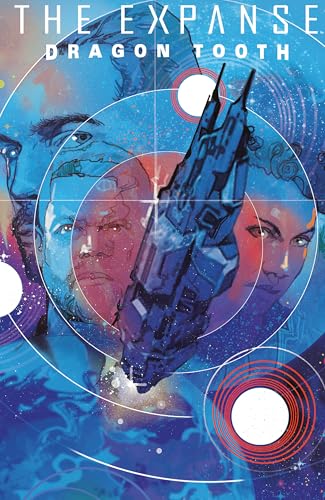
The Expanse: Dragon Tooth (Graphic Novel)
The official bridge between the show and Book 7. Fill the 30-year gap with this canonical comic series.
Price as of Oct 11, 09:11 PM UTC. Subject to change.

Jurassic Park - 4K Ultra HD
Experience the movie that defined a generation in stunning 4K resolution. A visual masterpiece.
Price as of Oct 11, 09:11 PM UTC. Subject to change.

The Art of The Legend of Vox Machina (Hardcover)
The official art book — stunning behind-the-scenes visuals from the making of the series.
Price as of Oct 11, 09:11 PM UTC. Subject to change.
You might also like
The Day of the Jackal review – The perfect thriller
The best-constructed thriller in the language. No twists, no chases, no interior life — just two competent men and a deadline, and it is impossible to put down. Rating: 5/5.
The Jackal (1997) review – The guilty pleasure defence
Judged as a Forsyth adaptation it is indefensible. Judged as a nineties thriller it is superb — pacy, cold, brilliantly cast, and one of the most rewatchable action films of its decade. 4.5/5.
The Matarese Circle review – Ludlum's other masterpiece
The best premise Ludlum ever built a book on, and he does not waste it. Two ruined professionals who hate each other, a conspiracy founded in 1911, and six hundred pages that never let the pressure off. Rating: 5/5.