
The Hunt for Red October review – The perfect yarn
A Soviet captain defects with his submarine and the only man who reads it correctly is a desk analyst. Clancy's 1984 debut is still the best thing he wrote. 5/5.
This post contains affiliate links. We may earn a commission if you make a purchase, at no extra cost to you. As an Amazon Associate, Dadnology earns from qualifying purchases.
📖 Introduction
⚓ This review is part of our guide to Tom Clancy books in order — every Ryanverse novel in publication and story order, with the honest answer to where to start.
There is a scene early in The Hunt for Red October in which a young sonar operator on an American submarine hears something he cannot identify. It is not a dramatic scene. He listens, he runs the tape again, he checks it against a library of known signatures, he tells his superior he has something odd. That is the entire beat.
It is also the moment the modern techno-thriller was invented, because Clancy had worked out something nobody in the genre had bothered with: procedure is thrilling. Not the explosion at the end of the procedure. The procedure itself — the checking, the listening, the careful refusal to overstate what you actually know.
He sold the manuscript to the Naval Institute Press for five thousand dollars, and it became the first work of fiction that publisher had ever put out. They asked him to cut roughly a hundred pages of technical detail before release, which was excellent advice and is a large part of why this book is still readable when several of his later ones are a slog. Then President Reagan called it “the perfect yarn”, and the thing went off like a rocket: over 365,000 hardcovers and more than four million paperbacks.
Forty years on, it is still the best book Tom Clancy wrote.
🧠 The story
Marko Ramius is the most respected submarine captain in the Soviet Navy, the man who trained most of the other captains, and he has just been handed a brand new Typhoon-class boat carrying a propulsion system nobody else has: a caterpillar drive that makes her effectively invisible to passive sonar. On her first cruise, he kills the political officer, forges new orders and points the Red October at the American coast with no intention of ever going home.
What follows is a three-way problem. The Soviet fleet is hunting him to sink him. The American fleet is trying to work out whether he is defecting or executing a first strike. And in a windowless office in Langley, an analyst named Jack Ryan is looking at photographs and arriving at a conclusion that the senior people in the room have no political appetite to hear.
That is the whole engine of the book, and it is a superb one. There is no villain in the conventional sense — the closest thing is Viktor Tupolev, a former student of Ramius commanding an Alfa-class boat, and he is simply a professional doing his job well. The danger comes from the fact that everyone involved is competent and has incomplete information. Any one of them making a reasonable decision at the wrong moment starts a nuclear war.
🎭 Characters and craft
Ramius is the achievement. Clancy gives him a private grief and a quiet, absolute resolve, and then makes him almost entirely opaque — we watch him mostly through what his crew observe and what his opponents deduce. He is never sentimentalised and never explained more than necessary.
Jack Ryan, here, is not the character the screen versions later made him. He is a desk man. He is out of his depth every time he leaves the office, he is visibly frightened by the physical parts of the story, and his actual weapon is that he reads carefully and refuses to soften his conclusions for a room that would prefer a different answer. That version of the character is the good one, and Clancy never quite got him this right again.
Bart Mancuso, running the USS Dallas, carries the American submarine material, and the Dallas sequences are the book’s technical showcase — a boat trying to hold contact with something it can barely hear. The prose in these passages is flat, clean and unshowy, which is exactly correct. Clancy was never a stylist. What he had instead was an absolute grip on how a piece of equipment and a trained crew interact under pressure, and the discipline to let that carry the scene.
👨👧 The dad perspective
This is the Clancy that got a generation of teenage boys reading doorstop novels, and it holds up because it was never really about the hardware.
The pleasure it delivers is a specific and slightly unfashionable one: the fantasy of a functioning institution. Everybody in this book is good at their job. The sonar operator listens properly, the captain trusts him, the analyst tells the truth to a room that does not want it, and the system — creaking, politically compromised, staffed by people protecting their careers — nonetheless works, because enough individuals in it do their part correctly. After a week of your own institution doing the opposite, that is enormously satisfying to read.
Reading commitment: substantial but not punishing, and it moves. The short chapters and rotating viewpoints make it unusually good for reading in twenty-minute increments, which is generally all the evening allows.
Audiobook: a genuinely good option here, because the cast is large and the accents help keep the Soviet officers apart. Audible’s 30-day trial is enough to test whether a Clancy of this length survives a commute — check the catalogue on the day rather than assuming any specific edition is in it.
Age guidance: fine for a capable teenage reader from about 14. There is violence but very little gore, no sexual content to speak of, and the swearing is naval rather than gratuitous. It is a long book, not a dark one — which separates it sharply from Without Remorse.
✅ Pros & cons
Pros
- The single best demonstration of Clancy's real talent: procedure as suspense
- Ramius is a superb, deliberately opaque character
- Jack Ryan as an analyst rather than an action hero — the best version of him
- Tightly edited by the standards of the later books, and it never stalls
- Completely self-contained, so it works as a first book or a one-off
Cons
- The large cast of Soviet officers takes a hundred pages to sort out
- Cold War geopolitics requires a little patience from a reader born after it
- Clancy's prose is functional at best — nobody reads this for the sentences
Conclusion: Still the one to beat
Everything Clancy became — the brand, the games, the continuation novels, four different screen Jack Ryans — traces back to this book, and almost none of it improved on it. The Hunt for Red October is lean in a way the late novels are not, disciplined in a way the imitators never managed, and built on a genuinely original insight about where tension comes from.
It is also, quietly, an optimistic book. Its argument is that careful people doing their jobs properly can stop a catastrophe, even inside institutions that are not built to help them. That is not a small thing to believe, and it is the reason this one stuck with a lot of us.
The Final Word: the debut, the peak, and the right place to start. A perfect five.
Is The Hunt for Red October worth reading today?
Do I need to read anything before The Hunt for Red October?
Is the book better than the 1990 film?
Is the technical detail hard to follow?
How does Jack Ryan appear in this book?
Keep this in your inbox
One email a week: what we actually watched, built and reviewed — the stuff worth a dad's time. No hype, no daily spam.
Dadnology Weekly
One email a week: the LEGO, gaming and movie news worth a dad's time — plus what we actually reviewed. No hype, no daily spam.
Disclaimer: This review and its visuals were created with the help of AI. Some links may be affiliate links – we may earn a commission if you make a purchase, at no extra cost to you.
Current deals in Books & media
Verified live discounts tracked on Amazon
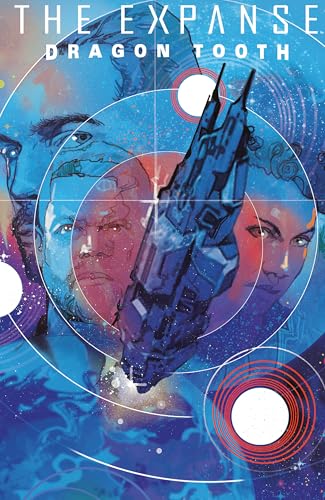
The Expanse: Dragon Tooth (Graphic Novel)
The official bridge between the show and Book 7. Fill the 30-year gap with this canonical comic series.
Price as of Oct 9, 09:11 PM UTC. Subject to change.

Jurassic Park - 4K Ultra HD
Experience the movie that defined a generation in stunning 4K resolution. A visual masterpiece.
Price as of Oct 9, 09:11 PM UTC. Subject to change.

The Art of The Legend of Vox Machina (Hardcover)
The official art book — stunning behind-the-scenes visuals from the making of the series.
Price as of Oct 9, 09:11 PM UTC. Subject to change.
You might also like
Clear and Present Danger review – The one about betrayal
The one where the enemy is Washington. A deniable war, then a political inconvenience, then men on a mountainside with no radio and nobody coming. Ryan and Clark go anyway. Furious, tightly built and genuinely moral. Rating: 5/5.
The Cardinal of the Kremlin review – The spy novel
Clancy's purest espionage novel and his most underrated. An asset thirty years deep, a KGB investigation closing around him, and an extraction that has to be improvised. Also where John Clark first walks on. Rating: 5/5.

The Hunt for Red October (1990) review – Still the best
The best Clancy adaptation, and it is not close. McTiernan shoots analysis as though it were an action sequence, because he correctly worked out that it is one. Connery is magnificent and unbothered about the accent, and Baldwin is the most book-accurate Jack Ryan there has been. 4/5.