
The Third Option review – Rapp gets shot by his own side
Rapp completes a clean assassination in Germany and is shot twice in the chest by his own team. The book where the series stops being simple. 5/5.
This post contains affiliate links. We may earn a commission if you make a purchase, at no extra cost to you. As an Amazon Associate, Dadnology earns from qualifying purchases.
📖 Introduction
🎯 This review is part of our guide to Mitch Rapp books in order — every Vince Flynn novel in sequence, with the honest answer to where to start.
The title is a piece of tradecraft jargon and it is worth understanding, because the whole novel sits inside it. When a government wants something done, the first option is diplomacy. The second is open military force. The third is what you do when the first has failed and the second would be a war — a small number of people who do not officially exist, doing something that will never be admitted.
Mitch Rapp is the third option.
The Third Option opens with him in Germany, tasked with killing Count Heinrich Hagenmiller, an arms dealer supplying people who intend to use the merchandise on Americans. The operation is textbook. Rapp does the job, and then the two operatives running the mission with him — a married couple he has been told are reliable — put two rounds into his chest.
He survives because his jacket is lined with kevlar. He gets out by setting the room on fire to destroy the forensics. And then he has to work out who at home decided he should die on a floor in Germany, and why.
🧠 The story
The answer is the reason this book matters to the series.
Nobody betrayed Rapp for ideology, or for money from a foreign power, or because they had been turned. Senator Hank Clark wanted a scandal. A CIA assassin killed on a botched illegal operation on German soil would embarrass a President he opposes and destroy the career prospects of Irene Kennedy, who is in line to run the agency. Rapp is not a target. He is a mechanism.
That is a genuinely nasty idea and Flynn plays it straight. The rest of the novel is Rapp — wounded, off the books, formally deniable — working backwards up the chain while the people who arranged it try to close the loop before he reaches them. He has no institutional protection, because the institution is where the problem lives.
The German material at the front is the best procedural writing Flynn did. The approach, the surveillance, the decision points, the improvised exit through a burning room — it is tight, specific, and completely free of the flourishes a lesser writer would have added.
🎭 Characters and craft
This is where the series gets its actual subject, and it is not terrorism.
Flynn’s recurring interest, from Term Limits onwards, is the gap between the people who take the risks and the people who benefit from them. Here it is stated as bluntly as he ever stated it: an elected official decides that a man’s death is worth a news cycle, and arranges it with about as much emotional weight as scheduling a vote.
Rapp changes in this book too. The version in Transfer of Power is a specialist doing difficult work for an institution he broadly trusts. The version at the end of this one has learned that the institution contains people who will spend him, and his subsequent hardness — the thing that defines the character for the next fifteen novels — starts here.
Irene Kennedy is excellent throughout. She is the one who has to operate inside the system that is trying to destroy them both, and Flynn is good on the specific exhaustion of being the competent person in a political knife fight you did not start.
The weakness is the antagonists again. Senator Clark is well conceived but thinly drawn, and the Jansens who pull the trigger are functions rather than people. Flynn’s villains tend to be positions on an organisational chart.
👨👧 The dad perspective
Here is what makes this one stick.
Rapp does exactly what he was asked to do, correctly, at real risk, and the reward is two bullets arranged by somebody who has never met him. There is no version of doing the job better that would have prevented it. His competence was never the variable.
That is a bleaker proposition than anything in Clancy, and it is the point where the Flynn shelf starts talking to the other kind of spy fiction. The competence engine assumes that being good at your job is what saves you. This book says being good at your job is precisely what made you useful enough to be spent.
Anyone who has been restructured, reorganised or quietly moved sideways by a decision taken three floors up will recognise the feeling, minus the kevlar.
Reading commitment: moderate, fast, and it ends in a way that will make you want the next one immediately. Consider having Separation of Power to hand.
Audiobook: good — the German sequence in particular works well aloud. Audible’s 30-day trial covers it; check the catalogue on the day rather than assuming.
Age guidance: 16 and up. The violence is professional rather than gratuitous, but the moral setup — a politician ordering an American’s death for advantage — is the heavier element.
🔍 What it sets up
Two things start here that the rest of the series never puts down.
The first is Rapp’s relationship with the political class. Before this book he works for an institution that occasionally frustrates him; after it, he knows the institution contains people who will trade his life for a news cycle, and he behaves accordingly. Every later scene where he refuses to brief a senator or walks out of a hearing traces back to a floor in Germany.
The second is Irene Kennedy’s position. She spends this novel learning that being the most competent person available is not protection, because the attack on her is not about competence at all. That lesson shapes how she runs the agency for the next fifteen books, and it is the reason she and Rapp end up trusting each other more than either trusts the structure above them.
Neither is spelled out. Both are why the series has a spine that a straight run of terrorist plots would not have given it.
✅ Pros & cons
Pros
- The German opening is the best procedural sequence Flynn wrote
- A betrayal with a genuinely nasty, entirely plausible motive
- Gives the series its real subject: who takes the risk and who takes the credit
- Irene Kennedy is superb — the competent person in a fight she did not start
- The hardening of Rapp's character starts here and is earned
Cons
- The antagonists are organisational positions rather than people
- Ends mid-argument — it really needs Separation of Power immediately after
- Requires Transfer of Power to carry its full weight
- Flynn's prose remains strictly functional
Conclusion: Where the series grows up
The Third Option is the point at which Vince Flynn stopped writing terrorist thrillers and started writing about American institutions eating their own people. The terrorism is still there. It is no longer the subject.
Five out of five. It has the best single sequence in the series at the front, the sharpest idea in the middle, and a consequence at the end that the next fourteen books are still carrying.
Read it straight after Transfer of Power, and have the next one ready.
The Final Word: the book where the series found out what it was about. Five out of five.
Is The Third Option worth reading?
Do I need to read Transfer of Power first?
What is the Orion Team?
Does The Third Option end on a cliffhanger?
Is this the darkest Mitch Rapp book?
Keep this in your inbox
One email a week: what we actually watched, built and reviewed — the stuff worth a dad's time. No hype, no daily spam.
Dadnology Weekly
One email a week: the LEGO, gaming and movie news worth a dad's time — plus what we actually reviewed. No hype, no daily spam.
Disclaimer: This review and its visuals were created with the help of AI. Some links may be affiliate links – we may earn a commission if you make a purchase, at no extra cost to you.
Current deals in Books & media
Verified live discounts tracked on Amazon
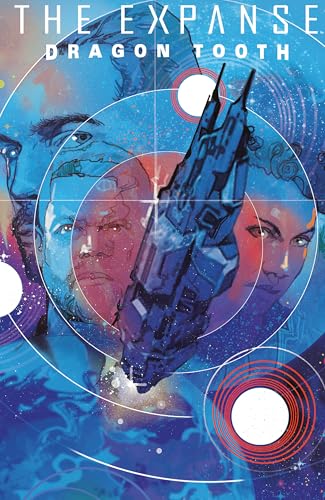
The Expanse: Dragon Tooth (Graphic Novel)
The official bridge between the show and Book 7. Fill the 30-year gap with this canonical comic series.
Price as of Oct 9, 09:11 PM UTC. Subject to change.

Jurassic Park - 4K Ultra HD
Experience the movie that defined a generation in stunning 4K resolution. A visual masterpiece.
Price as of Oct 9, 09:11 PM UTC. Subject to change.

The Art of The Legend of Vox Machina (Hardcover)
The official art book — stunning behind-the-scenes visuals from the making of the series.
Price as of Oct 9, 09:11 PM UTC. Subject to change.
You might also like
Memorial Day review – The one with the second bomb
The best premise in the series: the bomb you find is the one they wanted you to find. Tense, tightly built and genuinely unsettling about how relief makes people stop looking. Also the book where Rapp's methods get hardest to watch. Rating: 5/5.
Executive Power review – Rapp behind a desk, briefly
The most globe-trotting book in the run, and the one that finally asks what Rapp is for once everybody knows his name. Intricate, fast, and unusually good on how an atrocity can be a negotiating position. Rating: 5/5.
Mitch Rapp books in order – Vince Flynn's series explained
Start with Transfer of Power, not with the chronologically first book. Read in publication order. And know that only the first fourteen novels are Vince Flynn's own — everything after The Last Man was written by somebody else.