
Red Dead Redemption 2 review: The greatest Western ever made in gaming
Rockstar’s masterpiece is more than an open-world game. Red Dead Redemption 2 delivers one of the most powerful character stories ever told in gaming.
This post contains affiliate links. We may earn a commission if you make a purchase, at no extra cost to you. As an Amazon Associate, Dadnology earns from qualifying purchases.
The art of the slow burn
🎮 This review is part of the The Living Novel Hall of Fame – explore the best story-driven games we’ve reviewed.
There is a rhythm to Red Dead Redemption 2 that feels almost rebellious in the modern gaming landscape. Where most open-world games push players forward with constant rewards, flashing objectives, and endless map icons, Rockstar chose a completely different approach. The game asks you to slow down.
You wake up in a rough outlaw camp. Coffee simmers over a fire. Someone plays a quiet tune on a harmonica. The sun slowly rises over the plains.
Before you fire a single shot, you simply exist inside the world.
That deliberate pacing is the foundation of what makes Red Dead Redemption 2 extraordinary. The game is not just about missions or action sequences. It is about atmosphere, routine, and the quiet moments that build emotional weight.
The result is one of the most immersive experiences ever created in interactive entertainment.
The end of the wild West
The story takes place in 1899, a moment when the American frontier is disappearing. The railroad is expanding, cities are growing, and the era of roaming outlaw gangs is quickly coming to an end.
The Van der Linde gang is caught in the middle of this transition.
Led by the charismatic and increasingly unstable Dutch van der Linde, the group believes it is fighting for freedom against a rapidly modernizing society. Dutch talks about ideals—living outside the system, rejecting the rules of civilization, and protecting the people he calls family.
But as the world changes around them, that philosophy begins to collapse.
Law enforcement grows stronger. The Pinkertons pursue the gang relentlessly. Each new robbery becomes more desperate than the last.
What begins as a story about criminals slowly transforms into a tragedy about people who simply cannot adapt to a changing world.
A world that feels truly alive
Rockstar’s recreation of the American frontier is arguably the most detailed open world ever built.
Every region feels unique. Snowstorms sweep across the Grizzlies. The plains stretch endlessly across the Heartlands. Dense forests hide wildlife and wandering travelers. The swamps of Lemoyne feel humid, dangerous, and unpredictable.
What makes the world special is not its size—it is its behavior.
Animals interact with each other naturally. Wolves hunt deer. Hawks dive toward snakes. Bears wander through forests looking for food.
NPCs follow routines. Shopkeepers close their stores at night. Farmers work their fields during the day. Towns slowly evolve as time passes.
Even the smallest details reinforce the illusion of reality. Mud sticks to Arthur’s boots. Snow accumulates on clothing. Weapons become dirty and require cleaning.
These touches might seem minor individually, but together they create something rare: a digital world that feels believable.
Arthur Morgan: The heart of the story
At the center of everything stands Arthur Morgan.
When the story begins, Arthur is not a hero. He is an enforcer for the gang—a man who solves problems with intimidation or violence. He follows Dutch without question and believes deeply in the gang’s philosophy.
But over the course of the game, something remarkable happens.
Arthur begins to change.
Through his interactions with other characters—particularly John Marston, Abigail, and the gang’s younger members—Arthur slowly develops a different perspective on the life he has been living.
He starts asking questions.
Was Dutch always right?
Was the gang really a family, or just a group of criminals clinging to a fading dream?
Arthur’s journey becomes one of self-reflection and moral awakening. Few video games attempt this kind of character development, and even fewer succeed.
By the time the story reaches its later chapters, Arthur Morgan has evolved into one of the most complex protagonists the medium has ever produced.
The journal: A window into Arthur’s mind
One of the most brilliant narrative devices in the game is Arthur’s journal.
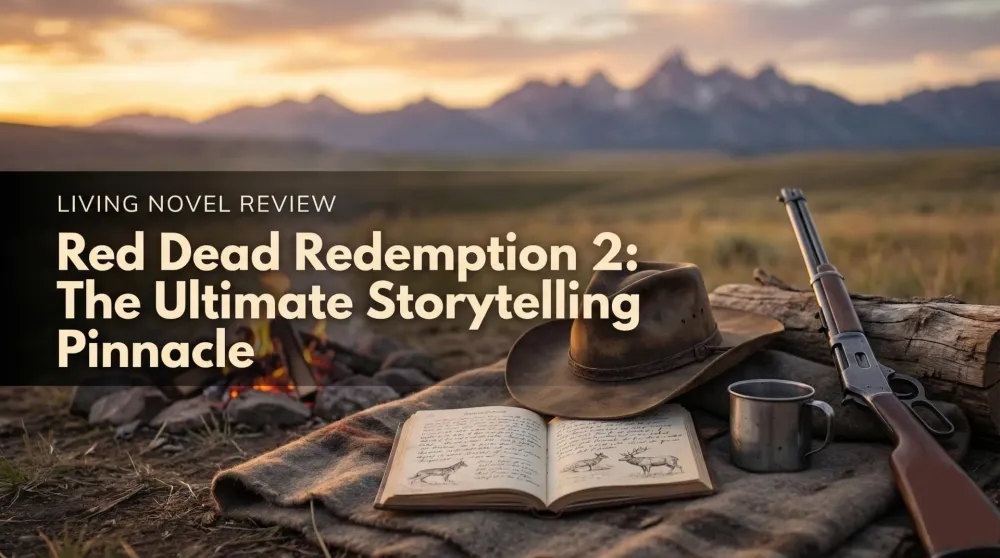
Throughout the adventure, Arthur records his thoughts and sketches the landscapes and animals he encounters. These entries reveal a thoughtful, observant man hidden beneath his rough outlaw exterior.
Through the journal, players see Arthur’s worldview slowly shift. His writing becomes more introspective. His drawings more detailed.
It is a subtle storytelling tool, but it adds enormous depth to the character.
Instead of simply watching Arthur change, players read his reflections and witness the transformation firsthand.
| Trait | Early Game Arthur | Late Game Arthur | Dad Perspective |
|---|---|---|---|
| Loyalty | Blind loyalty to Dutch | Protective loyalty toward the innocent | Learning who truly deserves your trust |
| Violence | Necessary survival tool | A burden he regrets | Protecting others rather than proving strength |
| Responsibility | Detached outlaw | Self-sacrificing protector | A powerful arc about personal growth |
| Legacy | Living day to day | Thinking about the future he leaves behind | The heart of Arthur’s redemption |
Life in the van der Linde gang
The emotional center of the game is the camp.
Between missions, the gang travels across the frontier, setting up temporary homes in forests, fields, and riverbanks. These camps are not just gameplay hubs—they are living communities.
You can sit beside the fire and listen to stories. Play poker with fellow outlaws. Help cook meals or donate money to support the group.
Over time, these moments create a strong sense of connection between the player and the characters.
People like Hosea, Charles, Sadie, and Lenny become more than side characters. They become companions whose fate genuinely matters.
When the gang eventually begins to fracture, those earlier campfire moments make the collapse far more painful.
The tragedy of Dutch van der Linde
Perhaps the most fascinating character in the game is Dutch himself.
At the beginning, Dutch appears confident, charismatic, and intelligent. He speaks about freedom and loyalty with the conviction of a revolutionary leader.
But slowly, cracks begin to show.
Each failed plan makes him more paranoid. Each confrontation with the law makes him more reckless.
Dutch begins to see betrayal everywhere—even among the people who trust him the most.
The relationship between Dutch and Arthur becomes the emotional backbone of the story. What begins as a father-son dynamic gradually deteriorates into something tragic.
Watching that transformation unfold is one of the most powerful narrative arcs ever portrayed in a video game.
The simulation of daily life
Many players describe Red Dead Redemption 2 as a “cowboy simulator,” and in some ways that description is accurate.
The game asks you to care about small things.
You feed your horse. Brush its coat. Calm it during storms. Over time you form a bond with the animal that goes far beyond simple transportation.
You hunt for food, cook meals, and maintain your weapons. Arthur must dress appropriately for weather conditions and manage his health and stamina.
Some critics initially saw these systems as tedious. But for many players, they are the key to the game’s immersion.
They force you to slow down and engage with the world on its own terms.
Audio, music, and atmosphere
Even years after release, the presentation of Red Dead Redemption 2 remains astonishing.
The lighting engine creates stunning sunsets and atmospheric weather systems. Rainstorms roll across the plains with cinematic intensity. Fog drifts through forests during early morning hours.
The sound design is equally impressive. Every region has its own ambient soundscape: wind through grass, distant animal calls, and the subtle creak of leather saddles.
The musical score by Woody Jackson elevates the experience even further. Instead of playing constantly, the music appears at key emotional moments.
When it does, the effect is unforgettable.
The epilogue: A different kind of story
Without revealing too much for new players, the main narrative eventually transitions into a lengthy epilogue that shifts focus to John Marston.
Where Arthur’s story is defined by conflict and regret, John’s arc is about building something new.
He works honest jobs. Struggles to support his family. Slowly constructs a home with his own hands.
After dozens of hours spent riding with outlaws, these quieter moments feel surprisingly powerful.
They remind players that redemption is not a dramatic event—it is a long process of choosing a better life.
Why Red Dead Redemption 2 still matters
Years after its release, Red Dead Redemption 2 continues to stand apart from most modern games.
It refuses to rush the player. It prioritizes character development over constant action. It treats its world and its story with remarkable patience.
That patience pays off.
By the end of the journey, the characters feel real. Their struggles feel meaningful. And the world they inhabit becomes unforgettable.
Few games attempt storytelling on this scale. Even fewer achieve it with such confidence.
👨 The dad angle — When and how to experience RDR2
Red Dead Redemption 2 is emphatically not a family co-op game. It is rated M for Mature and earns that rating — the violence is realistic, the themes are heavy, and several story sequences are genuinely upsetting. This is a game you play after the kids are asleep, with a good pair of headphones and a hour or two to spare.
But for dads specifically — the deliberate pacing, the themes of loyalty and sacrifice, the story of a man reconsidering every choice he’s ever made — this game hits differently in your 30s and 40s than it would at 20. Arthur Morgan’s arc isn’t about action. It’s about reckoning with who you’ve been and choosing something better at the end. That’s territory most entertainment doesn’t attempt, let alone achieve with this much craft.
On time investment: the main story runs roughly 50–60 hours, with the epilogue adding another 10–15. This is not a game to rush. The best approach is to treat it like a long novel — one chapter at a time, over weeks or months, letting the world breathe. There is no urgency mechanic pressing you forward; the game will wait for you.
On the right setup: if you have a capable TV with HDR, the game’s sunsets, storms, and snowscapes look astonishing. Add a quality headset for the spatial audio and Woody Jackson’s score. This is one of the rare games that rewards the best display and audio you can give it — the production values justify the setup.
Pros
- One of the greatest character arcs in gaming (Arthur Morgan)
- A staggeringly detailed, living open world
- A mature, emotional, brilliantly written story
- Reference-grade sound design, score, and performances
- Endless incidental detail rewards slow, immersive play
Cons
- Deliberate, slow pacing won't suit everyone
- Clunky, 'weighty' controls and fiddly menus
- Mission design can feel rigid and over-scripted
Final verdict
Red Dead Redemption 2 is one of the greatest narrative achievements in gaming history.
Its massive open world is stunning, but the real strength of the game lies in its characters—especially Arthur Morgan, whose journey from loyal outlaw to reflective protector remains one of the most powerful character arcs in the medium.
Rockstar created more than a game. They created a living, breathing world filled with tragedy, loyalty, and humanity.
Final Rating: 5/5 — The Gold Standard of Story-Driven Open Worlds
FAQ
Is Red Dead Redemption 2 worth playing today?
How long does the story take?
Does RDR2 run well on PS5?
Is the game suitable for kids to watch?
Keep this in your inbox
One email a week: what we actually watched, built and reviewed — the stuff worth a dad's time. No hype, no daily spam.
Dadnology Weekly
One email a week: the LEGO, gaming and movie news worth a dad's time — plus what we actually reviewed. No hype, no daily spam.
Disclaimer: This review and its visuals were created with the help of AI. Some links may be affiliate links – we may earn a commission if you make a purchase, at no extra cost to you.
Current deals in Gaming
Verified live discounts tracked on Amazon

Gaming · Tested by Dadnology
Marvel’s Spider-Man 2 (PS5)
5/5“Bigger, bolder, near-perfect superhero storytelling”Read our review
Gaming · Tested by Dadnology
Assassin's Creed: The Ezio Collection
4.5/5“The game that fixed everything and gave us Ezio”Read our review
Gaming · Tested by Dadnology
The Last of Us Part I (PS5)
5/5“A masterpiece rebuilt for the modern era”Read our reviewYou might also like

Assassin's Creed: The Ezio Collection review — The franchise at its best
An honest 4/5. The Ezio trilogy is Assassin's Creed at its absolute best — gorgeous historical cities, a lifelong character arc, and the pure, focused formula before the series ballooned. Dated mission design and aged controls hold it back from perfection, but the atmosphere and Ezio himself are timeless.
Batman: Arkham Trilogy review – The games that made you Batman
A confident 4/5. The Arkham trilogy is the superhero power fantasy done right — FreeFlow combat, predator stealth, and gliding that finally makes you FEEL like Batman. Arkham City is the peak; Knight leans too hard on the Batmobile. Still essential, still badass.

Cyberpunk 2077 review: Night city's cinematic comeback story
A redeemed masterpiece. Cyberpunk 2077 pairs a stunning, dense Night City with a genuinely cinematic story. The build variety is so deep it begs for replays most dads simply do not have time for. A confident 4.5/5.